


ISLAMABAD, Nov 4 (ABC): The world still has an opportunity to limit global warming to below 2°C. However, achieving this target will require deeper emissions reductions by 2035 and stronger financial support for developing economies facing growing climate risks.
Global greenhouse gas emissions must fall approximately 24% below 2025 levels by 2035 to keep warming below 2°C. In contrast, existing national climate commitments are expected to deliver reductions of only 11–15%.
This gap highlights the challenge facing governments ahead of COP31 in Antalya, Türkiye, from November 9 to 20. Stronger climate action and financial support for vulnerable countries are expected to remain important priorities.
According to the UN Environment Programme’s (UNEP) Emissions Gap Report 2026: The Point of Return, released on October 21, current policies would put the world on course for approximately 2.8°C of warming this century.
Meanwhile, full implementation of existing national pledges would reduce projected warming to 2.6–2.7°C.
The report also acknowledges that limiting warming to 1.5°C without temporarily exceeding that threshold is no longer possible. This finding underscores the urgency of accelerating emissions reductions to prevent further temperature increases.
Global greenhouse gas emissions reached 58.4 billion tonnes of carbon dioxide equivalent in 2025. The figure remained broadly unchanged from 2024, although emissions from fossil fuel combustion continued to increase.
By September 2026, 124 parties had submitted updated national climate commitments. However, these pledges made only a limited difference to projected global warming.
The United States recorded the largest increase in emissions of any country in 2025, adding approximately 133 million tonnes.
Furthermore, its withdrawal from the Paris Agreement accounted for roughly half of the deterioration in the report’s warming projections.
Renewable energy growth offers progress despite emissions challenges
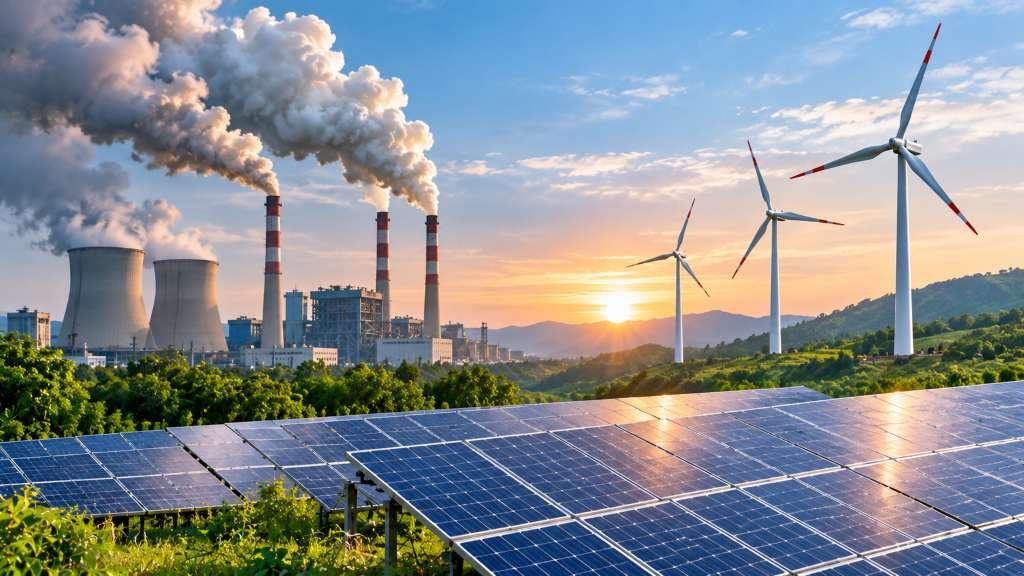
Despite the continuing emissions gap, the global energy transition has made significant progress over the past decade.
Since 2015, renewable energy capacity has expanded approximately three times faster than the International Energy Agency had projected.
Renewable energy sources also overtook coal in global electricity generation for the first time in 2025, marking an important development in the transition towards cleaner energy.
Investment in clean energy is expected to reach approximately $2.2 trillion in 2026, nearly twice the amount invested in fossil fuels.
However, global consumption of coal, oil and gas remains at record levels.
Fossil fuel subsidies have also increased substantially, rising from approximately $660 billion in 2018 to $920 billion in 2024.
These developments continue to complicate international efforts to reduce emissions and accelerate the transition towards cleaner energy systems.
According to the UNEP report, every five years of carbon dioxide emissions at current levels could add approximately 0.1°C to peak global warming.
Under existing policies, there is a 16–33% probability that global warming could exceed 2°C as early as 2050.
The report’s pathway for returning to 1.5°C by 2100 also depends on removing approximately 320 billion tonnes of carbon dioxide from the atmosphere during this century.
However, UNEP considers carbon removal on this scale uncertain, highlighting the importance of reducing emissions rather than relying primarily on future technological solutions.
Climate finance crucial for developing economies
For climate-vulnerable developing countries, closing the global emissions gap will depend heavily on access to affordable international financing.
Dr Bakht Bilal Khan, Head of Business Development and Climate Action at WeatherWalay, told Wealth Pakistan that the emissions gap was closely linked to the availability of climate finance.
He noted that G20 countries accounted for approximately 76% of global greenhouse gas emissions.
Meanwhile, existing national commitments worldwide would reduce global emissions by only 5–8% by 2030, compared with the 18% reduction required under the more ambitious pathway.
Khan said the principle of common but differentiated responsibilities required countries with historically higher emissions to lead decarbonisation efforts.
These countries should also provide financial support to developing economies seeking to strengthen climate resilience and adopt cleaner technologies.
He emphasised the importance of delivering the $300 billion annual climate finance goal by 2035.
According to him, this financing should primarily involve grants and concessional arrangements rather than additional borrowing that could increase the debt burdens of vulnerable countries.
“Without finance, there is no ambition; without ambition, there is no 2°C,” he said.
Khan added that Pakistan contributed less than 1% of global greenhouse gas emissions but faced substantial challenges in financing its clean energy transition.
He said affordable capital was essential for accelerating renewable energy adoption and avoiding long-term dependence on fossil fuel infrastructure.
Pakistan urged to seek stronger adaptation and loss-and-damage financing
Aisha Khan, Chief Executive of the Civil Society Coalition for Climate Change (CSCCC) and the Mountain and Glacier Protection Organization (MGPO), said developing countries such as Pakistan should use the UNEP findings to strengthen their case for international climate financing.
She particularly emphasised the need for greater support for climate adaptation.
According to her, developing economies would require additional financial resources to protect communities, infrastructure and livelihoods from increasingly severe climate impacts.
Khan also highlighted the importance of increasing contributions to the Fund for Responding to Loss and Damage.
This support would become increasingly important as limiting global warming to 1.5°C without temporarily exceeding the threshold no longer appeared achievable.
For vulnerable economies, higher temperatures could intensify risks to agriculture, infrastructure, food security and economic development.
Therefore, stronger adaptation financing and mechanisms for addressing climate-related losses would be essential for reducing future economic damage.
The UNEP roadmap indicates that limiting global warming to below 2°C remains achievable. However, the opportunity is narrowing as delays increase the scale and cost of future emissions reductions.
As governments prepare for COP31, the central challenge will be translating climate commitments into faster emissions reductions while ensuring adequate financial support for developing economies.
For Pakistan, progress on both fronts could help strengthen climate resilience, reduce exposure to future losses and support a more sustainable transition towards cleaner energy.