


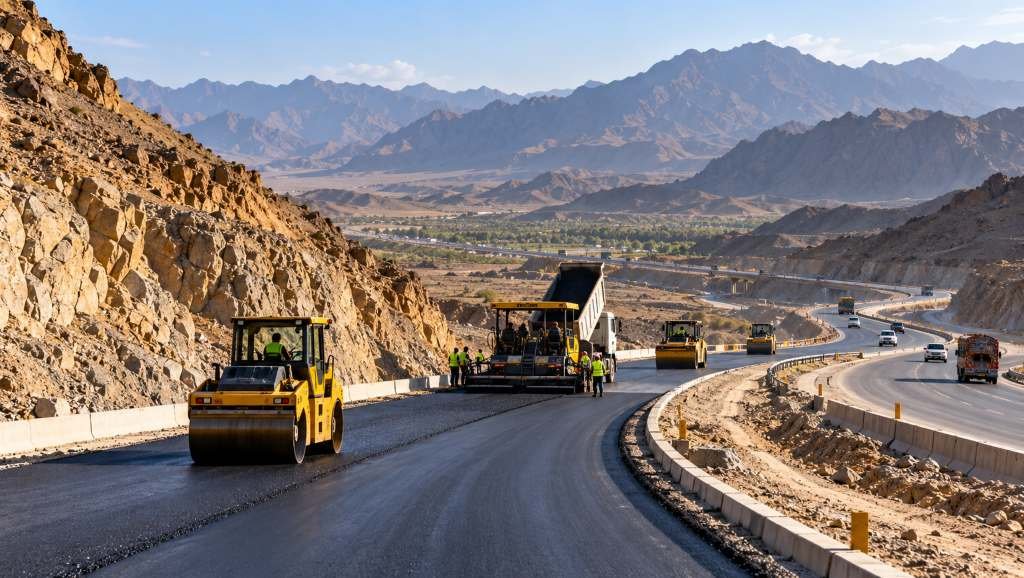
ISLAMABAD, Oct 29 (ABC): Ten major highway projects in Balochistan, with a combined approved PC-I cost of Rs644.06 billion, are scheduled for completion between 2026 and 2028, aiming to improve road connectivity, facilitate trade and strengthen transportation infrastructure across the province.
According to official documents available with Wealth Pakistan, the projects are being implemented under the Public Sector Development Programme (PSDP).
The documents show that three highway projects are scheduled for completion by December 2026, six others have completion deadlines in 2027, while one major project is expected to be completed in June 2028.
Three highway projects nearing completion in 2026
Among the projects nearing completion is the 22.7-kilometre dualisation of Quetta Western Bypass (N-25), costing Rs6.89 billion. The project has achieved 85% physical progress, with expenditure reaching Rs6.05 billion. It is scheduled for completion in November 2026.
Similarly, the 103-kilometre Nokundi-Mashkel road project, with an approved cost of Rs7.71 billion, has achieved 79% physical progress. Expenditure on the project has reached Rs6.94 billion, while completion is expected in December 2026.
The 79.89-kilometre Jhal Jhao-Bela Road project, costing Rs16.22 billion, has recorded 70% physical progress and expenditure of Rs13.87 billion.
Its completion is also scheduled for December 2026.
Major N-25 highway projects targeted for 2027
The official documents indicate that substantial investment is concentrated in the N-25 highway, a major transportation corridor connecting Karachi, Quetta and Chaman.
The 330.52-kilometre Khuzdar-Kuchlak section of N-25, with an approved PC-I cost of Rs98.90 billion, has achieved 61% physical progress. Expenditure on the project reached Rs42.86 billion by September 2026, while completion is scheduled for December 2027.
Another major undertaking is the 273-kilometre Karachi-Kararo and Wadh-Khuzdar section, carrying an approved cost of Rs183.42 billion. The project has achieved 19% physical progress, with expenditure reaching Rs36.53 billion. Its completion is targeted for December 2027.
Likewise, the 187-kilometre Kararo-Wadh and Kuchlak-Chaman section, costing Rs132.75 billion, has recorded 22% physical progress. Expenditure on the project has reached Rs30.07 billion, with completion also scheduled for December 2027.
M-8 and N-50 projects to strengthen regional connectivity
Meanwhile, the 168-kilometre Awaran-Naal section of M-8, with an approved cost of Rs32.24 billion, has achieved 52% physical progress. Expenditure on the project has reached Rs20.45 billion, while completion is scheduled for June 2027.
The 146-kilometre Hoshab-Awaran road project, costing Rs25.84 billion, has achieved 64% physical progress, with Rs9.75 billion spent so far. The project is also expected to be completed by June 2027.
The dualisation and improvement of the N-50 from Yarik-Sagu to Zhob, including the Zhob Bypass, carries an approved cost of Rs76.49 billion. However, physical progress stands at just 2%, with expenditure reaching Rs975 million. Its completion is scheduled for November 2027.
Looking ahead to 2028, the 305-kilometre Kuchlak-Zhob section of N-50 represents another major infrastructure investment. The project has an approved PC-I cost of Rs63.60 billion and has achieved 16% physical progress.
Expenditure reached Rs11.71 billion by September 2026, while completion is scheduled for June 2028.
Funding and security remain key challenges
The official documents highlight that the timely completion of these highway projects depends on the availability of funds and improvements in the law and order situation. These factors remain important challenges to the implementation of major infrastructure projects across Balochistan.
Once completed, the highways are expected to improve regional connectivity, facilitate the movement of goods and passengers, and strengthen commercial links between Balochistan and other parts of Pakistan.
The projects could also improve access to markets and support economic activity by strengthening major transportation corridors across the province.