


ISLAMABAD, Oct 28 (ABC): The Khyber Pakhtunkhwa government has proposed introducing artificial intelligence (AI)-powered solar irrigation systems at agricultural research farms across the province, aiming to reduce irrigation water consumption by 30% to 50%.
According to an official document available with Wealth Pakistan, the proposed project carries a budget of £180,000 and aims to improve irrigation efficiency through modern technologies.
The project, titled “Water Harvesting and AI-Based Solar-Driven High-Efficiency Irrigation System (Drip & Sprinkler) at Agriculture Research Farms in Khyber Pakhtunkhwa,” seeks to conserve water, recharge groundwater and improve crop yields.
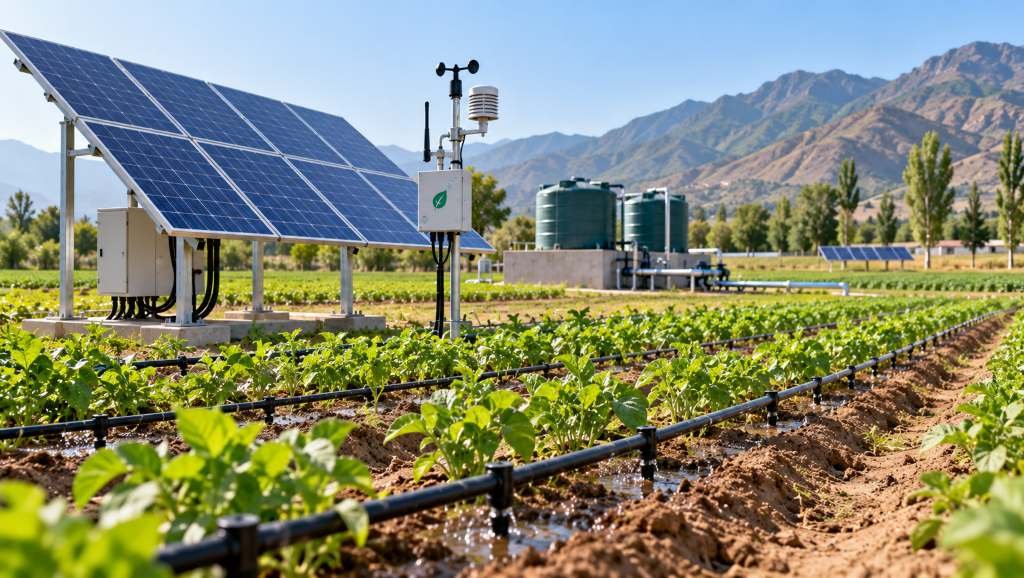
It also aims to promote solar-powered water pumping and introduce sensors and AI-based controls for efficient irrigation management. Under the proposal, the government would select six pilot agricultural research farms for the installation of modern irrigation infrastructure.
These farms would receive solar power systems, drip and sprinkler irrigation networks, and artificial groundwater recharge facilities.
AI and sensors to improve irrigation efficiency
The project envisages using modern technologies to monitor water consumption and improve irrigation practices. These include soil, weather, water-flow and pressure sensors, along with Internet of Things (IoT) devices and cloud-based monitoring systems.
AI-supported irrigation controls would also form part of the proposed infrastructure, helping farmers manage irrigation according to field conditions. The initiative aims to reduce unnecessary water consumption while supporting agricultural productivity.
In addition, groundwater recharge systems would help improve water resource management at the selected research farms.
Project to be implemented over 18 months
According to the document, the proposed implementation period is 18 months, with activities divided into several phases. During the first three months, the project would focus on selecting pilot sites, conducting baseline assessments and designing the irrigation systems.
Procurement and installation of solar irrigation and groundwater recharge infrastructure would take place between months four and eight.
Meanwhile, sensor installation and the integration of IoT and AI-based controls are planned for months seven to ten. The next phase, covering months ten to fifteen, would focus on system operations, farmer training and performance optimisation.
The KP Agriculture Department, through its Agricultural Engineering and On-Farm Water Management functions, would serve as the government and technical lead.
Farmers and participating research farms would host and operate the systems. Research institutions and universities would provide technical assistance and data analysis.
Technology providers would support the installation and maintenance of solar power equipment, irrigation infrastructure, sensors and AI-based systems.
The initiative also seeks to strengthen the technical skills of farmers and agricultural professionals in operating modern irrigation technologies.
If implemented, the proposed project could demonstrate how solar power, artificial intelligence and efficient irrigation systems can work together to conserve water and improve agricultural productivity in Khyber Pakhtunkhwa.