


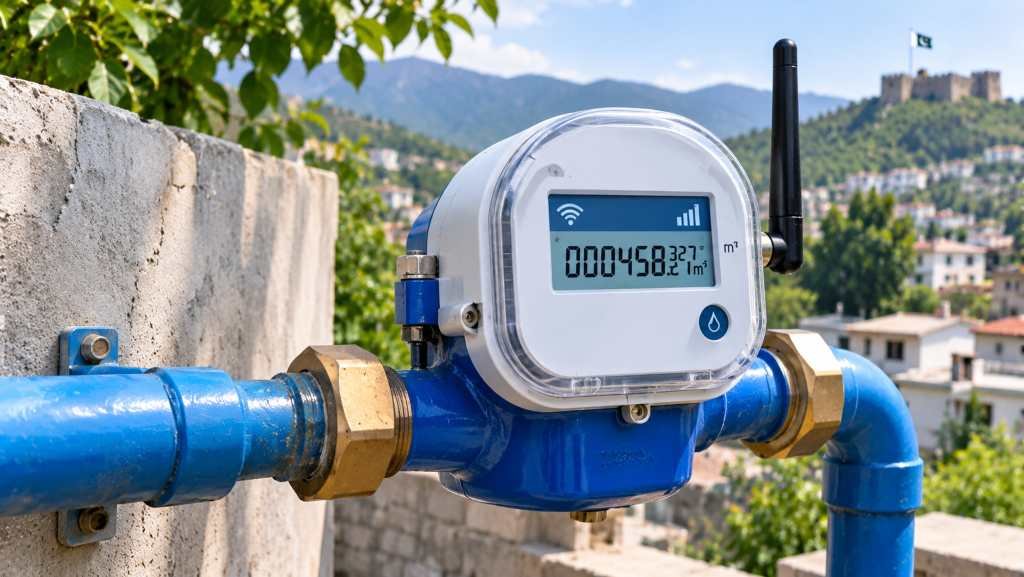
ISLAMABAD, Nov 4 (ABC): The Khyber Pakhtunkhwa government has proposed installing up to 1,000 smart water meters under a £150,000 initiative aimed at reducing water losses, improving revenue collection and strengthening the digital management of water utilities.
According to an official document available with Wealth Pakistan, the project, titled “GeoSmart Water – Integrated GIS and Smart Metering System for Efficient Water Resource Management,” is included in Pakistan’s Climate Prosperity Plan.
The proposed initiative involves a 12-month pilot featuring the installation of 500 to 1,000 Internet of Things (IoT)-enabled smart water meters.
The project would also introduce geographic information system (GIS) mapping, digital billing and technology-based leak detection to improve water resource management.
Its primary objectives include reducing non-revenue water, improving billing transparency and providing utility managers with reliable data to monitor water distribution systems.
Smart meters and digital monitoring to improve water management
Under the proposed framework, authorities would develop GIS-based maps of water infrastructure, including mains, valves, tanks and consumer connections.
These maps would help utilities monitor their distribution networks and identify areas requiring maintenance or improvements.
The project also envisages introducing a cloud-based dashboard to monitor water pressure and flow, analyse consumption patterns and detect potential leakages.
By integrating smart meters with digital monitoring systems, utilities could identify water losses more effectively and improve the management of available resources.
The proposed system would also support usage-based mobile billing, allowing consumers to access billing information more conveniently.
Digital billing could help improve transparency in revenue collection while reducing reliance on conventional manual processes.
Twelve-month pilot to include installation and staff training
The official document outlines a phased implementation schedule covering baseline assessments, equipment installation, operational monitoring and staff training.
During the initial phase, the project would focus on baseline assessments, GIS mapping and procurement of the required equipment.
The middle phase would involve installing smart meters, commissioning the cloud-based dashboard and training utility personnel to operate the new systems.
Meanwhile, operational monitoring would take place during months six to twelve.
This phase would include leak detection, billing analysis and economic validation to assess the effectiveness of the proposed technology.
The project also includes arrangements for maintenance and technical support to help ensure the long-term operation of the monitoring systems.
In addition, authorities would prepare a replication and scale-up guide to assess the feasibility of expanding the initiative beyond the initial pilot.
KP Climate Change Technical Working Group to coordinate project
According to the document, the KP Climate Change Technical Working Group would serve as the lead coordinating body for the proposed initiative.
The Centre for Revenue Growth and Reforms at IMSciences would provide technical support and assist with project implementation.
Local water utilities would be responsible for operating the smart meters and delivering services to consumers.
Technology providers would support IoT connectivity and equipment installation, while trained utility staff would undertake ongoing maintenance.
The project also envisages economic validation to determine whether the proposed system could deliver measurable improvements in water conservation and utility management.
The findings would help authorities assess the potential for replicating the smart metering system in other areas.
The proposed GeoSmart Water initiative aims to demonstrate how digital technologies can support more efficient water distribution, reduce losses and strengthen revenue management.
If successfully implemented, the pilot could provide a model for expanding smart water management systems across Khyber Pakhtunkhwa.