


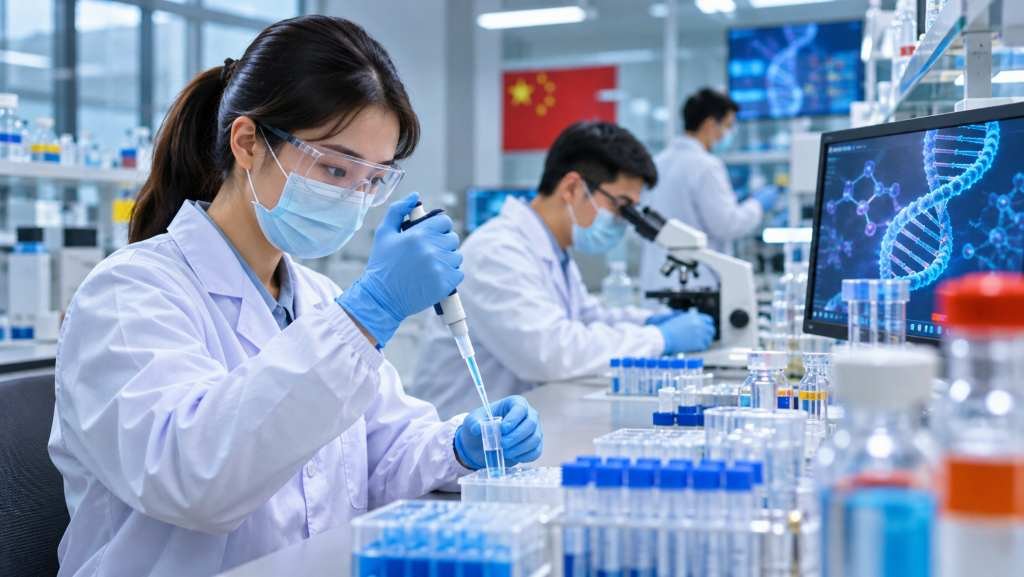
ISLAMABAD, Oct 31 (ABC): China’s biotechnology sector is expanding its role in the global pharmaceutical industry, moving beyond conventional medicine manufacturing towards innovative drug development and international licensing. Growing demand for Chinese-developed therapies is also creating new opportunities for international research and commercial partnerships.
According to pharmaceutical industry data provider PharmCube, overseas licensing agreements involving Chinese pharmaceutical and biotechnology companies reached a combined potential value of approximately $139.4 billion by October 8, 2026.
This figure surpassed the $138.8 billion recorded throughout 2025, reflecting growing international interest in China’s pharmaceutical research and development capabilities.
The agreements cover innovative treatments for cancer, obesity and autoimmune diseases. Meanwhile, upfront payments under these agreements reached approximately $8 billion during the first three quarters of 2026.
Major international pharmaceutical companies, including AstraZeneca, GSK and Novo Nordisk, have entered licensing partnerships involving Chinese-developed therapies.
These partnerships highlight China’s growing importance in global drug discovery and the commercial development of innovative medicines.
Dr Ijaz Akram, Assistant Professor at the Department of Biotechnology, Institute of Space Technology, told Wealth Pakistan that China’s expanding biotechnology licensing market reflected a shift in pharmaceutical competitiveness.
He explained that research, clinical development and intellectual property were becoming increasingly important alongside conventional manufacturing capabilities.
“Pakistan can benefit from closer cooperation with Chinese companies through specialised manufacturing, technology transfer and joint research programmes,” he said.
China strengthens its pharmaceutical innovation capabilities
The growing value of overseas licensing agreements reflects a broader transformation in China’s pharmaceutical industry.
Chinese companies are increasingly developing innovative therapies and establishing commercial partnerships with international drug manufacturers.
According to China’s Ministry of Industry and Information Technology, the potential value of overseas licensing agreements involving innovative Chinese medicines exceeded $100 billion during the first half of 2026.
The ministry also reported that China approved 38 innovative medicines for marketing during the same period, including 31 developed by domestic companies.
These developments highlight the country’s growing capabilities in pharmaceutical research, clinical development and product innovation.
In September 2026, Chinese authorities outlined further plans to strengthen the biomedical industry, focusing on innovative medicines, biotechnology research and international competitiveness.
The expansion of China’s pharmaceutical innovation sector is also creating opportunities for developing economies to establish partnerships in drug research, specialised manufacturing, technology transfer and clinical development.
For Pakistan, closer cooperation with Chinese biotechnology companies could help strengthen domestic research capabilities and support the development of higher-value pharmaceutical products.
Pakistan can benefit from technology transfer and joint research
Dr Ijaz Akram said Pakistan should prioritise partnerships that strengthen local technical expertise rather than limiting cooperation to importing or packaging finished pharmaceutical products.
“Technology-transfer agreements should include workforce training, research collaboration and the development of local production capabilities. This would help Pakistani pharmaceutical companies gradually move towards higher-value products and improve their prospects in international markets,” he said.
He added that cooperation with Chinese pharmaceutical companies could help Pakistan develop expertise in specialised manufacturing and research-based pharmaceutical production.
However, such partnerships would need to include meaningful knowledge transfer and technical training to deliver long-term benefits.
The growing international demand for innovative medicines also highlights the importance of strong research institutions, clinical-trial capabilities and regulatory systems.
Fatima Ayub, Researcher at the Department of Pharmaceutical Sciences, Hamdard University, told Wealth Pakistan that Pakistan could benefit from China’s biotechnology progress by strengthening cooperation among pharmaceutical companies, universities and research institutions.
“Pakistan has opportunities to collaborate with Chinese biotechnology institutions in drug discovery, clinical research and advanced pharmaceutical development. However, these partnerships will require reliable clinical-trial systems, internationally recognised quality standards and sustained investment in scientific expertise,” she said.
Fatima emphasised that international pharmaceutical cooperation should focus on developing long-term scientific and technological capabilities rather than relying solely on short-term commercial arrangements.
“Joint research laboratories, researcher exchanges and collaborative clinical development programmes could help Pakistan strengthen its biotechnology ecosystem. The objective should be to create the capacity to develop and commercialise pharmaceutical innovations locally,” she added.
She said stronger collaboration between academic institutions and pharmaceutical manufacturers could help translate scientific research into commercially useful products.
Such partnerships could also improve the skills and experience of local researchers while strengthening Pakistan’s pharmaceutical research capacity.
Licensing agreements highlight value of drug innovation
China’s expanding role in international pharmaceutical licensing demonstrates the growing commercial importance of intellectual property and research-led innovation.
Unlike conventional pharmaceutical exports, licensing agreements allow drug developers to commercialise their research through international partners.
These arrangements can generate upfront payments, milestone revenues and royalties as medicines progress through development and commercialisation.
However, the reported $139.4 billion represents the combined potential value of licensing agreements, including payments linked to future development and commercial milestones.
Therefore, the figure should not be interpreted as revenue already received by Chinese pharmaceutical companies.
For Pakistan, China’s transformation offers opportunities to strengthen pharmaceutical cooperation through joint research, technology transfer, workforce development and specialised manufacturing.
Experts believe that realising these opportunities will require sustained investment in scientific expertise, internationally recognised regulatory standards and partnerships that support domestic pharmaceutical innovation.