


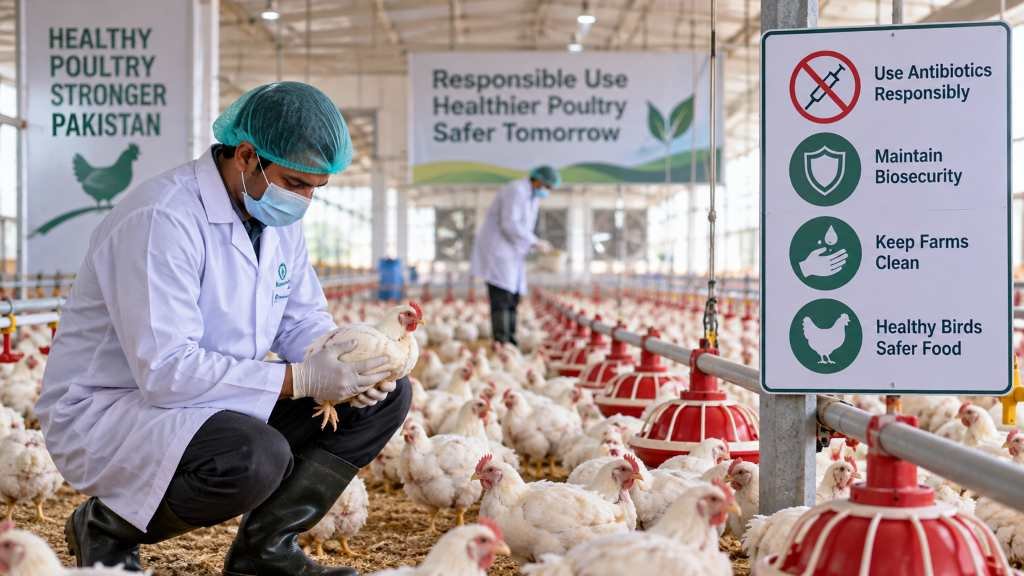
LAHORE, Sept 20 (ABC): Punjab is stepping up efforts to promote responsible antibiotic use and strengthen biosecurity at poultry farms to contain antimicrobial resistance (AMR) and safeguard poultry health.
Dr Farhan Afzal, Director of the Poultry Research Institute (PRI), told Wealth Pakistan that raising awareness among poultry farmers about the judicious use of antibiotics, farm hygiene and effective biosecurity was essential for healthy and sustainable poultry production.
“The Punjab Livestock Department has always remained at the forefront of awareness campaigns and other initiatives aimed at ensuring antibiotic resistance in poultryhealthy poultry production in the province,” he said.
Punjab accounts for around 70% of Pakistan’s more than 15,000 poultry farms. Improving farm practices in the province is therefore important for the country’s poultry meat and egg supply.
Responsible antibiotic use key to tackling AMR
Dr Farhan said the Punjab government was also participating in activities under the Fleming Fund, an international initiative focused on tackling antimicrobial resistance in humans and animals.
He said misuse and overuse of antibiotics could enable bacteria to develop resistance to medicines. Responsible antibiotic use was therefore important for both animal and human health.
Dr Farhan rejected the notion that a “superbug” was currently prevalent in Pakistan’s poultry sector. He explained that “superbug” was a non-scientific term generally used for bacteria resistant to multiple antibiotics.
Good production practices could substantially reduce disease risks at poultry farms, he said. These include proper farm management, effective biosecurity, accurate diagnosis and timely treatment.
“Currently, no major zoonotic disease is prevailing in Pakistan’s poultry sector, particularly in Punjab,” he said.
Common bacterial diseases such as E. coli and Salmonella could be controlled through basic sanitation measures at the production level and during the handling of poultry products, he added.
Dr Farhan said poultry meat in Pakistani households was generally consumed fully cooked, which helped eliminate harmful germs.
Diagnostic, surveillance capacity strengthened
Punjab is also strengthening its diagnostic and surveillance capacity to improve disease detection and monitor antimicrobial resistance.
The Bacteriology Laboratory at PRI Rawalpindi recently received accreditation from the Pakistan National Accreditation Council (PNAC).
“This prestigious accreditation reflects the laboratory’s commitment to international standards of quality, technical competence and excellence in diagnostic services,” Dr Farhan said.
He said the accreditation would strengthen avian disease diagnostics, AMR surveillance and quality-assured laboratory services for Pakistan’s poultry sector.
Poultry industry seeks tighter antibiotic controls
Representatives of the poultry farming community have also supported measures to contain antimicrobial resistance. They have called for a broader national biosecurity policy covering antibiotic use in humans, livestock and poultry.
Dr Abdul Karim Bhatti, former Punjab chairman of the Pakistan Poultry Association (PPA), said unrestricted access to antibiotics remained a major concern.
He told Wealth Pakistan that authorities should completely ban the over-the-counter sale of antibiotics of all types.
Strict enforcement of such restrictions, he said, would help curb antibiotic misuse and contain antimicrobial resistance among humans and animals, including poultry.