


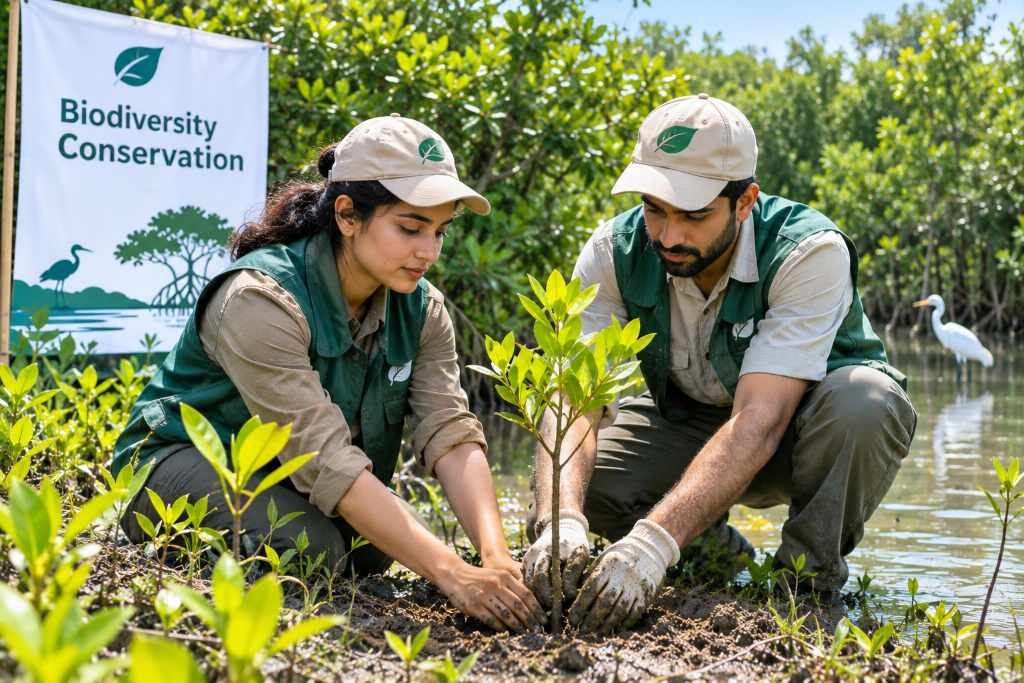
ISLAMABAD, Nov 17 (ABC): China-backed biodiversity financing is expanding support for conservation efforts in developing countries, with nine new projects worth approximately $4.5 million approved under the Kunming Biodiversity Fund. The initiative comes as international funding for nature protection continues to fall short of global commitments.
China’s Vice-Minister of Ecology and Environment, Dong Baotong, announced the approvals at the UN Biodiversity Conference (COP17) in Yerevan, Armenia. The projects will support conservation activities in nine developing countries under the first phase of the fund’s third financing round.
The beneficiary countries are Armenia, Bangladesh, Benin, Cameroon, Cuba, Montenegro, North Macedonia, Somalia and Vietnam. The latest approvals will expand the fund’s international conservation portfolio and strengthen cooperation on biodiversity protection.
China expands Kunming Biodiversity Fund with nine new projects
China launched the Kunming Biodiversity Fund in May 2024 in partnership with the United Nations Environment Programme (UNEP) and the UN Multi-Partner Trust Fund Office. The grant-based initiative supports biodiversity conservation and helps developing countries implement international environmental commitments.
China has contributed 400 million yuan, equivalent to approximately $60 million, to the fund. Its first two financing rounds supported 31 projects benefiting 45 developing countries, demonstrating the initiative’s growing international reach.
The latest nine projects, valued at approximately $4.5 million, represent another phase of the fund’s expansion. Through targeted grants, the initiative aims to help participating countries strengthen conservation activities and address biodiversity challenges.
The fund also highlights China’s contribution to South-South cooperation in environmental protection. By supporting conservation projects in fellow developing countries, it complements existing international biodiversity financing mechanisms.
Global biodiversity financing remains below agreed targets
The expansion comes amid continuing concerns about insufficient international financing for biodiversity conservation.
Under the Kunming-Montreal Global Biodiversity Framework adopted in 2022, developed countries were expected to provide at least $20 billion annually in international biodiversity finance to developing countries by 2025.
However, the United Nations’ global stocktake indicated that the target was likely missed. According to Organisation for Economic Co-operation and Development (OECD) data, international public biodiversity finance averaged approximately $16.1 billion annually during 2023–25.
Other dedicated biodiversity financing mechanisms have also struggled to mobilise sufficient resources. By mid-2026, the Global Biodiversity Framework Fund had secured $387.2 million in signed commitments, while the Cali Fund had collected only $6,000 in corporate contributions.
Meanwhile, BloombergNEF estimated that approximately $112 billion flowed into biodiversity-related activities worldwide in 2025. This remained considerably below the framework’s annual financing target of $200 billion by 2030.
These figures highlight the scale of the financing challenge facing countries seeking to protect ecosystems and reverse biodiversity loss. Consequently, additional funding mechanisms could help developing economies strengthen conservation efforts while pursuing their broader development priorities.
Pakistan among countries seeking biodiversity financing
Pakistan was among the Shanghai Cooperation Organisation countries that applied for financing under the Kunming Biodiversity Fund’s second round. However, Pakistan is not among the recipients of the nine projects approved in the latest round.
For developing countries, the significance of the initiative extends beyond the amount of funding available. It also demonstrates the growing potential of South-South cooperation in addressing shared environmental challenges.
Lim Li Ching, senior researcher at Third World Network, described the Kunming Biodiversity Fund as an important example of financial cooperation among developing nations.
Speaking to Wealth Pakistan, she noted that China had voluntarily established and capitalised the fund. She emphasised that China had no obligation under the Convention on Biological Diversity to provide such financing.
According to Lim, voluntary initiatives by China and other developing countries deserve recognition and encouragement. Such contributions can support biodiversity conservation while complementing existing international financing arrangements.
However, she stressed that these voluntary efforts did not replace the responsibilities of developed countries under international environmental agreements.
“The responsibility lies with the developed countries to provide financial resources,” she said.
Lim further argued that developed countries carried both current and historical responsibility for global environmental degradation. In her assessment, this responsibility also reflected an ecological debt owed to the rest of the world.
Experts call for direct conservation funding to local communities
Beyond increasing financial resources, experts highlighted the importance of ensuring that conservation funding reaches communities directly involved in biodiversity protection.
Nicola Sorsby, researcher on climate and nature at the International Institute for Environment and Development (IIED), said the institute’s research indicated significant challenges in delivering funding to grassroots organisations.
Talking to Wealth Pakistan, she explained that Indigenous Peoples and local communities had demonstrated their effectiveness in protecting biodiversity. However, these groups often faced substantial barriers when seeking financial assistance for conservation activities.
According to Sorsby, costly intermediary organisations could absorb significant portions of funding intended for nature protection. Moreover, complicated due diligence requirements frequently prevented smaller community organisations from qualifying for financial support.
“It doesn’t necessarily matter how big the financing organisation is,” she said.
Sorsby emphasised that successful conservation financing depended on whether resources reached the communities implementing protection measures. She also highlighted the importance of allowing local organisations to make decisions about how funding should be used.
Therefore, she advocated patient, flexible and long-term financing arrangements that respond to local priorities. Such mechanisms could help community organisations plan conservation activities and implement projects more effectively.
Her recommendations underline the importance of considering funding accessibility alongside the overall volume of biodiversity finance. Direct support for local conservation efforts could improve the effectiveness of international environmental initiatives.
South-South cooperation supports global biodiversity goals
The Kunming Biodiversity Fund represents a notable example of voluntary environmental financing from one developing country to others. Its expansion demonstrates how targeted grants and international cooperation can contribute to global conservation objectives.
The initiative also supports efforts to implement the Kunming-Montreal Global Biodiversity Framework. As developing countries seek additional resources for biodiversity protection, such partnerships could help strengthen their conservation capacity.
However, experts emphasise that funding commitments must translate into effective projects and measurable benefits for ecosystems and local communities. Sustained financing, accessible funding mechanisms and successful implementation will remain essential.
China’s continued support through the Kunming Biodiversity Fund provides an additional financing channel for developing countries. At the same time, the broader international community faces the challenge of meeting existing biodiversity finance commitments.
Ultimately, the effectiveness of the fund’s expanding portfolio will depend on how successfully its projects support conservation activities. Ensuring that financial resources reach communities working directly to protect biodiversity will be particularly important for achieving lasting results.