


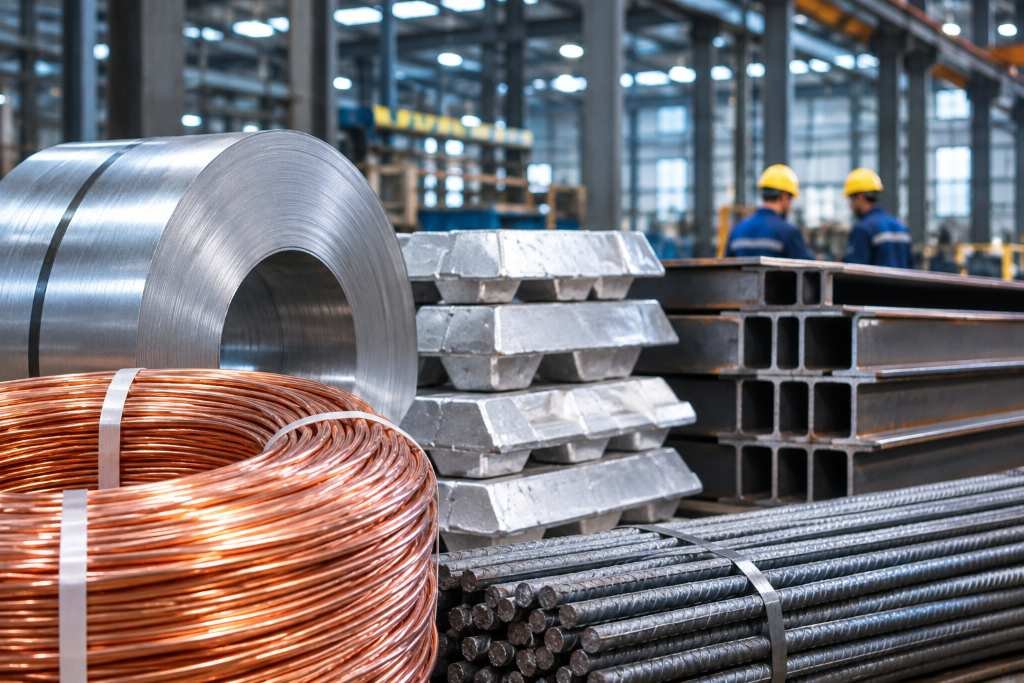
ISLAMABAD, Nov 12 (ABC): Rising metal prices and other industrial input costs are adding to global inflation risks as manufacturers face growing production expenses. These pressures could eventually reach consumers, even as energy prices remain a major driver of inflation.
Producer-price data from the United States, China and the United Kingdom indicate rising costs across manufacturing supply chains. Consequently, businesses could face higher expenses before the full impact becomes visible in consumer inflation.
Higher prices for metals, chemicals and other industrial materials are particularly important because manufacturers use these inputs across multiple industries. Therefore, sustained increases could affect production costs, profit margins and final selling prices.
US producer prices rise 1.3% in September
In the United States, the Producer Price Index (PPI) for final demand increased 1.3% in September. According to the Bureau of Labor Statistics, this marked the largest monthly increase since March 2022.
Moreover, producer prices rose 6.3% year on year, highlighting continued cost pressures across the economy.
Final-demand goods prices increased 2.6% during September. Meanwhile, prices for unprocessed goods used as intermediate inputs jumped 8.4%.
Unprocessed non-food materials, excluding energy, became 2.5% more expensive. Price increases also affected fabricated structural metal products and nonferrous metal ores.
Dr Uzma Zia, Senior Research Economist at the Pakistan Institute of Development Economics, discussed these developments with Wealth Pakistan.
She said metal-price shocks could be harder to identify than energy-price increases because their effects often spread gradually through manufacturing costs.
“Metals are embedded in machinery, construction, vehicles, electrical equipment and industrial components. When these prices rise, the impact may initially remain inside company cost structures before appearing in final goods prices,” she said.
According to Zia, the inflationary impact depends on how long higher input costs persist. Manufacturers’ ability to absorb expenses or increase selling prices also plays an important role.
China’s industrial input costs increase sharply
China’s producer-price data also indicate rising cost pressures across several major industrial sectors.
According to the National Bureau of Statistics, industrial producer prices increased 5.0% year on year in September. At the same time, purchasing prices paid by industrial producers rose 6.9%.
Among major industrial inputs, prices for nonferrous metals and cables increased 20.0% compared with the previous year.
Meanwhile, fuel and power costs rose 13.6%, while raw chemical material prices increased 12.6%.
These developments highlight simultaneous price increases across several important manufacturing inputs.
Maham Imran, Research Associate at Foundation Securities, said rising costs across metals, energy and chemicals could complicate inflation expectations.
“When several major input categories become more expensive together, companies have fewer opportunities to offset one cost against another. That can squeeze margins or push firms towards higher selling prices, particularly in sectors with energy-intensive and metal-intensive production,” she said.
As a result, manufacturers using several industrial inputs could face greater pressure on operating costs and profit margins.
UK metal prices push up manufacturing costs
The United Kingdom provides another example of rising industrial costs affecting manufacturing supply chains.
According to the Office for National Statistics, producer input prices increased 8.3% year on year in September.
Within these costs, prices for metals and non-metallic mineral inputs rose 9.6%. Meanwhile, basic iron, steel and alloys became 10.8% more expensive.
Prices for other basic metals and casting recorded an even sharper increase of 18.7%.
Furthermore, factory-gate prices for basic metals, fabricated metal products and machinery rose 6.1% year on year.
The increase indicates that some industrial input costs are already reaching manufacturers’ selling prices.
However, the extent to which these increases will affect consumer prices remains uncertain. Much depends on demand conditions, competition and manufacturers’ ability to absorb higher expenses.
Copper and aluminium prices show contrasting trends
Despite broader industrial cost pressures, individual metal prices continue to move in different directions.
China’s latest market-price monitoring showed that electrolytic copper prices declined 0.7% in late October compared with mid-month levels.
In contrast, aluminium ingot prices increased 0.9% over the same period.
These contrasting movements demonstrate that individual commodities can follow different trends within the broader industrial market.
Imran said such volatility could complicate business planning, particularly for manufacturers making procurement and inventory decisions.
“Short-term reversals do not remove the inflation risk if the average cost base remains elevated. For businesses, uncertainty itself becomes a cost because procurement, inventory and pricing decisions become harder to manage,” she said.
Consequently, companies may face difficulties managing input costs even when some commodity prices decline temporarily.
Higher production costs could sustain consumer inflation
Consumer inflation remains elevated across several major economies, increasing concerns about the potential impact of rising manufacturing costs.
In September, US consumer prices increased 3.7% year on year. Meanwhile, UK consumer inflation reached 3.5%, while euro-area inflation stood at 3.8%.
These figures highlight the importance of monitoring how industrial cost increases affect consumer prices.
Zia said policymakers should examine producer-price developments alongside headline inflation to understand emerging pressures across the economy.
“If commodity volatility continues feeding into intermediate goods, central banks may find that inflation remains persistent even when some energy prices stabilise. The key question is whether firms absorb these costs or pass them through.”
She explained that the duration of higher input costs and manufacturers’ pricing decisions would influence the eventual inflationary impact.
For central banks, producer-price movements can therefore provide useful information about potential inflation pressures before they fully reach consumers.
Overall, the latest producer-price trends suggest that global inflation risks extend beyond energy markets. Metals and other industrial inputs are also contributing to rising manufacturing costs.
For businesses, sustained price volatility could complicate procurement, investment and pricing decisions. Meanwhile, policymakers must assess whether higher production costs will translate into more persistent consumer inflation.