


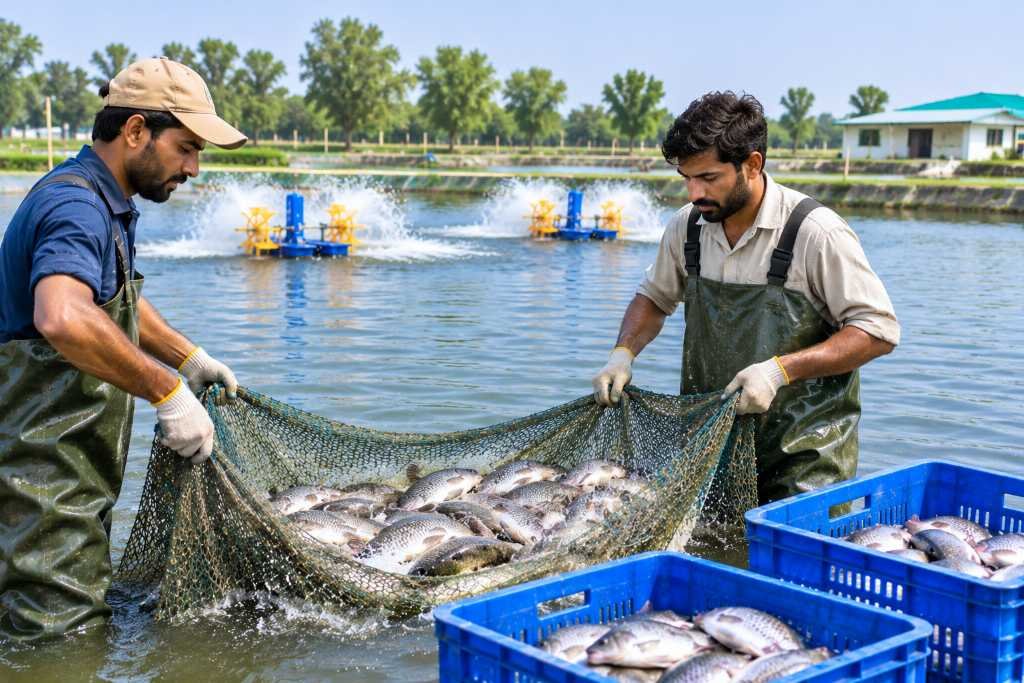
ISLAMABAD, Nov 17 (ABC): Pakistan’s aquaculture production increased by 22.8% between 2011 and 2024, reflecting steady growth in fish farming and highlighting opportunities to expand domestic fish supplies and strengthen the fisheries industry.
According to a Pakistan Business Council (PBC) research report available with Wealth Pakistan, aquaculture output rose from 141,935 metric tonnes in 2011 to 174,338 tonnes in 2024. This represents an increase of 32,403 tonnes over the 13-year period.
The report, titled Pakistan’s Aquaculture Sector: Opportunities, Challenges & Policy Recommendations for Improving Export Competitiveness, attributes the growth to rising fish demand and better utilisation of freshwater resources. Gradual improvements in fish farming practices and infrastructure have also supported production, although substantial potential remains for further expansion.
Pakistan’s fisheries sector valued at $1.3 billion
Pakistan’s fisheries sector has an estimated value of $1.3 billion, contributing 0.3% to national GDP and 1.29% to agricultural GDP. The industry benefits from extensive marine and freshwater resources that offer opportunities for both fishing and aquaculture.
The country has a 1,050-kilometre coastline along the Arabian Sea, besides rivers, lakes, canals, reservoirs and floodplains. These resources, together with existing fish farms, provide a foundation for increasing fish production through modern aquaculture practices.
According to the PBC report, investment in technology, infrastructure and supportive policies could help Pakistan utilise these resources more effectively. Furthermore, expanding fish farming could improve domestic supplies while creating opportunities for the fisheries industry.
Aquaculture contributes nearly 25% of total fish production
Pakistan’s total fisheries production reached 666,245 metric tonnes in 2022, with marine capture fisheries accounting for the largest share. Marine catches contributed 349,292 tonnes, representing 52.4% of the national total.
Meanwhile, inland capture fisheries produced 150,753 tonnes, accounting for 22.6% of total output. Aquaculture contributed another 166,200 tonnes, or approximately 24.9% of national fisheries production.
These figures show that nearly one in every four tonnes of fish produced in Pakistan came from fish farms. Consequently, aquaculture has become an important component of the country’s overall fisheries supply.
Production trends also indicate a gradual shift towards inland fishing and aquaculture. While marine catches declined between 2015 and 2022, both aquaculture and inland capture fisheries recorded growth during the same period.
Fish farming expands as marine catches decline
According to the report, Pakistan’s marine fish production declined from 377,141 tonnes in 2015 to 349,292 tonnes in 2022. This reduction highlights the growing importance of alternative sources of fish production.
In contrast, aquaculture output increased from 151,147 tonnes to 166,200 tonnes during the same period. Inland capture fisheries also recorded growth, with production rising from 132,365 tonnes to 150,753 tonnes.
Overall fisheries production experienced declines in 2018 and 2019 before returning to positive annual growth from 2020 to 2022. The sector recorded a further increase of 0.75% in 2022.
The contrasting trends underline the potential role of aquaculture in supporting fish supplies as marine capture fisheries face resource limitations. Moreover, continued investment in fish farming could help strengthen the industry’s production capacity.
Sindh leads fisheries production, Punjab dominates inland aquaculture
The PBC report identifies Sindh as the largest contributor to Pakistan’s overall fisheries and aquaculture production, with a share of 46.3%. Balochistan follows with 30.2%, while Punjab accounts for 22.8% and Khyber Pakhtunkhwa contributes 0.7%.
Together, Sindh and Balochistan represent 76.5% of the provincial production shares. Their dominant position reflects the importance of coastal fisheries in Pakistan’s overall fisheries sector.
Punjab, however, plays a leading role in inland aquaculture. Its extensive canal irrigation network and suitable agricultural land support fish farming, making it the country’s largest contributor to inland aquaculture production.
Meanwhile, Khyber Pakhtunkhwa offers opportunities for high-value trout farming, particularly in cold-water mountain streams. These natural conditions provide potential for developing specialised aquaculture activities in suitable locations.
Modern technology and investment could accelerate aquaculture growth
The report highlights considerable opportunities to expand aquaculture as marine capture fisheries face increasing pressure from overfishing, resource limitations and environmental challenges. Developing fish farming could help Pakistan diversify production and make better use of available freshwater resources.
According to the PBC, improved resource utilisation, modern farming technology and stronger supply chains could support further industry growth. Better product availability and greater consumer awareness could also help increase demand for farmed fish.
However, the report notes that domestic fish consumption remains relatively low, presenting both a challenge and an opportunity. Improving access to fish products and raising awareness about their availability could encourage greater consumption.
Furthermore, investment in aquaculture infrastructure and supportive policies could help farmers improve production efficiency and expand commercial operations. These measures would also strengthen the industry’s ability to meet growing domestic demand.
Overall, Pakistan’s 22.8% increase in aquaculture production between 2011 and 2024 demonstrates the sector’s gradual expansion. With modern technology, improved infrastructure and greater investment, fish farming could contribute more significantly to food supplies and fisheries development.