


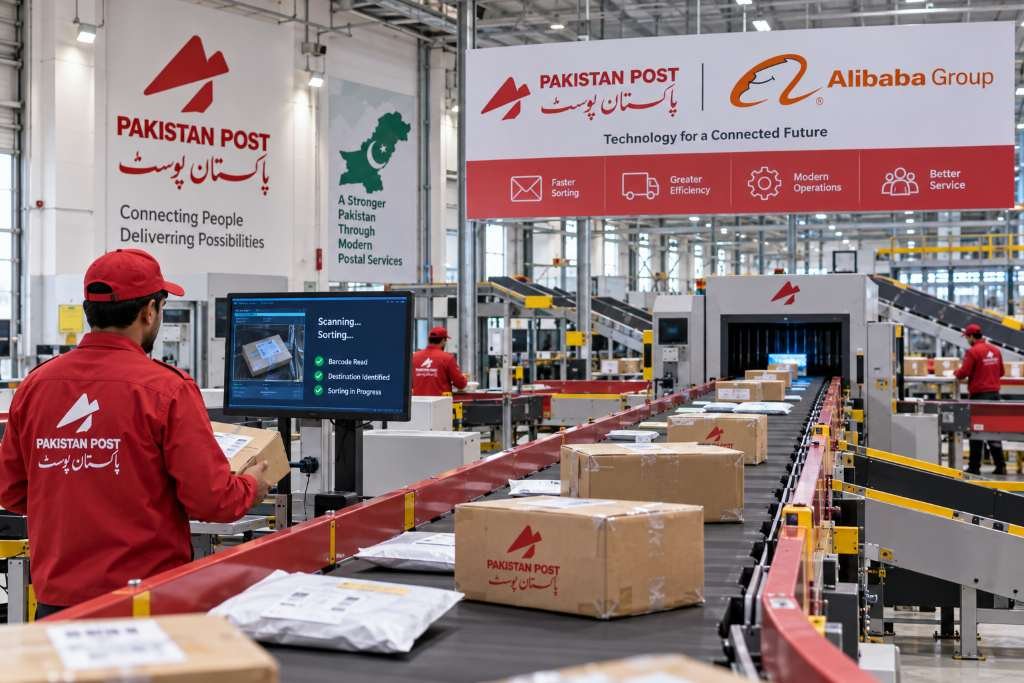
ISLAMABAD, Sep 18 (ABC): Pakistan Post Office Department (PPOD) and Alibaba Group have agreed to automate Pakistan Post’s sorting centres as part of efforts to modernise postal operations through technology.
According to an official document available with Wealth Pakistan, the two sides are pursuing the initiative under the prime minister’s directives regarding collaboration with Alibaba. The Ministry of Information Technology and Telecommunication is serving as the lead ministry.
The document states that PPOD and Alibaba Group have agreed on the automation of PPOD sorting centres. The initiative forms part of Pakistan Post’s broader drive to modernise operations and expand technology-based services.
Cashless services to cover 85 GPOs
Pakistan Post is also implementing the prime minister’s cashless economy initiative, with the Ministry of Finance serving as the lead ministry.
As part of the initiative, Pakistan Post signed a memorandum of understanding with the National Bank of Pakistan in March 2026 for the collection of non-tax revenues.
Pakistan Post has also asked the Finance Division to facilitate the opening of a RAAST-linked account. The move aims to align its financial operations with the national cashless economy initiative.
The first phase will cover 85 General Post Offices (GPOs) and target 65% of PPOD’s revenue receipts, according to the document.
Customs systems integration underway
Pakistan Post is also involved in implementing the National Action Plan of the National Gemstone Policy 2026-30. The Ministry of Industries and Production is leading this initiative.
Technical teams from the Universal Postal Union, PPOD, Pakistan Single Window and Pakistan Customs are working to integrate the Customs Declaration System with WeBOC/ACS.
The initiatives cover different areas of Pakistan Post’s modernisation programme, ranging from automated mail sorting to digital payments and customs integration.
Together, they aim to strengthen postal infrastructure, increase the use of digital systems and improve technology-based service delivery.