


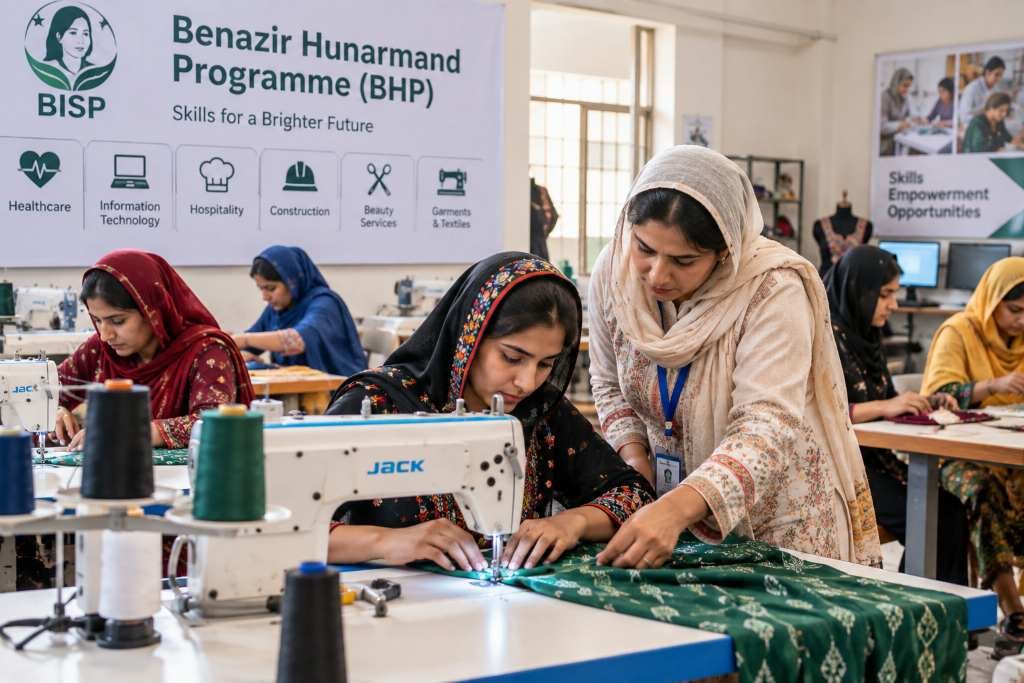
ISLAMABAD, Sep 24 (ABC): More than 5,000 Benazir Income Support Programme (BISP) beneficiaries and their family members are currently undergoing vocational training in various trades in Sindh under the Benazir Hunarmand Programme (BHP).
According to documents available with Wealth Pakistan, BISP is conducting the training in collaboration with the Benazir Bhutto Shaheed Human Resource Research and Development Board (BBSHRRDB).
The programme aims to empower women beneficiaries and their eligible family members through market-relevant vocational and skills training. It seeks to improve their prospects for sustainable livelihoods and employment opportunities in Pakistan and abroad.
Training covers key employment sectors
The BHP offers formal training in key sectors, including healthcare, information technology, hospitality, construction, beauty services, garments and textiles.
It also provides informal training opportunities for artisans in remote areas. The initiative aims to preserve traditional crafts while improving artisans’ access to markets through digital marketing skills.
More than 49,000 candidates have registered on the BHP portal for six-month training programmes since its inauguration by the President of Pakistan in June 2025. Women account for approximately 75% of the applicants.
BISP builds partnerships for skills development
BISP has established multi-stakeholder partnerships to support the programme and provide demand-driven vocational training.
It has signed memorandums of understanding with the National Vocational and Technical Training Commission (NAVTTC) and BBSHRRDB. Other partners include the Pakistan Poverty Alleviation Fund (PPAF), Punjab Skills Development Fund (PSDF) and Lok Virsa.
The partnerships aim to strengthen the programme’s implementation, outreach and long-term sustainability.
The BISP Board gave in-principle approval to the Benazir Hunarmand Programme at its 66th meeting in December 2025. Subsequently, the Technical Design Committee approved the programme design at its 19th meeting in August 2026.
The programme seeks to use the expertise of partner organisations to deliver high-quality, demand-driven vocational training. It also aims to strengthen employment and livelihood opportunities for BISP beneficiaries and their families.