


Balochistan projects receive over Rs11bn under PSDP 2025-26
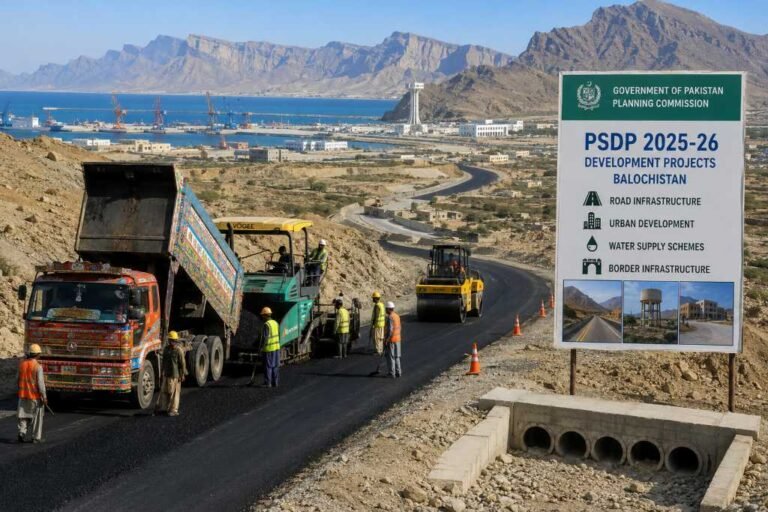
ISLAMABAD, May 25 (ABC): Development projects in Balochistan received more than Rs11 billion under the Public Sector Development Programme (PSDP) 2025-26, with funding focused on roads, urban rehabilitation, border infrastructure and water supply schemes across different regions of the province.
According to documents available with Wealth Pakistan, the Finance Division released Rs11.405 billion against the revised allocation of Rs19.197 billion for Balochistan projects as of May 6, 2026.
Road infrastructure receives major share of PSDP funding
Road infrastructure projects received a large portion of the released funds under PSDP 2025-26.
Among the highest-funded projects, the rehabilitation and reconstruction of the 124-kilometre road from Khani Cross to Ziarat and onward to Sinjavi received Rs1.5 billion against a revised allocation of Rs2.5 billion.
The feasibility study and road construction project at the Pak-Afghan border in the Badini area also received significant funding.
According to official documents, Rs902.65 million was released for the feasibility study for the border terminal and the road from Obashtai to Kahan Daggar on the main Badini Road in Qilla Saifullah district.
The construction of the Sui-Kashmor Road received Rs2 billion under revised allocations.
The Sibi-Talli and Kohlu-Rakhni road projects also received their full revised allocation of Rs500 million.
Similarly, the Durgai Shabozai to Taunsa Road project received its full revised allocation of Rs750 million.
The Panjgur-Gichak-Awaran Road project received Rs1.5 billion against its revised allocation of Rs1.9 billion.
Meanwhile, the Naag-Gichak Road project in Panjgur received Rs200 million during the current period.
Gwadar projects secure substantial development funds
Gwadar-related schemes also accounted for a significant share of development spending.
The rehabilitation of the Old Town Gwadar project received Rs359.949 million against its revised allocation of Rs400 million to support improvements in urban infrastructure.
The Gwadar Development Authority Business Plan project received Rs75 million out of a revised allocation of Rs250 million.
The Gwadar Safe City Project received the entire revised allocation of Rs1.5 billion.
A project aimed at improving freshwater treatment, water supply and distribution systems in Gwadar received Rs142 million against a revised allocation of Rs470 million.
Additional projects receive full allocations
Several smaller infrastructure projects received their full revised allocations under the programme.
The Ziarat Town development project received Rs300 million.
The improvement and widening of the Spera Ragha Road from Khanozai to Loralai Kila Saifullah received the full Rs200 million allocation.
The blacktopped road project from Killi Sardar Abdul Rahim Killji, Taftan, to Chaghi received Rs75 million.
The Zhob to Mekhtar road project also received its full Rs75 million revised allocation.
The construction of the Baikar to Mari Top Road in Dera Bugti received Rs25 million.
Similarly, the road project from Chedagi to the Iranian border in Panjgur and the Northern Bypass Road in Loralai each received Rs75 million.
According to official documents, total allocations for Balochistan projects under PSDP 2025-26 stood at Rs24.492 billion, while authorisations reached Rs19.197 billion.
Pakistan plans export zones, disease-free compartments for livestock exports
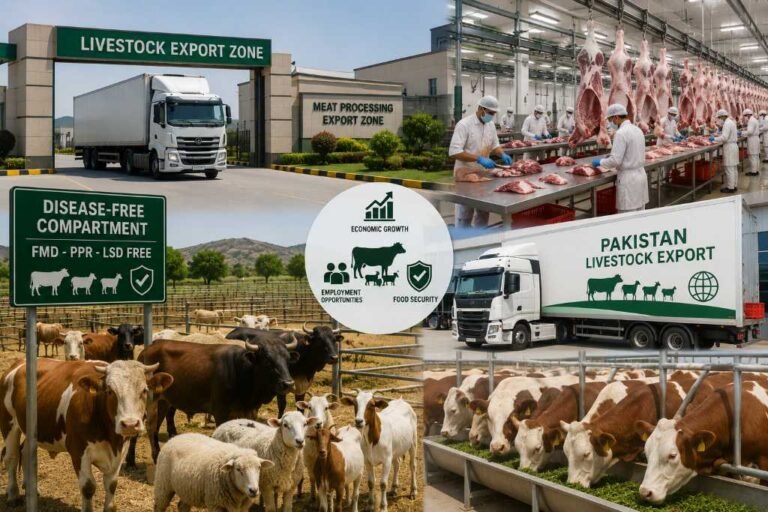
ISLAMABAD, May 25 (ABC): Pakistan plans to accelerate livestock exports by establishing dedicated meat processing export zones and disease-free compartments for major animal diseases as part of wider efforts to modernise one of the country’s fastest-growing economic sectors.
According to the Ministry of National Food Security and Research’s Year Book 2024-25, the government is also planning modern slaughterhouses aligned with international standards and introducing time-bound financial support schemes to attract investment and promote value-added livestock exports.
Pakistan targets livestock export growth through modernisation
The government is focusing on transforming the livestock sector through export-oriented reforms and technology-driven initiatives.
Breed improvement has emerged as an important component of the strategy. Plans include establishing nucleus herds, importing high-yield dairy, beef and mutton breeds, and introducing advanced genetic materials such as sexed semen, embryos and ova.
Officials believe these measures can increase productivity, create employment opportunities and strengthen national food security.
Animal husbandry continues to play a major role in Pakistan’s rural economy. More than eight million rural families are engaged in livestock production, with the sector contributing nearly 35% to 40% of household income in farming communities.
Livestock sector remains a key contributor to the economy
The livestock sector has strengthened its position as a major contributor to Pakistan’s agricultural economy.
According to the report, livestock accounted for 61.2% of agriculture’s value addition and contributed 14.7% to the country’s GDP during FY2024-25.
The sector also recorded steady growth during the past year.
Gross value addition increased from Rs5,587 billion in 2022-23 to Rs5,837 billion in 2023-24, reflecting a growth rate of 4.4%.
Livestock also contributed to foreign exchange earnings, accounting for around 2.9% of Pakistan’s total exports during FY2024-25.
Disease control strategy to support livestock trade
The government is pursuing a private sector-led development strategy supported by public policy interventions.
The strategy includes improvements in veterinary healthcare services, modern breeding methods, artificial insemination, balanced livestock nutrition and advanced reproductive technologies.
Officials are also focusing on controlling economically important diseases that affect productivity and trade.
These include Foot-and-Mouth Disease (FMD), Peste des Petits Ruminants (PPR), Lumpy Skin Disease (LSD) and Avian Influenza.
Disease-free compartments are expected to improve export certification standards and increase Pakistan’s competitiveness in international livestock markets.
Poultry industry maintains strong growth momentum
Pakistan’s poultry sector also continued its strong growth trend and remained an important segment of the broader livestock industry.
The industry generated employment for more than 1.5 million people nationwide and contributed gross value addition of Rs853 billion to the economy.
Over the last decade, Pakistan’s poultry sector recorded an average annual growth rate of 8.1%, helping the country become the world’s 11th-largest poultry producer.
The poultry industry currently contributes approximately 43.3% to Pakistan’s total meat production.
The government’s poultry development strategy focuses on disease prevention, production modernization, value-added processing and diversification of products.
Authorities have also introduced farmer-friendly policies to support both commercial and rural poultry farming.
Pakistan Railways set for tech revolution with 1,700km fiber network

LAHORE, May 24 (ABC): Pakistan Railways is moving towards a major technology-driven transformation through a large-scale digitization programme featuring a 1,700-kilometre fiber optic network and several smart systems designed to modernise railway operations, freight management and passenger services across the country.
Pakistan Railways launches digital transformation programme
According to official project documents available with Wealth Pakistan, the initiative falls under Pakistan Railways’ Railway Advance Infrastructure Network (RAIN). Officials describe it as the first major revenue-focused digitization programme in the department’s history.
The programme aims to build a comprehensive digital ecosystem and introduce modern technologies to improve operational performance and efficiency.
Under the project, Pakistan Railways plans to establish a 1,700km fiber optic backbone to support digital operations nationwide.
Of the total network, approximately 700km will consist of railway-owned fiber infrastructure. Another 1,000km will be developed through a strategic partnership with Frontier Works Organization (FWO). The project also includes bandwidth transmission through public-private partnership arrangements.
Freight operations to become fully digital
The modernization programme will introduce Pakistan Railways’ first complete digital manifest system covering its 78-year operational history.
Officials expect freight operations to become fully digitized, improving cargo tracking, documentation and operational efficiency.
Pakistan Railways also plans to deploy GPS-based tracking systems for locomotives and rolling stock to improve monitoring and asset management.
Customized digital software solutions are under development to support future railway requirements and improve system integration.
Smart tracking and monitoring systems planned
The first phase of the programme includes projects focused on surveillance, infrastructure monitoring and tracking systems.
According to project documents, Pakistan Railways plans to install around 700 railway tracking systems for head and tail monitoring.
The programme also includes approximately 6,000 rolling stock tracking systems for asset monitoring and nearly 14,000 RFID-based railway tags.
Additional measures include rail and road weigh-in-motion systems, RFID checkpoints at workshops and locomotive sheds, and video wall-based control rooms to improve operational oversight.
Several components of the project are already at implementation and survey stages.
Passenger services to receive technology upgrades
Passenger-focused improvements also form part of the broader digitization strategy.
Pakistan Railways plans to establish public WiFi hotspots at selected locations and install smart surveillance systems and real-time fuel monitoring sensors to improve service delivery and operational efficiency.
Project timelines show that implementation activities under Phase-I will continue throughout 2026 as Pakistan Railways gradually shifts from pilot projects to large-scale installation and deployment.
Officials expect the modernization programme to support better connectivity, improve data-driven decision-making and create future-ready railway operations across Pakistan.
Pakistan targets 70% edible oil self-sufficiency by 2035

ISLAMABAD, May 24 (ABC): Pakistan has prepared a long-term strategy to reduce dependence on imported edible oil and achieve 70% self-sufficiency by 2035 through increased local oilseed production and expanded olive cultivation.
According to the Ministry of National Food Security and Research’s Year Book 2024-25, the Pakistan Oilseed Department has developed a Strategic Development Plan aimed at meeting most of the country’s edible oil demand through domestic production.
Pakistan plans major increase in edible oil production
The strategy aims to raise annual edible oil production and import substitution to more than 4.578 million tonnes by 2035. Officials estimate that the initiative could reduce import costs by nearly $7.017 billion annually.
Pakistan currently relies heavily on imported edible oil to meet domestic requirements.
During FY2024-25, the country imported 4.169 million tonnes of edible oil, including 0.542 million tonnes extracted from imported oilseeds. These imports were valued at Rs1,407 billion or $4.971 billion.
In comparison, local edible oil production reached only 0.474 million tonnes during the same fiscal year. Total edible oil availability from local production and imports stood at 4.643 million tonnes.
Oilseed cultivation area to expand by 2035
The Year Book stated that two major projects are supporting the development of the edible oil sector. These projects include the National Oilseed Enhancement Programme and the Promotion of Olive Cultivation on Commercial Scale in Pakistan Phase-II.
Under the long-term strategy, Pakistan plans to increase oilseed cultivation area from 1.240 million hectares to 4.600 million hectares by 2035.
The plan also includes the installation of 1,000 mini expellers and the provision of 1,500 farm machines to strengthen oilseed processing and production activities.
The Pakistan Oilseed Department has also conducted awareness campaigns to promote sunflower, canola and olive cultivation in different regions of the country.
Officials worked with provincial governments to encourage farmers to adopt oilseed crops and oil-producing plants as part of broader import substitution efforts.
Olive sector emerging as a key growth area
The olive sector is becoming an important component of Pakistan’s edible oil strategy.
During FY2024-25, different project components planted 822,452 olive cuttings for the production of disease-free and true-to-type nursery plants.
In Balochistan, the Agricultural Research and Development Centre planted 108,859 olive plants in different districts with a 33% farmer cost-sharing model.
The project also introduced drip irrigation systems across 737 acres in different districts of the province.
Training and international cooperation support sector growth
The Year Book said authorities conducted 45 training programmes on olive cultivation, nursery management, orchard development, value addition and oil processing.
A total of 2,684 participants, including youth and women, attended these training programmes.
The report also highlighted progress in international cooperation.
A €20 million TEVET Umbrella Project on professional capacity building and agricultural extension has been approved by the Central Development Working Party. The initiative focuses on technical training and infrastructure development in olive cultivation and other fruit crops.
2,200 madrassah students receive technical training under PM programme
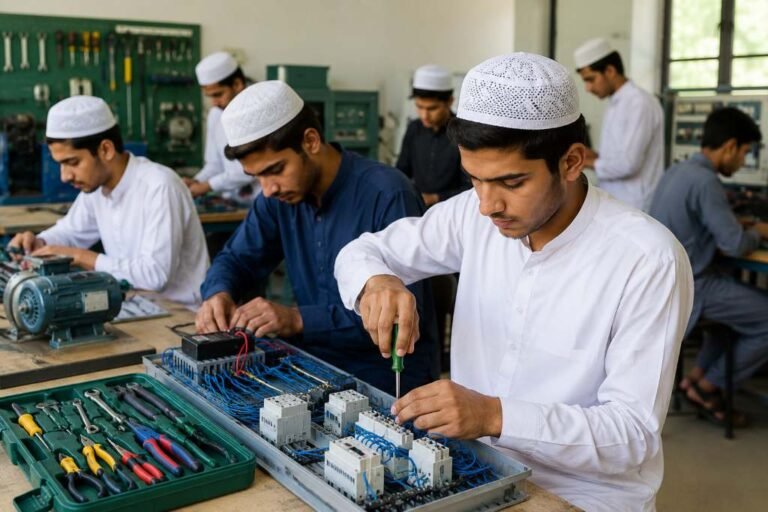
ISLAMABAD, May 22 (ABC): More than 2,200 madrassah students have completed technical and vocational training under the Prime Minister’s Youth Skills Development Programme (PMYSDP), reflecting efforts to improve skills development and increase employment opportunities for youth across Pakistan.
NAVTTC expands technical training for madrassah students
According to documents available with Wealth Pakistan, the National Vocational and Technical Training Commission (NAVTTC) enrolled a total of 2,480 madrassah students in technical and vocational training programmes across different regions of the country. Out of them, 2,219 students successfully completed the training.
The madrassah skills initiative aims to provide students from religious seminaries with market-driven technical education and equip them with practical skills needed in different industries.
Punjab records highest number of trainees
Punjab recorded the highest number of participants in the programme. A total of 1,315 madrassah students were enrolled in the province, while 1,255 completed their training successfully.
Khyber Pakhtunkhwa ranked second with 779 enrolled students and 610 graduates.
In Islamabad Capital Territory (ICT), 325 students participated in the programme and 293 completed their training successfully.
Sindh enrolled 39 students and achieved a 100 percent success rate as all trainees completed the programme. Balochistan also recorded full completion, with all 22 enrolled students graduating successfully.
PM youth programme expands training outreach
NAVTTC has expanded its training activities under the Prime Minister’s Youth Skills Development Programme in recent years.
The highest number of trainees was recorded during fiscal year 2024-25 when 131,417 individuals received technical and vocational training under the programme.
In FY2022-23, NAVTTC trained 51,948 individuals, while another 37,616 trainees benefited from the programme during FY2023-24.
For FY2025-26, the number of trainees has reached 76,525 so far, showing continued progress in vocational education and skills development initiatives.
Skills development programme supports employment opportunities
The madrassah training initiative focuses on integrating students into the mainstream economy by providing industry-oriented and market-relevant skills.
Officials believe the programme can improve employment prospects and encourage self-employment among young people.
The initiative also supports the government’s broader efforts to strengthen Pakistan’s skilled workforce and address unemployment through practical and industry-focused training programmes.
Pakistan expanding weather radar network to bring entire country under coverage

ISLAMABAD, May 22 (ABC): Pakistan is expanding and modernising its weather radar network to bring almost the entire country under radar coverage. The move aims to strengthen weather forecasting, improve disaster preparedness and provide timely warnings for severe weather events.
Modern radar network to improve weather forecasting
Speaking to Wealth Pakistan, a spokesman for the Pakistan Meteorological Department (PMD) said the department is adopting modern radar technology to monitor floods, thunderstorms, heavy rainfall and sea storms. The upgraded system will help forecasters issue early alerts and reduce risks to lives and property.
The PMD currently operates advanced radar systems in Islamabad, Karachi, Mardan and Sialkot. A new weather radar is also being installed in Multan with support from the Japan International Cooperation Agency (JICA).
The spokesman said that after the completion of ongoing projects, almost all major regions of Pakistan would fall under radar coverage. He added that the expansion would improve numerical weather prediction models and strengthen the country’s disaster response system.
Radar systems provide real-time weather data
The PMD spokesman explained that the department has already established 13-storey radar towers at its headquarters in Islamabad and Karachi with Japanese assistance. The S-band solid-state radar systems installed at these sites can monitor weather activity within a range of around 450 kilometres.
According to the department, these radar systems provide real-time information on rainfall intensity, cloud development, wind speed, wind direction and storm movement.
He said the weather radar network updates data every 10 minutes. This allows weather experts to closely monitor changing weather patterns and issue regular alerts.
“A radar acts as a nowcasting tool,” he said, adding that radar technology plays an important role in flood forecasting, rainfall estimation and runoff monitoring in dams and river catchments.
Different radar systems serve different purposes
The spokesman said Pakistan’s weather radar network includes S-band, C-band and X-band systems. Each radar type serves a specific purpose depending on geography and weather conditions.
The Islamabad and Karachi S-band radars can cover areas up to 450 kilometres. The X-band radar in Mardan covers around 120 kilometres and mainly supports weather monitoring in valleys and mountainous regions.
He said the C-band radar in Sialkot covers nearly 350 kilometres and plays a vital role in tracking monsoon systems entering from Indian catchment areas.
The Karachi weather radar also performs a key function by monitoring weather activity over the Arabian Sea and tracking tropical storm systems.
Radar expansion strengthening disaster preparedness
The spokesman noted that Pakistan previously had only five weather radar systems, many of which had become outdated. He said the old Islamabad radar had completed its 30-year operational life and was replaced with an advanced Japanese-supported system.
He said traditional rain gauges cannot provide large-scale real-time weather information. Modern radar systems, however, can instantly monitor weather developments across hundreds of kilometres.
The spokesman added that radar data is also shared with airports and aviation authorities. PMD teams monitor weather conditions around the clock and provide pilots with real-time updates on hazardous weather conditions.
He said the Flood Forecasting Division in Lahore also uses radar information to monitor catchment areas and issue flood alerts.
The PMD spokesman expressed confidence that after the completion of the Multan project and future expansion plans, Pakistan’s weather forecasting system would become more accurate and effective in dealing with climate-related threats.
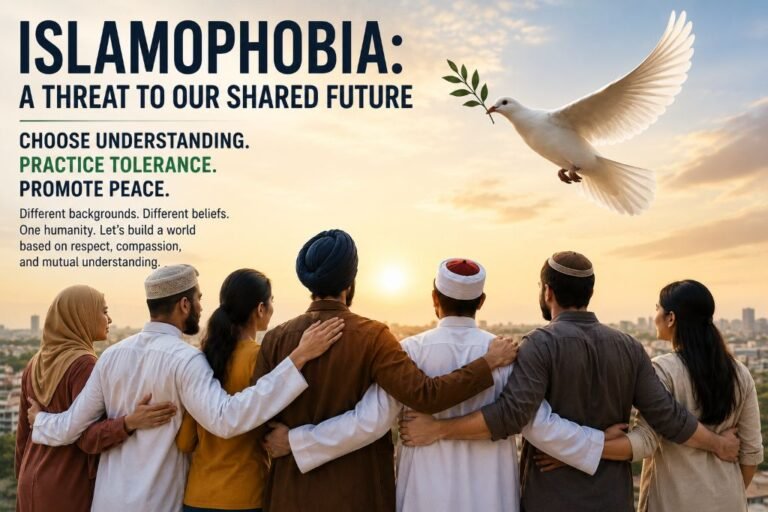
Islamophobia: A growing challenge
By Mahnaz Imdad
In an increasingly interconnected world, the ideals of peace, coexistence, and mutual respect should be stronger than ever. Yet, despite advancements in communication and globalization, societies across the world continue to witness the rise of prejudice and intolerance. Among the most concerning forms of this intolerance is Islamophobia — a phenomenon that has gradually emerged as a significant social and political challenge in many countries.
Islamophobia is not merely criticism or misunderstanding of a religion; it is the fear, hatred, prejudice, or discriminatory treatment directed toward Islam and Muslims. Over the years, this issue has become more visible in different parts of the world, affecting millions of Muslims in their daily lives. Whether through verbal abuse, social discrimination, restrictions on religious practices, or negative stereotyping, many individuals face challenges simply because of their faith or identity.
One of the major reasons behind the growth of Islamophobia is the portrayal of Muslims in certain media narratives. Isolated incidents involving extremist elements are sometimes generalized and linked to the entire Muslim community. As a result, the actions of a small number of individuals create perceptions that unfairly affect more than a billion Muslims around the world. Such broad assumptions ignore an important reality: no religion can be judged by the actions of a few misguided followers.
Islam, like many major religions, teaches principles of peace, justice, compassion, and respect for humanity. Its teachings emphasize helping the needy, maintaining social justice, and promoting peaceful coexistence among communities. Throughout history, Muslim societies have contributed significantly to science, medicine, education, philosophy, and culture. However, these positive contributions often receive less attention compared to negative headlines.
The consequences of Islamophobia extend far beyond individual suffering. Discrimination and prejudice weaken social cohesion and create divisions within communities. When people feel excluded or targeted because of their identity, trust between different groups can erode. Such divisions can become obstacles to peace and social stability. Furthermore, hatred directed at any religion or community threatens the broader values of tolerance and human rights upon which modern societies are built.
Addressing Islamophobia requires collective efforts from governments, educational institutions, media organizations, and community leaders. Responsible journalism has a crucial role in presenting balanced and accurate narratives. Educational institutions can promote understanding through discussions about cultural and religious diversity. Interfaith dialogue and public awareness initiatives can also help remove misconceptions and encourage mutual respect.
The fight against Islamophobia is not solely a Muslim issue; it is a human issue. History repeatedly shows that intolerance against one community eventually weakens the social fabric of entire societies. Promoting understanding, respect, and justice is therefore not only necessary for Muslims but for all communities striving for a peaceful future.
At a time when the world faces numerous challenges — from conflicts and economic uncertainty to climate crises — humanity needs unity more than division. Building bridges of understanding rather than walls of suspicion may ultimately be one of the most important steps toward ensuring lasting peace and harmony.
The writer is from Turbat-Balochistan.