


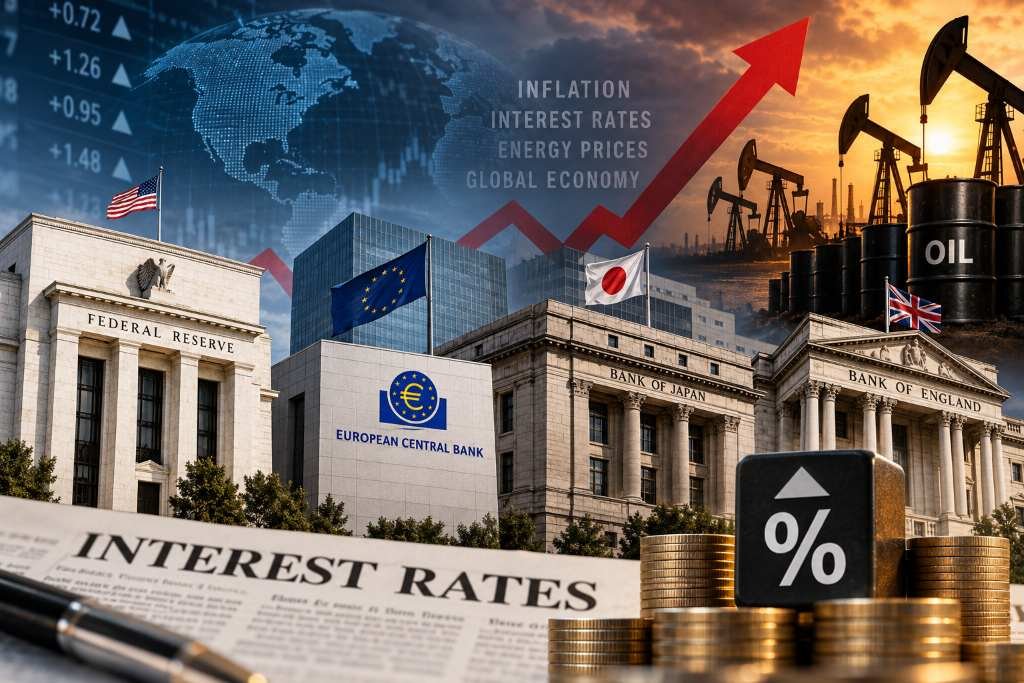
ISLAMABAD, Sep 22 (ABC): Major developed-market central banks are moving back towards interest rate increases or keeping borrowing costs elevated. Renewed energy-price pressures from the prolonged Middle East conflict are complicating the global fight against inflation.
The latest policy decisions mark a shift from the monetary easing that dominated much of 2025. The US Federal Reserve, European Central Bank and Bank of Japan raised rates in September. Meanwhile, policymakers at the Bank of England debated whether another increase was needed.
US Fed raises rates as energy prices surge
The US Federal Reserve raised the federal funds target range by 25 basis points on September 16 to 3.75%-4.0%.
The Fed said inflation remained elevated and uncertainty was high, partly because of geopolitical developments. The increase followed three rate reductions in 2025. Those cuts had brought the range down to 3.50%-3.75% by December.
The policy reversal has coincided with renewed US price pressures.
Consumer prices rose 3.4% year on year in August 2026. The energy index jumped 16.3%, according to the US Bureau of Labor Statistics.
Gasoline prices were 27.4% higher than a year earlier, while fuel oil prices surged 52%.
ECB returns to monetary tightening
The European Central Bank has also returned to tightening. On September 10, it increased all three key policy rates by 25 basis points.
The decision took the deposit facility rate to 2.50% and the main refinancing rate to 2.65%. The marginal lending rate increased to 2.90%.
The ECB directly linked the decision to the Middle East conflict. It said the conflict continued to generate inflationary pressure.
The bank also expects inflation to remain well above its 2% target for an extended period. Its latest projections put headline inflation at 3.0% in 2026, 2.5% in 2027 and 2.1% in 2028.
Euro area inflation accelerated to 3.2% in August from 2.9% in July. It stood at 2.0% a year earlier.
Energy contributed 1.29 percentage points to the annual inflation rate, according to Eurostat data.
Bank of Japan raises policy rate
Japan added another leg to the tightening cycle on September 18. The Bank of Japan voted 7-2 to raise its overnight policy rate to around 1.25%, effective September 24. It had increased the rate to 1% in June.
The BOJ cited high crude oil prices, yen depreciation and rising inflation expectations among the pressures confronting the economy.
It said higher crude prices linked to developments in the Middle East would push inflation higher. The impact would particularly affect energy and goods prices.
The bank also indicated that it would continue adjusting rates if economic and inflation conditions warranted.
Bank of England holds rates
The Bank of England stopped short of raising rates and maintained Bank Rate at 3.75%. However, its September decision showed increased concern over inflation.
The Monetary Policy Committee voted 6-3 to hold rates. Three members favoured an immediate 25-basis-point increase to 4%.
The bank said the prolonged Middle East conflict had contributed to further increases in crude and refined energy prices. Meanwhile, UK inflation climbed to 3.1% in August.
It warned that the energy shock could keep inflation above target for longer. This could also increase the risk of second-round effects on wages and prices.
Energy shocks complicate policy decisions
Tahir Ahmed, Manager Treasury Operations at Pak Oman Investment Company Ltd, said the shift away from the easing cycle reflected an increasingly uncertain inflation outlook.
“Energy shocks can pass rapidly through transportation, production and consumer prices, while monetary policy operates with a lag. Central banks therefore have to judge whether the initial rise in energy prices will remain temporary or spread into underlying inflation. The recent policy decisions suggest that authorities are attaching greater weight to the second risk,” he told Wealth Pakistan.
A treasury manager at EXIM Bank of Pakistan, who wished to remain anonymous, said central banks were becoming less willing to overlook energy-driven inflation.
“Central banks are facing a difficult trade-off because energy inflation originates largely from supply conditions, but if it persists, it can influence broader prices, wages and inflation expectations. That increases the likelihood of monetary authorities maintaining restrictive rates for longer or responding with additional tightening,” the official said.
Oil prices have provided the immediate backdrop to the policy shift.
The US Energy Information Administration said Brent crude averaged $91 a barrel in August. This was $7 higher than in July as total Middle Eastern exports remained constrained.
Emerging economies face tighter financing conditions
The renewed tightening also has implications beyond the economies directly affected.
Higher policy rates and bond yields in major developed markets can keep global financing conditions restrictive. This can increase borrowing costs and affect capital flows to emerging and developing economies.
The September decisions show that the anticipated path towards steadily lower global interest rates has been disrupted.
The four central banks are responding differently to their domestic conditions. However, they face a common challenge from renewed inflationary pressure coming through energy markets.
Energy prices are again feeding into headline inflation, while geopolitical uncertainty remains elevated. As a result, major central banks are signalling that containing renewed price pressures may take precedence over a return to monetary easing.