


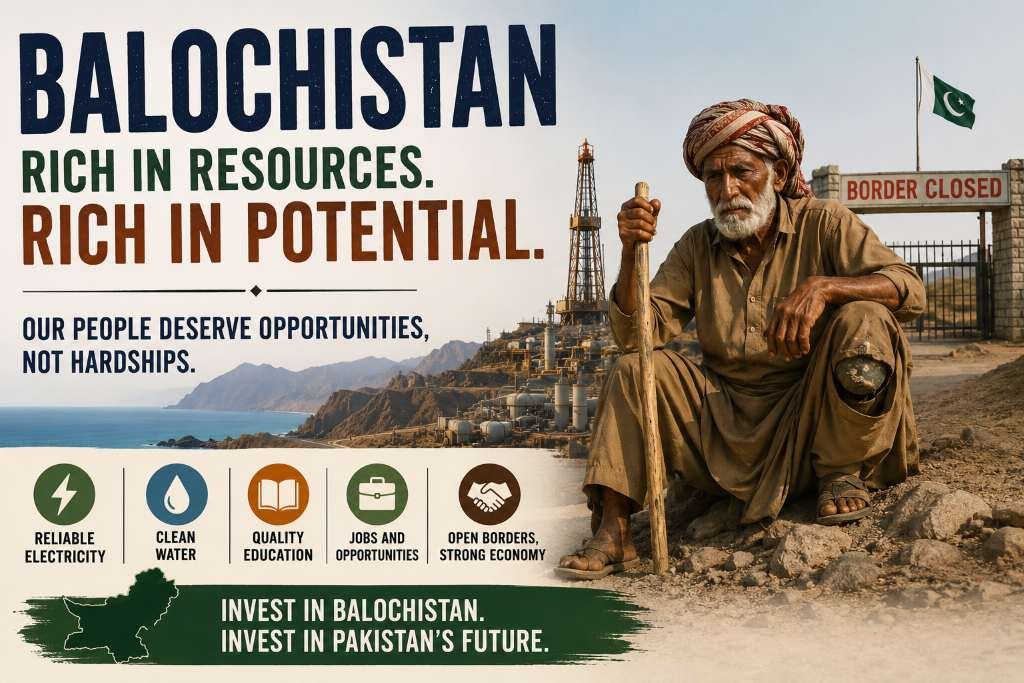
Balochistan is often described as Pakistan’s most resource-rich province. Covering nearly 44 percent of the country’s land area, it holds immense reserves of minerals, natural gas, petroleum, and precious metals. Its strategic location, vast coastline, and abundant natural wealth give it enormous economic potential. Yet, despite these advantages, many of its people continue to face deep-rooted social and economic challenges.
A Province Rich in Resources, Poor in Opportunities
The contrast between the province’s natural wealth and the living conditions of many residents is striking. While Balochistan contributes significantly to Pakistan’s resource base, large segments of its population struggle with poverty, unemployment, inadequate public services, and limited access to basic necessities.
One of the most pressing challenges is the persistent shortage of electricity. In many parts of the province, prolonged power outages have become part of daily life. These disruptions affect households, schools, healthcare facilities, and businesses. Without reliable electricity, economic activity remains constrained and investment stays limited.
Unemployment is another serious concern. Balochistan has a young and growing population, but employment opportunities remain scarce. Many educated and skilled young people cannot find stable jobs, leading to frustration and uncertainty about their future. The lack of industries, factories, and private-sector investment has further reduced opportunities for local communities.
Water and Education Challenges
Access to clean drinking water is equally critical. Numerous districts face chronic water shortages, forcing residents to travel long distances to obtain water or rely on unsafe sources. The consequences are particularly severe for children and vulnerable communities.
The education sector also requires urgent attention. Many schools in remote and rural areas lack adequate infrastructure, qualified teachers, and educational resources. As a result, thousands of children are deprived of quality education, limiting their future prospects and perpetuating cycles of poverty. Investing in education is not merely a social obligation; it is an economic necessity.
The Impact of Border Closures
Among the most immediate economic concerns facing many communities today is the closure of border trade routes. For decades, border-related commerce has provided income for thousands of families living in border districts. In areas where formal employment opportunities are limited, trade and related activities have supported local economies.
The prolonged closure of the border over the past two months has placed significant financial pressure on many households. Families that depend on cross-border economic activity are finding it increasingly difficult to sustain themselves. If the situation continues, economic hardships could deepen further.
There is also a need for a more balanced understanding of the realities faced by border communities. Public discourse sometimes portrays all border-related economic activity through the lens of smuggling and illegality. While authorities should address illegal activities through appropriate legal mechanisms, it is important to distinguish between criminal networks and ordinary citizens who rely on legitimate economic activities to support their families.
The reality on the ground is often more complex. Many individuals involved in border-related work are laborers, transport workers, or small-scale traders striving to earn an honest living. Their daily struggle reflects economic necessity rather than criminal intent. Images of elderly and physically challenged individuals working under harsh conditions serve as a powerful reminder of the hardships many families face.
A Path Forward for Balochistan
Beyond these immediate concerns, Balochistan continues to grapple with broader development challenges, including inadequate infrastructure, limited industrialization, weak public services, and insufficient investment. Roads, healthcare facilities, educational institutions, and industrial zones remain underdeveloped in many areas. This situation slows economic growth and limits opportunities for local populations.
Despite these difficulties, Balochistan’s future remains promising. The province possesses immense human potential, a rich cultural heritage, abundant natural resources, and a strategic geographic position. These strengths could make it a major driver of national economic growth.
The government should prioritize practical measures that directly improve the lives of local communities. These include expanding employment opportunities, investing in education and skills development, improving access to electricity and clean water, strengthening infrastructure, encouraging industrial investment, and addressing the concerns of border communities through sustainable and lawful solutions.
Development in Balochistan should not be viewed solely through the lens of natural resources. The province’s greatest asset is its people. Empowering them through education, employment, and economic opportunity is essential for achieving lasting peace, stability, and prosperity.
Balochistan has the potential to become a cornerstone of Pakistan’s future growth. However, this potential can only be realized when the well-being of its people becomes the central focus of development efforts. The citizens of Balochistan deserve the same opportunities, services, and prospects available elsewhere in the country. Addressing their challenges is not only a provincial necessity but also a national responsibility.