


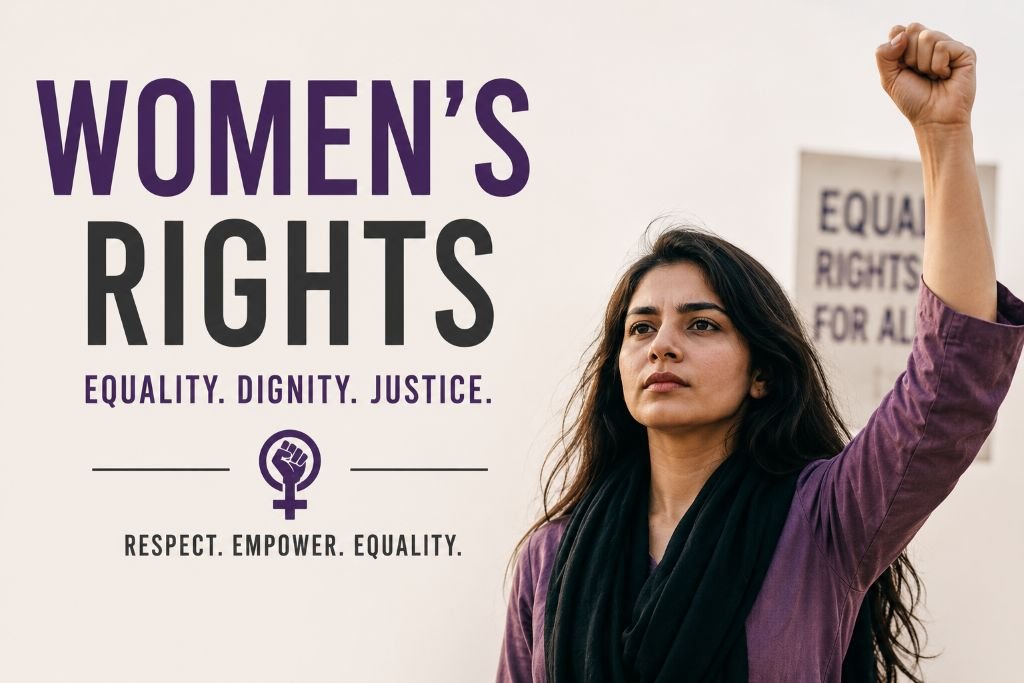
The struggle for women’s rights is as old as human civilization itself. Across centuries and cultures, women have fought against discrimination, inequality, and patriarchal attitudes to secure the basic rights and freedoms that many people take for granted today. While considerable progress has been made, the journey toward genuine equality remains far from complete.
A Long History of Resistance
History offers countless examples of women who challenged oppressive systems and paid a heavy price for doing so. One such figure was Olympe de Gouges, the French writer and activist who authored the Declaration of the Rights of Woman and of the Female Citizen. Her advocacy for women’s equality ultimately led to her execution during the French Revolution in 1793. Yet her legacy continues to inspire movements for women’s rights around the world.
Despite these sacrifices and decades of activism, women across the globe continue to face violence, discrimination, and restrictions on their freedom. In many societies, people still deny women the right to make decisions about their own lives, careers, education, and relationships. Gender-based violence remains a widespread problem, affecting women regardless of age, class, or nationality.
The Culture of Victim Blaming
Perhaps one of the most troubling aspects of this reality is the tendency to blame women for the violence committed against them. When a woman becomes the victim of harassment, assault, or murder, public debate often shifts from condemning the perpetrator to scrutinizing the victim’s behavior. People raise questions about what she was wearing, where she was, or why she made certain choices. Such attitudes deepen the suffering of victims and their families. They also contribute to a culture of impunity.
Recent incidents in Pakistan illustrate this disturbing trend. In June 2025, 17-year-old TikToker Sana Yousaf was shot dead in Islamabad after reportedly rejecting a marriage proposal. Rather than focusing solely on the crime, sections of society engaged in victim-blaming narratives that questioned her choices instead of condemning the act of violence.
Similarly, the tragic case of actress and model Humaira Asghar shocked the nation. Authorities reportedly discovered her body months after her death in her Karachi apartment. The incident sparked a broader conversation about loneliness, family estrangement, and the social pressures faced by women who choose independent paths.
Violence in the Name of Honor
Honor-based violence continues to be a grave concern. Across Pakistan, perpetrators have attacked or killed women for decisions related to marriage, social media activity, or personal autonomy. People often justify such acts under the guise of preserving family honor, despite their clear violation of human rights and the rule of law.
The recent killing of a married couple in Balochistan further highlighted the dangers faced by individuals who exercise their right to choose their life partners. Incidents like these demonstrate how deeply entrenched social attitudes can sometimes override legal protections and basic human dignity.
These cases are not isolated incidents. They reflect broader societal challenges that continue to limit women’s safety and freedom. Women often face harassment, violence, workplace discrimination, and unequal treatment. Yet even when they become victims, society frequently judges them more harshly than those responsible for harming them.
Laws Alone Are Not Enough
Pakistan’s Constitution guarantees equal rights to all citizens regardless of gender. The country has also enacted various laws aimed at protecting women from violence, harassment, and discrimination. However, legislation alone is not enough. Effective implementation, stronger institutions, public awareness, and social change are equally important.
The struggle for women’s rights is not solely a women’s issue; it is a human rights issue. A society cannot progress when half of its population lives in fear or faces barriers to education, employment, justice, and personal freedom. True development requires creating an environment where women can live safely, participate equally, and pursue their aspirations without fear of violence or discrimination.
Women’s rights should not be viewed as privileges granted by society but as fundamental rights that every human being deserves. The challenge before us is not only to strengthen laws but also to transform attitudes. Until that happens, the struggle for women’s rights will continue.
The measure of any society lies in how it treats its most vulnerable members. Ensuring dignity, safety, and equality for women is not merely a legal obligation—it is a moral imperative.