


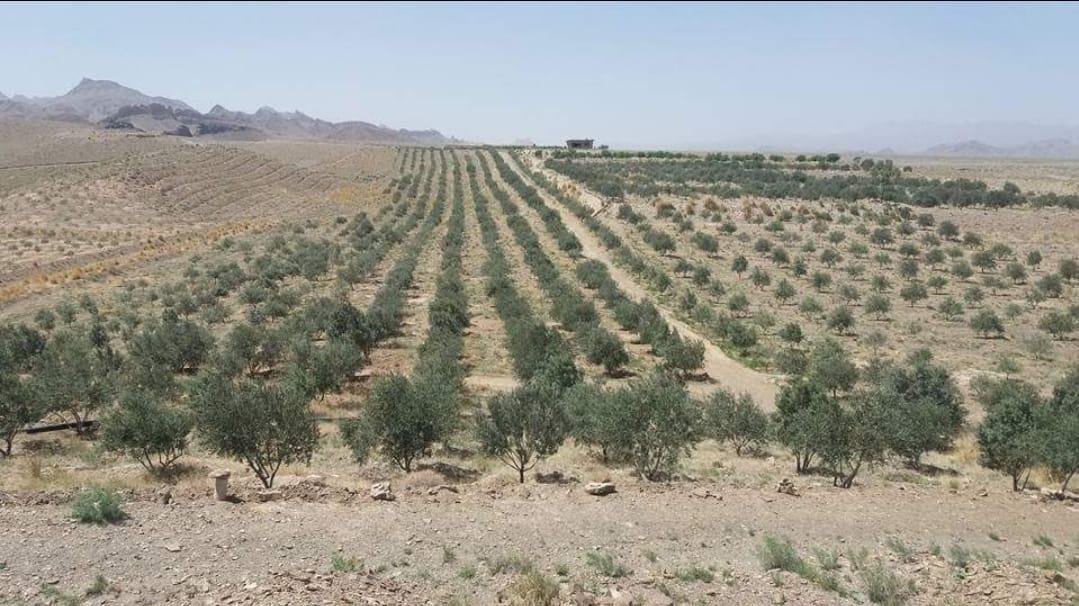
ISLAMABAD, April 30 (ABC): About 2.6 million olive plants cultivated across Balochistan have entered the production phase and are expected to reach full output by 2028-29, according to Abdul Raoof Kakar, former director general of the Agriculture Research Institute, Balochistan.
Speaking to Wealth Pakistan, Kakar described the development as a breakthrough. He said Loralai has emerged as the hub of olive cultivation in the country. He added that the oil content of Loralai olives ranges between 25% and 32%, which is the highest in Pakistan. As a result, farmers now have a viable alternative after suffering heavy losses in traditional orchards.
Balochistan’s fruit sector has faced severe damage due to a prolonged drought that began around 2000. Apples, apricots, and almonds were badly affected. In many areas, entire orchards were wiped out because of water scarcity. Therefore, farmers have increasingly shifted toward olive cultivation.
Kakar stressed the need to improve water management systems. He also highlighted the importance of investing in storage infrastructure. According to him, developing canal networks and building small dams can significantly enhance water conservation. He noted that, unlike Punjab and Sindh, Balochistan lacks extensive canal systems and rainwater storage facilities. However, he said this gap also presents strong development opportunities.
He explained that olive cultivation suits Balochistan’s environment. The region already has millions of wild olive trees. Moreover, domesticated varieties introduced with the support of the Italian government have now reached the harvesting stage. Consequently, more farmers are adopting olive farming.
The government has supported the sector by installing oil extraction units in Loralai, Zhob, Khuzdar, and other areas. These facilities allow farmers to process olives locally at nominal costs. However, Kakar said additional processing units are required as production expands.
He further pointed out that value addition and improved marketing strategies can drive future growth. He said better branding and market access can help farmers secure higher prices and increase their returns.
Kakar also claimed that locally produced extra-virgin olive oil is superior to many imported products. He said local oil is pure and free from adulteration, while imported oils are often mixed or of lower quality.
Currently, all locally produced olive oil is consumed within the country. Demand remains strong despite prices reaching around Rs3,000 per litre or more.
He also clarified that olive trees require proper care for commercial yield. He said irrigation, pruning, and fertilisation are essential. Without adequate water, trees may survive but will not produce quality output.
Kakar noted that olive oil from Loralai has gained international recognition. It recently won a silver award at a competition in New York due to its high antioxidant levels and rich phenolic content.
He concluded that olive cultivation is a blessing for Balochistan. According to him, it is not only reviving agriculture but also creating sustainable economic opportunities in the province.