


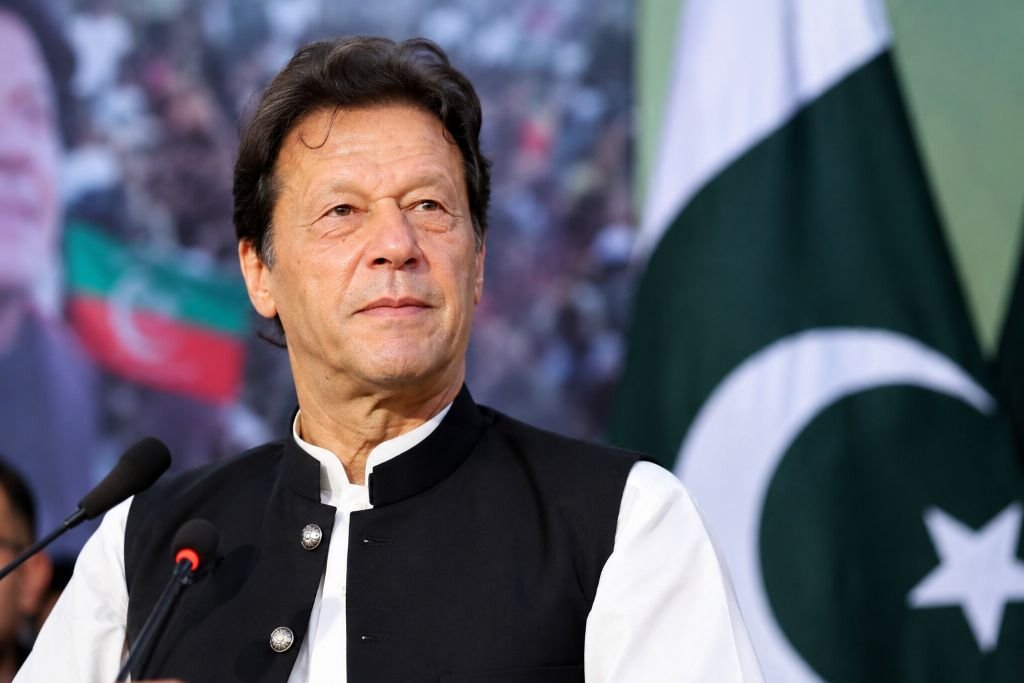
Imran Ahmad Khan Niazi is one of the most influential figures in Pakistan’s modern history. He has achieved success as a cricketer, philanthropist, and politician. His journey from the cricket field to the Prime Minister’s Office has inspired millions. While opinions about his politics differ, his impact on Pakistan remains significant.
Born on 5 October 1952 in Lahore, Imran Khan received his early education at Aitchison College. He later studied at the Royal Grammar School in Worcester, England. He graduated from Keble College, University of Oxford, with a degree in Philosophy, Politics, and Economics. His education and leadership qualities prepared him for a remarkable public career.
World Cup Victory Made Imran Khan a National Hero
Imran Khan first earned worldwide recognition through cricket. He became one of Pakistan’s greatest all-rounders and one of the country’s most respected captains.
His defining moment came in 1992 when he led Pakistan to its first and only Cricket World Cup title. The victory united the nation and created one of the most memorable moments in Pakistan’s sporting history.
His leadership also helped develop future cricket stars such as Wasim Akram and Waqar Younis. He promoted discipline, fitness, professionalism, and self-belief. As a result, he inspired an entire generation of young cricketers.
Philanthropy Became His Second Mission
After retiring from cricket, Imran Khan focused on public service instead of personal comfort.
The death of his mother, Shaukat Khanum, from cancer inspired him to establish the Shaukat Khanum Memorial Cancer Hospital and Research Centre in Lahore in 1994. The hospital was built mainly through public donations. Today, it provides quality cancer treatment to patients from across Pakistan, including thousands who cannot afford medical care.
Later, he founded Namal College, now Namal University, in Mianwali. The institution aims to provide quality higher education to talented students from rural and underprivileged backgrounds.
These projects continue to benefit society regardless of political differences.
Entering Politics Was a Long Journey
In 1996, Imran Khan founded Pakistan Tehreek-e-Insaf (PTI). His vision centred on justice, accountability, transparency, and a welfare state.
However, political success did not come quickly. For many years, PTI remained a small political party with limited representation in Parliament. Nevertheless, Imran Khan continued his campaign across Pakistan.
Gradually, his message attracted growing public support. Young voters, in particular, responded to his calls for political reform and accountability.
Becoming Prime Minister
The 2018 general elections marked a turning point. PTI emerged as the largest party, and Imran Khan became Prime Minister in August 2018.
During his tenure, his government introduced welfare programmes such as the Ehsaas Programme for low-income families. It also expanded health coverage in several provinces and promoted environmental initiatives, including large-scale tree plantation campaigns.
On the international stage, Imran Khan spoke about climate change, Islamophobia, regional peace, and Pakistan’s foreign policy priorities. His speeches at global forums received attention both at home and abroad.
A Divisive but Influential Political Figure
Like every major political leader, Imran Khan’s performance remains the subject of debate.
His supporters believe he tried to strengthen institutions, improve governance, and reduce corruption. Critics, however, question parts of his economic management and political approach.
These differing opinions reflect the normal functioning of a democratic society.
Political Challenges After 2022
In April 2022, Imran Khan lost office through a parliamentary vote of no confidence. Since then, he has faced numerous legal cases and political challenges, including imprisonment.
His supporters describe these developments as politically motivated. Others argue that legal institutions should be allowed to function independently.
Regardless of political opinion, democratic principles require that every citizen, including a former prime minister, receives fair treatment, due process, and equal protection under the law.
Imran Khan’s Lasting Legacy
Imran Khan’s contributions extend far beyond politics.
He led Pakistan to its only Cricket World Cup title. He established institutions that continue to provide cancer treatment and higher education. He also transformed Pakistan’s political landscape by bringing millions of young people into the democratic process.
History will ultimately judge his political legacy. However, few people have influenced Pakistan in as many different fields as Imran Khan. His journey demonstrates determination, resilience, and a commitment to serving causes that he believes can improve the country.
Whether people support or oppose his politics, his place in Pakistan’s contemporary history is firmly established.