


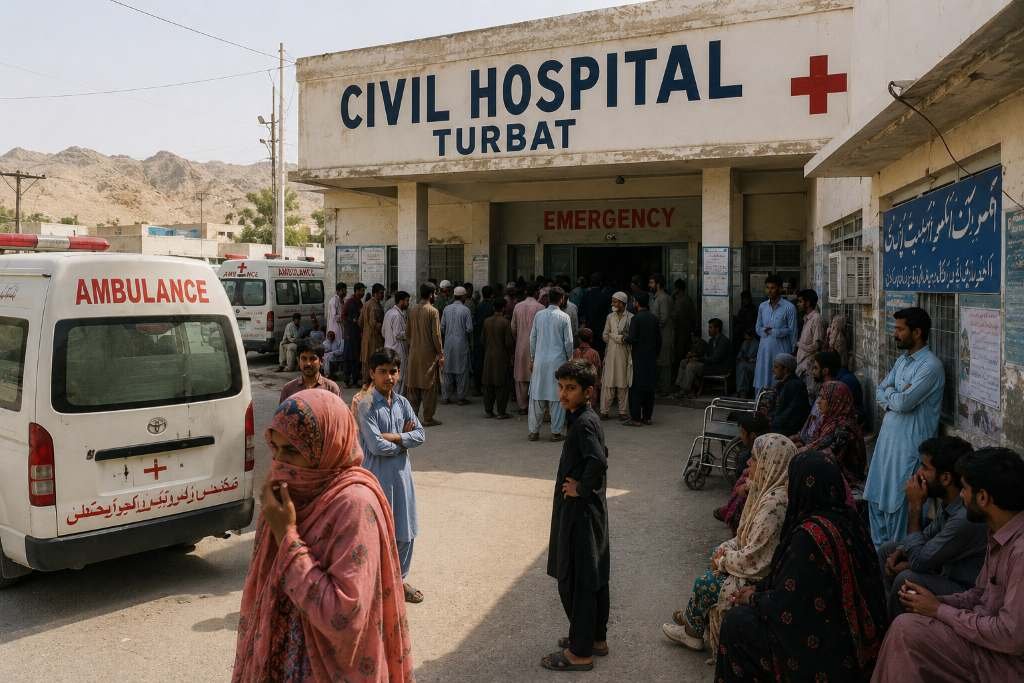
Turbat is the second-largest city in Balochistan. It serves hundreds of thousands of people across Kech District and nearby areas. Yet its main public healthcare facility, Civil Hospital Turbat, struggles to provide even basic medical services.
A government hospital should offer hope during a medical emergency. Instead, many families arrive at Civil Hospital Turbat only to discover that the healthcare system has already failed them.
The problems are not new. Residents have raised concerns for years. Reports have highlighted the shortcomings repeatedly. However, meaningful improvements remain limited. As a result, patients continue to pay the price.
Ambulance Shortage Costs Precious Time
One of the most serious problems is the shortage of ambulances.
Medical emergencies demand immediate action. Heart attacks, road accidents, severe burns, and pregnancy complications cannot wait. Every minute can make the difference between life and death.
However, Civil Hospital Turbat has too few ambulances to meet public demand. Many families must arrange private transport or rely on friends and relatives to move critically ill patients.
The issue has received public attention before. In April 2025, The Express Tribune published a letter stating that Turbat urgently needed a functional ambulance service for emergency cases. Earlier, in January 2024, reports also warned that the limited ambulance fleet could delay life-saving treatment.
Unfortunately, these warnings have not produced the improvements that local communities expected.
Shortage of Doctors Leaves Patients Waiting
The shortage of doctors remains another major concern.
Patients arrive with injuries, infections, diabetes, or other serious illnesses. Yet many complain that doctors are unavailable during duty hours. Consequently, people spend hours waiting without receiving treatment.
Those who have financial resources often travel to Quetta or Karachi for specialised care. However, many families simply cannot afford the cost of travel and accommodation. They have no option except to wait.
Healthcare should never depend on a person’s financial status or place of residence.
Equal Treatment Must Replace Preferential Access
Healthcare should treat every patient equally.
However, many residents believe that personal influence often determines who receives treatment first. Patients who have connections reportedly bypass long queues, while others continue waiting despite arriving much earlier.
Older patients, daily wage workers, and children often bear the greatest burden of these delays.
Whether perception or reality, such practices damage public trust in government healthcare institutions. Every patient deserves equal treatment based on medical need rather than personal influence.
Poor Hospital Infrastructure Adds to Patients’ Suffering
The hospital’s physical condition also requires urgent attention.
Many wards lack enough beds, chairs, and basic equipment. Families frequently remain beside patients for long hours under difficult conditions. Cleanliness also remains a concern in several areas of the hospital.
During summer, the situation becomes even more challenging.
Turbat experiences some of Pakistan’s highest temperatures, often exceeding 45°C and occasionally approaching 50°C. Despite these extreme conditions, many patients reportedly face inadequate cooling due to limited air conditioning and non-functional fans.
A hospital should provide comfort during illness. Instead, extreme heat often makes recovery even more difficult.
Serious Emergencies Demand Better Facilities
The need for specialised healthcare facilities has also become evident during major emergencies.
Many residents still remember the tragic gas cylinder explosion in Shapuk village in 2020. Several victims suffered severe burn injuries. Reports at the time highlighted the limited availability of specialised burn treatment facilities in Turbat, forcing critically injured patients to be transferred elsewhere.
That tragedy raised important questions about emergency preparedness in southern Balochistan. Those questions still deserve answers today.
Balochistan Needs Greater Investment in Healthcare
The challenges at Civil Hospital Turbat reflect wider healthcare problems across Balochistan.
The province covers nearly 44 percent of Pakistan’s land area. It is rich in natural resources and contributes significantly to the national economy. Despite this, many districts continue to face shortages of hospitals, doctors, specialist services, and modern medical equipment.
Access to healthcare should not depend on geography. Citizens living in Turbat deserve the same quality of medical care as those living in larger cities.
The Time for Action Is Now
Improving Civil Hospital Turbat does not require impossible solutions. It requires political commitment and effective administration.
The provincial government should increase funding for emergency ambulance services. Authorities must ensure that doctors remain available during duty hours. Hospital infrastructure requires urgent upgrades, including clean wards, reliable electricity, proper cooling systems, functional medical equipment, and improved sanitation.
Equally important, hospitals must ensure transparent patient management so that treatment depends on medical urgency rather than personal connections.
Conclusion
Civil Hospital Turbat represents far more than one struggling institution. It reflects the broader healthcare challenges facing Balochistan.
Every citizen deserves timely emergency care, qualified doctors, clean hospitals, and equal access to treatment. These are not luxuries. They are basic public services that every government has a responsibility to provide.
The people of Turbat have waited long enough. Their concerns have been documented repeatedly. Now those concerns must finally be translated into meaningful action.
Healthcare cannot remain another promise waiting to be fulfilled.