
Home Blog Page 24

Benazir Nashonuma Programme to distribute 3.7m nutritional packs to combat stunting

0

ISLAMABAD, Dec 16 (APP): The Benazir Nashonuma Programme is set to distribute more than 3.7 million specialised nutritious food (SNF) packs in 2025 as part of Pakistan’s efforts to curb stunting and malnutrition among pregnant women, breastfeeding mothers and young children.

Launched in 2020 and expanded nationwide in 2023, the programme has emerged as a key intervention targeting nutrition deficits during the critical first 1,000 days of life.

According to a document available with Wealth Pakistan, the planned distribution aims to strengthen maternal and child nutrition outcomes, particularly among low-income households facing limited access to healthy diets.

Currently operating through 540 facilitation centres across 157 districts, the programme provides nutrient-dense food supplements to an estimated 3.7 million women and children nationwide.

Under the initiative, enrolled mothers receive 75 grams of SNF per day, while children are provided with 50 grams daily. The supplements are fortified with essential vitamins, minerals, amino acids and fatty acids required for healthy maternal and child development.

In addition to nutritional support, the programme offers conditional cash transfers to enrolled beneficiaries. Women who comply with prescribed health services and return at least 90 percent of empty SNF sachets are eligible to receive Rs 4,000 per quarter for a girl child and Rs 3,500 for a boy child, easing household financial constraints linked to nutrition and healthcare.

Implemented under the Benazir Income Support Programme (BISP), the Nashonuma initiative seeks to address Pakistan’s high stunting rates. The document highlights that more than two-thirds of households in the country are unable to afford a nutritious diet, underscoring the programme’s role in delivering both food assistance and income support to the most vulnerable families.

The programme is also scheduled to introduce targeted nutritional adjustments by the fourth quarter of 2025. Women identified as overweight or obese under body mass index criteria will receive multiple micronutrient supplements (MMS) in place of standard SNF, reflecting a more tailored approach to maternal nutrition.

The initiative forms part of Pakistan’s broader response to widespread malnutrition, driven largely by the high cost of healthy and diverse diets. With household food expenditure covering only around 60 percent of the cost of a nutritious diet, the programme remains a critical support mechanism for vulnerable populations.

Young Leaders Conference 2025 opens with a powerful call for growth

0

LAHORE: The 23rd edition of the Young Leaders Conference (YLC) 2025 commenced on Monday with an inspiring opening day centered around the theme “Manifesting Personal Development.” Bringing together young leaders from across Pakistan, Day One set the tone for six transformative days of reflection, learning, and leadership-building.

The opening day emphasized a core belief of YLC: meaningful change in society begins with self-awareness, values, and personal alignment. Through immersive activities, thought-provoking conversations, and interactive sessions, participants were encouraged to reflect on who they are, who they aspire to become, and how intentional personal growth can shape responsible leadership.

The conference officially opened with a warm welcome, followed by recitation and the national anthem. A key highlight of the day was the launch of 23 Years of Legacy – The Case of Silent Revolution, marking over two decades of sustained youth-led impact by the Young Leaders Conference. This milestone celebrated YLC’s journey of nurturing conscious, ethical, and socially responsible leaders.

Throughout the day, participants engaged in a carefully curated program including reflective sessions, collaborative activities, and mentoring opportunities. Signature segments such as “Sowing Manifestation,” “Make Your Mark,” and “Let’s Manifest” encouraged young leaders to translate intention into action, while fostering introspection, resilience, and purpose-driven ambition. Interactive experiences like Human Bingo, mentoring tea sessions, and high-energy challenges further strengthened peer connections and community-building.

Day One also highlighted the importance of partnerships in sustaining youth development initiatives. The Young Leaders Conference 2025 is supported by a diverse group of partners and collaborators committed to empowering Pakistan’s youth. The conference proudly acknowledges the support of English Biscuit Manufacturers (EBM), Accelerate Prosperity, Reko Diq Mining Company, J., Feroze1888, Alkaram, Habib Metro Bank, Prime Minister’s Youth Programme, Sports and Youth Affairs Department, and ecosystem partners including ANA & Batla, Hustle Stories, ConnectHear, Freepaani, and School of Leadership Foundation. Media partners for YLC 2025 include Jang Group, The News, and Geo, whose support continues to amplify youth voices and leadership narratives across the country.

Speaking on the opening day, the YLC leadership emphasized that personal development is not a destination but a lifelong process. “Before we can hope to lead change in the world, we must first learn to lead ourselves,” shared the organizers, reinforcing the philosophy that underpins the conference.

As YLC 2025 moves forward, the coming days will explore themes of social stewardship, informed citizenship, economic leadership, harmony in diversity, and social action, guiding participants from self-discovery to collective impact.

The Young Leaders Conference remains one of Pakistan’s most impactful youth leadership platforms, continuing its mission to inspire young people to think critically, act ethically, and lead with purpose.

HEC provides digital connectivity to over 50 universities in less-developed areas

0

ISLAMABAD, Dec 15 (APP): The Higher Education Commission (HEC) has provided digital connectivity and advanced IT services to more than 50 universities and higher education institutions (HEIs) located in less-developed areas as part of its efforts to modernise teaching, research and administrative functions across the country.

According to documents available with Wealth Pakistan, the initiative is being implemented through the Pakistan Education and Research Network (PERN), which offers high-speed internet connectivity along with supporting digital services to universities in remote and underserved regions. The project aims to ensure equitable access to quality higher education facilities for students and faculty regardless of geographic location.

The PERN connectivity project covers a wide range of cities and districts, including Khairpur, Dera Ghazi Khan, Bannu, Turbat, Mirpur, Khuzdar, Zhob, Gwadar, Shikarpur, Chitral, Swat, Upper Dir, Shangla, Buner, Battagram, Mastung, Dera Murad Jamali, Wadh, Layyah, Hangu, Panjgur, Loralai, Muslim Bagh, Ghotki, Kharan, Swabi, Dera Ismail Khan and Kandhkot, among others.

Under the PERN Core Network expansion, the HEC has extended a long-haul optical fibre network spanning approximately 1,100 kilometres into remote areas of Balochistan and Khyber Pakhtunkhwa. The expanded footprint enables universities in these regions to access the same quality and range of digital services available to institutions in more developed parts of Pakistan.

The optical fibre network passes through Lasbela, Wadh, Khuzdar, Mastung, Loralai, Ziarat, Zhob, Turbat, Gwadar and Dera Ismail Khan, significantly strengthening national academic and research connectivity.

In addition to connectivity, the HEC has launched the Smart University Project, which focuses on providing campus-wide Wi-Fi coverage and deploying intelligent safety systems, including surveillance infrastructure, at universities in less-developed areas.

The project is being implemented at campuses in Lasbela, Khuzdar, Okara, Swabi, Nawabshah, Taxila, Sialkot, Jamshoro, Bannu, Dera Ghazi Khan, Mirpur, Khairpur, Tandojam, Narowal, Shikarpur, Gumbat, Mansehra, Sukkur, Bahawalpur, Gilgit, Karak, Kohat, Murree, Sahiwal and Haripur.

The commission has also introduced smart classroom facilities at more than 30 universities and HEIs located in remote regions, including Turbat, Kharan, Muslim Bagh, Lasbela, Thar, Kandhkot, Ghotki, Umerkot, Hangu, Chitral and Hunza. These classrooms are equipped with modern technological tools to support both on-campus and distance learning.

Connectivity in Azad Jammu and Kashmir and Gilgit-Baltistan has been strengthened through links established via the Special Communication Organisation (SCO) network, ensuring that universities in Gilgit, Skardu, Kotli, Rawalakot, Bagh, Hunza and Muzaffarabad remain integrated into the national education and research network.

To further support academic collaboration, the HEC has provided video conferencing facilities to more than 45 higher education institutions in less-developed areas, enabling remote teaching, research collaboration, administrative coordination and participation in national and international academic forums.

Meanwhile, the Public Sector Development Programme (PSDP) for FY2025-26 includes 44 HEC projects with a total allocation of Rs77.8 billion, prioritising infrastructure development in remote and underdeveloped districts through the construction and upgrading of campuses, academic blocks, hostels and laboratories.

Applications invited for new olive orchards in Potohar until March 2026

0

ISLAMABAD, Dec 15 (APP): Applications have been invited from farmers in the Potohar region for the establishment of new olive orchards under a government-backed initiative aimed at expanding commercial olive cultivation, with the deadline set for March 15, 2026.

The initiative is part of a broader push to shift farmers toward high-value crops and strengthen Pakistan’s domestic olive sector. The programme is being implemented with technical support from the Centre of Excellence for Olive Research and Training (CFORT) at the Barani Agricultural Research Institute (BARI), Chakwal.

Director CFORT Dr Muhammad Ramzan Anser told Wealth Pakistan that olive cultivation now offers economic returns strong enough to replace low-value traditional crops. He said farmers are being encouraged to adopt olives on a commercial scale, supported by subsidies, research-based guidance and improved processing facilities.

Under the programme, farmers owning at least five acres of land are eligible to apply for orchard development. Eligible growers can select certified olive plants directly from approved nurseries, with the government providing a subsidy of Rs360 per plant. Nearly Rs58,000 per acre will be provided to farmers over the three-year duration of the project.

Dr Ramzan said the approach gives farmers ownership of their orchards while ensuring quality planting material, which is critical for long-term productivity. He added that CFORT has made advisory services accessible to all growers through a dedicated helpline and online platforms, allowing farmers to seek technical guidance throughout the cultivation cycle.

The Potohar region has emerged as a focal area for olive expansion following decades of varietal testing and adaptive research. Since initial trials began in 1991, BARI has evaluated dozens of olive cultivators, developed private-sector nurseries and built a domestic knowledge base to support large-scale plantation.

Dr Ramzan said Pakistan’s olive sector is now operating on a full value-chain model linking researchers, farmers, processors, entrepreneurs and marketers. More than 85 olive oil brands have emerged across the country, reflecting growing private-sector participation and rising consumer confidence.

He said CFORT also assists farmers in improving yields by converting low-performing farms into diagnostic sites, addressing issues such as improper pruning, orchard management gaps and limited awareness of good agronomic practices.

In addition, efforts are underway to utilize Pakistan’s wild olive resources. Farmers are being trained in stabilisation and grafting techniques, while certified scions are being provided at nominal prices to improve success rates.

Punjab is also preparing to expand olive processing capacity by offering cold-press oil extraction units on a 50 percent subsidy. Officials said the measure will enable farmers to process olives closer to orchards, preserve oil quality and reduce transport costs as plantation areas expand.

Work starts on Pakistani-Brazilian cows crossbreeding project to boost milk production

0

ISLAMABAD, Dec 14 (APP): Livestock Production Research Institute in Bahadur Nagar Okara is working on a project to introduce crossbreeding between low-potential Pakistani cow breeds and the high-yield Brazilian breed Girolando to boost milk and meat production in the country.

The project, with an estimated cost of Rs17.61 million, will be implemented over three years at the Livestock Production Research Institute in Okara.

“We have developed this project with the objective of bringing the lactation capabilities of Pakistani cows up to the international level,” said Livestock Production Research Institute Director Dr Maqsood Akhtar told Wealth Pakistan.

Pakistan’s cow population includes breeds such as Sahiwal, Cholistani, Dajal, Dhanni, Lohani, Bhagnari, Thari, Hissar, and Rojhan, along with a vast number of non-descript animals.

Dr Akhtar explained that indigenous and non-descript cattle exhibit very low productivity — averaging 2-4 liters of milk per day and 800-1,200 liters per lactation —compared to global crossbred averages of 2,500-3,000 liters per lactation.

Meat production is similarly inefficient, with carcass weights of 80-100kg, whereas improved crossbreds can reach 180-200kg.

“This underperformance has direct nutritional consequences. Pakistan’s per capita animal protein availability is just 18-20 grams per day, far below the international average,” he said.

The proposed project aims to address these deficiencies by introducing the Girolando breed, a dual-purpose cattle type from Brazil that produces 8-12 liters of milk per day, shows strong heat and disease tolerance, and yields A2 beta-casein milk, which is considered healthier for human consumption.

By crossbreeding Girolando with non-descript cattle, the project aims to achieve a 2-3-fold increase in milk production and a 40-50% improvement in meat output.

Beyond productivity gains, livestock experts believe the intervention will significantly raise farm incomes.

“Each upgraded cow is expected to generate an additional Rs225,000 annually through increased milk production and Rs60,000-70,000 through meat. This means a household with 2-3 animals could earn an extra Rs500,000-700,000 per year,” said Dr Abdul Mannan, a livestock researcher.

At the economic level, he said, the crossbreeding program offers strong returns on investment for smallholder farmers. “The expected additional income from just 2-3 crossbred cows can transform subsistence livestock production into a profitable enterprise.”

The project will also support climate resilience. By improving feed-conversion efficiency and reducing greenhouse-gas emissions per liter of milk by nearly 30%, the initiative ensures that productivity gains are achieved sustainably.

Meanwhile, the import of high-quality cattle from Brazil has already begun. “The import is part of the Green Pakistan Livestock Initiative (GPLI), which aims to enhance local livestock quality and productivity,” said Dr Muhammad Junaid, a consultant at the Federal Ministry of National Food Security and Research.

Talking to Wealth Pakistan, he said this step is intended to integrate Pakistani and Brazilian breeds in order to strengthen the genetic pool of local livestock.

He hoped that the cross-breeding would help improve the lactation potential of the non-descript cows that form about 45% of total cattle population in Pakistan.

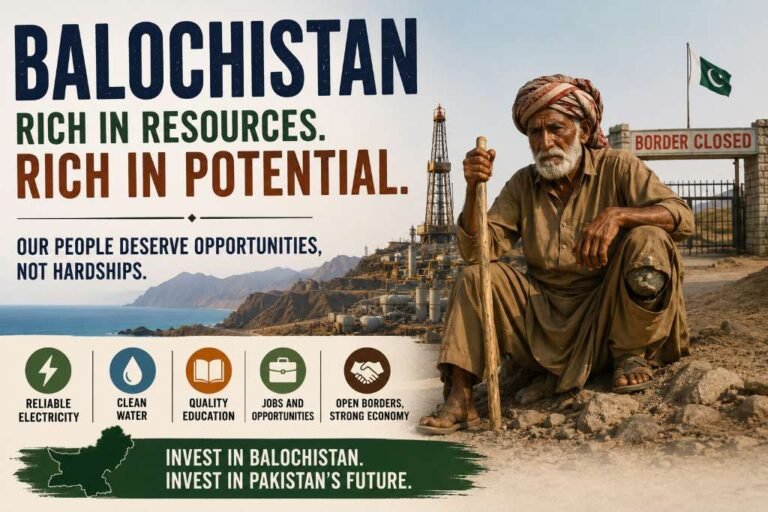
Balochistan sees major progress on CPEC energy, roads projects

0

ISLAMABAD, Dec 12 (APP): The China-Pakistan Economic Corridor (CPEC) projects have achieved significant progress across Balochistan, reflecting a renewed focus on the province’s infrastructure development, social uplift and economic integration.

According to documents available with Wealth Pakistan, in the energy sector, a landmark completed project is the 1320MW China Hub Coal Power Plant in Hub District, executed under the IPP model with an investment of USD1,912.2 million, now supplying critical baseload power to the national grid.

Connectivity improvements include the completion of Eastbay Expressway Phase-I in the IFL mode at a cost of USD179 million, 110km Khuzdar–Basima Road financed through PSDP at USD118.01 million, and New Gwadar International Airport constructed as a grant-funded project worth USD230 million. Additionally, Gwadar Port and Free Zone, developed under the BOT at a cost of USD300 million, has strengthened Pakistan’s maritime and logistics capabilities.

Under the socio-economic development initiatives, several grant-based projects have been completed to support the local communities. These include Gwadar Smart Port City Master Plan worth USD4 million, freshwater treatment facilities under PSDP costing USD130 million, Technical and Vocational Institute in Gwadar supported by a USD10 million grant, and Pak-China Friendship Hospital in Gwadar, built through a USD100 million grant.

Key socio-economic infrastructure projects also encompass 1.2 MGD Gwadar Desalination Plant with a grant of USD13.97 million, provision of 15,000 solar-powered lighting units through a grant of USD0.34 million, and upgradation of an emergency centre at Bolan Medical Complex, Quetta, supported by a grant of USD0.22 million.

Several major projects are currently under implementation in Balochistan’s connectivity network. These include 168km Awaran–Naal Road under PSDP with a cost of USD107.46 million, 103km Nokundi–Mashkhel Road, costing USD47 million, Hoshab–Awaran Section of M-8 (146 km) financed through PSDP at USD161.49 million, and Zhob–Quetta Road (298 km) estimated at USD391 million.

Work is also progressing on the infrastructure of Gwadar Free Zone Phase-II under the BOT model with an estimated investment of USD285 million.

In the industrial infrastructure domain, Bostan SEZ in Quetta, supported by PSDP financing worth USD 9 million, is advancing regional industrialization. Moreover, socio-economic measures include the establishment of a burns centre and the rehabilitation of 36,000 flood-affected houses in Balochistan.

Energy infrastructure expansion continues with the 300MW Gwadar Coal Power Project, costing USD542.32 million under the IPP model.

Meanwhile, the planned DI Khan to Zhob four-lane highway (210 km), spanning Khyber Pakhtunkhwa and Balochistan and currently under the TBD financing category, is expected to significantly improve inter-provincial connectivity.

Looking forward, ambitious projects are in the pipeline to further catalyze growth in the province.

The province is preparing for its first major urban transport system through the Quetta Mass Transit Project, aimed at easing mobility challenges in the provincial capital. To boost maritime capacity, two new PSDP-funded initiatives – dredging of berthing areas and channels (USD27 million) and construction of a breakwater (USD123 million) are expected to enhance operational efficiency at the port.

Two more higher education institutes planned in southern Punjab

0

ISLAMABAD, Dec 12 (APP): The government is planning to set up two new institutes to expand quality higher education in southern Punjab to meet growing educational needs across provinces.

According to a document available with Wealth Pakistan, proposals for establishing a public sector university in Muzaffargarh district and a science and technology institute in Rajanpur district are currently under consideration.

According to the Higher Education Commission (HEC), these projects have the potential to significantly enhance academic and technical opportunities across South Punjab.

As per the document, the HEC has expanded its efforts to strengthen access to quality higher education across Pakistan, particularly in underserved and remote regions, through the establishment of new universities, sub-campuses, and targeted development initiatives.

In recent years, several higher education institutions have been successfully established and are now fully operational. These include Karakoram International University in Gilgit, the University of Baltistan in Skardu, the Hyderabad Institute for Technology and Management Sciences in Hyderabad, and the Kalam Bibi International Women Institute in Bannu. Collectively, these institutions are designed to address regional disparities by offering modern academic programs and expanding outreach to marginalized communities.

In addition to the establishment of new universities, the federal government has funded multiple campuses of federally and provincially chartered higher education institutions in far-flung districts.

These include sub-campuses of Air University, Islamabad, in Kharian and Kamra, COMSATS University, Islamabad, in Abbottabad, Vehari and Sahiwal, the National University of Modern Languages, Islamabad, in Quetta and Mirpur, National University of Science and Technology, Islamabad, in Quetta, Institute of Space Technology, Islamabad, in Dr A. Q. Khan Institute of Computer Sciences and Information Technology, Kahuta, Rawalpindi, and National Skills University, Islamabad, in Kala Shah Kaku.

Campuses of Sardar Bahadur Khan Women University, Quetta, have been established in Pishin and Khuzdar, Lasbela University of Agriculture, Water and Marine Sciences, Uthal, in Dera Murad Jamali, and BUITEMS, Quetta, in Muslim Bagh and Zhob.

Similarly, IBA Sukkur’s campus has been set up in Mirpurkhas.

The Malakand University campus has been established in Batkhela, besides various study centres of Allama Iqbal Open University and Virtual University in the Khyber Pakhtunkhwa province.

The initiative also includes support for private-sector campuses, such as those of Riphah International University, Islamabad, in Sahiwal and Malakand; Ibadat International University, Islamabad, in Pakpattan; and National University of Computer and Emerging Sciences, Islamabad, in Chiniot and Faisalabad. The expansions signal a sector-wide strategy to address the rising demand for education across provinces.

12 energy projects completed across Sindh under CPEC

0

ISLAMABAD, Dec 11 (APP): The energy portfolio of the China-Pakistan Economic Corridor (CPEC) in Sindh’s less developed regions has recorded notable progress with the completion of 12 power projects.

The initiatives have significantly boosted electricity generation, strengthened transmission capacity, and enhanced overall energy security across the province.

According to an official document by the Ministry of Planning, Development and Special Initiatives, available with Wealth Pakistan, 12 major energy initiatives have been successfully completed across Sindh under various financing modes, including Independent Power Producer (IPP), Foreign Direct Investment (FDI) and Built-Operate-Transfer (BOT) arrangements.

In Tharparkar district, the 660MW Engro Thar Power & Mine project was completed at a cost of $995 million under the IPP mode, marking a key milestone in Pakistan’s transition toward utilising its vast indigenous coal reserves.

Four renewable energy projects have been completed in the Thatta district, including 100MW UEP Wind Farm ($250 million), the 100MW Three Gorges Wind Power project ($150 million), the 50MW Sachal Wind Farm ($134 million), and the 50MW Hydro China Dawood Wind Project ($113 million). These wind projects, completed under the IPP model, have collectively strengthened the renewable power base of Sindh and significantly contributed to Pakistan’s clean energy targets.

At Port Qasim in Karachi, the 1,320MW Port Qasim Coal Power Project was completed with an investment of $1.9 billion under the IPP model, providing one of the largest baseload power sources in the country.

Meanwhile, in Tharparker, the 7.8MTPA (million tonnes per annum) TCB-II Mine project was completed through FDI at a cost of $850 million.

Additionally, the 330MW Thar Energy Limited project costing $497 million, the 330MW ThalNova Thar Power project costing $497 million and 1,320MW Shanghai Electric (TCB-1) power project costing $1.9 billion have been completed under the IPP model in the Tharparkar district.

In addition, 7.8MTPA Thar Block-I project has been completed at a cost of $990 million on the FDI basis.

Together, these projects have deepened the energy potential of the Thar coal ecosystem and enhanced long-term energy stability.

Sindh also saw the completion of a critical national transmission project – the ±660kV Matiari-Lahore High Voltage Direct Current (HVDC) Transmission Line. Executed under the BOT mode and completed at a cost of $1.7 billion, the project links Matiari in Sindh to Lahore in Punjab, enabling long-distance, high-efficiency power transmission from south to north and marking Pakistan’s first HVDC transmission system.

Collectively, the completed CPEC energy projects in Sindh represent one of the most comprehensive provincial energy transformations under the corridor initiative, bringing together coal, wind, and transmission infrastructure with precisely documented investments that continue to support Pakistan’s economic and industrial growth.

Sindh to spend Rs 200m to upgrade environmental labs in Karachi, Hyderabad, Sukkur

0

ISLAMABAD, Dec 9 (APP): The Sindh Environmental Protection Agency (SEPA) has revised the PC-I for the expansion and strengthening of environmental laboratories in Karachi, Hyderabad and Sukkur at an estimated cost of Rs 200 million.

According to documents available with Wealth Pakistan, the initiative aims to meet the growing requirements for environmental monitoring and testing at the regional and divisional levels.

The project forms part of the Sindh government’s broader strategy to combat air pollution, enhance environmental sustainability, and safeguard natural resources. The upgraded laboratories will be equipped with state-of-the-art facilities to monitor air quality, analyse hazardous emissions, and conduct comprehensive environmental testing across multiple sectors.

The revision of the PC-I follows the Sindh cabinet’s approval of SEPA’s proposal to ban the use of substandard fuels and materials that contribute to toxic emissions in the province. This includes restrictions on the use of plastic, rubber, latex, and other hazardous substances in line with national environmental protection goals.

In parallel, the Sindh government has launched multiple initiatives to curb air pollution, including a large-scale tree plantation drive, the generation of over 2,200 megawatts of renewable energy, and the installation of air emission control systems in various parts of the province. The government is also working to solarise public buildings and improve infrastructure for flood-affected communities.

Moreover, the government has implemented a complete ban on plastic carrier bags and is encouraging industries to adopt greener practices. These include the promotion of electric vehicle services for public transport in Karachi and large-scale mangrove restoration projects.

The restoration of mangrove forests over more than 2,800 hectares in the Indus Delta is a major initiative aimed at protecting coastal ecosystems, preventing soil erosion, and reducing the impact of natural disasters.

Through these measures, SEPA aims to ensure that Sindh’s environmental monitoring infrastructure keeps pace with rapid urbanisation while mitigating the harmful effects of industrial pollution and environmental degradation.

These projects are expected not only to improve air quality and preserve biodiversity but also to advance long-term sustainability goals, positioning Sindh as a model for other provinces in addressing climate challenges and promoting eco-friendly development.

Balochistan EPA to set up 10 environmental testing labs

0

ISLAMABAD, Dec 08 (APP): The Balochistan Environmental Protection Agency (BEPA) has decided to establish 10 environmental testing laboratories across various districts of the province as part of its broader strategy to strengthen air quality monitoring and environmental protection.

According to documents available with Wealth Pakistan, the initiative forms part of a larger programme to introduce an AI-powered Air Quality Index (AQI) across all 36 districts of Balochistan.

The new laboratories will play a pivotal role in monitoring air, water, and industrial pollutants, enabling more effective enforcement of environmental laws and pollution-control policies.

The agency has already undertaken several measures to curb environmental degradation in the province. Key achievements include the relocation of 38 chromite grinding mills from densely populated areas to designated industrial zones and the installation of scrubbers in steel manufacturing units to control greenhouse gas emissions.

In addition, a complete ban has been imposed on the import of cut tyres.

The organisation has also turned its focus toward the transport sector. A proposal is under consideration for the procurement of 45 electric vehicles to replace conventional motor rickshaws in Quetta’s Central Business District to reduce vehicular emissions in the city.

The agency plans to continue vehicular emission testing and other air pollution control measures in the coming months.

By the end of 2025, the BEPA’s expanding environmental initiatives are expected to deliver tangible improvements in air quality and environmental health, positioning Balochistan as a stronger model for environmental governance in Pakistan.