
Home Blog Page 14

Sindh motorway, highway projects get Rs49.3bn in FY27

0

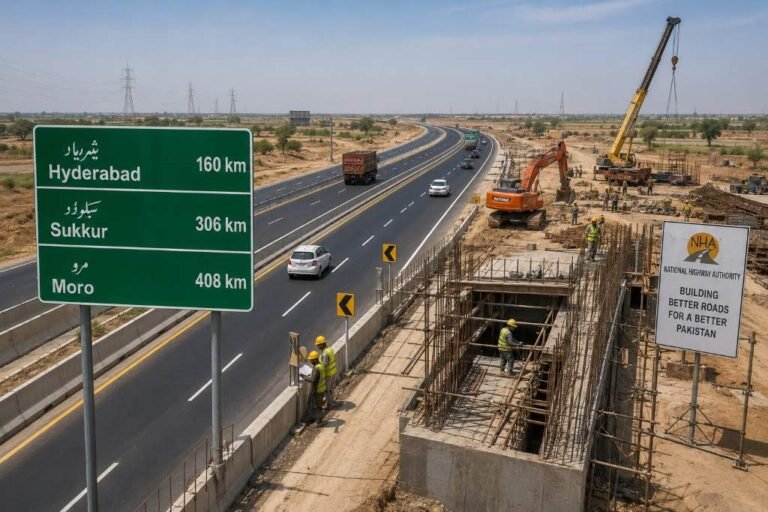
ISLAMABAD, Aug 11 (ABC): Sindh’s motorway and highway infrastructure is set for a major boost in the current financial year, with Rs49.305 billion earmarked for key projects. These include the Hyderabad-Sukkur Motorway and rehabilitation of the flood-damaged N-5 corridor.

According to official documents available with Wealth Pakistan, the Sindh component of the National Highway Authority’s Public Sector Development Programme (PSDP) 2026-27 covers nine motorway and highway projects.

These projects have a combined approved PC-I cost of Rs594.977 billion. Cumulative expenditure stood at Rs122.508 billion by June 2026, while the remaining throw-forward liability was Rs472.469 billion as of July 1.

Of the total FY27 allocation, Rs8.055 billion will come from local funding and Rs41.25 billion from foreign assistance.

Hyderabad-Sukkur Motorway gets biggest allocation

The government has earmarked the largest share of Rs30 billion for the 306-kilometre Hyderabad-Sukkur Motorway. The six-lane, divided and fenced motorway is planned on a build-operate-transfer basis.

The project carries an approved cost of Rs363.7 billion and a throw-forward liability of Rs363.691 billion. Its FY27 allocation includes Rs2 billion in local funding and Rs28 billion in foreign assistance.

According to the documents, authorities expect to finalise the procurement process in November 2026.

Another Rs9 billion has been allocated for rehabilitation and reconstruction of the N-5 section between Moro and Ranipur. The work covers kilometres 318 to 404 on both northbound and southbound carriageways. It also includes restoration of 32 damaged bridges.

The project has an approved cost of Rs57.245 billion. Expenditure reached Rs13.224 billion by June 2026, leaving a throw-forward liability of Rs44.021 billion.

Its FY27 allocation comprises Rs1.75 billion in local funding and Rs7.25 billion in foreign assistance. Physical progress has reached 23% on Lot-1 and 19% on Lot-2, with completion targeted for June 30, 2027.

N-55 expansion receives Rs5bn

The NHA has earmarked Rs5 billion for construction of a 221.9-kilometre additional carriageway on the Indus Highway (N-55) between Shikarpur and Rajanpur. The allocation includes Rs4 billion in foreign assistance.

The project has an approved cost of Rs44.704 billion, while expenditure stands at Rs32.108 billion. Its remaining throw-forward liability amounts to Rs12.596 billion.

Physical progress has reached 24% on Lot-1, 21% on Lot-2, 79% on Lot-3 and 73% on Lot-4. The NHA has targeted October 2026 for completion.

A further Rs2.5 billion has been allocated for the China-aided rehabilitation of the 66-kilometre Hala-Moro section of N-5. The project has an approved cost of Rs27.973 billion, and its procurement process has been finalised.

Other road projects advance

The government has allocated Rs1 billion for construction of a four-lane flyover at the junction of N-5 and N-65 in Sukkur, along with approach roads.

The Rs2.792 billion project has achieved 62% physical progress. Authorities have targeted April 13, 2027, for completion, subject to the availability of funds.

Another Rs800 million has been earmarked for land acquisition, compensation for affected properties and relocation of utilities for the 959-kilometre Karachi-Lahore Motorway.

The Rs66.742 billion scheme has achieved 68% physical progress. The authorities expect to complete it by December 2026, subject to funding availability.

The Bhong Interchange on the Sukkur-Multan Motorway has received an allocation of Rs100 million. The Rs1.780 billion project is 75% complete and scheduled for completion by August 31, 2026.

The CAREC Corridor Development Investment Programme Tranche-I projects have received Rs830 million. Sections 1 and 3 are complete, while Section 2 has achieved 95% physical progress.

The government has also earmarked Rs75 million for the commercial feasibility study of the proposed new Karachi-Hyderabad Motorway under the public-private partnership model.
Punjab’s wheat stocks sufficient to meet demand until next harvest

0

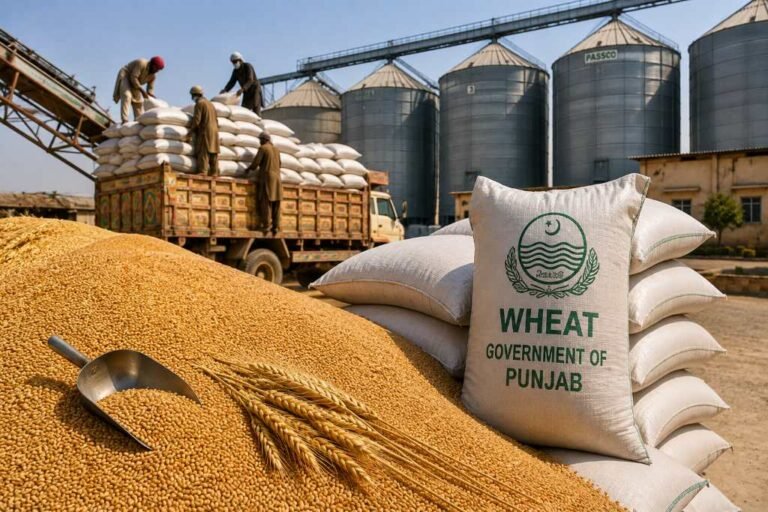
LAHORE, Aug 10 (ABC): Punjab has sufficient wheat stocks to meet the province’s consumption requirements until the arrival of the next crop, with this year’s record harvest creating a substantial surplus.

Punjab produced more than 22 million metric tonnes of wheat this year. The output exceeded the province’s annual consumption requirement by around 5.5 million metric tonnes.

Speaking to Wealth Pakistan, Director General of the Punjab Food Department Amjad Hafeez said the government had started releasing wheat received from the Pakistan Agricultural Storage and Services Corporation (PASSCO) to flour mills.

He said the releases formed part of the government’s strategy to ensure uninterrupted flour production and maintain market stability.

Wheat supplied to flour mills

Hafeez said the government was supplying wheat to eligible flour mills at Rs3,800 per 40 kilograms under approved criteria. The authorities are carrying out the distribution transparently and on merit.

“The initiative will play an important role in stabilising flour prices by ensuring a steady supply of wheat to flour mills,” he said.

According to Hafeez, the measure will support flour availability at government-notified rates. It will also establish a price benchmark in the market and discourage unnecessary price increases.

He said the government’s foremost priority was to ensure that consumers continued to receive quality flour at affordable prices.

“Approximately 850,000 to 900,000 bags of 10kg and 20kg flour are being supplied daily across Punjab at notified prices of Rs1,100 and Rs2,200, respectively, to ensure adequate availability and protect consumers from price volatility,” he said.

Responding to a question about wheat imports, Hafeez said the federal government would make any such decision. It determines national requirements based on production, consumption and overall food security considerations.

Millers welcome wheat releases

Flour millers have welcomed the government’s wheat releases as a positive step towards stabilising market prices. However, they believe broader coverage could further strengthen the impact.

Speaking to Wealth Pakistan, former Central Chairman of the Pakistan Flour Mills Association (PFMA) Asim Ahmad Raza said the government was currently supplying around 30% of Punjab’s daily wheat requirement.

He said increasing the volume of wheat releases could exert greater downward pressure on open-market wheat and flour prices.

Raza said the government was currently supplying subsidised wheat mainly to flour mills in divisional headquarters. Extending the programme to mills in smaller towns and other parts of Punjab would broaden its benefits, he added.

He said such an expansion could contribute to greater price stability across the province.

Raza also called for timely adjustments to the existing wheat policy to minimise price fluctuations until the next crop arrives.

“The government should continue consulting all stakeholders while formulating wheat-sector policies to ensure stable supplies and affordable flour prices,” he said.

Pakistan mango exports reach 44,882 tonnes as 2026 season progresses

0

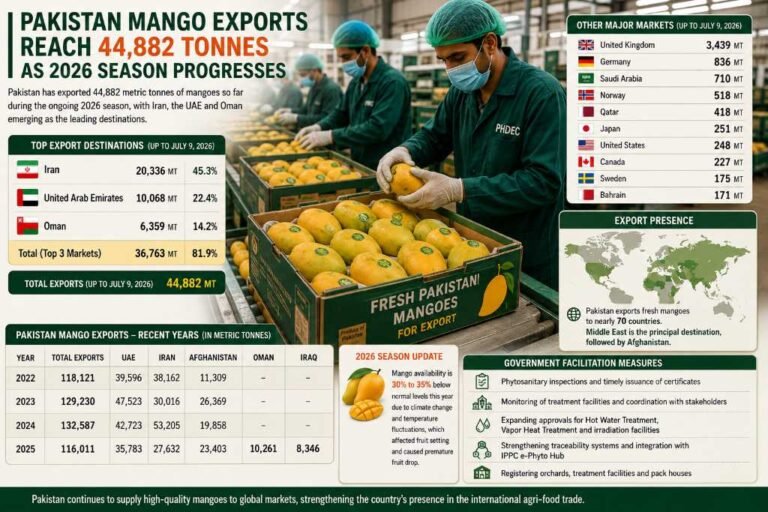
LAHORE, Aug 10 (ABC): Pakistan has exported 44,882 metric tonnes of mangoes so far during the ongoing 2026 season, with Iran, the United Arab Emirates and Oman emerging as the leading destinations.

According to official documents available with Wealth Pakistan, Iran led Pakistan’s mango exports with shipments of 20,336 metric tonnes up to July 9. The UAE followed with 10,068 metric tonnes, while Oman received 6,359 metric tonnes.

Together, the three markets imported 36,763 metric tonnes, accounting for nearly 82% of Pakistan’s mango exports recorded during the period.

The 44,882 metric tonnes represent mid-season figures rather than the country’s full-season export performance. Mango harvesting and overseas shipments were still underway, and the final export volume is expected to rise as the season progresses.

High-value markets receive Pakistani mangoes

Pakistan also continued supplying mangoes to several high-value international markets. The United Kingdom received 3,439 metric tonnes up to July 9, while shipments to Germany reached 836 metric tonnes.

Saudi Arabia imported 710 metric tonnes, followed by Norway with 518 metric tonnes and Qatar with 418 metric tonnes.

Other destinations included Japan with 251 metric tonnes, the United States with 248 metric tonnes and Canada with 227 metric tonnes. Sweden received 175 metric tonnes and Bahrain 171 metric tonnes.

The documents show that Pakistan exports fresh mangoes to nearly 70 countries. The Middle East remains the principal destination, followed by Afghanistan.

The European Union, United Kingdom, Japan, South Korea, China, Australia, Canada and the United States are among important high-value markets. Exporters must meet specific phytosanitary import requirements to access these destinations.

Mango exports show strong international presence

Pakistan’s mango export performance in recent years demonstrates the sector’s capacity to supply substantial volumes to international markets.

Fresh mango exports stood at 118,121 metric tonnes in 2022. They increased by around 9.4% to 129,230 metric tonnes in 2023.

Shipments rose by another 2.6% to 132,587 metric tonnes in 2024, the highest level during the period covered by the documents. Exports subsequently stood at 116,011 metric tonnes in 2025.

Pakistan’s leading mango export destinations have also changed over the years. The UAE was the largest market in 2022, receiving 39,596 metric tonnes, followed closely by Iran with 38,162 metric tonnes.

The UAE retained the top position in 2023 as shipments increased to 47,523 metric tonnes. Iran received 30,016 metric tonnes during the year. Meanwhile, exports to Afghanistan more than doubled from 11,309 metric tonnes in 2022 to 26,369 metric tonnes in 2023.

Iran became the largest market in 2024, importing 53,205 metric tonnes. The UAE received 42,723 metric tonnes, while Afghanistan accounted for 19,858 metric tonnes.

In 2025, the UAE again emerged as the leading destination with imports of 35,783 metric tonnes. Iran followed with 27,632 metric tonnes and Afghanistan with 23,403 metric tonnes. Oman received 10,261 metric tonnes, while shipments to Iraq reached 8,346 metric tonnes.

Climate pressures affect 2026 season

The 2026 mango export season is progressing despite lower fruit availability.

According to the Pakistan Horticulture Development and Export Company, mango availability is 30% to 35% below normal levels this year. Climate change and temperature fluctuations affected fruit setting and caused premature fruit drop.

The government continues to facilitate mango exports through phytosanitary inspections and timely issuance of certificates. It is also monitoring treatment facilities and coordinating with relevant stakeholders.

Other measures include expanding approvals for Hot Water Treatment, Vapor Heat Treatment and irradiation facilities. Authorities are also strengthening traceability systems and integrating with the International Plant Protection Convention’s e-Phyto Hub.

The government is also registering orchards, treatment facilities and pack houses to strengthen compliance with international phytosanitary requirements and facilitate Pakistan’s access to global mango markets.

Sindh launches 24/7 flood monitoring system

0

ISLAMABAD, Aug 7 (ABC): The Sindh government has launched a round-the-clock monsoon and flood monitoring system under its Monsoon Contingency Plan 2026 to strengthen preparedness and improve monitoring of rainfall, river flows and potential flood risks across the province.

According to official documents available with Wealth Pakistan, the Irrigation Department approved the plan and is implementing it across Sindh as part of the province’s annual flood management strategy.

The department prepares and issues a comprehensive contingency plan every year before the onset of the monsoon season to ensure timely coordination and an effective response to potential flooding.

Round-the-clock monitoring

As part of the plan, the Irrigation Department established a Monsoon and Flood Monitoring Cell last month at the office of the Director Regulation in Karachi.

The monitoring cell will operate 24 hours a day throughout the monsoon season. It will provide continuous oversight of weather conditions and hydrological developments across the province.

The system will monitor rainfall, river flows, water discharges and the overall flood situation. It will also assess changing monsoon conditions to help authorities respond quickly to emerging risks.

Faster coordination during emergencies

According to the documents, the centralised monitoring mechanism will support faster decision-making and improve coordination among field formations during emergencies.

The contingency framework forms part of Sindh’s broader flood management strategy to strengthen disaster preparedness and reduce the impact of heavy rainfall and flooding through real-time monitoring and timely dissemination of information.

The documents state that the institutional framework is designed to improve operational readiness and ensure that relevant authorities remain prepared to respond effectively to flood-related emergencies during the 2026 monsoon season.

Pakistan receives 258 Chinese farm machines under CPEC

0

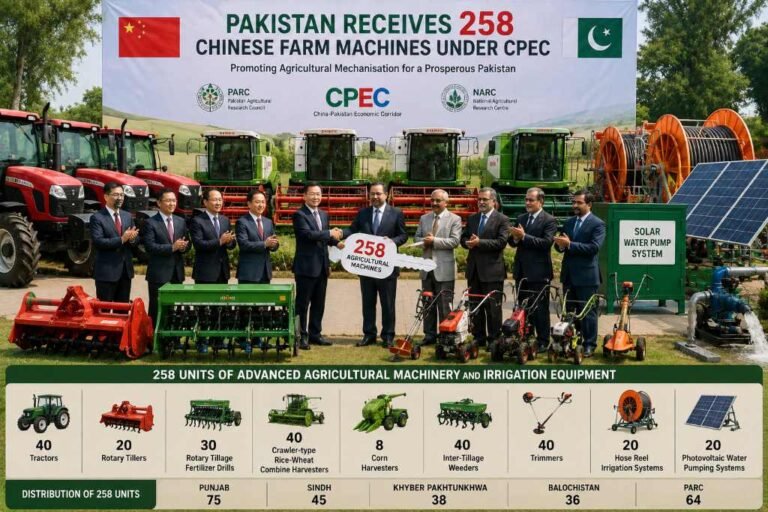
ISLAMABAD, Aug 7 (ABC): Pakistan has received 258 units of advanced agricultural machinery and irrigation equipment from China under China-Pakistan Economic Corridor (CPEC) cooperation to support the modernisation of the country’s agriculture sector.

According to official documents available with Wealth Pakistan, the Pakistan Agricultural Research Council’s (PARC) Agricultural Engineering Institute at the National Agricultural Research Centre (NARC) received and assembled the equipment before formally inaugurating and distributing it to PARC and provincial governments for technology demonstration and adoption.

The package comprises nine categories of machinery and equipment. These include 40 tractors, 20 rotary tillers, 30 rotary tillage fertilizer drills, 40 crawler-type rice-wheat combine harvesters, eight corn harvesters, 40 inter-tillage weeders, 40 trimmers, 20 hose reel irrigation systems and 20 photovoltaic water pumping systems.

Of the total 258 units, 75 were distributed to Punjab, 45 to Sindh, 38 to Khyber Pakhtunkhwa, 36 to Balochistan and 64 to PARC.

Mechanisation under reform programme

The machinery forms part of the Prime Minister’s Agriculture Modernization Initiative, a flagship programme to transform Pakistan’s agriculture into a modern, technology-driven, climate-resilient and export-oriented sector.

The initiative aims to increase productivity, strengthen food security, promote value addition and improve the competitiveness of Pakistan’s agri-food system.

The recently approved National Agricultural Biotechnology Policy 2026 and National Seed Policy 2026 support the initiative. These policies provide a framework for accelerating the development and commercialisation of improved crop varieties, promoting biotechnology and genome-based research, strengthening the national seed system, encouraging private-sector investment, improving quality assurance and expanding access to climate-resilient, high-yielding varieties.

Pakistan-China research collaboration

A key component of the initiative is strategic collaboration between PARC and the Chinese Academy of Agricultural Sciences (CAAS).

The federal government granted in-principle approval in March 2026 to restructure PARC on the lines of CAAS. It also constituted a dedicated working group to oversee the transformation.

The restructuring plan includes the establishment of five Centres of Excellence at NARC, Islamabad. These centres will focus on genome-based research in field and horticultural crops, livestock improvement and health management, climate-smart solutions for land, water and energy, artificial intelligence in agri-food systems, and food processing and value addition.

The initiative also includes a Centre of Excellence for Advanced Agricultural Mechanization and Digital Agriculture at PARC in collaboration with CAAS. The centre will support research, testing, demonstration and commercialisation of precision agriculture, artificial intelligence, robotics, the Internet of Things (IoT), drones and climate-smart agricultural machinery.

Capacity building and training

The ministry is also pursuing a broader agricultural mechanisation strategy. It includes developing a National Agricultural Mechanization Policy, strengthening indigenous machinery research, establishing a national machinery testing and certification system, promoting local manufacturing of advanced farm machinery, expanding Custom Hiring Centres through public-private partnerships, strengthening post-harvest mechanisation and enhancing the capacity of agricultural engineers through specialised training.

Another major component of the initiative is the Prime Minister’s programme to train 1,000 Pakistani agricultural graduates in China.

So far, 885 graduates have completed specialised training, while the remaining 115 are expected to depart shortly, completing the programme.

The training covers nine priority areas, including aquaculture, crop breeding and genomics, farm mechanisation, fruit and vegetable processing, high-efficiency irrigation systems, drones, artificial intelligence and IoT, livestock breeding and genomics, livestock disease surveillance, and seed production and processing technologies.

According to the documents, the trained graduates will serve as master trainers. They will transfer modern agricultural knowledge and technologies to farmers, extension services, researchers and educational institutions across Pakistan. The programme is expected to accelerate the adoption of hybrid seeds, precision agriculture, mechanisation, water-efficient technologies and value-added processing while strengthening agricultural productivity and competitiveness.

Over Rs163bn spent on nine CPEC road projects in Balochistan

0

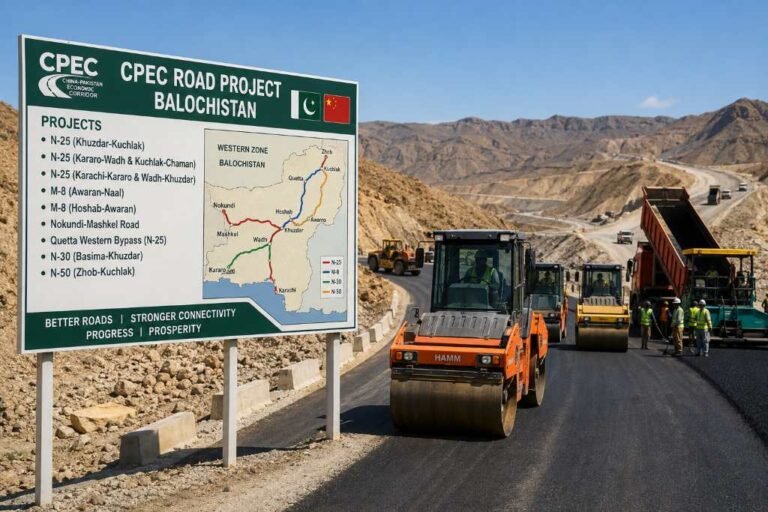
ISLAMABAD, Aug 6 (ABC): The government has spent more than Rs163 billion on nine under-construction China-Pakistan Economic Corridor (CPEC) road projects in Balochistan’s western zone since the Public Sector Development Programme (PSDP) 2022-23, against total allocations exceeding Rs310 billion.

According to official data available with Wealth Pakistan, the nine projects received a combined allocation of Rs310.30 billion between PSDP 2022-23 and PSDP 2026-27. Releases and expenditures reached Rs163.17 billion during the period.

The projects cover key sections of National Highways N-25, N-30 and N-50, as well as the M-8 Motorway, aiming to improve regional connectivity and strengthen CPEC transport infrastructure in Balochistan.

N-25 receives the largest share

The largest allocation of Rs82.6 billion went to the 330-kilometre Khuzdar-Kuchlak section of National Highway N-25. Releases and expenditures on the project reached Rs40.67 billion.

Another Rs81 billion was allocated for the 187-kilometre Kararo-Wadh and Kuchlak-Chaman sections of N-25, with releases and expenditures amounting to Rs25.29 billion.

The 273-kilometre Karachi-Kararo and Wadh-Khuzdar sections of N-25 received Rs63 billion. The government has released and spent Rs33.54 billion on the project so far.

Progress on M-8 and other highways

Among the M-8 Motorway projects, the 168-kilometre Awaran-Naal section received an allocation of Rs26.03 billion. Releases and expenditures reached Rs20.02 billion.

The 146-kilometre Hoshab-Awaran section was allocated Rs14.79 billion, while spending and releases stood at Rs9.40 billion.

The remaining projects include the 103-kilometre Nokundi-Mashkel Road, which received Rs7.84 billion and recorded Rs6.90 billion in releases and expenditures.

The 22.7-kilometre Quetta Western Bypass on N-25 received Rs6.91 billion, with Rs5.95 billion released and spent.

The government allocated Rs13.55 billion for the 106-kilometre Basima-Khuzdar section of National Highway N-30. Releases and expenditures on the project reached Rs12.97 billion.

The 298-kilometre Zhob-Kuchlak section of National Highway N-50 received Rs14.58 billion, while spending and releases totalled Rs8.43 billion.

Overall investment

According to the official data, the government allocated Rs310.30 billion for the nine CPEC road projects in Balochistan’s western zone between PSDP 2022-23 and PSDP 2026-27.

During the same period, releases and expenditures reached Rs163.17 billion, reflecting continued investment in strategic transport infrastructure under the China-Pakistan Economic Corridor.

KP govt plans Rs47bn programme for merged districts

0

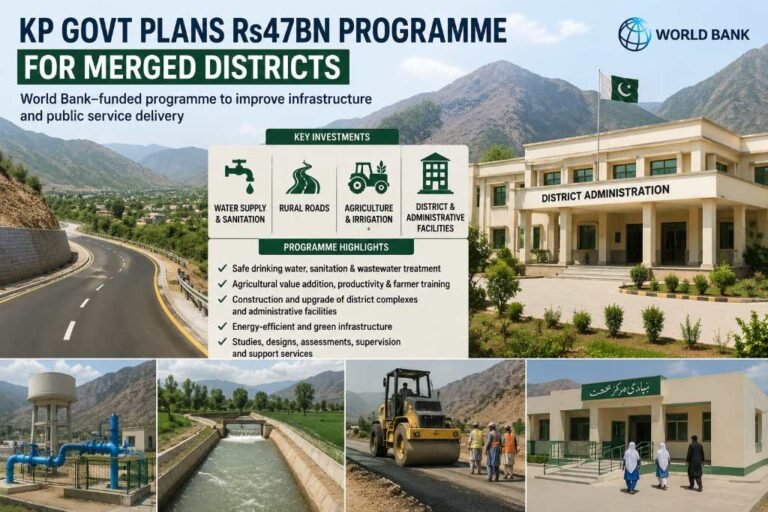
ISLAMABAD, Aug 6 (ABC): The Khyber Pakhtunkhwa government plans to launch a US$175 million (Rs47.25 billion) World Bank-funded programme to expand infrastructure and improve public service delivery across the province’s merged districts.

According to official documents available with Wealth Pakistan, the project, titled “Multisectoral Investments and Improved Service Delivery in Merged Areas,” will finance investments in water supply, sanitation, rural roads, agriculture and irrigation infrastructure.

The programme will prioritise underserved areas to improve connectivity, boost economic productivity and strengthen human capital.

Infrastructure and public services

The water sector component will provide safe drinking water, sanitation services and wastewater treatment facilities.

Agricultural interventions will focus on value addition, crop processing, diversification, productivity enhancement, marketing and farmer training across key sectors.

The programme also includes the construction, refurbishment and expansion of district complexes and sub-divisional administrative facilities. It will also develop connecting roads to strengthen administrative integration between local systems and provincial line departments.

Green infrastructure

According to the documents, all new public facilities will incorporate energy-efficient and environmentally friendly designs.

Project planning will also follow principles that promote greater citizen inclusion and improve access to public services.

Technical support

The project will finance feasibility studies, engineering designs, surveys, environmental and social assessments, and site-specific environmental and social management plans.

It will also support labour management plans, construction supervision and other technical services required for project implementation.

Under the arrangement, the Khyber Pakhtunkhwa government will provide land for district complexes. It will also bear the staff costs of technical and field personnel supporting the project.

According to the documents, the investment aims to strengthen infrastructure and improve public service delivery throughout the merged districts.