


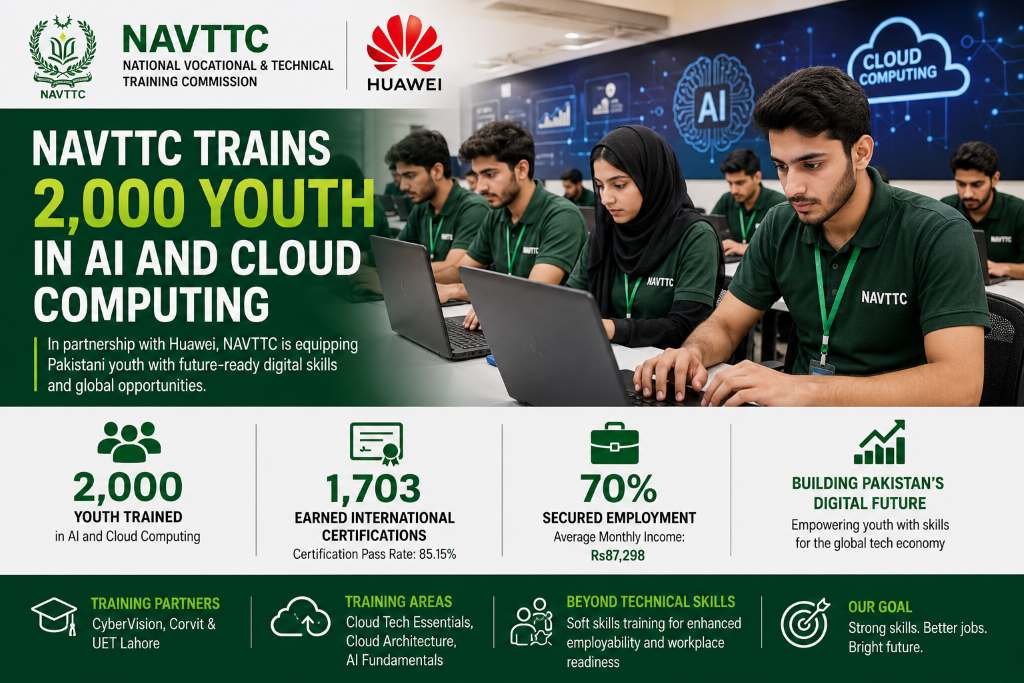
ISLAMABAD, June 07 (ABC): The National Vocational and Technical Training Commission (NAVTTC) has trained 2,000 youth in artificial intelligence (AI) and cloud computing. Moreover, 1,703 participants earned international certifications, while 70% secured employment under the programme.
According to official documents available with Wealth Pakistan, NAVTTC launched the initiative in partnership with Huawei. The programme focused on cloud tech essentials, cloud architecture and AI fundamentals. As a result, participants gained skills aligned with global technology trends.
Certification success highlights programme impact
The documents show that 2,000 participants completed training through CyberVision, Corvit and the University of Engineering and Technology (UET) Lahore.
Out of the total trainees, 1,703 obtained international certifications. Consequently, the programme achieved a certification pass rate of 85.15%.
In addition, authorities completed all international certification requirements. They also finalized placement verification for graduates.
Employment outcomes exceed expectations
The programme recorded an employment rate of 70%. Furthermore, graduates reported an average monthly income of Rs87,298.
NAVTTC designed the pilot project with employability as a key objective. Therefore, it targeted job placement rates ranging from 60% to 80%.
At the same time, the programme combined technical instruction with soft-skills development. This approach improved workplace readiness and enhanced career prospects for participants.
Digital skills drive economic opportunities
The successful pilot phase has created momentum for the next training batch. Accordingly, NAVTTC has already placed a new phase of training in the pipeline.
The initiative forms part of broader efforts to strengthen Pakistan’s digital workforce. It also aims to equip youth with globally recognised technology credentials.
Moreover, the programme supports the country’s transition towards a knowledge-based economy. As demand for digital expertise continues to rise, such initiatives are becoming increasingly important.
The strong certification and employment results highlight the effectiveness of public-private partnerships. In particular, they demonstrate how collaboration can help address skills gaps in cloud computing, artificial intelligence and other emerging technologies.