


By Mahnaz Imdad
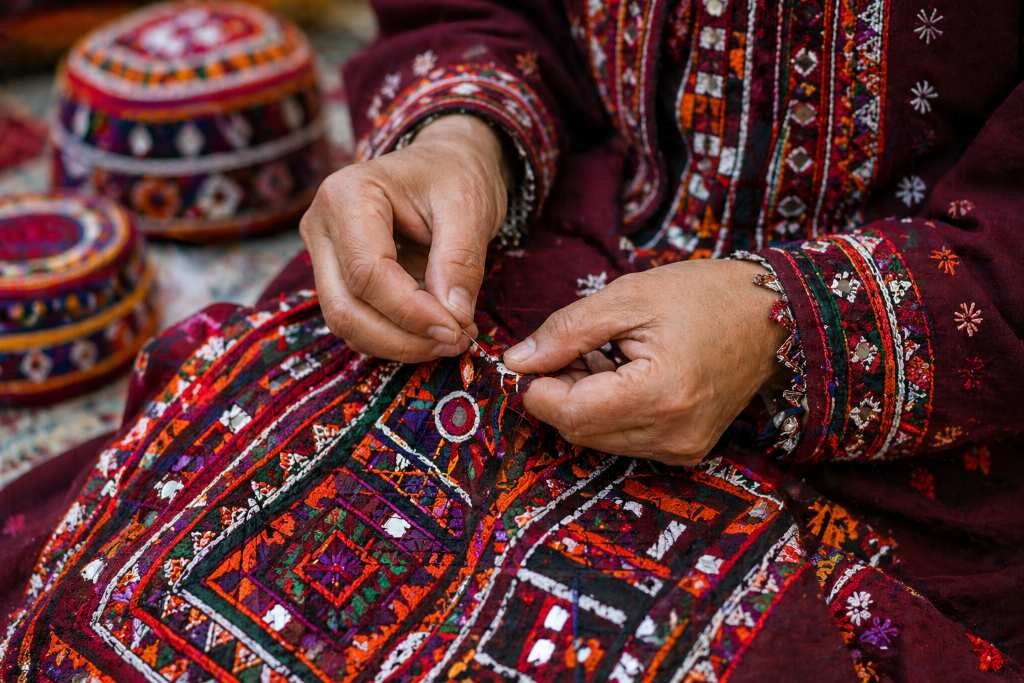
Balochi embroidery is not simply a craft—it is a living archive of identity, history, and cultural memory. In the rugged landscapes of Balochistan, this centuries-old art form has survived not because of institutional support, but because of the quiet, consistent labour of women who stitch their heritage into fabric, thread by thread.
At its core, Balochi embroidery is a language. Its intricate geometric patterns are not random designs; they are inherited codes, passed down across generations. Each motif tells a story—of tribe, lineage, and belonging. In a region where oral traditions dominate, embroidery becomes a visual record of identity, preserving what words often cannot.
What sets this craft apart is its astonishing precision. Entirely handmade, Balochi embroidery demands patience that borders on devotion. A single piece can take weeks, sometimes months, to complete. Every stitch is counted, every pattern measured, ensuring symmetry that machines struggle to replicate. In an era of speed and mass production, this slow, meticulous process is both its strength—and its vulnerability.
The guardians of this tradition are overwhelmingly women. From a young age, girls learn the art from their mothers and elders, not in formal classrooms but within homes. This transfer of knowledge is more than skill-building—it is cultural continuity. Yet, beyond preservation, embroidery also offers women a rare pathway to economic participation. For many in rural Balochistan, it is one of the few accessible means of income, providing both dignity and a degree of financial independence.
The visual power of Balochi embroidery lies in its bold use of color. Deep reds, vibrant blues, bright yellows, and earthy greens reflect both the natural environment and the celebratory spirit of the culture. Often, tiny mirrors are embedded into the fabric, catching light and symbolizing joy. These are not just aesthetic choices—they are expressions of life, resilience, and festivity.
Traditional garments such as the pashk and dosh are more than clothing; they are statements of pride. Worn at weddings and cultural gatherings, they embody heritage in its most visible form. To wear Balochi embroidery is not to follow fashion—it is to assert identity.
Yet, this rich tradition now stands at a crossroads. The rise of machine-made textiles and fast fashion has flooded markets with cheaper, quicker alternatives. While accessible, these products lack the authenticity and cultural depth of handmade embroidery. The result is a shrinking demand for original craftsmanship, pushing artisans to the margins.
This is not merely an economic issue—it is a cultural one. When traditional crafts disappear, entire histories fade with them. Balochi embroidery risks becoming a museum artifact rather than a living practice.
However, the solution is not complicated—it is commitment. Governments and cultural institutions must move beyond symbolic appreciation and invest in practical support: training programs, financial assistance, and structured market access. Designers and fashion houses should integrate Balochi patterns into contemporary collections, ensuring relevance without erasing authenticity.
Equally important is the role of digital platforms. Social media and e-commerce have the power to take this local craft to global audiences. With the right visibility, Balochi embroidery can tap into the growing international demand for handmade, sustainable products—turning cultural preservation into economic opportunity.
Tourism, too, offers untapped potential. Cultural festivals, exhibitions, and artisan markets can showcase this craft as a symbol of Pakistan’s rich heritage. For visitors, authenticity is the attraction—and Balochi embroidery offers exactly that.
Ultimately, preserving this art is not just about saving a tradition—it is about protecting identity. In a rapidly homogenizing world, cultural diversity is a strength, not a relic. Balochi embroidery represents resilience, creativity, and continuity. Losing it would mean losing a part of Pakistan’s soul.
The question, then, is simple: will we allow this heritage to fade, or will we give it the recognition and support it deserves?