


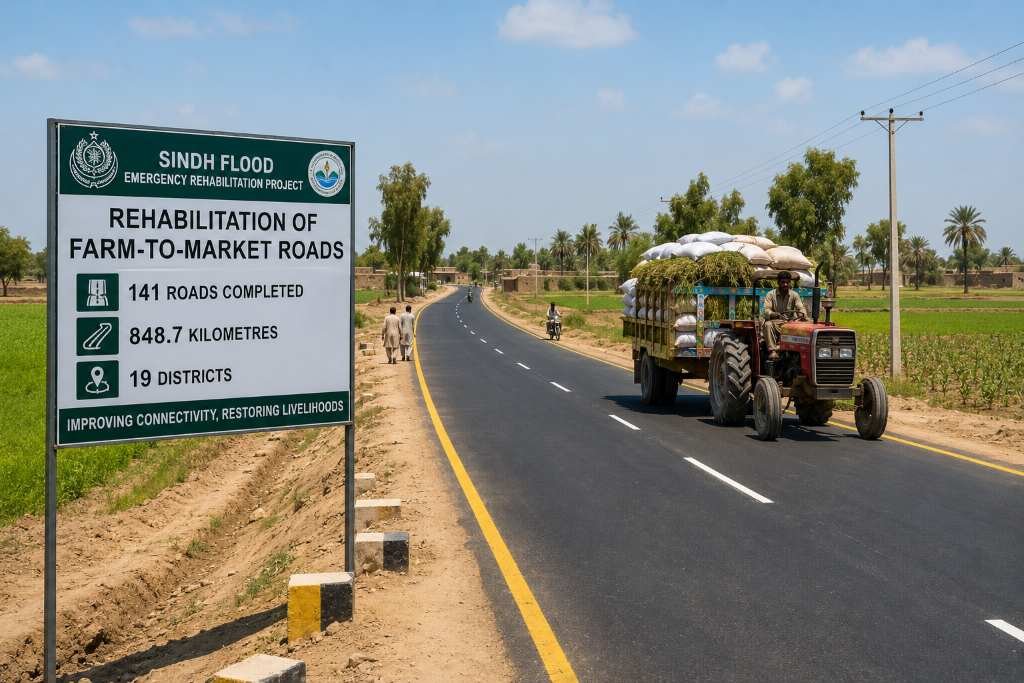
ISLAMABAD, July 09 (ABC): Sindh has completed the rehabilitation of 141 flood-hit farm-to-market roads covering 848.7 kilometres across 19 districts under the Sindh Flood Emergency Rehabilitation Project.
According to official documents available with Wealth Pakistan, the completed road network will restore mobility, improve market access and strengthen rural connectivity in flood-affected areas.
Roads restored across 19 districts
The rehabilitated roads cover Jamshoro, Dadu, Naushahro Feroze, Thatta, Sujawal, Hyderabad, Matiari, Tando Allahyar, Badin, Tharparkar, Sanghar, Mirpurkhas, Shaheed Benazirabad, Larkana, Umerkot, Khairpur, Shikarpur, Kambar Shahdadkot and Sukkur.
The road component had a completion deadline of December 2027. However, official records show that authorities have already completed the entire package.
The restored road network is expected to benefit around five million people, both directly and indirectly. It will improve access to farms, markets, schools, healthcare facilities and local commercial centres.
Project delivers wider rehabilitation gains
The documents also highlight broader progress under the Sindh Flood Emergency Rehabilitation Project.
So far, the project has benefited 2.420 million people against an overall target of 5.3 million.
Women account for 1.171 million beneficiaries, compared with the overall target of 2.650 million.
In addition, the project has benefited 428,000 households against the target of 600,000.
Authorities have also rehabilitated 205 kilometres of embankments using improved designs, compared with the target of 250 kilometres.
Meanwhile, rehabilitation work has restored 157,000 hectares of land against the overall target of 180,000 hectares.
Better connectivity to support rural economy
The completion of farm-to-market roads marks an important step in Sindh’s post-flood recovery.
Improved rural roads reconnect villages with markets and reduce transport costs. They also help farmers move crops and livestock more efficiently while improving access to schools, healthcare facilities and other essential services.
According to the documents, stronger road connectivity will support agriculture, encourage small businesses and create better economic opportunities for rural communities.