


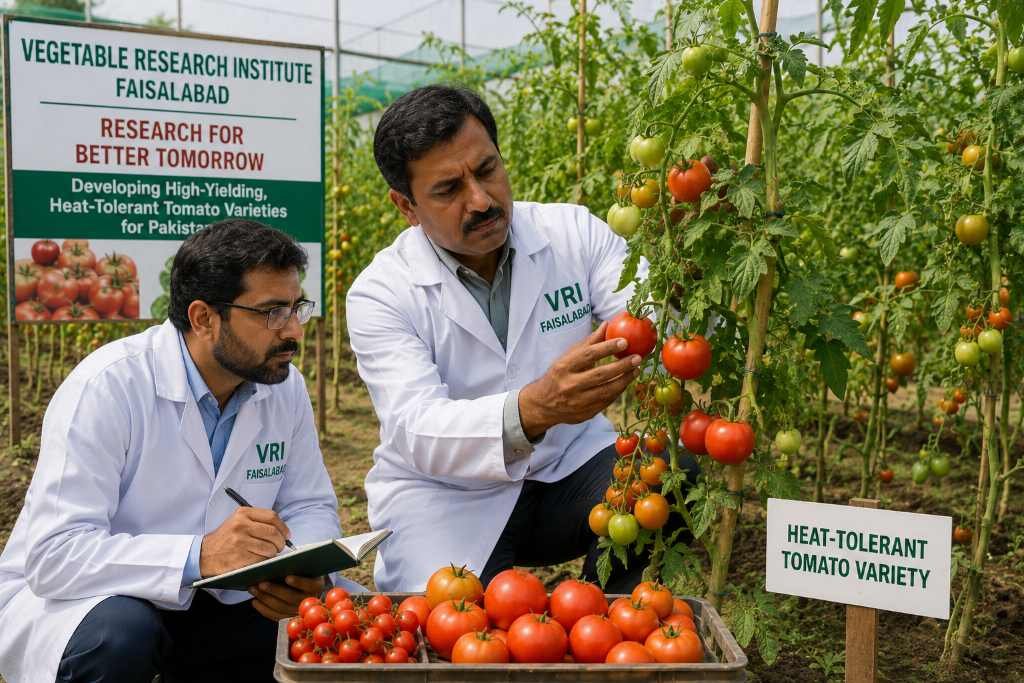
LAHORE, July 8 (ABC): Scientists at the Vegetable Research Institute (VRI), Faisalabad, are developing high-yielding, heat-tolerant tomato varieties to help reduce recurring tomato shortages in Pakistan.
“We are currently developing hybrid tomato varieties that can withstand high temperatures and resist viral diseases,” said Ghazanfar Hammad, Principal Scientist at VRI, Faisalabad.
Talking to Wealth Pakistan, he said the institute expects to release the new varieties commercially within the next two to three years.
New varieties to ensure stable supply
The researchers are developing the new varieties for cultivation during relatively moderate temperatures. This approach aims to ensure a more consistent tomato supply and reduce shortages during lean production seasons.
Ghazanfar Hammad said VRI is also developing local cherry tomato varieties. At present, gardeners mainly grow cherry tomatoes from imported seed.
“The local cherry tomato varieties will offer Pakistani consumers tomatoes with different tastes, colours and sizes,” he said.
Weather disrupts tomato production
According to Ghazanfar Hammad, tomato demand remains stable throughout the year. However, production fluctuates because of seasonal and weather-related factors.
These fluctuations often cause shortages and sharp price increases. Punjab, which contributes only about 20% of Pakistan’s total tomato production, is particularly affected.
Pakistan produces around 4.2 million tonnes of tomatoes every year. However, the country consumes almost the entire crop as fresh produce because the tomato processing industry remains underdeveloped.
Punjab grows tomatoes mainly in Muzaffargarh, Khushab, Sheikhupura, Multan, Faisalabad, Vehari, Khanewal and Gujranwala. The province supplies the market from April to June.
From June to November, Khyber Pakhtunkhwa and Balochistan meet most of the country’s demand. Sindh supplies tomatoes from December to April.
However, extreme weather events and floods frequently disrupt production and create severe market shortages, Ghazanfar Hammad said.
Imports help bridge supply gap
Vegetable traders said Pakistan usually imports tomatoes from neighbouring countries, especially Iran and Afghanistan, to bridge the gap between domestic production and market demand.
“This year, Pakistan could not import tomatoes from either country, which caused a sharp increase in prices,” Saddam Athar Khan, Secretary General of Anjuman-e-Tajiran, Badami Bagh Vegetable Market, told Wealth Pakistan.
He said tomato prices climbed to as high as Rs350 per kilogram in June.
He expressed hope that high-yielding and off-season tomato varieties would reduce import dependence and help stabilise prices.
Processing can reduce post-harvest losses
Food technologists say tomatoes are highly perishable, making long-term storage difficult.
“The best way to ensure tomato availability during lean months is to preserve tomatoes as paste, chutneys or ketchup,” said Dr Ahmad Din, Assistant Professor at the National Institute of Food Science and Technology, Faisalabad.
Talking to Wealth Pakistan, he said processors should boil, peel and remove the seeds from tomatoes during the glut season, particularly in April. They should then convert the tomatoes into paste, add a suitable preservative and store the product at about four degrees Celsius.
“You can use the preserved tomato paste throughout the year in different dishes or further process it into ketchup and other products,” he said.