


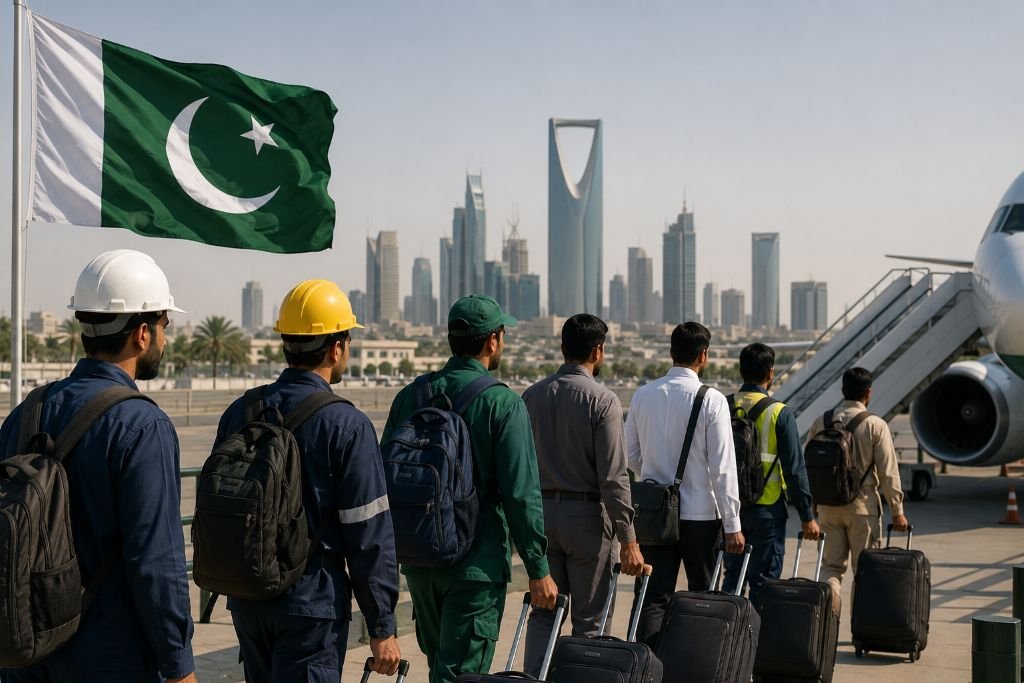
ISLAMABAD, Jun 28 (ABC): Pakistan has set a target of deploying one million workers to Saudi Arabia by 2030. The initiative forms part of a long-term workforce development strategy aimed at strengthening labour mobility, human capital development and economic cooperation between the two countries.
According to official documents available with Wealth Pakistan, the target is included in the Human Resource Deployment Plan (2025-2039). The plan was developed under the Saudi-Pakistan Economic Cooperation Framework (SPECF) in line with Saudi Arabia’s Vision 2030.
Pakistan sets ambitious workforce target
The plan envisages increasing annual overseas deployments to 1.51 million workers by 2039 through a structured pipeline of skilled, semi-skilled and highly qualified manpower. The targeted sectors include construction, hospitality and tourism, healthcare, information technology, logistics, aviation and infrastructure development.
Saudi Arabia remains the largest destination
Saudi Arabia continues to be the leading destination for Pakistani workers. According to the Bureau of Emigration and Overseas Employment (BE&OE), 762,499 Pakistanis registered for overseas employment during 2025. Of these, 530,256, or 69.54%, moved to Saudi Arabia.
More than 96% of Pakistani workers proceeding abroad through official channels found employment in Gulf Cooperation Council (GCC) countries, particularly Saudi Arabia and the United Arab Emirates.
The documents note that Saudi Arabia’s Vision 2030 has significantly expanded employment opportunities in infrastructure, construction and services. As a result, the Kingdom has retained its position as the largest overseas labour market for Pakistani workers.
Skills development and policy reforms
To support growing demand for skilled manpower, Pakistan is aligning its workforce development strategy with Saudi mega and giga projects. The country plans to strengthen training programmes in construction, hospitality, healthcare, ICT and engineering. These initiatives aim to ensure a steady supply of qualified workers for the Saudi market.
The framework also proposes several policy and institutional reforms. These include Mutual Recognition Agreements (MRAs), qualification alignment between NAVTTC and Saudi training institutions, digital labour market integration and employer-linked recruitment models.
Investment in workforce development
Pakistan has proposed a US$3.8 billion investment framework for Saudi participation. The proposal includes US$2.7 billion for technical and vocational education and training (TVET) and US$1 billion for higher education.
The investment aims to establish demand-driven training infrastructure, skill cities and joint educational institutions. These facilities will prepare workers for emerging labour market requirements.
The documents also highlight early progress under the initiative. During 2024-25, the two countries signed more than 70 memorandums of understanding and letters of intent. In addition, more than 4,700 workers secured overseas jobs following the Human Resources and Labour Services Expo. Pakistan also strengthened cooperation with Saudi institutions, including Takamol, Musaned and the Technical and Vocational Training Corporation (TVTC).
Preparing workers for future opportunities
Besides supporting labour exports to Saudi Arabia, Pakistan is aligning workforce planning with future international opportunities. The strategy includes preparations for the FIFA World Cup 2034.
It aims to train and deploy 300,000 to 400,000 workers between 2026 and 2034. These workers will support infrastructure, aviation, tourism and related service sectors.
According to the documents, the initiative will gradually shift Pakistan’s overseas workforce towards higher-skilled and higher-remittance employment. It is also expected to strengthen Pakistan’s position as a preferred workforce partner for Saudi Arabia.