
Home Blog Page 7

Xi says ready to work with Trump to steer China-US ties forward

0

BEIJING, Feb 4 (ABC): Chinese President Xi Jinping said he is ready to work closely with U.S. President Donald Trump to steer China-US ties forward in the new year, stressing the need for dialogue, mutual respect and practical cooperation between the world’s two largest economies.

During a phone conversation with Trump, Xi described China-US ties as one of the most important bilateral relationships globally. He said stable relations benefit not only both countries but also the wider international community.

According to the state-run Xinhua news agency, Xi said he attaches great importance to China-US ties and values continued communication with the U.S. leadership.

Dialogue and cooperation stressed

Xi noted that over the past year both leaders maintained sound communication. He also recalled their successful meeting in Busan, which he said helped chart the direction for future China-US ties.

He added that people in both countries, as well as the global community, welcomed efforts to stabilise relations.

At the same time, Xi acknowledged that both sides have concerns.

“Just as the United States has its concerns, China for its part also has concerns,” he said.

However, he stressed that China always matches words with actions. Therefore, he said both sides can resolve differences if they work together in the spirit of equality, respect and mutual benefit.

Key events for both countries

Xi highlighted important national milestones this year.

China will begin its 15th Five-Year Plan. Meanwhile, the United States will celebrate the 250th anniversary of its independence.

In addition, China will host the APEC Economic Leaders’ Meeting, while the United States will host the G20 Summit.

Given these events, Xi said both countries should enhance dialogue and communication. He urged both sides to properly manage differences and expand practical cooperation in trade, economy and global affairs.

“It is always right to do a good thing, however small,” Xi said. “And it is always wrong to do a bad thing, however small.”

He added that step-by-step progress can help build mutual trust and create a stable path for China-US ties.

Xi expressed hope that 2026 would become a year of mutual respect, peaceful coexistence and win-win cooperation.

Taiwan remains sensitive issue

Xi emphasised that the Taiwan question remains the most important and sensitive issue in China-US ties.

He said Taiwan is China’s territory and that Beijing must safeguard its sovereignty and territorial integrity. He added that China would never allow Taiwan to separate.

Xi also urged the United States to handle arms sales to Taiwan with prudence.

Trump signals positive outlook

For his part, Trump described China and the United States as great countries and said the bilateral relationship is the most important in the world.

He said he maintains a good relationship with Xi and respects him.

Trump added that under their leadership both countries were performing well in areas such as economy and trade.

He also said he wants China to succeed and expressed willingness to deepen cooperation.

The U.S. president said Washington would like to work with Beijing to make further progress in China-US ties. He added that he understands China’s position on the Taiwan issue.

Trump concluded by saying both sides should continue dialogue and maintain stable China-US ties during his presidency.

Outlook

Analysts say sustained communication between the two leaders could help reduce tensions and create opportunities for cooperation in trade, technology and global governance.

As both nations prepare for major domestic and international events this year, Xi and Trump signalled that steady engagement remains key to steering China-US ties forward.

Pakistan’s olive oil industry banks on China for growth

0

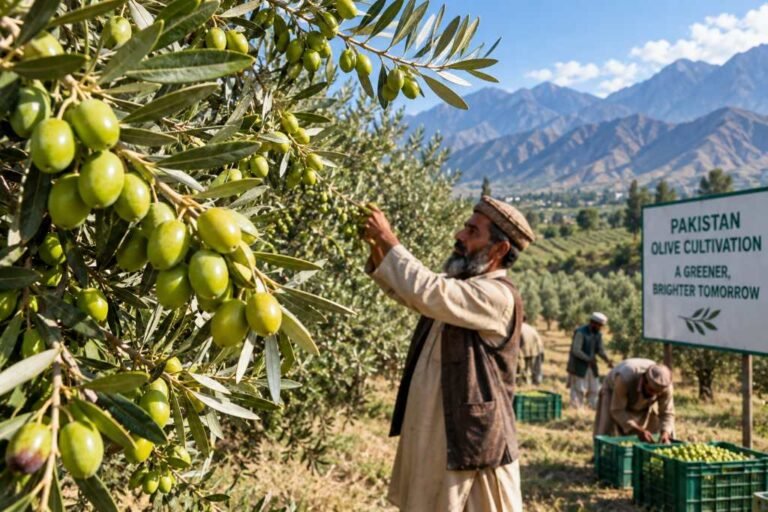
ISLAMABAD, Feb 02 (ABC): Pakistan’s olive oil industry is stepping up efforts to attract Chinese investment as entrepreneurs pitch large joint ventures to boost production, create jobs and open new export routes to China’s vast food market.

Local producers say cooperation with Chinese firms can help scale up farming, processing and exports. They believe the partnership can turn olive oil into a high-value agribusiness sector.

Large-scale estates planned with Chinese partners

Shaukat Rasool, founder of the internationally award-winning brand Loralai Olives, said his company is in advanced talks with Chinese firms to sign memoranda of understanding.

He said the discussions gained momentum after the recent Pak-China Agri Investment Conference.

“We are proposing three corporate olive estates spread over 3,000 acres, with a total investment of about $20 million,” Rasool told Wealth Pakistan.

He added that the projects could create more than 3,000 direct jobs. Within six to seven years, they may generate olive oil worth $18–20 million annually.

China seen as natural export destination

According to Rasool, China offers a strong market for Pakistan’s olive oil exports. The country imports more than $300 million worth of olive oil each year. At the same time, its middle class is becoming more health-conscious.

“Olive oil is medicine for a healthy life,” he said. “China is the most populous country in the world, and people are increasingly aware of healthy food choices. Pakistan can meet this demand.”

He noted that Pakistan also offers Chinese investors lower land costs and improving logistics under the China-Pakistan Economic Corridor (CPEC).

“This is an ideal and win-win opportunity for Chinese companies,” he added.

Existing supply chain links with China

Rasool said Loralai Olives already works closely with Chinese suppliers. The company sources its packaging and bottling materials from China.

Future cooperation may include extraction machinery, bottling plants and harvesting equipment. This, he said, will improve efficiency and reduce costs.

Global recognition boosts credibility

Pakistan’s olive oil industry has started gaining international recognition. Last year, Loralai Olives won a silver award at the New York International Olive Oil Competition (NYIOOC).

The contest featured more than 1,200 brands from traditional olive-producing countries.

The NYIOOC is widely regarded as the world’s largest olive oil competition. Judges evaluate quality, flavour and aroma. Rasool said the company plans to compete again this year.

Domestic demand rising

Although exports remain limited and mainly target Gulf markets, domestic demand is increasing.

Pakistan imports more than $12 million worth of olive oil annually. However, consumers are gradually shifting toward locally produced brands due to better quality and growing awareness of health benefits.

Industry activity is also expanding. Rasool said more than 80 olive-related startups now operate across farming, processing and marketing.

Wide cultivation potential across Pakistan

Experts say olives can grow in many parts of Pakistan. Suitable regions include Balochistan, Khyber Pakhtunkhwa, Punjab and Sindh. Arid areas such as Cholistan and southern Punjab also show strong potential.

“Olive is a complete value chain,” Rasool said. “It is not just oil. We can produce tea, cosmetics, medicines and many other value-added products.”

New pillar of Pakistan-China cooperation

Rasool recalled that imported brands once dominated the local market. However, international awards helped change perceptions.

“When we started, few people trusted local olive oil,” he said. “Global recognition built confidence and pride among consumers.”

With Chinese investors now showing interest, stakeholders expect the Pakistan olive oil industry to enter a new growth phase. Analysts say stronger cooperation with China could make olive oil exports a fresh pillar of Pakistan-China economic ties, linking agriculture, health and trade.

Pakistan’s mobile phone industry braces for 5G rollout by mid-year

0

LAHORE, Feb 3 (ABC): Pakistan’s mobile phone industry is preparing for the launch of next-generation 5G services by the middle of the year, as manufacturers upgrade hardware, software and production plans to meet rising demand.

Local manufacturing gains momentum

Over the past few years, the mobile phone industry in Pakistan has emerged as one of South Asia’s key manufacturing success stories. More than 30 local assembly units now produce nearly 30 million handsets every year.

“Local assembly and manufacturing capabilities have strengthened significantly, and producers of leading brands have already aligned their roadmaps with next-generation technologies,” Zeeshan Mianoor, Chief Executive Officer of Inovi Telecom, told Wealth Pakistan.

Ecosystem must move together

He said 5G readiness requires coordination across the entire ecosystem. Although handset makers appear prepared, the country still needs timely spectrum allocation, a phased network rollout and affordable pricing.

“When these elements move in tandem, Pakistan can fully capitalise on 5G, especially in the mobile phone sector,” he said.

Moreover, many smartphones currently assembled or sold in Pakistan already support key 5G frequency bands expected to operate locally. However, most of these devices fall into the mid- to high-price segment, starting at around Rs75,000.

Adoption to grow gradually

Zeeshan expects demand for 5G phones to grow steadily rather than surge overnight. Early users in large urban centres such as Lahore, Karachi and Islamabad will likely adopt first, as operators plan to introduce coverage there initially.

Later, adoption should expand once consumers experience faster speeds and lower latency. At the same time, cheaper devices and easier financing options will encourage mass uptake. He noted that Pakistan’s young and digital-first population provides strong long-term growth potential.

Hardware upgrades essential

He clarified that 5G cannot run on software updates alone. Instead, manufacturers must install specialised hardware, including 5G-capable chipsets, antennas and radio frequency components.

Therefore, companies will introduce new or upgraded 5G models while continuing to supply 4G devices for price-sensitive buyers.

“This dual strategy ensures inclusion and consumer choice during the transition period,” he said, adding that production volumes will match network rollout timelines and market demand.

Policy clarity remains critical

Zeeshan stressed that widespread 5G adoption depends not only on handset availability but also on regulatory clarity, spectrum readiness and well-defined rollout frameworks. Strong coordination among these areas, he added, will ensure smooth adoption and long-term sustainability.

He also said local production of 5G-capable devices could boost Pakistan’s competitiveness in regional and emerging markets.

“With consistent quality standards, certifications and cost competitiveness, 5G manufacturing can strengthen Pakistan’s position in the global supply chain over time,” he said.

Manufacturers expect gradual gains

However, industry leaders expect benefits to appear in phases. Mian Abdul Rehman, Chairman of the Pakistan Mobile Phone Manufacturers Association, told Wealth Pakistan that only 20 to 30 percent of manufacturers may initially benefit from the new technology.

He added that 5G-compatible handsets could account for about 20 percent of total sales in the early stage, with the share rising gradually.

Prices will also remain higher at first. According to him, 5G phones may cost Rs5,000 to Rs15,000 more than current models. In some cases, the difference could reach Rs20,000 to Rs30,000.

Three more model cattle markets to improve livestock trade in Punjab

0

LAHORE, Feb 3 (ABC): The Punjab government is setting up three more model cattle markets in the province to help livestock breeders secure fair prices for the animals they raise.

New markets in three districts

Punjab Cattle Markets Management and Development Company (PCMMDC) Chief Executive Officer Bilal Hashim said new model cattle markets are under development in Bhakkar, Mohammadpur, and Chowk Azam.

Talking to Wealth Pakistan, he said these additions will increase the total number of model cattle markets to five. Two modern facilities already operate in Lahore and Jhang. Once completed, the new markets will serve thousands of farmers, particularly those living in remote areas.

Modern facilities for farmers and traders

Hashim said the company is building these markets according to international standards. Workers are installing tensile sheds to protect cattle from the intense summer heat of the Punjab plains.

In Lahore, the Shahpur Kanjran cattle market now has a waterbed tank with a storage capacity of 50,000 gallons. The facility, considered Pakistan’s largest state-of-the-art cattle market, can accommodate up to 25,000 large animals and 150,000 small animals at a time.

Moreover, authorities are constructing security walls at all cattle markets across the province. They are also installing CCTV cameras at every model cattle market to ensure safety.

“We want livestock farmers to trade in a comfortable and secure environment,” Hashim said.

Better trading infrastructure

To improve trading, officials have built auction rings at the Lahore and Jhang markets. These rings allow traders to display animals more effectively and help buyers make informed decisions.

In addition, the markets now offer washrooms, spacious parking areas, loading and unloading bays, veterinary clinics, and banking services. These facilities aim to make livestock trading easier and more organized.

Digital platform launched

Hashim said PCMMDC established the company about a decade ago to regulate and modernize cattle markets across Punjab. Currently, it operates 113 cattle markets in all 41 districts.

Furthermore, the company has launched an e-cattle market application. The app allows buyers and sellers to trade animals from home. It proved particularly useful during the last Eidul Azha, the peak season for livestock sales.

Small farmers to benefit most

According to the National Agriculture Census 2024, Pakistan’s livestock population stands at 251.3 million. Punjab holds the largest share, with 104.2 million animals.

Prof Irshad Muhammad Khan, former dean at the University of Agriculture Faisalabad, said nearly 70 percent of livestock belongs to small farmers who own only two or three animals.

“They deserve better prices for animals they raise for months and even years,” he told Wealth Pakistan.

He explained that modern cattle markets equipped with proper facilities can help farmers sell animals quickly, especially when they urgently need money.

Need for improved marketing systems

While medium and corporate farms face fewer marketing issues, small livestock farmers often struggle to secure fair rates. Therefore, Prof Khan urged the government to introduce stronger marketing mechanisms to protect these farmers.

“The government must support small farmers so they do not wait long to receive fair prices,” he said.

Pakistan to play T20 World Cup 2026 but boycott India match

0

ISLAMABAD, Feb 1 (ABC): Pakistan has decided to participate in the ICC Men’s T20 World Cup 2026 but will boycott its scheduled group-stage match against India, citing concerns over the International Cricket Council’s handling of Bangladesh’s exclusion from the tournament, official sources said on Sunday.

The decision was taken following a meeting between Prime Minister Shehbaz Sharif and Pakistan Cricket Board chairman Mohsin Naqvi amid rising regional tensions in South Asian cricket.

In a post on X, the government said it had approved Pakistan’s participation in the tournament but barred the team from taking the field in the match scheduled for February 15, 2026, against India.

Solidarity with Bangladesh cited as key reason

Government sources said the decision was intended as a gesture of solidarity with Bangladesh following what Pakistan views as unfair treatment of the Bangladesh Cricket Board by the ICC.

According to the sources, Pakistan’s protest targets the ICC’s refusal to relocate Bangladesh’s matches outside India despite security and political concerns raised by Dhaka. They said the Pakistan team was instructed not to play against India as a form of symbolic protest rather than a withdrawal from the tournament.

Officials also alleged that recent decisions by the ICC leadership had undermined the principles of neutrality and equal treatment among member boards.

Allegations of ICC bias

Sources accused ICC chairman Jay Shah of adopting decisions that favoured the Indian cricket board, claiming this had weakened confidence in the governing body’s impartiality.

They said such actions had effectively created different standards for different countries, particularly in the treatment of smaller cricketing nations.

PCB and captain support government stance

Pakistan T20 captain Salman Ali Agha backed the government’s decision, saying the team would follow instructions issued by the cricket board.

“We are going to the World Cup, and we will do whatever our cricket board instructs us to do,” he said during a post-match press conference in Lahore after Pakistan completed a T20I series sweep against Australia.

He added that the decision not to play India was taken at the government level.

Bangladesh replaced by Scotland

The controversy emerged after the ICC rejected a request from the Bangladesh Cricket Board to move its matches to a neutral venue outside India.

Bangladesh had raised concerns following the removal of pacer Mustafizur Rahman from the Indian Premier League on the instructions of the Indian cricket board, a move that triggered strong reaction in Dhaka.

Last week, the ICC replaced Bangladesh with Scotland, saying it was not feasible to revise the tournament schedule so close to the February 7 start of the World Cup.

Matches to be played at neutral venue

Under an existing arrangement between Pakistan and India, both teams play ICC fixtures at neutral venues due to bilateral tensions.

As part of this arrangement, Pakistan’s matches in the 2026 T20 World Cup will be held in Sri Lanka, even though the tournament is co-hosted by India and Sri Lanka.

Pakistan have been drawn in the same group as defending champions India but will not face them on February 15 as originally scheduled.

ICC response awaited

The decision has raised questions over possible financial and legal implications, including potential revenue losses for broadcasters if the high-profile match does not take place.

The ICC has not yet issued an official response to Pakistan’s announcement.

The Men’s T20 World Cup 2026 is set to begin on February 7, with regional tensions adding a new layer of uncertainty to the tournament’s proceedings.

Digital livestock monitoring to strengthen disease control in Punjab

0

ISLAMABAD, Jan 30 (ABC): Punjab’s newly launched digital livestock monitoring system is expected to improve disease control and animal healthcare by enabling real-time tracking of veterinary services, officials and experts say.

The Punjab government approved the initiative to modernise livestock management across the province. The Punjab Information Technology Board developed the digital platform.

Real-time monitoring of veterinary services

The system brings all services of the Livestock and Dairy Development Department into one digital framework. It connects field operations with the “Livestock Connect” platform.

As a result, authorities can monitor mobile veterinary units, staff attendance and service delivery in real time. This monitoring also improves transparency and accountability.

Vice-Chancellor of Cholistan University of Veterinary and Animal Sciences Prof Mazhar Ayaz said the system would ensure timely vaccination and treatment for farmers.

“Farmers can now access vaccines and treatment in real time,” he told Wealth Pakistan. “They will also receive guidance on seasonal and animal health issues.”

Moreover, the system allows farmers to report missed vaccinations or staff absenteeism. This feature strengthens oversight at the field level.

Focus on border districts and disease prevention

Prof Mazhar said the system would closely monitor border districts, including Attock, Dera Ghazi Khan, Koh-e-Suleman, Bhakkar and Rahim Yar Khan.

These areas face a higher risk of trans-boundary animal diseases. Therefore, digital surveillance will help authorities respond faster.

He identified Lumpy Skin Disease, Foot-and-Mouth Disease and Peste des Petits Ruminants as major threats. Peste des Petits Ruminants mainly affects sheep and goats.

“Most of these diseases enter through border areas,” he said. “With digital surveillance, control will improve significantly.”

Support for field staff and farmers

Meanwhile, the provincial cabinet has approved a fixed monthly travel allowance of Rs4,000 for veterinary assistants and artificial insemination technicians.

Prof Mazhar described the decision as a long-pending reform. He said the allowance would cover fuel and maintenance costs.

As a result, field staff will improve mobility and focus better on service delivery.

Livestock sector shows steady growth

These measures come as Pakistan’s livestock sector continues to show steady growth. Official data show the sector grew by 4.72 percent in FY25.

According to the Pakistan Bureau of Statistics, livestock growth stood at 2.80 percent in FY20. It rose to 2.38 percent in FY21 and 2.25 percent in FY22.

Growth then accelerated to 3.70 percent in FY23 and 4.38 percent in FY24. It further improved in FY25.

Prof Mazhar linked this progress to rising demand for milk and meat. He also cited better farm management and improved animal health services.

He added that small farmers play a key role in this growth. For them, livestock remains a vital source of income and security.

Need for targeted investment

However, Prof Mazhar said sustained growth requires further investment. He called for stronger focus on feed development, disease control and value-added processing.

In addition, better market linkages can boost rural employment and food security. Such steps can also support national economic goals, he added.

Pakistan Railways to spend over Rs31bn for track upgrades

0

LAHORE, Jan 31 (ABC): Pakistan Railways (PR) is investing more than Rs31 billion to upgrade and rehabilitate railway tracks across the country.

The investment covers six major development projects. These projects aim to improve safety, boost efficiency and provide faster services for passengers and freight operators.

According to an official document available with Wealth Pakistan, Pakistan Railways is executing all projects under the Public Sector Development Programme (PSDP).

In the Sukkur Division, Pakistan Railways will carry out track safety work on the Rohri–Khanpur section at a cost of Rs4.87 billion. It will also upgrade the Tando Adam–Rohri section with an estimated investment of Rs4.83 billion.

In the Karachi Division, the department will complete essential track safety work on the Keamari–Hyderabad section at a cost of Rs5.4 billion.

Pakistan Railways will also upgrade the Khanewal–Shahdara section through Shorkot, Faisalabad and Qila Sheikhupura. This project covers the Multan and Lahore divisions and will cost Rs6.3 billion.

In the Multan Division, the Sher Shah–Kundian section will receive safety upgrades costing Rs4.9 billion. Meanwhile, Pakistan Railways will complete track safety work on the Rohri–Sibi section in the Sukkur Division at a cost of Rs5.49 billion.

These projects will make train travel safer and more reliable. They will also reduce travel time between major railway stations.

After completion, passengers will save 55 minutes on the Tando Adam–Rohri section and 27 minutes on the Rohri–Khanpur route. Travel time will drop by 25 minutes on the Keamari–Hyderabad section.

Similarly, the Khanewal–Shorkot–Faisalabad–Qila Sheikhupura–Shahdara route will save 40 minutes. The Rohri–Sibi section will save 56 minutes, while the Sher Shah–Kundian section will see the highest reduction of 106 minutes.

Chinese mining firm sees scope for deeper Pak–China cooperation

0

ISLAMABAD, Jan 29 (ABC): A Chinese mining engineering and equipment company has stressed the need for stronger Pakistan–China cooperation in the minerals sector, as both countries seek to expand ties in resource development and industrial growth.

Speaking to Wealth Pakistan on the sidelines of the Pak–China Mineral Cooperation Forum in Islamabad, Min Ziheng, Director Marketing Planning at Jiaozuo Creation Heavy Industry Co Ltd, said Pakistan’s mineral potential and demand for modern technology offer strong opportunities for long-term cooperation.

Untapped mineral resources attract interest

Min said Pakistan has large mineral reserves that remain underdeveloped. At the same time, the country needs modern mining equipment and engineering solutions.

He said Chinese companies have gained strong experience in mining technology over the years. This experience, combined with Pakistan’s resources, can support joint projects that benefit both sides.

“Pakistan has vast mineral wealth, while Chinese firms bring technical expertise,” he said. “This creates space for practical and long-term cooperation.”

Focus on safety and productivity

Min said cooperation between Pakistani and Chinese firms can improve safety and efficiency in mining operations. He added that better technology can also help raise productivity across the sector.

He said Pakistan is increasingly focusing on minerals as a source of economic growth. As a result, demand for modern mining solutions is expected to rise.

Chinese firms’ long presence in Pakistan

Min noted that Chinese companies have worked in Pakistan for decades. He said his company has operated in the country for more than 20 years.

The firm maintains a local office in Karachi and has supported several industrial and energy-related projects. According to him, long-term engagement has helped Chinese firms understand local needs better.

Wide range of minerals for cooperation

Min told Wealth Pakistan that future cooperation could cover minerals such as copper, gold and coal. He added that modern engineering is needed to improve extraction and processing in these areas.

He also said Chinese companies often employ local staff in Pakistan. This helps promote skills development and knowledge sharing.

Long-term investment outlook

Min said mining cooperation fits well with Pakistan and China’s shared goal of industrial development. He added that the Pakistani government recognises the importance of developing mineral resources to support the economy.

He said Pakistan’s reserves of copper, iron, lead, zinc, aluminium and gemstones offer long-term investment potential. Sustained cooperation, he added, can help unlock this potential and further strengthen economic ties between the two countries.

China plans space-based AI data centres

0

BEIJING, Jan 29 (ABC): China plans to build space-based artificial intelligence data centres over the next five years, state media reported on Thursday, as the country steps up efforts to expand its digital and space capabilities.

China’s main space contractor, China Aerospace Science and Technology Corporation (CASC), said it aims to construct “gigawatt-class space digital-intelligence infrastructure,” according to a five-year development plan cited by China Central Television (CCTV).

Processing data in orbit

According to the report, the planned space-based data centres will integrate cloud, edge and device-level computing systems. This approach will allow data generated on Earth to be processed directly in space.

The system will combine computing power, storage capacity and transmission bandwidth. As a result, China aims to reduce pressure on land-based energy systems while supporting the rapid growth of AI technologies.

Comparison with SpaceX plans

Meanwhile, U.S. company SpaceX has also announced plans to develop orbital AI data centres. Its founder, Elon Musk, said the company plans to launch solar-powered AI data centre satellites within the next two to three years.

Speaking at the World Economic Forum in Davos last week, Musk said space offers a cost-effective solution for AI due to abundant solar energy. He added that solar generation in orbit can produce significantly more power than ground-based systems.

SpaceX expects to use funds from its planned initial public offering to support the development of orbital AI infrastructure.

China’s long-term space strategy

China also plans to shift energy-intensive AI processing into orbit by developing large solar-powered hubs. According to a December CASC policy document, the country aims to build an industrial-scale “Space Cloud” by 2030.

The document identifies the integration of space-based solar power with AI computing as a core element of China’s upcoming 15th Five-Year Plan. The strategy aligns with broader goals to strengthen the country’s digital economy and space industry.

Beyond data centres

In addition, CASC said it plans to begin suborbital space tourism operations within the next five years. Over time, the programme will expand into orbital space tourism, CCTV reported.

China and the United States continue to compete as both countries seek to turn space exploration into a commercially viable industry. Beyond economic potential, space is also viewed as a domain with strategic and security importance.

CASC has said it aims to transform China into a world-leading space power by 2045.

Launch capacity and future ambitions

Although China has made rapid progress in launch capacity, it continues to work on reusable rocket technology. Reusability is critical to reducing launch costs and expanding access to space.

China carried out a record 93 space launches last year, according to official data. The growth was supported by the country’s expanding commercial spaceflight sector.

Earlier this week, China inaugurated its first School of Interstellar Navigation at the Chinese Academy of Sciences. The institute aims to train future experts in deep space navigation and propulsion.

According to Xinhua, the next decade will be a key period for technological breakthroughs that could reshape deep space exploration.

Army fully prepared to defend Pakistan against all threats: COAS

0

ISLAMABAD, Jan 29 (ABC): Chief of Army Staff and Chief of Defence Forces (COAS & CDF), Syed Asim Munir, on Wednesday said the Pakistan Armed Forces remain fully prepared to defend Pakistan’s sovereignty and territorial integrity against all threats.

He made the remarks during his visit to Bahawalpur Garrison, where he reviewed operational readiness and future security planning.

Briefing on operational preparedness

During the visit, the army chief received a detailed briefing on operational, training and administrative matters of Bahawalpur Corps. The briefing focused on readiness for future battlefields and the growing role of technology in warfare.

Officials highlighted measures taken to improve coordination, training standards and rapid response capability. They also shared updates on preparations for multi-domain operations.

Field exercise demonstrates combat capability

Later, the COAS & CDF witnessed a high-intensity field exercise, “Steadfast Resolve,” at Khairpur Tamewali. The exercise demonstrated the armed forces’ ability to operate in a modern combat environment.

The drill featured:

  • unmanned aerial systems, including drones

  • advanced surveillance assets

  • electronic warfare capabilities

  • modern command-and-control systems

According to ISPR, the exercise reflected the armed forces’ focus on technology-based and multi-domain operations.

Troops praised for morale and professionalism

While addressing officers and troops, the army chief praised their high morale and professional skills. He said strong training and discipline remain vital for national defence.

Moreover, he stressed the need to maintain high readiness levels to meet future security challenges. He added that threats continue to evolve and demand constant preparedness.

Focus on future warfare and transformation

The COAS & CDF said the nature of warfare has changed due to rapid technological progress. He noted that future conflicts will rely more on technological manoeuvres than physical movement.

Therefore, he said, the Pakistan Armed Forces are undergoing a major transformation across multiple domains. He added that innovation, indigenisation and adaptation remain central to this process.

Education and digital skills initiatives

Earlier, the army chief inaugurated the ROHI eSkills Learning Hub (STP). The facility aims to promote digital skills among students, especially in Southern Punjab.

He also inaugurated the APS Abbasia Campus. Through this initiative, the Pakistan Army reaffirmed its commitment to quality education and character building.

Review of maintenance and support systems

Later, the COAS & CDF visited the EME Regional Workshop. There, he reviewed maintenance systems used to sustain modern military platforms.

Officials briefed him on advanced technologies, indigenisation efforts and combat support measures that help ensure operational readiness.

Tribute to martyrs

Upon arrival at Bahawalpur Garrison, the army chief was received by the Commander Bahawalpur Corps. He laid a floral wreath at Yadgar-e-Shuhada and offered Fateha.

Through this gesture, he paid tribute to the martyrs who sacrificed their lives in the defence of the country.