
Home Blog Page 40

Understanding student psychology

0

Zahid Dilwash

Education is one of the most important foundations of human life. It shapes character, builds morality, and helps people understand the difference between right and wrong. Many thinkers have described education as the most powerful tool to change the world. However, the true strength of education depends on teachers.

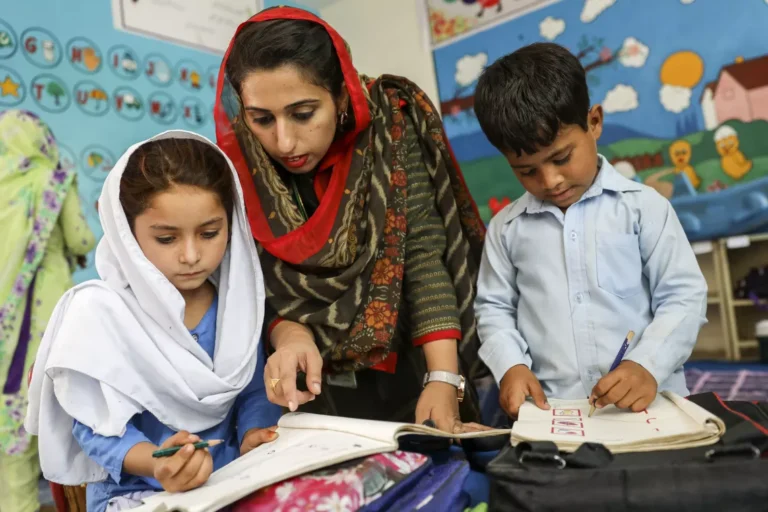
Teachers are the backbone of any society. They guide students from ignorance to awareness and from confusion to clarity. Their role is not limited to delivering lessons. They must also understand the psychological needs of their students. Without this understanding, education loses its real purpose.

Not all students learn the same way

Every student is different. Just as the five fingers on a hand are not equal, students also have different abilities. Some students excel in academics, while others show strength in creative or practical skills. This diversity is natural and should be respected.

However, many teachers fail to recognise these differences. They often treat all students in the same way. As a result, students who struggle in traditional learning feel ignored or discouraged. This approach creates distance between teachers and students.

Importance of understanding students’ psychology

A teacher’s primary role is to guide, not to impose. Good teachers do not force or insult students for their weaknesses. Instead, they try to understand each student’s mindset and learning capacity.

When teachers understand students’ psychology, they become more approachable. This helps students feel safe and confident in the classroom. It also allows teachers to adopt better teaching methods that suit individual needs.

Many students who appear weak in studies often possess hidden talents. These may include skills in art, sports, or problem-solving. Unfortunately, such talents are often overlooked. Constant criticism and harsh behaviour can damage a student’s confidence and motivation.

A lesson from Taare Zameen Par

A powerful example of this issue can be seen in the film Taare Zameen Par. The story revolves around a young student who struggles with studies but has exceptional artistic talent.

The student faces humiliation from teachers and even from his parents. However, a compassionate teacher, played by Aamir Khan, recognises his potential. Instead of criticising him, the teacher understands his condition and nurtures his talent.

As a result, the same student who once struggled becomes confident and successful. The film delivers a clear message: every child has unique abilities, and it is the teacher’s responsibility to discover and develop them.

Moving beyond rote learning

Education should not rely only on memorisation. Rote learning limits creativity and discourages critical thinking. Teachers should focus on understanding how students learn rather than forcing them to follow a single method.

A supportive teacher creates an environment where students feel encouraged to express themselves. Respect, patience, and empathy are essential qualities in this process.

Conclusion

Every student has potential. The responsibility lies with teachers and parents to recognise and nurture that potential. Education should be based on understanding, not pressure.

When teachers guide students with wisdom and kindness, they build confident individuals. In the long run, this approach strengthens society as a whole.

Fuel crisis closures and education

0

Sassi Nasir Ali

A school is more than a building. It is where a child learns, grows, and dreams of a better future. Today, in Balochistan and across Pakistan, many classrooms stand empty. Schools, colleges, and universities have closed repeatedly due to a severe fuel crisis. With each extension, students lose valuable time.

Closures spread across provinces

In Balochistan, the government first announced that all educational institutions would remain closed until March 31 to save fuel amid rising petrol and diesel demand. In Punjab, authorities ordered closures from March 10 to March 31 and advised schools to shift to online classes where possible. Khyber Pakhtunkhwa also introduced fuel-saving measures, including reduced office hours and remote work for government staff.

These steps aim to cut fuel use at a time when global oil prices have increased due to geopolitical tensions and supply constraints. The policy reflects the need to manage limited resources during a difficult period.

Uncertainty deepens concerns

What was already difficult is becoming more uncertain. Reports suggest that authorities may extend closures from April 1 to April 15. The government says it needs more time to manage shortages. However, this uncertainty adds to the stress faced by students and parents.

While the official reasoning is understandable, the education sector should not bear a disproportionate burden. Fuel is essential for transport, agriculture, and emergency services. Yet, repeated school closures risk long-term damage to learning outcomes.

Digital divide limits online learning

In much of Balochistan, online learning is not a practical solution. Internet access remains slow and expensive. Many families cannot afford smartphones or computers. Even where connectivity exists, frequent power outages and weak networks disrupt virtual classes.

For students, each closure means lost lessons and reduced opportunities. The gap in learning continues to widen, especially for those already facing disadvantages.

Rising pressure on students and parents

Parents are increasingly worried as their children fall behind. Motivation is declining, while anxiety continues to rise. Exams remain scheduled, despite the disruption. Many students now face the risk of taking tests without adequate preparation.

This situation places an unfair burden on families who have little control over the circumstances.

Need for a clear and balanced approach

The government faces a complex challenge. A fuel crisis requires careful management, and solutions are not simple. However, education must remain a priority. School closures should be a last resort, not a recurring response.

Authorities should present a clear plan with a defined timeline for reopening institutions. If closures must continue, alternative solutions are essential. These may include community learning centres, subsidised internet access, or flexible education models suited to local conditions.

Students deserve clarity and continuity

Students and families are not asking for special treatment. They seek clarity, fairness, and continuity in education. While many are prepared to wait until April 1, any extension to April 15 requires clear communication and reassurance.

The children of Balochistan and Pakistan deserve uninterrupted learning. Their future depends on the decisions made today. The nation cannot afford to let their education fall behind.

$10m project launched in AJK to bring out-of-school children into classrooms

0

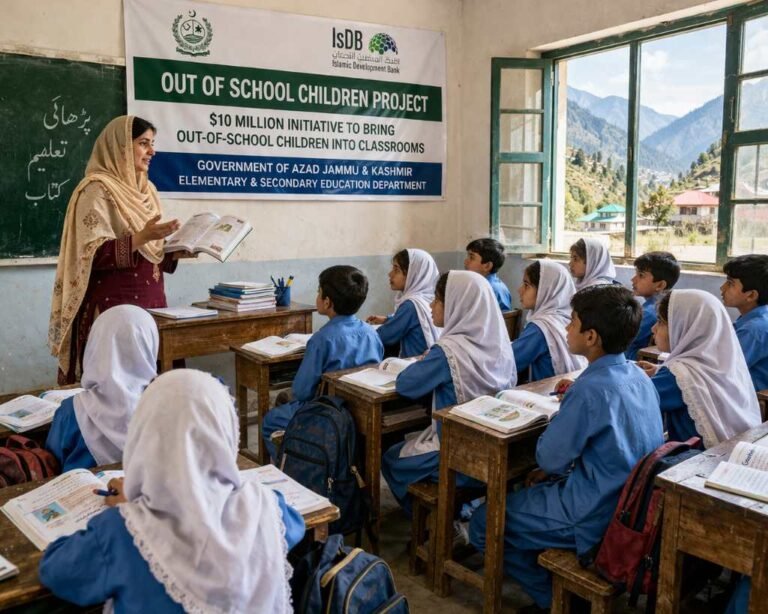
ISLAMABAD, March 29 (ABC): A $10 million project has been launched in Azad Jammu and Kashmir to bring out-of-school children into classrooms and expand access to education.

The initiative, titled Out of School Children Project, is supported by the Islamic Development Bank and was signed on January 19, 2026, according to official documents available with Wealth Pakistan.

The project will be implemented by the Elementary and Secondary Education Department of the Government of AJK. It is expected to become operational soon.


Focus on enrollment and access

The initiative aims to identify out-of-school children and connect them with formal learning opportunities. It will support this process through improved school facilities, community outreach, and targeted enrollment campaigns.

In addition, the project seeks to strengthen institutional capacity. This will help schools enroll and retain students more effectively.


Early-stage development

According to official documents, the project is currently in the preparatory phase. Financial and physical progress will begin once implementation starts.


Expected impact

Once operational, the project is expected to improve literacy levels across the region. It will also support broader educational development goals in Azad Jammu and Kashmir.

Experts believe such targeted initiatives can expand access to education and promote inclusive learning environments.

The project is also expected to benefit children in remote and underserved areas by improving access and providing better learning opportunities.

Rs1.28bn project planned to boost livestock, arid agriculture in Thar

0

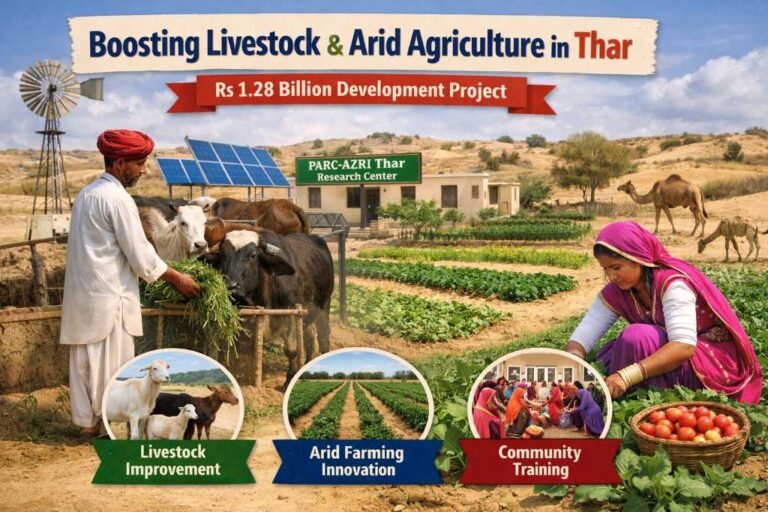
ISLAMABAD, March 29 (ABC): A Rs1.28 billion project has been proposed to strengthen livestock, horticulture, and ecosystem management in the Thar desert region. The plan focuses on research, technology transfer, and community capacity building.

The project, titled Thar Community Actions for the Management of Sustainable Ecosystem, Livestock, Land and Livelihood (THAR CAMELL), is outlined in official documents available with Wealth Pakistan.

The five-year initiative will run from July 2026 to June 2031. The Pakistan Agricultural Research Council (PARC) will implement it through the PARC-Arid Zone Research Institute in Umerkot. The project will cover Umerkot district and 30 union councils of Tharparkar in Sindh.


Focus on livestock and agriculture

The project aims to promote agricultural innovation and improve livestock genetics. It will also strengthen disease control systems and support sustainable natural resource management.

In addition, the initiative will transfer modern technologies to farming communities. These include diagnostics, genotyping, and Radio Frequency Identification systems under the E-Pakistan framework.

The project also plans to boost value addition for exports. It includes setting up a dehydration plant and promoting dried vegetables and ber exports.


Support for local communities

The initiative will target poor Thari communities to reduce poverty and improve livelihoods. It will train more than 2,000 farmers to enhance skills and productivity.

Moreover, the project will build local capacity for sustainable ecosystem management. This approach aims to create long-term economic benefits in the region.


Environmental and research interventions

Environmental measures include afforestation, arid horticulture, and rainwater recharge through TARAI. These steps will help improve climate resilience in desert ecosystems.

The project will also establish livestock and horticulture research facilities at PARC-AZRI Umerkot. These centres will focus on improving productivity, strengthening disease diagnostics, and promoting indigenous breeds.

In addition, demonstration sites will be developed to support arid horticulture practices.


Infrastructure and productivity gains

According to the document, the project will convert 180 acres of wasteland into productive land. It will also develop infrastructure for research and demonstration activities.

Research will cover livestock, rangeland, water management, and arid horticulture. The project will provide machinery and field equipment to support these activities.

Furthermore, it will promote silage making and set up facilities for soil, water, and plant analysis. It will also establish livestock service units, insemination centres, and biotechnology labs.

These services will support researchers, extension workers, NGOs, and local farmers. They are expected to improve fertilizer use and increase crop productivity by 30–35%.


Alignment with national priorities

The project aligns with key national and international frameworks. These include the 5Es Framework, the 13th Five-Year Plan, the United Nations Sustainable Development Goals, and the National Agriculture Innovation and Growth Programme.

Pakistan must act now to tackle anaemia through food fortification: Dr Shabina

0

ISLAMABAD, Mar 28 (ABC): Pakistan must take urgent action to address anaemia through food fortification, as the condition continues to affect nearly half of women, adolescent girls and children, posing risks to public health and economic growth, said Dr Shabina Raza, Country Director of Nutrition International.

Anaemia remains a major health challenge in the country. It also affects education, productivity and long-term development.

According to the Pakistan National Nutrition Survey (2018), 42.7% of women of reproductive age suffer from anaemia. The survey also shows that 52% of children under five are affected. The burden is higher in rural areas due to limited dietary diversity and low access to fortified foods. More than 900,000 pregnant women experience anaemia every year, increasing the risk of complications and low birth weight.

The economic cost is significant. Estimates show that Pakistan loses nearly $3 billion annually due to anaemia. This includes $2.5 billion linked to children and $595 million related to women and adolescent girls. These losses reflect reduced productivity, weaker learning outcomes and higher healthcare spending.

Dr Shabina Raza said anaemia is both a public health and economic emergency. She noted that it leads to poor cognitive development and lower productivity.

She emphasised that fortifying staple foods such as wheat flour can help reduce anaemia. She added that this approach is cost-effective and delivers strong results. According to her, tackling anaemia among women, adolescent girls and children remains a top priority.

Research supports this approach. Fortifying wheat flour, edible oil and salt with iron and folic acid is considered one of the most effective solutions.

Provincial data shows a similar trend. The Punjab Multiple Indicator Cluster Survey (2018) found that 42% of women and 52% of children under five are anaemic. Evidence also shows that fortifying a 20-kg bag of wheat flour costs about Rs20. This is less than 1% of its retail price.

Analyses suggest that every dollar invested in food fortification can generate up to $27 in economic returns. These gains come through improved health, higher productivity and better cognitive performance.

Policy gaps still exist. Sindh, Khyber Pakhtunkhwa and Balochistan have introduced mandatory fortification laws. However, Punjab has not enacted such legislation despite having nearly 60% of the population. Experts say that large-scale fortification in Punjab could significantly reduce anaemia nationwide.

At the Nutrition for Growth Summit 2025, Pakistan reaffirmed its commitment to adopt and enforce food fortification laws by 2030. These efforts align with global nutrition targets and Sustainable Development Goals.

Experts warn that delays will increase health and economic losses. Malnutrition continues to affect productivity, healthcare costs and education outcomes.

They stress that food fortification offers a low-cost and high-impact solution. Timely action, especially in Punjab, can improve health outcomes and strengthen the economy.

Aga Khan begins first official Canada visit, marking 50-year partnership milestone

0

OTTAWA, Mar 28 (ABC): His Highness the Aga Khan, 50th hereditary Imam of the Shia Ismaili Muslim community and chair of the Aga Khan Development Network (AKDN), has begun his first official visit to Canada, marking a milestone in a relationship spanning more than five decades.

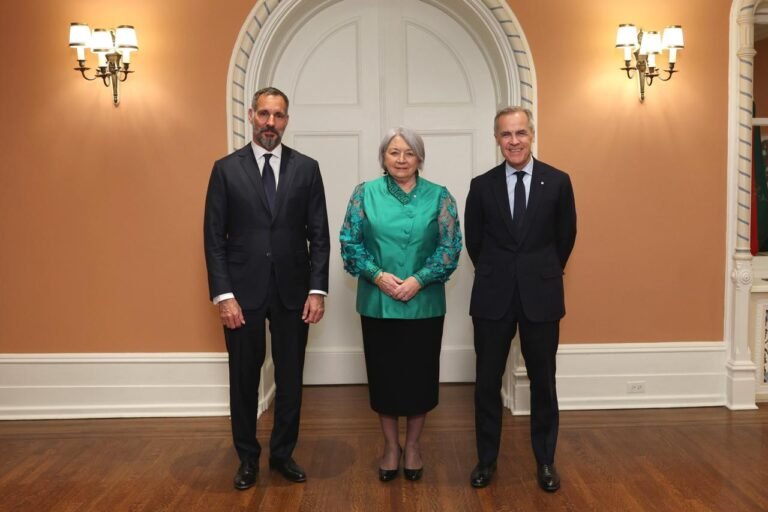
During the visit, His Highness met with Canadian Prime Minister Mark Carney and attended a dinner hosted by Governor General Mary Simon and His Excellency Whit Fraser. He also held discussions with senators and members of parliament at the Delegation of the Ismaili Imamat.

Reflecting on the partnership, the Aga Khan said he believes in Canada’s values, principles and its willingness to act on them, noting that these qualities have made the relationship enduring.

The visit builds on a longstanding partnership between Canada and the Ismaili Imamat, which has produced outcomes in capacity building, economic development and civil society strengthening across multiple regions over the past 50 years. Prime Minister Carney and the Aga Khan issued a joint declaration outlining new areas of collaboration, including housing and economic development, setting the stage for renewed engagement.

During discussions, both sides agreed to deepen cooperation in three key areas. On affordable housing, the Canadian prime minister welcomed investments by the Ismaili Imamat in multi-generational, not-for-profit housing projects aimed at increasing supply. The government also plans to establish a long-term partnership through Build Canada Homes to develop housing projects for low- and middle-income groups.

On development collaboration, the two sides announced the creation of an Economic Partnership Platform to strengthen development financing. FinDev Canada and the Aga Khan Fund for Economic Development will combine public and private capital to invest in infrastructure, renewable energy and agriculture across Africa and Asia. The collaboration will also support programmes in economic opportunity, health, education and pluralism, including in regions such as Syria. Both sides identified opportunities in skills development, energy initiatives and the use of Canadian innovation and technology in sectors like agriculture and climate.

On global diplomacy, Canada and the Ismaili Imamat reaffirmed their commitment to work together on efforts aimed at saving lives, ending conflict and preserving human dignity.

Prime Minister Carney also announced that the Honourable David Lametti, currently Canada’s permanent representative to the United Nations, will also serve as Canada’s new representative to the Ismaili Imamat to help advance the renewed partnership.

Speaking at a parliamentary reception attended by senators and ministers, the Aga Khan noted that traditional aid models are becoming harder to sustain in an increasingly complex world. He emphasised the need for new forms of partnership capable of delivering sustainable prosperity in challenging regions.

He expressed his intention to make this the first of many visits to Canada and reaffirmed the readiness of the Imamat, the AKDN and the Canadian Ismaili community to act as partners in building a safer, more prosperous and more pluralist world.

Punjab launches Rs20bn plan to boost indigenous livestock breeds

0

LAHORE, March 25 (ABC): The Punjab government has launched an initiative to preserve and promote indigenous livestock breeds, including the Sahiwal cow and the Nili Ravi buffalo.

The initiative forms part of the Rs20 billion Punjab Herd Transformation to Enhance Livestock Productivity programme. Under this programme, the government has earmarked Rs4 billion for the Progeny Testing Programme (PTP) to improve genetic potential and breed quality.

Focus on genetic improvement and breed conservation

Dr Khaliq Shafee, Director of the Punjab Livestock Department, said schemes for producing sex-sorted semen of indigenous breeds are underway. These include Nili Ravi buffalo, Sahiwal, and Cholistani cattle registered under the PTP.

Talking to Wealth Pakistan, he said unchecked crossbreeding with exotic breeds has weakened indigenous livestock. It has led to unpredictable genetic traits and weaker physical characteristics.

Punjab has around 500,000 Sahiwal cattle and 2 to 2.5 million Cholistani cattle. The Nili Ravi buffalo population ranges between 13 and 15 million.

Institutional support and breeding programmes

The government is implementing the programme with the Sahiwal Cattle Breeders Society and the Buffalo Breeders Association. Key measures include setting up breed conservation units and expanding the PTP.

Authorities are also introducing a Bull Dam (bull mother) scheme. In addition, they are strengthening structured breeding and bull selection based on lactation performance exceeding 3,000 litres.

Several institutions are executing the project. These include the Buffalo Research Institute Pattoki, the Livestock Production Research Institute Bahadurnagar (Okara), and the Research Centre for Conservation of Indigenous Breeds in Jhang.

Industry welcomes initiative

Breeders have welcomed the initiative and called it a positive step for the livestock sector.

Dr Muhammad Imran Basharat, Director Technical at the Sahiwal Cow Breeders Society, said the project comes at a crucial stage. Talking to Wealth Pakistan, he said it offers opportunities to harness the strength of indigenous breeds.

He said Pakistan can improve breed quality and productivity with better use of genetic resources. He also highlighted the need to refine breeding systems and improve identification of superior bull dams.

Focus on productivity, markets and exports

Dr Basharat said cooperative livestock and dairy farming models can support sustainable sector growth. He added that recent market fluctuations linked to trade dynamics with Afghanistan show the need for stronger market structures.

He said Pakistan has high-yielding animals, including Nili Ravi buffalo producing around 4,000 litres annually and Sahiwal cows about 3,500 litres. These provide a strong base for future growth.

He stressed the importance of best practices in livestock management. He said better regulatory oversight can protect animal health, fertility and long-term productivity.

He added that indigenous breeds are cost-effective and well-suited to Pakistan’s climate. Their natural resilience supports sustainable dairy production.

He also noted growing international demand for Sahiwal breed semen and embryos in Bangladesh, Kenya and Sri Lanka. He said developing export systems can open new revenue streams for Pakistan’s livestock sector.

Rs990m project to boost local agricultural equipment production

0

ISLAMABAD, March 24 (ABC): The Ministry of National Food Security and Research has proposed a Rs990 million project to promote smart farming technologies and strengthen local agricultural machinery production.

The ministry plans to launch the project titled “Establishment of Digital and Precision Agriculture Mechanisation Facility at National Agricultural Research Centre (NARC).” The Agricultural Engineering Institute (AEI), NARC, Islamabad, will execute the project, according to official documents available with Wealth Pakistan.

The project will run for five years, from July 2026 to June 2031. It aims to expand agricultural mechanisation and promote precision farming.

Alignment with national priorities

The project supports key national frameworks. These include the 5Es Framework, the 13th Five-Year Plan, the UN Sustainable Development Goals, and the National Agriculture Innovation and Growth Programme (NAIGP).

It aims to promote efficient use of resources. It will support smallholder mechanisation and strengthen the National Agricultural Research System. The project will also encourage import substitution and support agri-SMEs and local manufacturers.

Facility upgrades

The project will upgrade three facilities: a design lab, a prototype workshop, and a testing lab.

Engineers will equip the design lab with 3D scanning, computer-aided design (CAD), and simulation tools. These tools will improve product design and testing.

The team will modernise the prototype workshop with Computer Numerical Control (CNC), Computer-Aided Manufacturing (CAM), and laser-cutting systems. These upgrades will improve machinery development and evaluation.

Advanced technologies focus

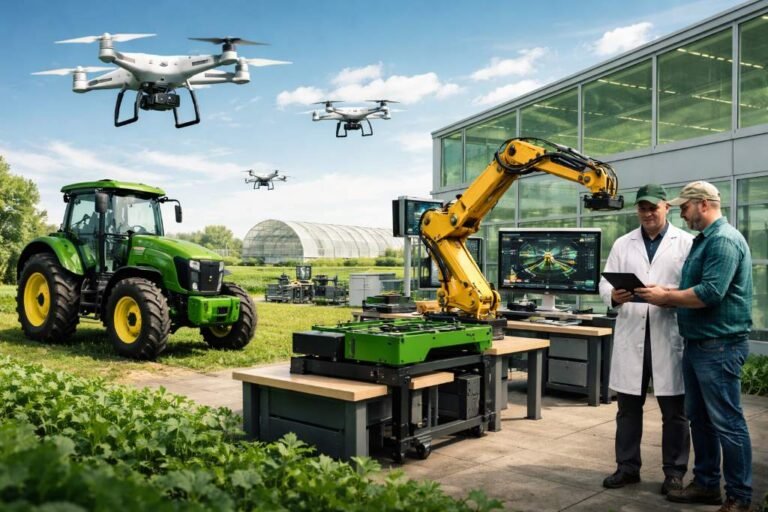
The project will promote the use of artificial intelligence, the Internet of Things, unmanned aerial vehicles (UAVs), and robotics in agriculture.

The team will establish a dedicated UAV and agricultural robotics facility. This facility will support manufacturing and system integration.

Researchers will design and test at least five agricultural machine prototypes under the project.

Capacity building and impact

The project will focus on capacity building. Organisers will conduct at least 10 training activities, including workshops, training sessions, and farmer field days.

These activities will help farmers, manufacturers, and researchers improve their skills.

The project will support value-added production and create technical jobs. It will also strengthen local manufacturing capacity.

More than 500 stakeholders will benefit from training and knowledge-sharing activities. These include farmers, manufacturers, and researchers.

Rs490m lab project planned to boost food safety monitoring

0

ISLAMABAD, March 18 (ABC): The Ministry of National Food Security and Research plans a Rs490 million project to strengthen food safety monitoring in Pakistan. As a result, it will improve compliance with international trade standards and support exports of livestock products.

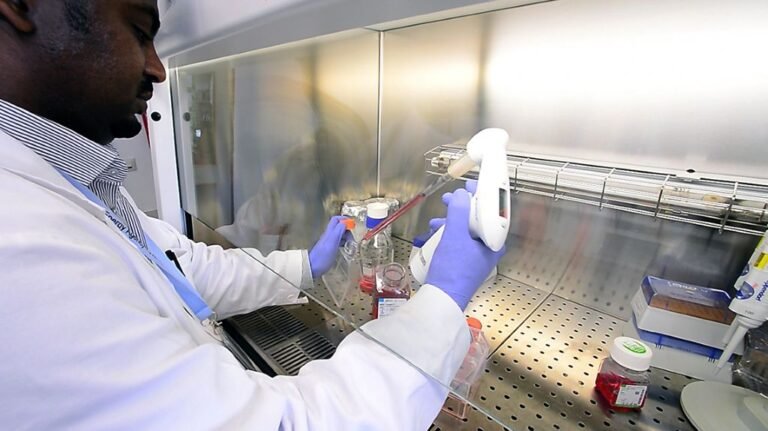
The project aims to enhance the capacity of the National Veterinary Laboratory (NVL) for antimicrobial residue analysis. Therefore, it will help meet both national and international standards. It will also support the export of livestock and livestock-derived products.

The project, titled “National Agri Food Laboratory Standards, Accreditation and Reference Network,” will run for three years from July 2026 to June 2029. It will be implemented by the National Veterinary Laboratory, Islamabad.

According to documents available with Wealth Pakistan, the project focuses on improving laboratory standards for livestock and agri-food safety. It targets antimicrobial residue monitoring, public health protection, regulatory effectiveness, and compliance with global food safety standards.

Strengthening laboratory capacity

The initiative will strengthen laboratory capacity and veterinary diagnostic systems. As a result, it will support value chain modernisation and improve the competitiveness of Pakistan’s livestock products in global markets.

In addition, the project will establish a National Antimicrobial Drug Residue Monitoring Plan. This plan will cover livestock and livestock-derived products across the country.

Training and accreditation measures

The project also includes training and certification of laboratory personnel. These efforts will improve their technical and regulatory skills. Moreover, the laboratory will work toward ISO/IEC 17025 accreditation to meet international quality standards.

Alignment with national priorities

The initiative aligns with the 5Es Framework, the 13th Five-Year Plan, the United Nations Sustainable Development Goals (SDGs), and the National Agriculture Innovation Growth Programme (NAIGP).

Furthermore, it will support regulatory digitalisation under the E-Pakistan initiative. It will also strengthen export certification systems by improving food safety compliance and veterinary diagnostic standards.

Expected impact on trade and safety

The project is expected to produce reliable and timely residue testing reports. These reports will support regulatory oversight and facilitate trade in livestock and livestock-derived products.

Overall, the initiative will enhance food safety monitoring, strengthen institutional capacity, and improve Pakistan’s position in international livestock markets.

Rs300m livestock fibre project to drive rural industrialisation in GB, AJK

0

ISLAMABAD, March 18 (ABC): A major initiative aims to transform livestock fibre into high-value products. As a result, it will accelerate rural industrialisation in Gilgit-Baltistan (GB) and Azad Jammu & Kashmir (AJK). It will also open new income streams for farmers and artisans.

The project, titled “Value Added Livestock Products (Wool, Hair and Mohair) for Rural Industrialisation of Pakistan (GB and AJK),” carries a total cost of Rs300 million. It will run for three years from July 2026 to June 2029. It will cover all districts of Gilgit-Baltistan and the Neelum Valley in Azad Jammu & Kashmir.

According to documents available with Wealth Pakistan, the project focuses on value addition, productivity enhancement and modernisation of the fibre value chain. It will organise the entire chain from raw material collection to finished products. Therefore, it aims to increase farmers’ incomes by 15-20% through better processing and improved market access.

Infrastructure development and processing units

Under the initiative, authorities will establish 35 raw material collection units, including 30 in GB and five in AJK. In addition, cleaning and spinning units will be set up. Each GB district will get one unit, while Neelum Valley will also have one.

Moreover, four weaving and four stitching centres will be developed in GB and AJK. These centres will promote local craftsmanship and improve product finishing.

Institutional support and community role

The project also plans to register and operationalise the Yak Dwellers Association. This step will strengthen institutional capacity and improve linkages with international yak networks. At the same time, community ownership of units will ensure sustainability and inclusive growth.

Furthermore, tourism-oriented display and marketing centres will be created. These centres will enhance product visibility and boost sales. Linkages with tourism markets and private-sector buyers will also generate revenue.

Capacity building and livestock health

Capacity-building programmes will train farmers, artisans and entrepreneurs. These programmes will improve production techniques and business skills. In addition, authorities plan vaccination and deworming of 25,000 animals to enhance fibre quality.

Alignment with national priorities

The project aligns with the 5Es Framework, the 13th Five-Year Plan and the National Agriculture Innovation and Growth Project (NAIGP). It supports livestock value addition, rural enterprise development and sustainable livestock management.

By promoting niche fibre products and small-scale industry, the initiative will utilise underused livestock resources. Consequently, it will help build a structured rural industrial value chain in GB and AJK.

With modest federal investment, the project is expected to create jobs, strengthen local enterprises and support sustainable rural industrialisation.