
Home Blog Page 33

GIKI Industrial Open House 2026 promotes academia-industry collaboration

0

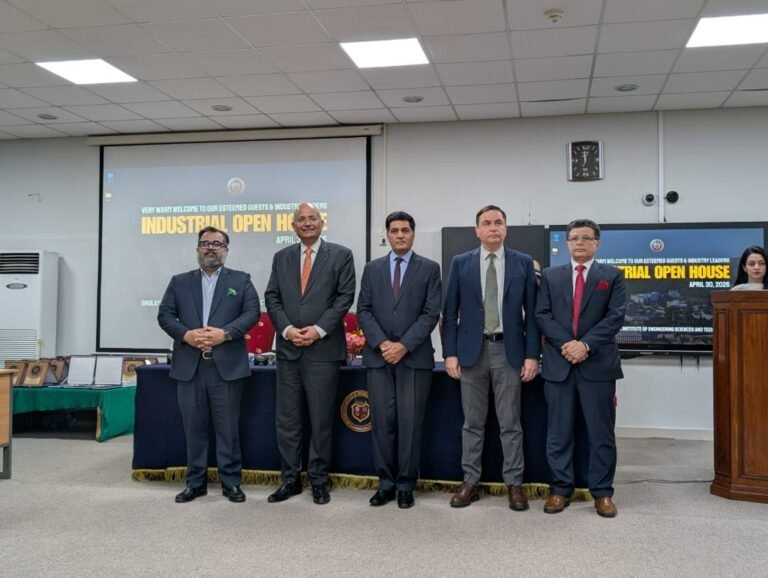
ISLAMABAD, May 3 (ABC): The Ghulam Ishaq Khan Institute of Engineering Sciences and Technology (GIKI) hosted its Industrial Open House 2026 at its campus in Topi, bringing academia and industry together on one platform for collaboration, recruitment, and innovation.

Strong industry participation

The GIKI industrial open house 2026 attracted strong participation from leading national and multinational companies. Notably, Huawei joined as a key partner. Moreover, the Ministry of IT & Telecom (MOITT) supported the event, reinforcing efforts to advance Pakistan’s digital transformation.

Opportunities for students

The event created multiple opportunities for students. For instance, companies conducted job interviews, internships, and project evaluations across engineering and management disciplines. In addition, students showcased final year projects in artificial intelligence, computer science, electrical engineering, mechanical engineering, chemical engineering, and materials engineering.

Strengthening academia-industry linkages

The open house strengthened collaboration between academia and industry. Furthermore, it allowed companies to engage directly with students and identify potential talent. As a result, the event promoted innovation and encouraged future partnerships.

The role of National Incubation Centers (NICs) and Ignite National Technology Fund also remained significant. Their programs and mentorship have supported student-led projects and helped scale innovative ideas.

Officials highlight importance

Secretary Ministry of IT & Telecom, Zarar Khan, who is also a member of GIKI’s Alumni Board, emphasized the importance of the initiative.

“The industrial open house is a vital bridge between academia and industry. It empowers students, promotes innovation, and strengthens Pakistan’s digital ecosystem,” he said.

Similarly, Chief Executive Officer AI and Cloud Business at Huawei Pakistan, Ahmed Bilal Masud, highlighted the role of collaboration.

“The industrial open house provides an important opportunity for students to showcase their talent. It also allows industry leaders to engage with future professionals,” he said.

Growing collaboration landscape

Overall, the GIKI industrial open house 2026 reflects growing cooperation between academia and industry in Pakistan. With continued support from MOITT, NICs, Ignite, and Huawei, the event highlights innovation, talent development, and future collaboration opportunities.
Potato exports hold steady at 248,000 tons in H1 FY26

0

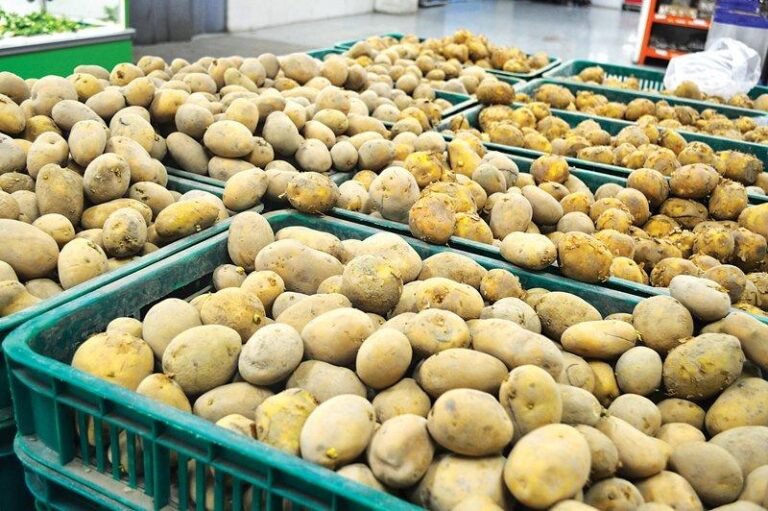
ISLAMABAD, May 3 (ABC): Pakistan’s potato exports remained stable at around 248,000 tons during the July–January period of FY2025-26, maintaining a steady presence in international markets despite shifting trade conditions.

In value terms, potato exports reached approximately $56 million, according to official data available with Wealth Pakistan. The figures reflect consistent demand and supply continuity during the period.

The United Arab Emirates emerged as the leading destination for Pakistan’s potato exports, followed by Sri Lanka, while Afghanistan remained an important regional market. Exports to Afghanistan stood at 29,411.90 tons in the first half of the fiscal year.

The Gulf region — including the United Arab Emirates, Qatar, and Oman — continued to show stable demand for Pakistani potatoes. Sri Lanka also remained a key buyer, although imports fluctuated in line with its domestic supply conditions.

Among smaller markets, Somalia imported limited quantities, indicating gradual diversification of Pakistan’s potato export base.

A key positive development for Pakistan’s potato exports is the reopening of the Russia market. Khawar Nadeem, Manager Agri Products at Pakistan Horticulture Development & Export Company, said Pakistan has regained access after Russia cleared potato imports from Punjab.

The National Plant Protection Organization removed phytosanitary restrictions that had been in place since May 2025. This decision allowed exporters to resume potato shipments to Russia.

Initially, Russia has approved three Pakistani companies to export potatoes from April 8 in the first phase. Efforts are underway to expand the number of approved exporters.

A list of around 40 companies has already been submitted to Russian authorities. Pakistan is actively engaging to secure permissions for more exporters and expand market access.

Khawar Nadeem said the development comes at a time of record potato production. “This year, production is estimated at around 12 million metric tonnes, compared to 8.7 million metric tonnes last year,” he said.

He added that Pakistan is expecting a surplus of 4 to 4.5 million metric tonnes. The country typically exports between 500,000 and 600,000 tonnes annually, highlighting strong export potential.

Recent trends show that Pakistan’s potato exports have remained resilient. After strong earnings in FY2022-23, exports declined in FY2023-24 and recovered in FY2024-25 due to higher volumes.

The current fiscal year is continuing this trend, with stable export volumes and a positive outlook supported by improved market access and steady international demand.

Pakistan’s milk output surges over 80% in two decades

0

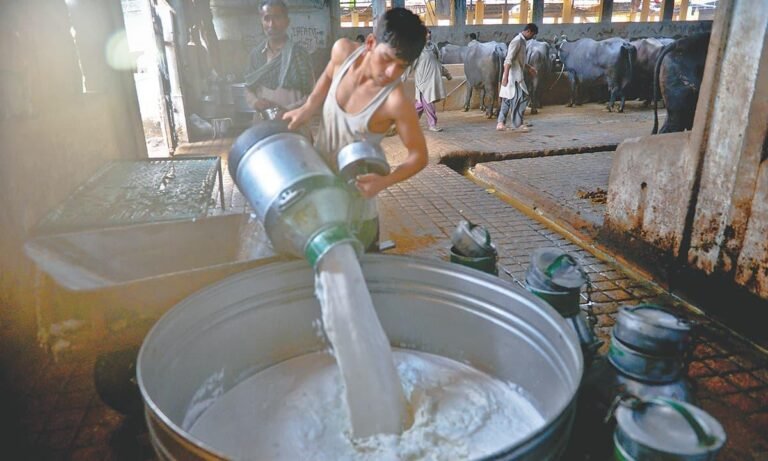
ISLAMABAD, May 3 (ABC): Milk production in Pakistan has increased by more than 80% over the past two decades, reflecting strong growth in the livestock sector.

According to official documents available with Wealth Pakistan, national milk output rose from 31.97 million tonnes in 2005-06 to 58.3 million tonnes in 2024-25, registering an increase of 82.3%. This growth highlights the expanding capacity of the livestock sector, a key pillar of the rural economy.

The growth in milk production has remained steady. Output crossed 40 million tonnes in 2013-14 and exceeded 50 million tonnes in 2020-21. It continued to rise in subsequent years, reaching 52.99 million tonnes in 2021-22, 54.71 million tonnes in 2022-23, and 56.47 million tonnes in 2023-24 before hitting the latest peak.

According to sector assessments, the sustained increase in milk production reflects improved livestock management, better feed availability, enhanced veterinary services, and rising demand for dairy products in urban and rural markets.

Pakistan is among the leading milk-producing countries. With milk output nearing 60 million tonnes, the country is strengthening its position in the global dairy sector.

According to the Pakistan Dairy Association, the dairy sector is emerging as a promising area for investment. It offers opportunities in farm productivity, milk collection, value-added processing, and export-oriented buffalo dairy products.

The dairy sector plays a vital role in livelihoods, food security, and nutrition. It supports millions of people directly and indirectly linked with dairy farming and related activities.

The Pakistan Dairy Association estimates that there are 8 to 10 million dairy farms in the country. Around 50 to 60 million people are associated with dairy farming, while nearly 8 million rural families are engaged in livestock production.

Livestock contributes around 35 to 40% of the total income of rural families involved in the sector. This makes animal husbandry a major source of household earnings and rural development.

According to the 7th Agricultural Census of Pakistan, the population of major milk-producing animals increased significantly between 2006 and 2024, supporting the rise in milk production.

Cattle numbers rose to 55.86 million in 2024 from 29.56 million in 2006, showing an increase of around 89%. Buffalo population grew to 47.74 million from 27.33 million, marking a rise of about 75%.

Goat population increased to 95.83 million from 53.79 million, up nearly 78%. Sheep numbers also climbed to 44.59 million from 26.49 million, showing growth of about 68%.

The rise in milk-producing animals indicates stronger livestock capacity, wider rural participation, and better prospects for dairy output, value addition, and food security.

Punjab remains the largest hub for cattle and buffalo populations in the country. It hosts 26.97 million cattle and 29.56 million buffaloes, highlighting its central role in milk production.

Khyber Pakhtunkhwa also holds a significant share, with 13.51 million cattle and 22.49 million goats. This reflects the importance of mixed livestock farming in the province.

Sindh reported 11.21 million cattle and 13.46 million buffaloes, showing its strong contribution to the dairy sector.

Balochistan leads in sheep population with 18.81 million animals. It also has 22.89 million goats and 0.77 million camels, indicating strength in small ruminants and arid-zone livestock systems.

Goats remain the most numerous livestock category at 95.83 million. They are followed by cattle at 55.86 million, buffaloes at 47.74 million, and sheep at 44.59 million, reflecting the diversity of Pakistan’s livestock base.

2.6m olive plants in Balochistan enter production phase

0

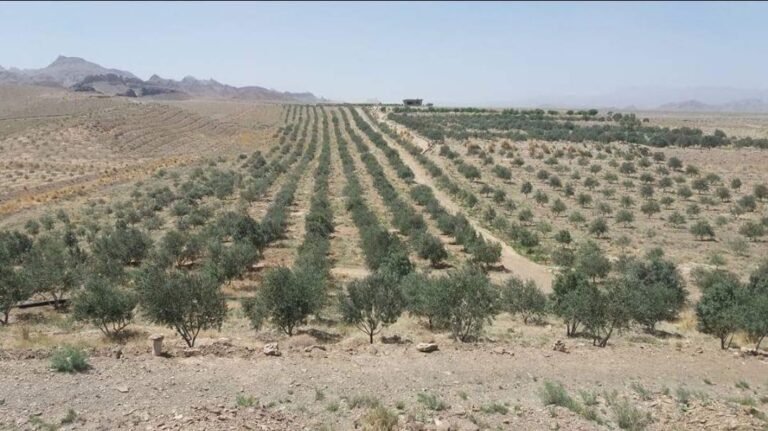
ISLAMABAD, April 30 (ABC): About 2.6 million olive plants cultivated across Balochistan have entered the production phase and are expected to reach full output by 2028-29, according to Abdul Raoof Kakar, former director general of the Agriculture Research Institute, Balochistan.

Speaking to Wealth Pakistan, Kakar described the development as a breakthrough. He said Loralai has emerged as the hub of olive cultivation in the country. He added that the oil content of Loralai olives ranges between 25% and 32%, which is the highest in Pakistan. As a result, farmers now have a viable alternative after suffering heavy losses in traditional orchards.

Balochistan’s fruit sector has faced severe damage due to a prolonged drought that began around 2000. Apples, apricots, and almonds were badly affected. In many areas, entire orchards were wiped out because of water scarcity. Therefore, farmers have increasingly shifted toward olive cultivation.

Kakar stressed the need to improve water management systems. He also highlighted the importance of investing in storage infrastructure. According to him, developing canal networks and building small dams can significantly enhance water conservation. He noted that, unlike Punjab and Sindh, Balochistan lacks extensive canal systems and rainwater storage facilities. However, he said this gap also presents strong development opportunities.

He explained that olive cultivation suits Balochistan’s environment. The region already has millions of wild olive trees. Moreover, domesticated varieties introduced with the support of the Italian government have now reached the harvesting stage. Consequently, more farmers are adopting olive farming.

The government has supported the sector by installing oil extraction units in Loralai, Zhob, Khuzdar, and other areas. These facilities allow farmers to process olives locally at nominal costs. However, Kakar said additional processing units are required as production expands.

He further pointed out that value addition and improved marketing strategies can drive future growth. He said better branding and market access can help farmers secure higher prices and increase their returns.

Kakar also claimed that locally produced extra-virgin olive oil is superior to many imported products. He said local oil is pure and free from adulteration, while imported oils are often mixed or of lower quality.

Currently, all locally produced olive oil is consumed within the country. Demand remains strong despite prices reaching around Rs3,000 per litre or more.

He also clarified that olive trees require proper care for commercial yield. He said irrigation, pruning, and fertilisation are essential. Without adequate water, trees may survive but will not produce quality output.

Kakar noted that olive oil from Loralai has gained international recognition. It recently won a silver award at a competition in New York due to its high antioxidant levels and rich phenolic content.

He concluded that olive cultivation is a blessing for Balochistan. According to him, it is not only reviving agriculture but also creating sustainable economic opportunities in the province.

Rs1.17bn sports projects planned for federal educational institutions

0

ISLAMABAD, April 29 (ABC): The federal government has proposed new sports development projects worth approximately Rs1.17 billion for educational institutions in the capital under the Public Sector Development Programme (PSDP) 2026-27.

According to official documents available with Wealth Pakistan, the upcoming fiscal plan includes several initiatives to promote physical activity and upgrade sports facilities in federal schools and colleges in Islamabad.

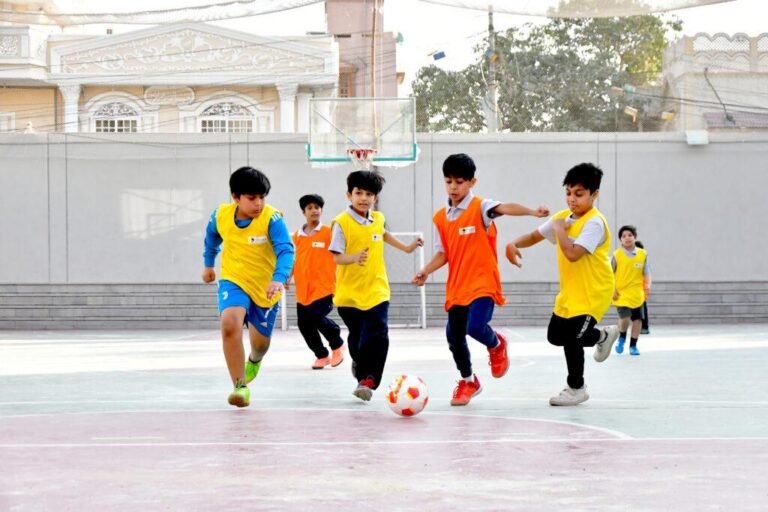
The largest project involves the construction of three indoor swimming pools. It is estimated to cost Rs368.598 million, while Rs450 million has been proposed for 2026-27. Similarly, the construction of 15 futsal grounds will cost Rs359.986 million, with Rs225 million allocated for the next fiscal year.

In addition, the government plans to set up 50 e-sports laboratories in federal educational institutions. This initiative is estimated at Rs229.650 million, with Rs200 million proposed for 2026-27. The move reflects a growing focus on digital and competitive gaming infrastructure.

Moreover, the document outlines plans to construct 10 pedal courts at a cost of Rs126.804 million, with Rs100 million proposed for the upcoming year. Another Rs87.559 million has been estimated for the provision of 500 sports cycles across schools and colleges, while Rs50 million has been allocated for 2026-27.

Overall, these proposed projects highlight the government’s focus on improving sports infrastructure in educational institutions. If approved, they are expected to promote youth engagement, support talent development, and improve physical well-being.

Padel sport arrives in Lahore with launch of new club

0

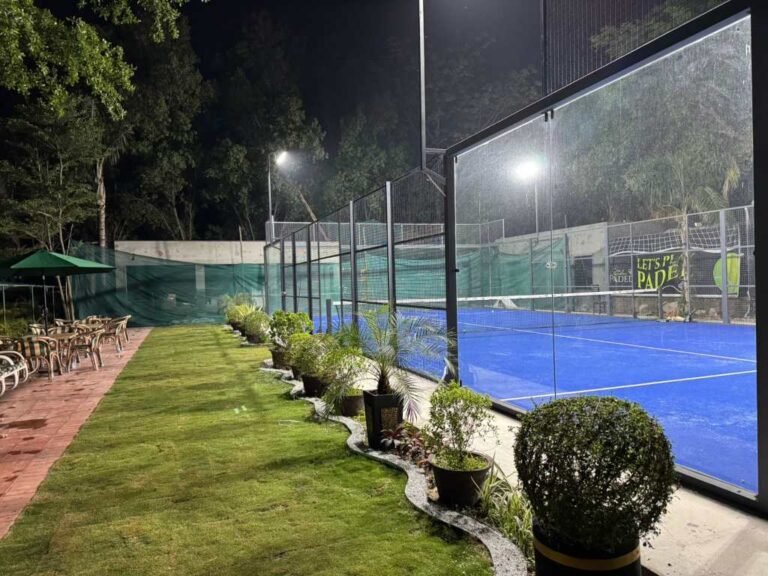
LAHORE, Apr 28 (ABC): A new chapter in sports and lifestyle has started in Lahore with the launch of The Garden Padel, a modern padel club built for players of all levels.

New sports venue opens in Lahore

The Garden Padel operates круглосуточно and aims to promote one of the world’s fastest-growing sports. The club focuses on building a strong and active community around padel.

Located next to The Garden Spice Restaurant near Green Forts 2, the club offers easy access for visitors. The facility includes a high-quality padel court built to international standards.

Modern facilities for families and players

The club also provides a calm farmhouse setting. Visitors can enjoy mini-golf, VR gaming, and a restaurant. These features make it a suitable place for families and friends.

“Padel is more than just a sport. It is a social experience that brings people together,” said Faizan Khalid. He said the goal is to create a space where people can connect, stay active, and enjoy a modern lifestyle.

Global sport gains popularity

Padel combines elements of tennis and squash. The sport has seen rapid growth across the world in recent years.

The Garden Padel aims to bring this trend to Lahore. The club offers premium court access for Rs4,500. It positions itself as a leading padel destination in the city.

With modern facilities and a focus on community, the club plans to promote an active lifestyle and expand interest in padel across Lahore.