


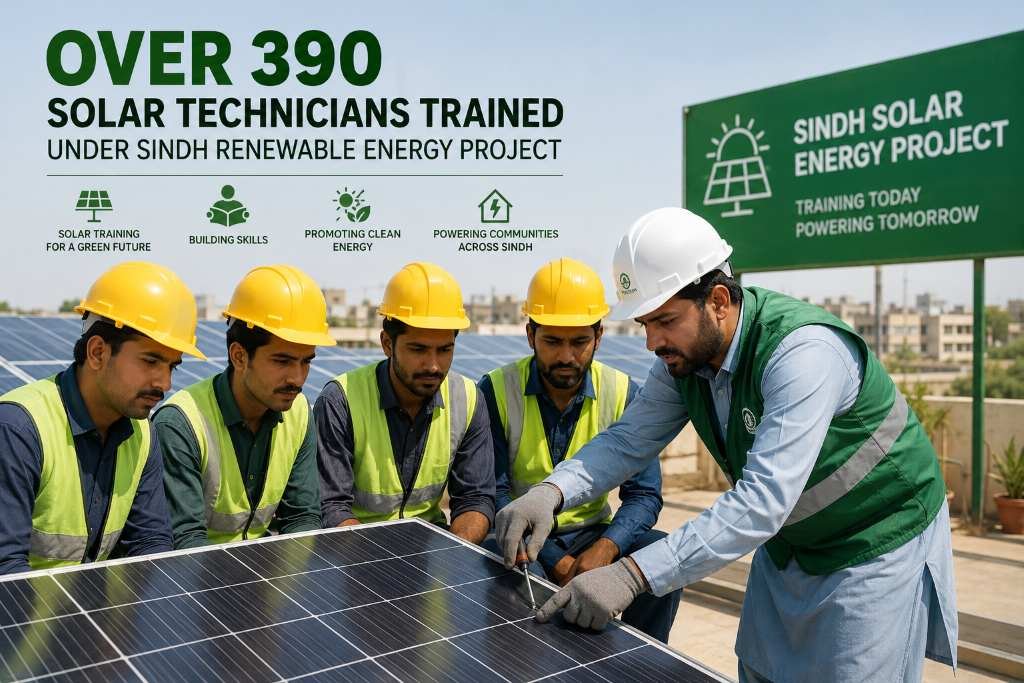
ISLAMABAD, June 10 (ABC): More than 390 solar technicians have completed training under the Sindh Solar Energy Project (SSEP), a World Bank-supported initiative that expanded renewable energy access and strengthened technical skills across the province.
According to a project document available with Wealth Pakistan, the $100 million project helped deploy solar energy systems, train technicians and improve electricity access before World Bank funding ended on July 31, 2025.
Training and capacity building
The project trained 392 solar technicians against a target of 600. It also provided specialised training to 11 Project Management Unit (PMU) staff members.
The Sindh government is setting up solar laboratories at NED University of Engineering and Technology and Mehran University of Engineering and Technology. These facilities will help develop technical expertise and support the renewable energy sector.
Funding utilisation reaches 95pc
The project utilised $94.9 million by August 2025. This amount represents nearly 95% of the committed funding.
Although the World Bank-funded phase has ended, the Sindh government continues the remaining activities through its own resources.
Solar power generation expands
The project allocated $15 million for utility-scale solar parks. The initiative aims to develop about 270 megawatts of solar power capacity.
K-Electric completed auctions for these projects at tariffs of around 3.4 cents per kilowatt-hour. The results highlight the growing competitiveness of solar energy in Pakistan.
Public buildings shift to solar power
The project installed solar systems with a combined capacity of 21.7MW in public buildings. Authorities handed these systems over to the Sindh Health Department during the first phase.
Another 11.8MW is close to completion. Work also continues at 24 priority sites across Sindh.
However, project managers removed 109 Information and Communication Block sites because of budget and timeline limitations.
Rural electrification gains momentum
The project installed solar home systems in 126,000 households. The original target was 200,000 households.
The Sindh government is continuing the programme to complete the remaining installations. The effort aims to improve electricity access in underserved rural areas.
World Bank clears compliance concerns
Media reports published in September 2025 raised concerns about transparency and procurement practices under the project.
After the reports emerged, the Ministry of Economic Affairs sought observations from the World Bank.
According to the document, the World Bank found no compliance issues related to the solar home systems supplied under the project. Its task team and the implementing agency also reported no concerns before the project closed on July 31, 2025.