


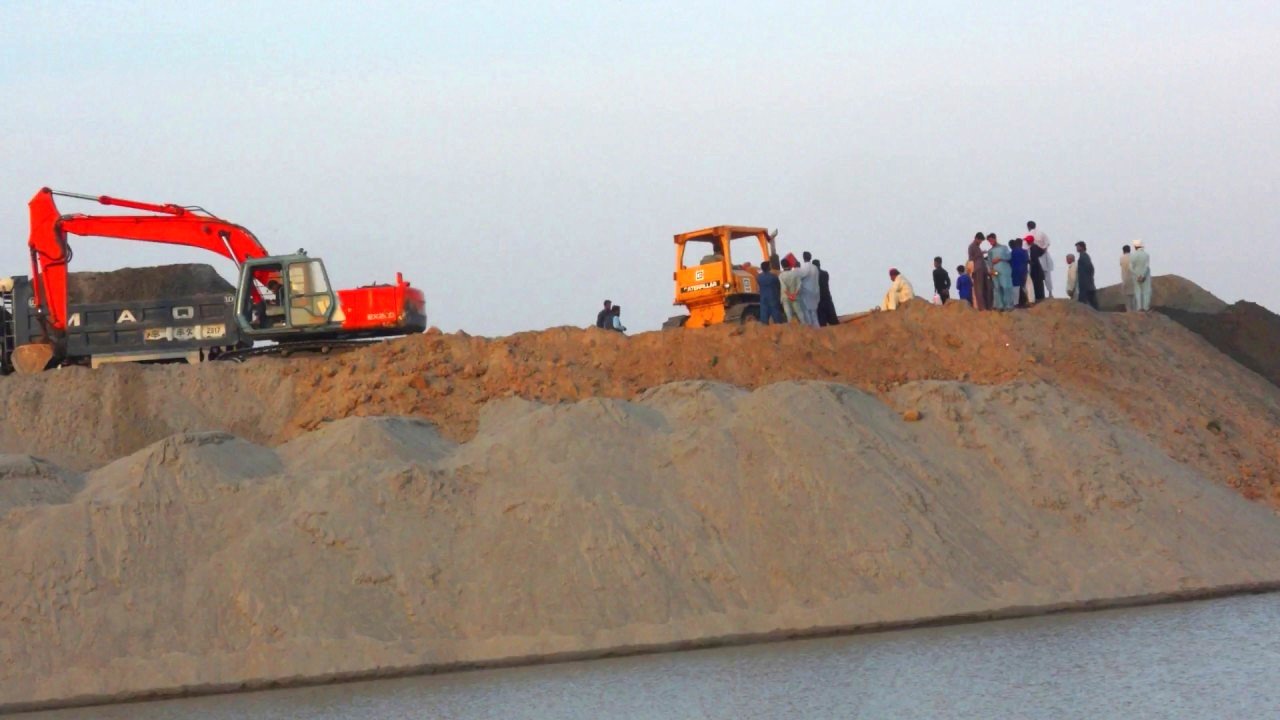

LAHORE, Feb 24 (ABC): The Jalalpur Irrigation Project, widely known as the Jalalpur Canal, will be completed by December 2027. The project will benefit about 384,000 people in 80 villages of Jhelum and Khushab districts.
The Jalalpur Canal will divert water from the Jhelum River to irrigate barren land in the tehsils of Pind Dadan Khan and Khushab. The canal lies along the right bank of the Jhelum River. It is a seasonal irrigation system that will operate from April to October.
The project includes an intake structure, a 117-kilometre main canal, 23 distributaries, and 10 minor canals. The total network will stretch over 210 kilometres. Authorities will also construct 485 tertiary-level watercourses and related infrastructure.
“The waters in the canal will irrigate 174,000 acres in the districts of Jhelum and Khushab, lying in the arid zone,” said Engr Waheed Ashraf, Project Director of the Jalalpur Irrigation Project.
He told Wealth Pakistan that authorities laid the foundation stone in December 2019. After completion, the Jalalpur Canal will increase Kharif crop intensity by 50 percent. The Asian Development Bank is financing the project. Officials expect it to enhance agricultural productivity in the region.
The concept of the Jalalpur Canal dates back to 1898. Engineers kept provisions for a future canal during the construction of the Rasul Barrage between 1898 and 1901. They maintained the same provisions during the barrage’s reconstruction in 1967 under the Indus Waters Treaty framework.
Planners also incorporated the canal into infrastructure planning during the construction of the Lahore-Islamabad Motorway. They provided a crossing near the Lillah Interchange.
Authorities conducted the first feasibility study in 1992-93 and updated it in 2010. They carried out a fresh feasibility assessment from March 2014 to November 2015. A topographic survey followed in 2016.
Water experts believe the Jalalpur Canal will transform the region. In addition to supplying irrigation water, it will improve groundwater quality. At present, groundwater remains brackish due to the area’s proximity to the Salt Range.
“The level of water will rise because of the canal and the area will become fertile,” Dr Ghulam Zakir Hassan Sial, Director of the Irrigation Research Institute (IRI), Punjab, told Wealth Pakistan. He said canal water will recharge and improve the aquifer, which is currently saline.
Pind Dadan Khan tehsil lies between the Salt Range and the Jhelum River. The area has long faced salinity and brackish flash floods from the salt-rich hills. High natural salt concentrations have damaged thousands of acres of farmland. Residents also face serious drinking water shortages due to saline subsoil water.
Experts say surface water from the Jalalpur Canal will boost agricultural output and improve living standards. By turning a rain-dependent area into an irrigated agricultural zone, the canal will support socio-economic uplift in Jhelum and Khushab.