


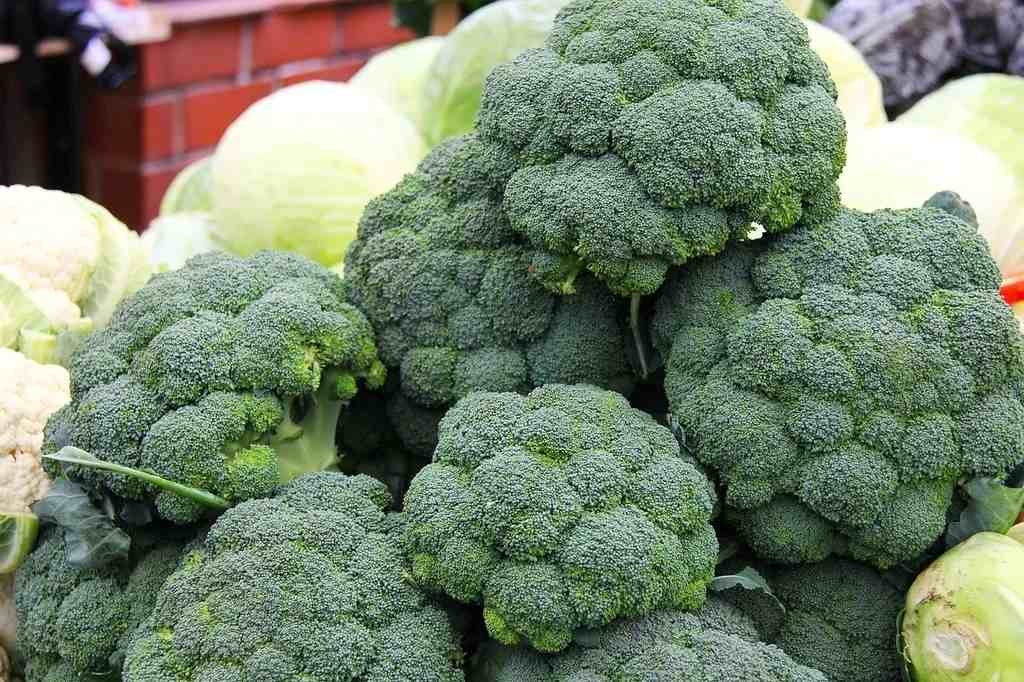

LAHORE, Feb 10 (ABC): Sensing a lucrative opportunity, progressive farmers in Punjab are increasingly turning to broccoli cultivation as demand for the vegetable rises among upper-income consumers in major urban centres.
Although broccoli remains a niche crop compared to traditional vegetables such as cauliflower and cabbage, its presence in the market has expanded in recent years. The vegetable is now widely available at major supermarkets, specialised vegetable outlets, and online platforms catering to urban consumers.
Cultivation spreading beyond Lahore
At present, broccoli is being cultivated mainly on the outskirts of major cities, particularly Lahore. Farmers have also started growing the crop in Sheikhupura, Kasur, Sahiwal, and Pakpattan districts, where climatic conditions during winter favour its production.
“This is a profitable crop. There is a strong demand for broccoli in Lahore, Islamabad, and Karachi,” said Pir Mehmoud Chishti, a broccoli grower from village Tibba Sherkot in Pakpattan district.
Talking to Wealth Pakistan, Chishti said that while prices are attractive, growers face uncertainty due to the absence of a well-developed marketing network for the exotic vegetable.
Prices attractive but market remains limited
According to growers, the retail price of broccoli currently ranges between Rs400 and Rs700 per 500 grams. This is significantly higher than prices of traditional vegetables such as cauliflower or cabbage.
Despite the premium prices, Chishti said imported seed remains the highest cost component in broccoli cultivation. He added that marketing also poses a major challenge, as the vegetable is still unfamiliar to a large segment of the population.
“Because broccoli is not commonly used by the general public, its market is limited,” he explained.
He said the main buyers include high-end hotels, departmental stores, and selected vegetable shops in large cities such as Lahore, Karachi, and Islamabad. Some farms also sell broccoli directly to affluent households through online platforms, where it is mainly used in salads.
“You cannot supply broccoli in large quantities. Sending small volumes is more profitable because demand is limited. In case of oversupply, growers face losses,” he added.
Green variety dominates local production
Several varieties of broccoli are currently being cultivated in Pakistan, with the green variety being the most popular among growers and consumers.
Often described as a superfood, broccoli is primarily grown during the cool season, from September to March. Farmers say the crop performs best during winter, when lower temperatures support healthy growth and better yields.
Imported seed drives up production costs
Vegetable seed dealers say all broccoli seed used in Pakistan is imported from countries including Holland, Japan, China, and Thailand.
“A 10-gram packet costs around Rs3,000, making broccoli cultivation an expensive venture,” said Tahir Saleemi, a vegetable seed dealer.
Talking to Wealth Pakistan, he said that developing local broccoli varieties could significantly reduce production costs and encourage more farmers to adopt the crop.
Research efforts underway for local seed
Efforts are ongoing to develop local broccoli varieties, but progress has been slow due to climatic constraints.
“The seed production phase of broccoli falls in late March and April. Because of high temperatures during this period, we have not yet succeeded in developing a local variety,” said Wajeeha Khan, a broccoli expert at the Vegetable Research Institute.
Talking to Wealth Pakistan, she said scientists at the institute are experimenting with different sowing windows to overcome the temperature challenge.
“Hopefully, we will succeed in developing a local broccoli variety in the future,” she added.
Punjab suitable for winter broccoli cultivation
According to Khan, broccoli requires low temperatures for optimal production. This makes the entire Punjab province suitable for its cultivation during winter.
“It can easily be grown alongside cauliflower and cabbage in the same field,” she said.
Unlike traditional vegetables, broccoli is usually cultivated on small plots, sometimes on less than an acre. Despite the limited area, growers report much higher returns compared to conventional crops.
Health benefits fuel rising demand
Nutritionists say broccoli’s growing popularity is also driven by its health benefits.
The vegetable is rich in fibre, vitamins C, K, and A, and compounds such as sulforaphane, which make it a nutrient-dense food.
“It supports heart health, boosts immunity, and strengthens bones,” said Syed Ali Haider, a nutritionist at a hospital in Lahore.
Talking to Wealth Pakistan, he said broccoli contains antioxidants and bioactive compounds that help reduce cancer risk, aid digestion, and offer low-calorie, anti-inflammatory, and detoxifying benefits.