


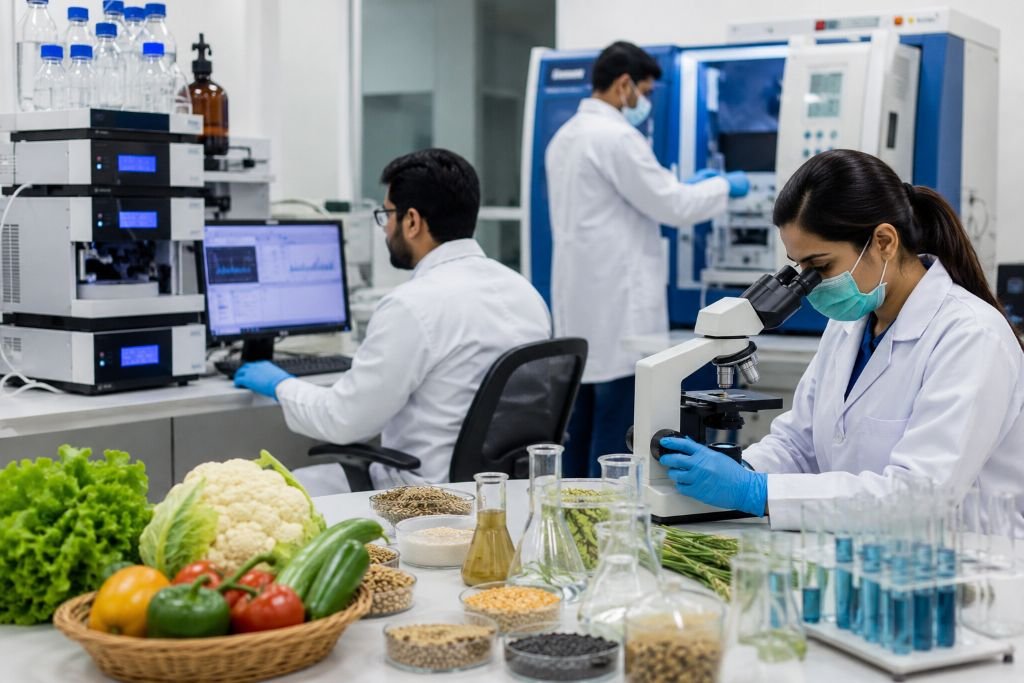
ISLAMABAD, June 3 (ABC): The Pakistan Council of Scientific and Industrial Research (PCSIR) will launch a Rs983.35 million project to modernise testing laboratories for agricultural products. The initiative aims to improve quality assurance and strengthen Pakistan’s export competitiveness.
According to documents available with Wealth Pakistan, PCSIR will implement the project from 2026 to 2028 under the Ministry of Science and Technology.
The project focuses on establishing advanced testing facilities for pesticide residues, aflatoxins, heavy metals and genetically modified organisms (GMOs). These facilities will help exporters meet international food safety requirements and access high-value markets.
Upgrading laboratories across Pakistan
PCSIR will upgrade laboratories in Lahore, Karachi, Peshawar and Quetta. The modernised facilities will expand testing and certification services for agricultural exporters.
The upgraded laboratories will support exports to the European Union, the United States and Gulf Cooperation Council (GCC) countries. Exporters often need internationally recognised testing reports before shipping products to these markets.
The project team expects the initiative to increase agricultural exports by 20% annually. Officials estimate that it could generate an additional $1.5 billion in export earnings every year.
More than 1,000 exporters and farmers are likely to benefit from the improved services. Better testing facilities can also help reduce export rejections caused by contamination or quality issues.
Introducing modern testing technologies
PCSIR plans to install High-Performance Liquid Chromatography (HPLC) and Liquid Chromatography–Tandem Mass Spectrometry (LC-MS/MS) systems in the laboratories.
The organisation will also introduce Enzyme-Linked Immunosorbent Assay (ELISA) and Polymerase Chain Reaction (PCR) technologies for biological screening.
These systems can identify contaminants more accurately and quickly. They will help exporters comply with the standards set by international buyers and regulators.
Achieving international accreditation
PCSIR will align laboratory operations with ISO/IEC 17025 accreditation standards. These standards serve as a global benchmark for testing and calibration laboratories.
International accreditation will improve the credibility and reliability of laboratory results. It will also increase confidence among foreign importers and regulatory authorities.
The project supports Pakistan’s broader strategy to modernise scientific infrastructure and promote value-added agricultural exports.
Strengthening export competitiveness
Global demand for safe, traceable and high-quality food products continues to rise. Pakistan aims to strengthen its position in international markets by improving testing and certification systems.
Officials believe the upgraded laboratories will provide exporters with reliable and internationally accepted testing services. This support can help Pakistan expand agricultural exports and improve access to premium markets.