Home Blog Page 59

Xi stresses securing good start for new five-year plan

0

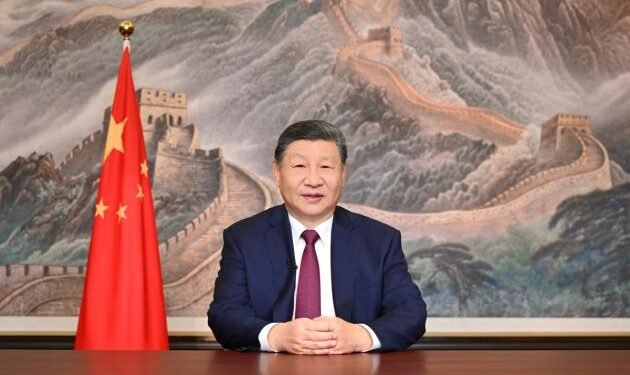
BEIJING, Jan. 20 – Chinese President Xi Jinping on Tuesday called for solid efforts to secure a good start to the 15th Five-Year Plan (2026-2030).

Xi, also general secretary of the Communist Party of China (CPC) Central Committee and chairman of the Central Military Commission, made the remarks at the opening of a study session at the Party School of the CPC Central Committee (National Academy of Governance) for principal officials at the provincial and ministerial level.

Beijing urges Afghanistan to protect Chinese citizens after bombing

0

BEIJING: Beijing demanded on Tuesday that Afghanistan protect Chinese citizens after a bombing at a restaurant in Kabul killed at least seven people, including a Chinese man.

China, which shares a rugged 76-kilometre (47-mile) border with Afghanistan, has close ties with the Taliban government.

“China has made urgent representations with the Afghan side, demanding that the Afghan side spare no effort to treat the injured, further take effective measures to protect the safety of Chinese citizens,” foreign ministry spokesman Guo Jiakun told a news conference.

Six Afghans were also killed in Monday’s explosion at the Chinese Noodle restaurant in central Kabul, city police spokesman Khalid Zadran said.

The blast was claimed by the regional branch of the Islamic State group, the SITE Intelligence Group reported, saying it was a suicide attack targeting Chinese nationals.

The Kabul police spokesman said the restaurant in the Shahr-e-Naw area mostly served Chinese Muslims.

Five Chinese nationals were also among the wounded, Beijing said, warning its citizens against travelling to Afghanistan.

“Chinese citizens and enterprises already in Afghanistan should enhance their awareness of prevention, strengthen security measures and evacuate high-risk areas as soon as possible,” Guo said.

Taliban officials have vowed to restore security to the country and are courting foreign investors to secure crucial revenue streams as foreign aid funding dries up.

Chinese business visitors have flocked to Afghanistan since the Taliban government took power in 2021 for the second time.

The following year, the Islamic State group claimed a deadly attack on a Kabul hotel popular with Chinese guests.

China factory explosion death toll rises to 9

0

The death toll from an explosion at a steel factory in northern China rose to nine, state media said Tuesday, after dozens were also injured in the weekend blast.

One person was still unaccounted for as of midday Tuesday, Xinhua news agency said, citing local rescuers.

Early reports showed the explosion at Baogang United Steel plant in the Inner Mongolia autonomous region on Sunday originated from a 650-cubic-metre water and steam tank.

Xinhua previously said 84 people were taken to the hospital for treatment following the blast.

Footage on social media showed collapsed ceilings and rubble at the factory, huge plumes of smoke overhead, and fire engines at the scene.

Other videos showed an object being blasted into the sky as smoke billowed from the factory and a large, cylindrical hunk of metal that appeared to have come from the plant lying in the rubble of buildings.

Residents kilometres away reported that the explosion shook their homes and shattered windows.

Industrial accidents are common in China due to lax safety standards.

An explosion at a fireworks factory in Hunan province in central China in June killed nine people and injured 26 others.

In 2015, blasts at warehouses containing flammable chemicals in the port city of Tianjin killed more than 170 people and injured 700 others.

UK mulls Australia-style ban on social media for children

0

The United Kingdom (UK) is considering a range of measures to better protect children online, including an Australian-style ban on social media for those below a certain age and tougher guidance for use of mobile phones in schools.

The government said it would examine evidence from around the world on a wide range of suggested proposals, including looking at whether a social media ban for children would be effective and, if one was introduced, how best to make it work.

Ministers will visit Australia, which last month became the first country to ban social media for children under 16, to learn from their approach, the statement said.

The government did not mention a particular age limit, but said it was exploring a ban “for children under a certain age”, in addition to other measures, such as better age checks and looking into whether the current digital age of consent was too low.

The proposals come as governments and regulators worldwide contend with the risks of exposing children to social media, as well as the impact of screen time on their development and mental health.

The recent rapid explosion of AI-generated content online has exacerbated those concerns, highlighted this month by a public outcry over reports of Elon Musk’s Grok AI chatbot generating non-consensual sexual images, including of minors.

The British government has already set out plans for an outright ban on artificial intelligence nudification tools, while working to stop children being able to take, share or view nude images on their devices, it said in Monday’s statement.

The government said it was also considering removing or limiting functionalities that could drive addictive or compulsive use of social media, such as infinite scrolling.

Britain’s recently enforced Online Safety Act, one of the strictest safety regimes, has increased the share of children encountering age checks online to 47% from 30%, while cutting visits to pornography sites by a third, according to the government.

United States Treasury Secretary Scott Besant on Monday said Europe should not retaliate against any measure.

“These laws were never meant to be the end point, and we know parents still have serious concerns,” Technology Secretary Liz Kendall said. “That is why I am prepared to take further action.”

Trump to meet global CEOs in WEF, with US policy in spotlight

0

DAVOS: Donald Trump is expected to meet global business leaders in Davos on Wednesday, sources familiar with the matter said, as the U.S. President’s presence looms large over the annual gathering of the global elite in Switzerland.

Business leaders, including CEOs in financial services, crypto, and consulting, were invited to a reception after Trump’s address to the World Economic Forum’s (WEF) annual meeting, the sources told Reuters on Monday. The agenda was unclear.

One CEO simply had “a reception in honour of President Donald J Trump” scheduled in their diary, while another said their understanding was that global CEOs had been invited, not just those from the United States. One of the sources said the invitations had come from the White House.

Anthony Scaramucci, an investor who briefly served as Trump’s communications director during his first term, said he knew the meeting was happening.

“I’m not going. I’m not sure I’m invited, but even if I were, I wouldn’t want to be a side show,” Scaramucci said.

Trump is expected to arrive on Wednesday in the Swiss mountain resort, where he is due to deliver a special address.

Several top U.S. officials, including Treasury Secretary Scott Bessent, are also accompanying Trump.

China, meanwhile, is being represented in Davos by Vice Premier He Lifeng, who is due to deliver a special address on Tuesday. He will also host a reception with CEOs and founders of global companies, a source told Reuters.

China’s Ministry of Foreign Affairs did not immediately respond to a request for comment outside of business hours.

The WEF agenda has to some extent been overtaken by the U.S. president’s dramatic policy moves, including his demand in recent days that the United States take over Greenland.

WEF organisers have said that over 3,000 delegates from more than 130 countries will attend this year, including 64 heads of state and government, particularly from emerging economies.

The list also includes several heads of G7 nations, with changes in U.S. policy under Trump in focus.

Russian President Vladimir Putin’s special envoy Kirill Dmitriev will also travel to Davos and hold meetings with members of the U.S. delegation, two sources with knowledge of the visit told Reuters on condition of anonymity.

Meanwhile, national security advisers from a number of countries are due to meet on the sidelines of the event on Monday, with Greenland among the subjects on the agenda, diplomatic sources said.

One European diplomat, who spoke on condition of anonymity, said Greenland had been added to the agenda of the previously scheduled meeting after Trump on Saturday to impose extra tariffs on eight European countries until the U.S. is allowed to buy the Arctic island.

Bessent said European governments should not retaliate against any measures taken by the U.S. in their dispute.

“I think it would be very unwise,” Bessent told reporters when asked about retaliatory trade measures on the sidelines of the WEF meeting, adding that Europe should not doubt Trump’s intentions over Greenland.

“I’ve been travelling, so I haven’t been in touch (with European officials), but I spoke to President Trump, and evidently there are a lot of inbounds, and I think everyone should take the president at his word,” Bessent said.

Jenny Johnson, CEO of asset manager Franklin Templeton, said Trump’s moves were negotiating tactics that can feel uncomfortable, but appeared to be in U.S. interests.

“We all know his style. His style is, ‘I’m going to come out with a hammer, and then I’ll negotiate with you,’” Johnson told Reuters in an interview.

“But his instinct about trying to figure out longer-term positions for the U.S. is the right instinct,” she added.

Xi calls for advancing building of China-Canada new strategic partnership

0

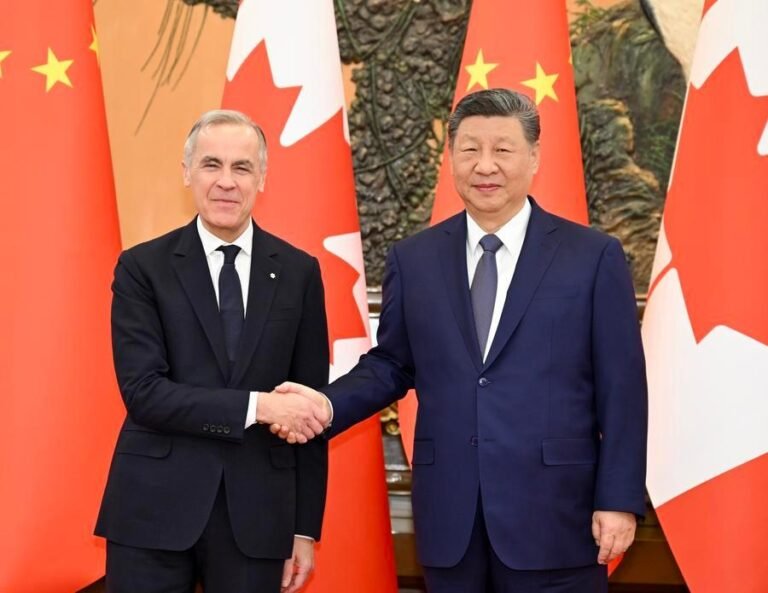
BEIJING, Jan. 16  – Chinese President Xi Jinping and Canadian Prime Minister Mark Carney met on Friday for the second time in less than three months, in a bid to chart the course for bilateral ties that began to thaw last year.

The Xi-Carney meeting last October in Gyeongju, Republic of Korea, marked a turnaround of bilateral relationship, and placed it on a new trajectory of positive development. The two sides have had in-depth discussions on resuming and restarting cooperation across various fields, and achieved positive outcomes.

The healthy and stable development of China-Canada relations is in the common interests of the two countries and also conducive to world peace, stability, development and prosperity, Xi told Carney, who is on an official visit to China from Wednesday through Saturday, marking the first by a Canadian prime minister in eight years.

With a sense of responsibility for history, for the people and for the world, the two sides should advance the China-Canada new strategic partnership, steer their ties onto the track of sound, steady and sustainable development, and bring more benefits to both peoples, Xi said.

He said China and Canada should be partners of mutual respect, common development, mutual trust and collaboration.

He said that despite different national conditions, both countries should respect each other’s sovereignty and territorial integrity, respect the political systems and development paths they have chosen respectively, and adhere to the correct way of getting along with each other.

Xi said the essence of China-Canada economic and trade relations is mutual benefit and win-win cooperation, with both sides benefiting from cooperation. China’s high-quality development and high-level opening up will continue to provide new opportunities and expand new space for China-Canada cooperation.

Xi called on both sides to increase efforts to promote cooperation and reduce the negative list, thereby strengthening the bond of shared interests through deeper and broader cooperation.

Xi urged both sides to encourage exchanges and cooperation in education, culture, tourism, sports and sub-national areas, and facilitate two-way travel to entrench public support for strong ties.

China is willing to enhance communication and coordination with Canada within the frameworks of the United Nations (UN), the G20 and the Asia-Pacific Economic Cooperation to jointly address global challenges, Xi said.

Carney noted that with a long history of friendly engagement and strong economic complementarity, Canada and China enjoy extensive common interests and opportunities.

Canada wishes to build with China a new strategic partnership that is strong and enduring so as to deliver greater benefits to the two peoples, Carney said.

The Canadian side reaffirms its adherence to the one-China policy and its commitment to working with China in the spirit of mutual respect and partnership to expand and strengthen cooperation in economy and trade, energy, agriculture, finance, education, climate change, and others, he said.

Carney said multilateralism underpins global security and stability, and the Global Governance Initiative put forward by President Xi is important.

Facing a fast-changing and turbulent world, Canada would like to intensify multilateral coordination with China to uphold multilateralism and the authority of the UN and to promote international peace and stability, he added.

During Carney’s visit, both sides issued a joint statement of the China-Canada leaders’ meeting, and signed multiple cooperation documents covering trade, customs, energy, construction, culture, and public security.

Chinese Premier Li Qiang held talks with Carney on Thursday. Li said China welcomes more Canadian companies to invest in China and hopes that Canada will provide a fair and non-discriminatory business environment for Chinese enterprises investing in the country.

Wang Wen, dean of Chongyang Institute for Financial Studies at the Renmin University of China, said the new Canadian government’s endeavor to mend bilateral ties reflects the pragmatic and rational approach of its new leadership.

Restoring stable bilateral relations will not only enhance political mutual trust but also bring exchanges in economy, trade, culture and other fields back on track, benefiting the people of both countries, Wang said.

Xi congratulates Central African Republic president on reelection

0

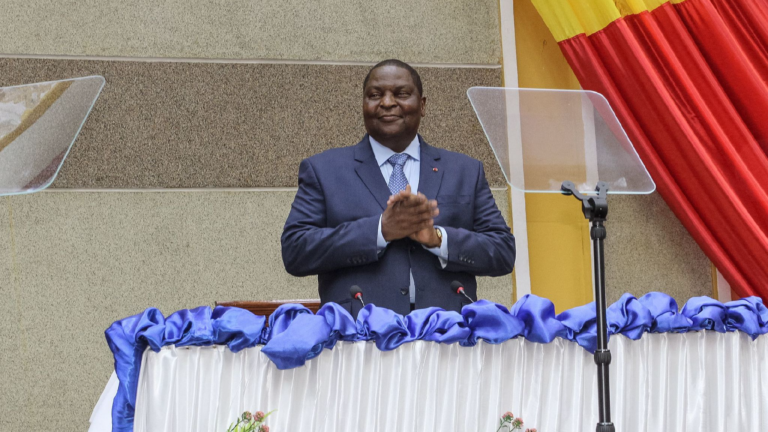
BEIJING, Jan. 20 – Chinese President Xi Jinping on Tuesday congratulated Faustin-Archange Touadera on his reelection as president of the Central African Republic.

In his message, Xi noted that in recent years, China and the Central African Republic have continued to deepen political mutual trust.

The two sides have also firmly supported each other on issues involving their core interests and major concerns, and steadily advanced exchanges and cooperation across various fields, he added.

Xi said that he attached great importance to the development of China-Central African Republic relations.

He expressed readiness to work with President Touadera to actively implement the outcomes of the Beijing Summit of the Forum on China-Africa Cooperation, and to push ahead with the continuous upgrading of the two countries’ strategic partnership, so as to deliver greater benefits to the peoples of both countries.

China Focus: Southeast Asian tourists flock north, fueling China’s ice-snow economy boom

0

HARBIN, Jan. 19 – Despite the biting minus 20 degrees Celsius cold on the century-old Central Street in Harbin, northeast China’s Heilongjiang Province, Thai tourist Nattapong Somchai stamped his feet to keep warm yet happily embraced a local tradition by trying a classic ice cream bar.

“This is absolutely amazing,” he said with unconcealed excitement. “There are not only exquisite ice sculptures but also European-style architecture and Western cuisine. The blend of Eastern and Western charm is truly captivating.”

Recently, tourists from Southeast Asian countries like Thailand, Vietnam and Malaysia have been flocking to Harbin, hailed as China’s “Ice City,” with unprecedented enthusiasm.

Guo Chunguang, general manager of a local travel agency in Harbin, stated that since the start of this winter, there has been strong demand for direct charter flights from Bangkok to Harbin, and the agency has already received over 3,000 Thai tourists.

Han Yuanjun, a researcher at the China Tourism Academy, analyzed that the hot climate and the scarcity of ice and snow resources in Southeast Asia are prompting an increasing number of tourists in the region to travel to northeast China in search of unique experiences.

Since the start of this year, high-altitude scenic spots across the southwestern Chinese provinces of Yunnan, Sichuan and Guizhou, which boast abundant snow-capped mountains and proximity to Southeast Asia, have also seen a surge in inbound tourists from the region.

On Jan. 1 alone, more than 3,000 travelers from Vietnam entered China via Hekou in Yunnan. Many then boarded high-speed trains bound for Jiaozi Snow Mountain in Kunming, the provincial capital, eager to experience snow.

“It rarely snows in Vietnam. With the New Year holiday, many Vietnamese are eager to see snow in China,” Vietnamese tour guide Nong Thuy Duong said.

According to a report released last year by China’s General Administration of Sport, the country’s ice-and-snow economy has experienced leapfrog growth in recent years. The sector’s scale expanded from 364.7 billion yuan (about 52 billion U.S. dollars) in 2016 to 980 billion yuan in 2024, with an average annual growth rate exceeding 21 percent.

Through four consecutive years of overseas promotional campaigns for ice and snow tourism, China has expanded its international market presence and achieved targeted outreach for its winter tourism brand in Southeast Asian countries like Malaysia and Vietnam. Data shows that there has been a significant increase in Southeast Asian tourists visiting ice and snow destinations in Harbin, Jilin, another province in northeast China, and Sichuan.

According to Tang Chengcai, professor at the School of Tourism Sciences, Beijing International Studies University, this growth is no longer a mere increase in visitor numbers but reflects the deep integration of China’s ice and snow industry chain with the global tourism consumption market. It has fostered a new international ecosystem that spans product development, cultural exchanges and service trade, Tang added.

China’s optimized visa-free transit policies have also reduced travel barriers for Southeast Asian visitors. “It used to be expensive to get a visa, but now it’s so easy. You can just buy a ticket and travel around China. The visa-free policy is really a great move,” said Yanti, a tourist from Singapore.

Industry insiders point to a prominent trend as Southeast Asian tourists in China move beyond ice and snow tourism to seek deeper cultural experiences, with “living like a local” growing in popularity.

At Harbin’s Zhaolin Park, home to a six-decade-old ice lantern garden party, Thai tourist Siriporn Wannarat took photos with her child in front of ice sculptures and wandered through an ice maze. “What moved me the most is that the park is open for free here. We can take a walk after dinner and feel the pulse of the city. That’s what real life is about,” she said.

Han with the China Tourism Academy noted that Southeast Asian tourists have a strong interest in Chinese culture, and they are naturally drawn to the unique local customs, winter fishing and ice sculpture art in northeast China.

Pan Jie, a Harbin-based tour guide, has also observed that Thai tourists’ itineraries are expanding beyond the city to include Yabuli’s professional ski resorts, the snow-blanketed forests of Snow Town, and folk-tradition villages across northeast China.

The influx of Southeast Asian visitors is setting higher standards for the internationalization of China’s ice and snow industry. Local authorities in the country are rolling out targeted service upgrades.

Chengdu Tianfu International Airport in Sichuan provincial capital has established a dedicated payment assistance center for inbound travelers, while the city now allows direct use of foreign bank cards on public transit. Major tourist sites across the province now feature AI-powered multilingual translation screens and on-site currency exchange kiosks, ensuring a seamless and stress-free journey.

Harbin Taiping International Airport has launched four new international routes to Ho Chi Minh City, Hanoi, Bangkok and Kuala Lumpur, increasing its weekly passenger flights from 87 to 118.

Ports such as Heihe and Suifenhe in Heilongjiang have implemented measures like deploying bilingual police officers for guidance and dynamically adjusting inspection lanes to ensure efficient clearance for travelers.

According to statistics from the Heilongjiang provincial exit and entry frontier inspection station, from Jan. 1 to 13, the number of inbound and outbound passengers at ports in the province reached 122,000, marking a 37-percent increase compared to the same period last year.

“I really like Snow Town. It’s so beautiful here, and I enjoy experiencing the feeling of cold here,” said a Vietnamese tourist visiting Heilongjiang for the first time, adding that the English translations in the scenic area and the helpful local people made him feel at ease.

Experts suggest that there is still room for improvement in the service quality, market regulation and internationalization of commercial facilities in China’s ice and snow tourism destinations. For example, deeper development could focus on the dining preferences and accommodation habits of Southeast Asian tourists, along with further enhancements to indoor entertainment facilities and the expansion of ice and snow consumption scenarios.

Foreign tourists board K7041, a train themed on folk culture of northeast China, at Harbin Railway Station in Harbin, northeast China’s Heilongjiang Province, Jan. 19, 2026. Recently, tourists from Southeast Asian countries have been flocking to Harbin, hailed as China’s “Ice City,” with unprecedented enthusiasm.


A tourist from Malaysia (L) experiences painting techniques of Elunchun nationality on K7041, a train themed on folk culture of northeast China, in northeast China’s Heilongjiang Province, Jan. 19, 2026. Recently, tourists from Southeast Asian countries have been flocking to Harbin, hailed as China’s “Ice City,” with unprecedented enthusiasm.
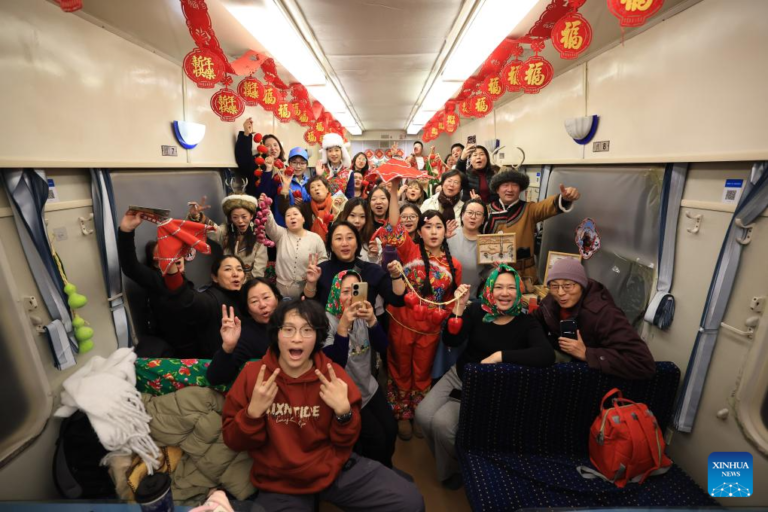
Foreign tourists pose for photos on K7041, a train themed on folk culture of northeast China, in northeast China’s Heilongjiang Province, Jan. 19, 2026. Recently, tourists from Southeast Asian countries have been flocking to Harbin, hailed as China’s “Ice City,” with unprecedented enthusiasm.

Foreign tourists experience a sledge on K7041, a train themed on folk culture of northeast China, in northeast China’s Heilongjiang Province, Jan. 19, 2026. Recently, tourists from Southeast Asian countries have been flocking to Harbin, hailed as China’s “Ice City,” with unprecedented enthusiasm.

Paracetamol/Tylenol in pregnancy is safe, says research prompted by Trump autism claims

0

Taking paracetamol, known as Tylenol in the U.S., during pregnancy is safe, a group of European researchers have said, after compiling data in response to U.S. President Donald Trump’s claims of a link to autism last year.

In a review published in the British journal The Lancet Obstetrics, Gynaecology & Women’s Health on Saturday, the team said they had focused on amassing the best-quality evidence to address the claims.

“Paracetamol is safe to use in pregnancy,” said lead author Asma Khalil, professor of obstetrics and maternal foetal medicine at City St George’s, University of London.

“The key message is reassurance: When used as recommended, the best available evidence does not support a causal link with autism, ADHD (attention-deficit/hyperactivity disorder) or intellectual disability.”

TYLENOL NOT LINKED TO AUTISM OR ADHD

Khalil said she had been asked about the popular pain medication – also known as acetaminophen – by her patients after Trump in September told pregnant women not to take the drug. At the time, national and international medical groups, decried the president’s comments, saying they were not evidence-based.

Paracetamol/Tylenol is the only pain reliever considered safe for pregnant women, and doctors already advise them to use the smallest amount for the shortest time to control pain and fever during pregnancy. Untreated, these conditions can be risky for both pregnant women and their babies.

The researchers conducted a systematic review, and meta-analysis of existing data, finding 43 studies that were then assessed for quality and bias using a standard tool.

The team particularly focused on studies that looked at children born to the same mother who took paracetamol/Tylenol during one pregnancy but not the other. These take into account shared genetic factors and family environments that could be linked to autism or the other conditions studied, Khalil said.

There were only three studies of this type, but they were large, covering more than 260,000 children assessed for autism, and around 335,000 and 405,000 for ADHD and intellectual disabilities respectively.

ACCOUNTING FOR BIAS

They showed no significant link between use of the drug and any of the conditions studied. This remained the case when results from all of the high-quality studies that were assessed were pooled, the authors said.

Khalil said much of the work showing a potential link, including a review of 46 studies cited by Trump officials, was prone to bias or confounding factors that her team’s review had tried to account for.

Grainne McAlonan, professor of Translational Neuroscience at King’s College London, who was not involved in the research, praised the study, adding: “I hope the findings of this study bring the matter to a close.”

PM launches health card for Islamabad, AJK & Gilgit-Baltistan

0

ISLAMABAD: Prime Minister Muhammad Shehbaz Sharif on Friday revived and extended the Prime Minister’s Health Card programme to Islamabad Capital Territory, Azad Jammu and Kashmir (AJK) and Gilgit-Baltistan reaffirming the federal government’s commitment to provide quality healthcare as a fundamental right to every citizen, regardless of social or economic status.

Addressing the launch ceremony, attended by Federal Minister for Health, Chief Minister Gilgit-Baltistan, federal ministers parliamentarians, senior officials including Secretary Health and the Chief Secretary AJK, the prime minister said the initiative marked another major step towards delivering healthcare facilities at people’s doorsteps.

Prime Minister Shehbaz Sharif recalled that the health card scheme was first introduced in 2016 under the leadership of Mian Muhammad Nawaz Sharif and later expanded rapidly across provinces.

He said there was nothing more valuable in life than health. “If there is health, there is education; if there is health, there is dignified employment; if there is health, there is progress in every field of life,” he remarked.

The PM said affluent segments of society could afford expensive treatment anywhere in the world, but the true test of the state lay in protecting the poor, widows, orphans and daily wage earners who struggle to make ends meet. “If a labourer falls ill and leaves this world without treatment, his children are left in permanent darkness. Healthcare is the right of every Pakistani whether prime minister or street vendor,” he said.

The prime minister congratulated Federal Health Minister Mustafa Kamal, Secretary Health, and their entire team on the launch, urging them to ensure transparent implementation through third-party monitoring so that treatment is provided at the right facilities and with the right standards.

He expressed confidence that honest execution of the programme would not only serve the people but also earn reward in both this world and the hereafter.

Expressing hope that the scheme would be implemented swiftly and effectively, he said the programme would be personally monitored through visits and inspections in collaboration with Islamabad’s health leadership, parliamentarians, the Chief Minister of Gilgit-Baltistan and the Prime Minister of AJK.

Responding to a demand for extending the programme to Sindh, he said that the proposal was valid and assured that he would personally take up the matter with the Chief Minister of Sindh.

He noted that the programme was already progressing rapidly in Punjab, with billions of rupees being spent on healthcare, and congratulated the Punjab government on its efforts. He added that while other provinces had their own health initiatives, efforts would be made to ensure similar facilities were made available nationwide.

The prime minister expressed the hope that the Prime Minister’s Health Card programme would gain momentum across the country, bringing relief to millions of families. “May Allah help us in serving the people,” he said, ending with prayers for the success of the initiative and the prosperity of Pakistan.

Earlier, Federal Minister for National Health Services, Regulations and Coordination Mustafa Kamal said that the revival of the Prime Minister’s Health Card would provide free, cashless healthcare to nearly one crore (10 million) residents of Islamabad Capital Territory, Azad Jammu and Kashmir and Gilgit-Baltistan. He said the programme ensures that citizens will receive treatment without worrying about affordability at moments of pain and distress.

The minister said that within four to five weeks, a programme that had become inactive was fully revived, terming it a major administrative achievement. He stressed that healthcare should not be limited to treating illness alone. “Healthcare means preventing people from becoming patients ensuring safe childbirth, vaccinating children, providing clean drinking water and strengthening preventive care,” he said.

Sharing operational details, Kamal said that around 70 hospitals were being empanelled under the Prime Minister’s Health Card across Islamabad, AJK and Gilgit-Baltistan, including 20 additional hospitals in Islamabad alone. He added that cardholders from these regions living in Karachi would also be able to access treatment at 16 designated hospitals in the city.

He noted that Sindh remains the only province where the Prime Minister’s Health Card is not yet operational, while Punjab, Khyber Pakhtunkhwa, Balochistan and the federal territories are already covered.

Referring to proposals discussed earlier, he said a plan covering 10 rural and urban districts of Sindh at an estimated cost of Rs24 billion had been prepared. “If funding is provided for just two years, the programme can become self-sustaining from the third year onward,” he said, expressing hope that healthcare deprivation in Sindh could also be addressed.