
Home Blog Page 50

Trump warns Iran time is running out to avoid US military action

0

PARIS, Jan 29 (ABC): United States President Donald Trump on Wednesday warned Iran that time was running out to prevent American military action, as Tehran rejected negotiations under what it described as military threats.

Trump said Iran must return to talks over its nuclear programme, which Western countries believe aims to develop atomic weapons. Iran has repeatedly denied seeking nuclear arms.

Trump issues warning on nuclear talks

In a post on Truth Social, Trump urged Iran to negotiate what he called a fair deal.

He said Iran should agree to a settlement with “no nuclear weapons” and warned that delays could trigger military consequences.

Trump referred to US strikes on Iranian nuclear targets during the June conflict between Iran and Israel, which Washington supported and joined.

“The next attack will be far worse,” Trump said, warning Tehran not to repeat past actions.

US military presence increases

Trump said a US naval strike group was operating in the region. He described it as an “armada” led by the aircraft carrier USS Abraham Lincoln.

The carrier group has entered Middle Eastern waters, according to US officials, although they did not disclose its exact location.

Trump has never ruled out new strikes on Iran, especially after its crackdown on protests earlier this month.

Iran rejects talks under threat

Iran’s Foreign Minister Abbas Araghchi said diplomacy cannot succeed under military pressure.

He said Iran would not negotiate while facing threats or what he described as excessive demands.

Araghchi added that Iran had not sought talks and had no recent contact with US Middle East envoy Steve Witkoff.

Iran’s armed forces chief of staff Habibollah Sayyari warned the United States against miscalculation, saying any attack would also cause damage to US forces.

Regional diplomacy intensifies

Iran has meanwhile stepped up diplomatic contacts with US allies in the region.

President Masoud Pezeshkian spoke with Saudi Crown Prince Mohammed bin Salman in an effort to reduce tensions.

Iran’s Supreme National Security Council Secretary Ali Larijani also held talks with Qatar’s Prime Minister Mohammed bin Abdulrahman Al Thani.

Qatar said it supported efforts to reduce escalation and seek peaceful solutions.

Egypt’s Foreign Minister Badr Abdelatty also spoke separately with Iranian and US officials, calling for steps to ease tensions and revive dialogue.

Turkey’s Foreign Minister Hakan Fidan criticised renewed military threats, saying a new war against Iran would be wrong.

Rights groups report rising toll

Meanwhile, the US-based Human Rights Activists News Agency reported that more than 6,200 people had been killed during Iran’s recent unrest.

The group said most of the victims were protesters. It added that tens of thousands had been arrested.

Rights groups warned that Iranian security forces were searching hospitals for wounded protesters. They said this reflected an escalation in the crackdown.

Iran also executed a man accused of spying for Israel this week, raising fears that some detained protesters could face the death penalty.
Xi Jinping praises Zimbabwe liberation war veterans in letter

0

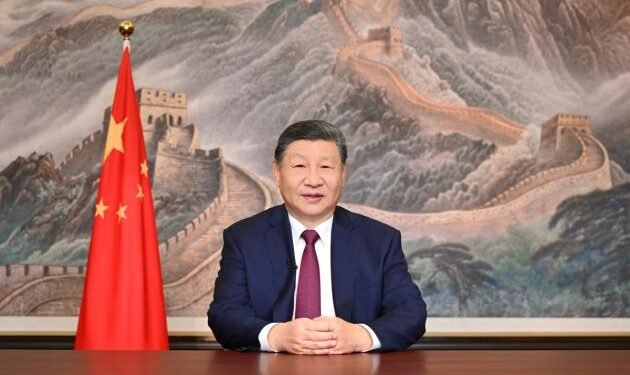
BEIJING, Jan 28 (ABC): Chinese President Xi Jinping has written to veterans of Zimbabwe’s national liberation war, praising their lifelong commitment to friendship between China and Africa.

In his letter, Xi said the veterans devoted their youth to the struggle for national liberation. He noted that they left their homeland and forged a deep bond with China during that period.

He said their continued dedication to China-Zimbabwe and China-Africa relations remains deeply moving.

Xi highlights China-Africa ties

Xi said 2026 will mark the 70th anniversary of diplomatic relations between China and African countries. He also described the year as the China-Africa Year of People-to-People Exchanges.

Over the past seven decades, he said, China has stood as a reliable partner in Africa’s efforts for national liberation, development and renewal.

Xi added that China and African countries have supported each other, faced challenges together and advanced cooperation toward modernization.

Focus on future cooperation

Xi said China is ready to use the outcomes of the Beijing Summit of the Forum on China-Africa Cooperation as an opportunity to deepen traditional friendship.

He said both sides should work together to build a stronger future for China-Africa relations.

Xi also expressed hope that the veterans would inspire more African youth to support China-Zimbabwe and China-Africa friendship.

Message ahead of Chinese New Year

As the Chinese New Year of the Horse approaches, Xi said China and Africa should carry forward the tireless spirit symbolized by the dragon and the horse.

He said both sides should work together to build an all-weather China-Africa community with a shared future in the new era.

Veterans express appreciation

The veterans recently wrote to Xi to thank China for its support during Zimbabwe’s national liberation struggle.

They praised his leadership of the Communist Party of China and the Chinese people in achieving major development progress.

They also expressed pride in the all-weather Zimbabwe-China community with a shared future and pledged to continue promoting friendship between the two countries.

Court issues non-bailable arrest warrant for KP CM Sohail Afridi

0

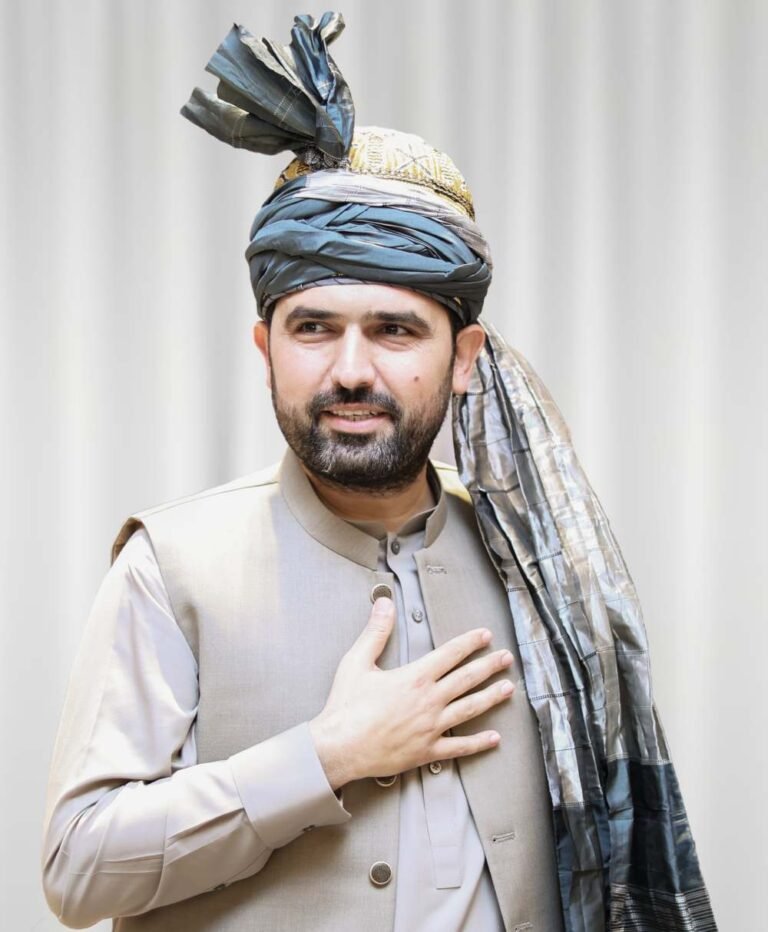
ISLAMABAD, Jan 28 (ABC): An Islamabad district and sessions court on Wednesday issued a non-bailable arrest warrant for Khyber Pakhtunkhwa Chief Minister Sohail Afridi after he repeatedly failed to appear in a case related to alleged misleading statements against state institutions.

Senior Civil Judge Abbas Shah issued the warrant after the chief minister did not attend the hearing despite multiple court summons. The judge ordered law enforcement authorities to arrest Afridi and produce him before the court.

The court adjourned further proceedings in the case until February 10.

Case registered under cybercrime law

The case was registered by the National Cyber Crime Investigation Agency under the Prevention of Electronic Crimes Act.

Investigators accused the KP chief minister of making statements that allegedly damaged the reputation of state institutions. The court observed that Afridi ignored repeated summons and showed no lawful justification for his absence.

The judge noted that the continued non-appearance appeared to be an attempt to avoid the legal process.

Allegations linked to Adiala Jail statement

Authorities registered the case after Afridi made remarks during a media interaction outside Adiala Jail on November 6, 2025.

According to the first information report, he alleged that security forces would bring dogs into mosques in Khyber Pakhtunkhwa. The statement triggered public criticism and condemnation.

Officials registered the FIR on November 9 under Sections 11, 20 and 26-A of the Prevention of Electronic Crimes Act, 2016.

The FIR stated that Afridi knowingly made false and misleading remarks, which were recorded and circulated on social media platforms, including a political party’s YouTube channel.

Investigators alleged that the content aimed to harm the credibility of state institutions and spread unrest.

Other legal proceedings underway

Apart from the cybercrime case, Afridi is also facing proceedings before an anti-terrorism court over his alleged role in the November 26 protest in Islamabad.

He is further facing a case before the Election Commission of Pakistan over an alleged violation of the code of conduct during a recent National Assembly by-election in Khyber Pakhtunkhwa.

PHC restrains ECP in separate case

A day earlier, the Peshawar High Court restrained the Election Commission from taking action against the chief minister in a separate case.

A two-member bench heard Afridi’s petition challenging an ECP notice linked to alleged threats made during the Haripur by-election campaign.

His counsel argued that the speech cited by the ECP took place outside the constituency and formed part of a province-wide development tour.

The high court summoned the ECP record and adjourned the hearing.

Pakistan named founding member of ‘Board of Peace’ for Gaza

0

ISLAMABAD, Jan 29 (ABC): United States President Donald Trump has included Pakistan among the 26 founding members of the newly created “Board of Peace”, an international initiative linked to his Gaza plan.

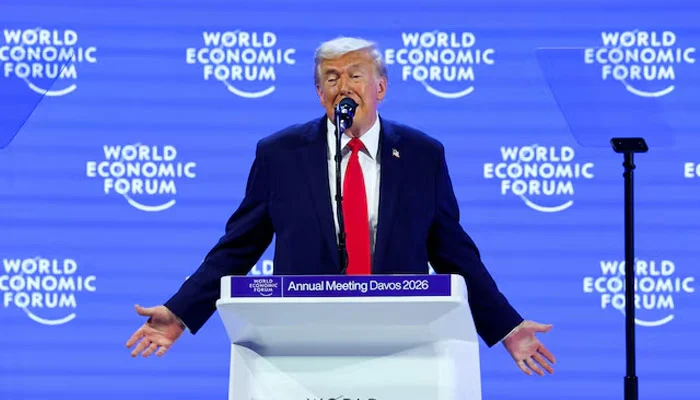
The announcement came on Wednesday, one week after Trump introduced the initiative at the World Economic Forum in Davos, Switzerland.

Meanwhile, the board launched its official account on X and welcomed Pakistan as a founding member.

Wide range of countries included

Along with Pakistan, the founding group includes Saudi Arabia, Turkiye, the United Arab Emirates and Qatar.

In addition, Argentina, Armenia, Azerbaijan, Albania and Bahrain have joined the initiative.

The list also includes Belarus, Bulgaria, Cambodia, El Salvador, Egypt, Hungary, Indonesia, Jordan, Kazakhstan, Kosovo, Kuwait, Mongolia, Morocco, Paraguay, Uzbekistan and Vietnam.

Together, the members represent regions across Asia, the Middle East, Europe, Latin America and the Caucasus.

Major European states stay out

However, several major European countries did not join the board. These include France, Germany and the United Kingdom.

According to media reports, sharp disagreements with Trump over Greenland and tariff policies led to their absence. As a result, relations between Washington and several European capitals remain strained.

At the same time, Ukraine raised concerns about participation alongside Belarus. Russia does not appear on the list of members.

Russia excluded, Canada invitation withdrawn

Russia remained outside the initiative despite President Vladimir Putin’s offer to allocate $1 billion from frozen Russian assets to support the board.

In contrast, Trump withdrew Canada’s invitation earlier this month. He took the step after Canadian Prime Minister Mark Carney warned against economic coercion during his Davos speech.

Board tied to Gaza ceasefire

Trump announced the creation of the Board of Peace on January 15 as part of his broader Gaza initiative. The plan later led to a ceasefire agreement.

The board received formal backing through Resolution 2803 adopted by the United Nations Security Council in November 2025.

Mandate extends beyond Gaza

Initially, the board aimed to oversee the Gaza ceasefire and reconstruction process.

Now, however, its charter expands the role to peace-building in regions affected by conflict or facing instability.

So far, the board has not released details about its leadership, structure or implementation timeline.

Pakistan tightens entry-point screening over Nipah virus threat

0

ISLAMABAD, Jan 29 (ABC): Pakistan has imposed strict and enhanced health screening at all entry points to stop the possible spread of the Nipah virus after regional alerts from India.

The Ministry of National Health Services issued the instructions through Border Health Services–Pakistan. Authorities enforced the measures with immediate effect. The rules apply to airports, seaports and land border crossings across the country.

Nipah virus spreads from animals to humans. Fruit bats and pigs carry the virus. It can also spread through close human contact. Doctors say the virus can cause severe brain infection and respiratory illness. No approved vaccine or treatment exists.

All travellers to face mandatory screening

Officials will now screen every arriving and transit passenger. The order also covers crew members, drivers and support staff.

Border Health Services–Pakistan will issue health clearance at entry points. No traveller will enter the country without this clearance.

Officials will check the travel and transit history of every traveller for the last 21 days. The rule applies to all nationalities.

Staff will closely monitor travellers arriving from or passing through high-risk regions. Authorities will record and report false travel declarations immediately.

Thermal checks and isolation measures

All travellers will undergo thermal screening at entry points. Medical staff will also carry out clinical checks.

Screening teams will look for fever, headache and breathing problems. They will also watch for neurological symptoms, including confusion and drowsiness.

Authorities will isolate any suspected case at the entry point. They will stop onward travel immediately. Health teams will manage cases under infection prevention rules.

Officials will shift suspected patients to designated isolation facilities or tertiary hospitals. Authorities will disinfect the aircraft, vehicle or vessel used by the patient.

Strict compliance and daily reporting ordered

Health authorities have ordered strict compliance with infection control measures. These include the use of protective equipment, hand hygiene and sanitation.

Officials will treat any lapse as serious negligence.

All entry points must submit daily case or nil reports. Border Health Services–Pakistan will share the data with national authorities. The measures will stay in force until further notice.

NIH alerts provinces and health facilities

The National Institute of Health has issued a separate alert to provincial health departments and hospitals.

The institute said Pakistan has not reported any human case so far. However, it warned that the regional situation requires vigilance.

Doctors will continue supportive treatment only. Care focuses on fever control, breathing support and neurological management.

Health officials advised travellers to avoid contact with sick individuals. They urged returning travellers to seek medical help if symptoms appear within 21 days.

Experts advise preparedness, not panic

Health experts say the risk of spread to Pakistan remains low.

They note that Nipah outbreaks have occurred occasionally in South and Southeast Asia since 1998. The virus does not spread easily between humans.

Experts urged authorities to focus on early detection and rapid response. They also said airport screening alone cannot stop importation due to the long incubation period.

Jennifer Grey to reprise iconic role in Dirty Dancing sequel

0

United States , Jan 28 (ABC) : Jennifer Grey is set to return to the big screen as Frances “Baby” Houseman in a direct sequel to the 1987 classic Dirty Dancing, nearly 40 years after the original film’s release.

Lionsgate has officially greenlit the sequel, bringing Grey back to the franchise that defined her career. The project will be produced by Nina Jacobson and Brad Simpson, the duo behind the Diary of a Wimpy Kid films.

Jonathan Levine, who was earlier attached as the film’s director, will no longer direct the sequel but will stay on as an executive producer. The screenplay will be written by Kim Rosenstock, creator and writer of Dying for Sex.

Grey’s return revives her memorable pairing with the late Patrick Swayze, who starred as dance instructor Johnny Castle in the original film. Swayze later appeared briefly as Johnny in the 2004 prequel Dirty Dancing: Havana Nights, starring Diego Luna, though the film failed to match the success of its predecessor.

Dirty Dancing has since expanded into multiple adaptations, including a stage musical in 2005 and a television remake in 2017 featuring Abigail Breslin and Colt Prattes.

Ahsan Iqbal urges value-added approach to grow mineral exports

0

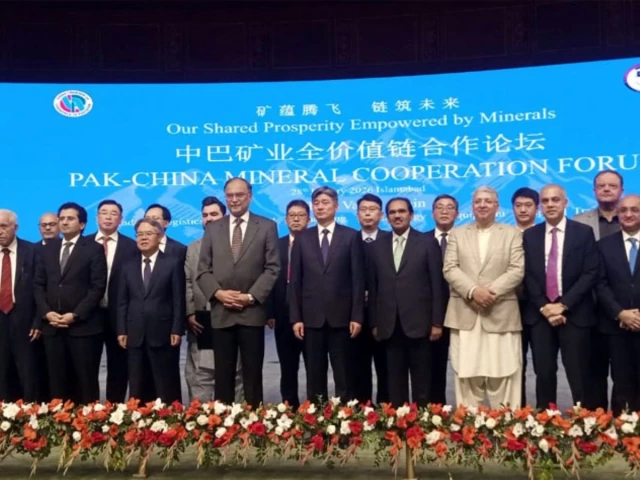
Jan 28 (ABC) :Federal Minister for Planning and Development Ahsan Iqbal said on Wednesday that Pakistan’s mineral exports have the potential to grow to between $6 billion and $8 billion per year within this decade if the country prioritises value addition instead of exporting raw materials.

Speaking at the Pak-China Mineral Cooperation Forum in Islamabad, Iqbal said Pakistan plans to move beyond basic extraction by investing in mineral processing plants, smelters and refining facilities. He added that the government also aims to develop mineral-based industrial clusters connected to Special Economic Zones, Radio Pakistan reported.

The minister stressed that reforming Pakistan’s mineral sector would require strong strategic partnerships, noting that China’s role was vital to this transformation.

“The future of Pakistan-China mineral cooperation lies in creating value together through technology, innovation, human resource development and long-term collaboration,” he said.

Iqbal said that with China as a trusted partner, Pakistan could convert its mineral resources into industrial capacity, stronger exports and shared economic growth. He added that the government was seeking joint ventures that would cater to domestic demand while also serving regional and international markets.

Reaffirming Pakistan’s commitment to safeguarding Chinese nationals and investments, he said security remained a top national priority. He added that the second phase of the China-Pakistan Economic Corridor focuses on converting infrastructure connectivity into productivity, exports, job creation and sustainable growth.

Iqbal expressed confidence that the next phase of CPEC would support the modernisation of Pakistan’s agriculture, industry, technology and workforce, helping the country pursue an export-led growth model.

Meanwhile, Minister for Petroleum Ali Pervaiz Malik said Pakistan, with China’s support, was positioning itself as a dependable and long-term partner in the global mineral supply chain. He invited Chinese firms, service providers and equipment suppliers to expand their involvement in Pakistan’s mineral sector.

In 2025, Pakistan’s mineral exports to China showed strong and diversified growth, reflecting closer industrial cooperation and rising Chinese demand from manufacturing, infrastructure and green energy sectors.

Data from China’s General Administration of Customs showed that exports of copper and copper-based products rose to $1.14 billion, while copper ores and concentrates crossed $11 million, highlighting the metal’s importance for power transmission, electronics and clean energy technologies.

Aluminium ores and concentrates also recorded a sharp rise, increasing from $0.29 million to $14.16 million — a jump of more than 4,700%.

Other mineral exports also performed well, including iron ores and concentrates, which exceeded $101 million, along with manganese ores, lead ores and concentrates, natural calcium phosphates and industrial minerals such as vermiculite and perlite. These materials are widely used in China’s steel, battery, fertiliser and large-scale infrastructure industries.

China tech firm eyes long-term investment in Pakistan’s IT industry

0

Islamabad Jan 28 (ABC):A Chinese technology delegation has shown keen interest in forming long-term partnerships and investing in Pakistan’s information technology sector, pointing to the country’s growing digital ecosystem and skilled workforce.

The two-member delegation from the Leviathan Group, which focuses on big data centers, smart technologies and advanced digital solutions, shared its plans during a meeting with Federal Minister for Information Technology and Telecommunication Shaza Fatima Khawaja, according to an official statement.

The delegation included Mingqian Sun, chief executive officer of Leviathan Technologies, and Dinglin Mei, senior representative of the group. The meeting was also attended by Zeeshan Qureshi, chief operating officer of Capital Smart Innovations, and Khalid Taimur Akram, adviser to the chairman of HRL Group.

During the discussion, Sun briefed the minister on the company’s expertise and explored opportunities for collaboration, technology transfer and potential investment in Pakistan’s IT sector.

Minister Khawaja welcomed the delegation and underscored the government’s commitment to attracting foreign investment, expanding digital infrastructure and creating a supportive environment for international technology firms.

She highlighted Prime Minister Shehbaz Sharif’s Digital Nation Pakistan initiative, which aims to transform the country into a regional hub for IT services, innovation and digital development.

The Chinese delegation appreciated Pakistan’s policy direction and reaffirmed its interest in continued engagement with local stakeholders to explore joint projects. Both sides agreed to stay in close coordination and identify practical areas of cooperation in the near future to further strengthen Pakistan-China technological and economic ties.

Menace of Terrorism

0

Adil Haider Baloch

Terrorism remains one of the most serious threats to global peace and stability. It involves the use of violence and fear to achieve political, ideological, or religious goals. In many cases, civilians become the main targets. As a result, societies suffer deep social, economic, and psychological damage. Understanding the causes of terrorism is essential to addressing its long-term impacts.

What Fuels Terrorism

Several factors contribute to the rise of terrorism. First, political injustice plays a major role. Groups often emerge in response to perceived oppression, foreign occupation, or systematic discrimination. When people feel excluded from political processes, frustration can turn into violence.

Second, extremist ideologies also fuel terrorism. Violent groups misuse religion or ideology to justify their actions. Through propaganda, they attract followers and present violence as a moral duty.

Third, socioeconomic stress increases vulnerability. Poverty, unemployment, and limited access to education create conditions where young people are more likely to be radicalised. Without opportunities, extremist narratives become more appealing.

Finally, weak governance worsens the situation. Corruption, lawlessness, and fragile institutions allow terrorist networks to operate freely. In such environments, enforcement agencies struggle to respond effectively.

The Fallout of Terrorism

The human cost of terrorism is devastating. Thousands of people lose their lives every year, while millions are forced to flee their homes. Conflict-affected regions continue to face displacement and humanitarian crises.

In addition, terrorism causes serious economic damage. Countries facing frequent attacks suffer from declining tourism, reduced foreign investment, and increased security spending. These losses slow development and strain public finances.

Psychological trauma is another lasting impact. Survivors often experience anxiety, depression, and post-traumatic stress. Communities live in constant fear, which weakens social cohesion.

Moreover, counter-terrorism measures sometimes restrict civil liberties. Increased surveillance and security laws may affect privacy and freedom, creating new challenges for democratic societies.

Modern Challenges in Terrorism

Terrorism has also evolved with technology. Cyberterrorism now poses a growing threat, as hackers target communication networks and critical infrastructure. At the same time, lone-wolf attacks have become more common. Individuals radicalised online can plan and execute attacks without direct organisational support.

Furthermore, terrorist groups increasingly use digital tools. Encrypted messaging platforms and modern technology help them spread propaganda, recruit members, and evade detection.

Fighting Back Against Terrorism

Effective counter-terrorism requires coordinated action. International cooperation remains essential, as terrorist networks often operate across borders. Shared intelligence and joint operations can disrupt their activities.

Equally important is addressing the root causes. Investment in education, employment, and good governance reduces the appeal of extremism. When people feel included and hopeful, radical narratives lose influence.

In addition, governments and technology companies must work together to counter online propaganda. Removing extremist content and promoting credible alternatives can limit radicalisation.

At the same time, a rights-centric approach is necessary. Security policies should respect international law and protect fundamental freedoms. Sustainable peace cannot be achieved through repression alone.

The Role of Media and Society

Media and civil society play a crucial role in preventing extremism. Responsible journalism avoids sensationalism and challenges extremist narratives. Grassroots movements and community initiatives also promote tolerance and social harmony.

Education remains one of the most powerful tools. By encouraging critical thinking and mutual respect, societies can build resilience against hatred and violence.

The Way Forward

Terrorism thrives on division, injustice, and despair. Therefore, defeating it requires more than military action. It demands global solidarity, inclusive development, and long-term commitment. By strengthening institutions and investing in people, societies can weaken the foundations of terrorism.

Education, in particular, remains central to this effort. As Nelson Mandela once said, education is the most powerful weapon which can be used to change the world.


The writer is a part-time teacher at DELTA, the change agent.

FCC upholds super tax, clears recovery of over Rs300bn

0

ISLAMABAD, Jan 27 (ABC): The Federal Constitutional Court (FCC) on Tuesday upheld the super tax, confirming Parliament’s power to impose taxes and allowing the recovery of more than Rs300 billion in public revenue.

As a result, Sections 4-B and 4-C of the Income Tax Ordinance (ITO), 2001 will remain effective from their original dates at the prescribed rates.

A three-member bench headed by Chief Justice Aminuddin Khan announced the short order. Justice Syed Hasan Azhar Rizvi and Justice Syed Arshad Hussain Shah were also part of the bench. The court said it would release a detailed judgment later.

Ruling concludes long-pending tax cases

Importantly, the verdict brings an end to more than 2,200 tax cases pending for several years.

According to senior counsel Hafiz Ahsaan Ahmad Khokhar, who represented the Revenue Division secretary, the ruling protects around Rs310 billion in public revenue. Therefore, the decision removes major uncertainty surrounding super tax recovery.

Earlier, these cases were heard by the Supreme Court. However, after the 27th Constitutional Amendment, they were transferred to the FCC.

Background of legal challenges

Previously, businesspersons, banks and companies had challenged the super tax in different high courts.

They claimed the tax applied retrospectively. Moreover, they argued that it resulted in double taxation and unfair treatment.

As a result, the Islamabad, Lahore and Sindh high courts issued conflicting rulings. While some judgments upheld Section 4-B, others struck down or restricted Section 4-C.

Court reaffirms Parliament’s authority

On Tuesday, the FCC clearly stated that Parliament alone has the authority to impose taxes.

The court observed that judges cannot decide tax rates, income thresholds or fiscal policy. Instead, courts can only interpret the law.

Therefore, the FCC held that the high courts exceeded their jurisdiction. It said this amounted to judicial overreach and violated the principle of separation of powers.

Consequently, the FCC set aside all relevant judgments of the Islamabad, Lahore and Sindh high courts.

Validity of super tax provisions

The court declared both Sections 4-B and 4-C fully valid under the Constitution.

In addition, it ruled that earlier decisions limiting or striking down Section 4-C had no legal standing. The FCC also confirmed that appeals filed by the Federal Board of Revenue and Inland Revenue authorities were maintainable.

Exemptions and special treatment

However, the FCC clarified that the super tax does not apply to benevolent funds, modarabas and mutual funds.

Meanwhile, the court allowed oil and gas exploration companies to seek relief individually. These companies may approach the relevant tax commissioner. Each case, the court said, must be assessed separately under the 1948 concession regime.

Why the super tax was introduced

Originally, the government introduced the super tax in 2015 as a one-time levy.

At that time, its purpose was to fund the rehabilitation of areas affected by Operation Zarb-i-Azb. A 5 percent tax applied to annual profits above Rs300 million.

Later, in 2022, the government expanded the tax. It lowered the income threshold to Rs150 million and raised the maximum rate to 10 percent.

Currently, banking companies pay a 4 percent super tax. Other sectors pay a 3 percent levy. The government uses these funds to support temporarily displaced persons.

Revenue impact going forward

Separately, the Federal Board of Revenue said the decision would generate around Rs300 billion for the national exchequer.

Overall, the ruling strengthens the government’s position on tax collection and brings clarity to a long-running legal dispute.