Home Blog Page 4

Huawei highlights AI, cloud solutions at Indus AI Week

0

ISLAMABAD, Feb 11 (ABC): Huawei showcased its latest artificial intelligence and cloud computing solutions during the Indus AI Week Islamabad, an event organized by the Ministry of IT and Telecom to promote innovation and accelerate Pakistan’s digital transformation.

The flagship event brought together policymakers, technology firms, researchers, and industry leaders. Participants displayed emerging technologies and explored partnerships aimed at strengthening the country’s digital ecosystem.

Government calls for public-private collaboration

Federal Minister for Planning, Development and Special Initiatives Ahsan Iqbal visited the Huawei booth and stressed the need for closer cooperation between the public and private sectors. He said such partnerships are vital for building a competitive knowledge economy.

He also invited leading technology companies, including Huawei, to participate in the Narowal Innovation Center initiative. According to him, collaboration with global firms will help Pakistan adopt advanced technologies faster and create new opportunities for youth.

“Partnerships with Huawei and other innovators will accelerate Pakistan’s digital transformation and keep the country competitive in the global knowledge economy,” he said. “Huawei’s strong presence in Pakistan is already fostering innovation and supporting our journey toward Digital Pakistan.”

Huawei reaffirms commitment to Pakistan

Huawei Pakistan’s CEO for AI and Cloud, Ahmed Bilal Masood, reiterated the company’s long-term commitment to the country’s technology sector.

He said Huawei aims to support local innovation, skill development, and digital infrastructure through advanced AI and cloud solutions.

“Huawei is proud to be a trusted partner in Pakistan’s innovation ecosystem,” he said.

Platform for innovation

Meanwhile, Indus AI Week Islamabad served as a platform to connect stakeholders, showcase new technologies, and encourage knowledge sharing. Officials said the initiative will help position Pakistan as a regional hub for artificial intelligence and digital innovation.

Online radicalisation, youth recruitment by militants growing: UN

0

ISLAMABAD, Feb 10 (ABC): Militant organisations are increasingly relying on online propaganda, digital outreach and targeted recruitment of young people to sustain their ranks, signalling a shift from purely battlefield tactics to long-term influence strategies, according to a United Nations monitoring report.

The UN Analytical Support and Sanctions Monitoring Team said several armed groups are expanding their use of digital platforms to attract supporters, spread ideology and mobilise recruits across borders.

Security analysts say this trend is creating a steady pipeline of fighters and sympathisers, making extremist networks more resilient.

Digital platforms used for outreach

According to the assessment, militant organisations are actively using social media, encrypted messaging applications and online forums to circulate propaganda material.

These platforms allow groups to distribute videos, statements and recruitment messages quickly and at low cost. Moreover, content can reach audiences far beyond conflict zones.

Officials say such online activity helps militants maintain visibility even when their physical presence is restricted.

Youth increasingly targeted

The report observed that young people are often the primary targets of recruitment efforts.

Militant groups tailor messages to appeal to grievances, identity issues and economic frustrations. As a result, vulnerable individuals may be drawn toward extremist narratives.

Experts warn that online recruitment lowers the barrier to entry. Unlike traditional methods, it does not require direct contact or travel to conflict areas.

Consequently, radicalisation can occur quietly and spread rapidly.

Cross-border influence expands reach

Digital communication also allows groups to connect supporters across countries.

Analysts say this cross-border connectivity strengthens networks and enables coordination without physical meetings. Therefore, extremist ideas can travel faster than security responses.

For countries such as Pakistan, where a large share of the population uses smartphones and social media, monitoring online spaces has become increasingly important.

Long-term security implications

Security experts believe recruitment strategies pose long-term risks.

While weapons and financing determine immediate capabilities, recruitment sustains militant movements over time. Without new entrants, groups weaken. With steady inflows, they persist.

Therefore, counter-radicalisation has become as critical as military operations.

Need for preventive measures

The UN report underscores the importance of preventive action, including community engagement, education initiatives and monitoring of online extremist content.

Officials say addressing root causes such as unemployment, marginalisation and misinformation will be key to reducing vulnerability.

Experts add that digital awareness and stronger cyber monitoring can help limit the spread of extremist propaganda.

Kidnapping, extortion fuel terror financing across conflict regions: UN

0

ISLAMABAD, Feb 10 (ABC): Kidnapping for ransom, extortion and other illicit revenue streams are increasingly strengthening the financial base of militant organisations, enabling them to sustain operations and expand their capabilities, according to a United Nations monitoring report.

The UN Analytical Support and Sanctions Monitoring Team said several armed groups have diversified their funding sources and are generating significant income through criminal activities rather than relying solely on external donations.

Security analysts say this shift has made militant networks more self-sufficient and harder to weaken financially.

Ransom payments boost war chests

According to the assessment, kidnapping for ransom remains one of the most profitable tactics.

In parts of Africa and the Sahel, militant groups reported receiving large payments in exchange for hostages. The report cited cases where single ransom deals ran into tens of millions of dollars, sharply increasing the groups’ financial strength .

Experts say such windfalls allow militants to purchase weapons, recruit fighters and strengthen logistics.

As a result, these organisations can sustain longer campaigns despite security pressure.

Extortion becomes routine income

The report noted that many groups now depend on systematic extortion of local populations and businesses.

Militants impose “taxes,” demand protection money and seize goods in areas under their influence. In some regions, these collections have become a steady source of monthly revenue.

Officials say this model provides predictable cash flow and reduces reliance on foreign backers.

Consequently, dismantling such networks becomes more complex for authorities.

Shift toward sustainable financing

The UN observed a broader trend toward what it described as more “profitable and sustainable” financing methods.

Instead of sporadic donations, groups are embedding themselves in local economies through criminal enterprises, smuggling and illegal trade.

Analysts warn that such financial independence improves resilience. Even when leaders are targeted or camps are dismantled, funding channels often remain intact.

Implications for regional security

Although many of these practices are reported in other conflict zones, security experts say the pattern carries lessons for South Asia as well.

Stronger finances allow militant groups to maintain recruitment, propaganda and operational networks. Therefore, financial disruption is now considered as important as battlefield operations.

Counter-terrorism officials say closer monitoring of money flows, ransom payments and illicit trade routes will be essential to curb the growth of such groups.

Need for financial countermeasures

The UN report underscores the importance of coordinated financial intelligence, tighter controls on illegal transactions and regional cooperation to cut off funding sources.

Experts say without targeting militant finances, security operations alone may not produce lasting results.

As armed groups increasingly rely on criminal income streams, governments are expected to place greater emphasis on financial tracking and enforcement measures.

Militant groups adopt drones, satellite phones and encrypted tech

0

ISLAMABAD, Feb 10 (ABC): Terrorist organisations operating across conflict regions are increasingly adopting modern technologies such as drones, satellite communication systems and encrypted digital platforms, making detection and interception more difficult for security agencies, according to a United Nations monitoring report.

The UN Analytical Support and Sanctions Monitoring Team said armed groups are no longer relying solely on conventional tactics. Instead, they are integrating affordable commercial technologies into their operations to improve mobility, communication and operational security.

Security experts say these developments are reshaping the threat landscape and complicating counter-terrorism efforts worldwide, including in South Asia.

Drones becoming a key tool

According to the assessment, several militant groups have expanded their use of drones for reconnaissance and surveillance.

The report noted that drones are being deployed to monitor troop movements, identify targets and coordinate attacks. In some theatres, fighters are also experimenting with weaponizing drones to strike government and military positions.

Analysts say unmanned aerial systems allow militants to gather real-time intelligence while staying out of reach of ground forces.

As a result, security personnel face greater challenges in tracking hostile movements, especially in remote or mountainous terrain.

Satellite communications widen reach

The UN team also highlighted the growing use of satellite-based communications.

Unlike traditional mobile networks, satellite systems allow fighters to communicate from isolated areas that lack cellular coverage. This enables groups to coordinate operations, transfer information and maintain contact across long distances.

Officials say such connectivity acts as a force multiplier. It allows militants to operate even in regions where state communication infrastructure is weak or absent.

Consequently, interception and monitoring become more complex for law-enforcement agencies.

Encrypted and digital tools on the rise

Meanwhile, militants are increasingly relying on encrypted messaging applications and digital platforms to protect internal communications.

The report observed that these tools help groups maintain operational secrecy and avoid surveillance. Some organisations are also using online propaganda, digital fundraising methods and emerging technologies to recruit and mobilise supporters.

Security analysts warn that these digital capabilities allow groups to expand influence beyond physical battlefields.

Security implications for the region

Experts say the shift toward technology-driven tactics signals a broader evolution in militant strategy.

Instead of large formations, groups now prefer smaller, mobile cells supported by modern communication tools. This approach reduces their visibility and increases survivability.

For countries like Pakistan, which face varied terrain and long borders, such tactics present additional challenges for intelligence gathering and rapid response.

Need for adaptive countermeasures

The UN report underscores the importance of adapting counter-terro­rism strategies to match these technological changes.

Officials say stronger surveillance systems, improved cyber monitoring and enhanced regional coordination will be essential to counter evolving threats.

As militant organisations modernise their tools, security agencies are also expected to upgrade capabilities to prevent misuse of commercial technology for violent purposes.

Afghanistan remains base for multiple militant groups

0

ISLAMABAD, Feb 10 (ABC): Afghanistan continues to host multiple terrorist organisations, creating persistent cross-border security risks for neighbouring countries, particularly Pakistan, according to a new United Nations monitoring report.

The UN Analytical Support and Sanctions Monitoring Team said the presence of militant groups inside Afghanistan remains a serious regional concern, with spillover effects including cross-border attacks and growing instability in South Asia.

Regional countries, the report noted, remain worried about the number of armed groups operating within Afghan territory and the impact of their activities beyond its borders.

Multiple groups active inside Afghanistan

According to the assessment, several internationally designated groups continue to maintain a presence in Afghanistan.

The report said Al-Qaida remains operational and retains ambitions for external attacks. Meanwhile, Al-Qaida in the Indian Subcontinent (AQIS) is active in south-eastern Afghanistan, with parts of its leadership and media networks reportedly based in major cities.

The monitoring team observed that such groups benefit from local networks that provide training, advice and logistical support, strengthening their operational capabilities.

Security analysts say this environment allows militants to regroup, recruit and reorganise with relative freedom.

TTP attacks increase pressure on Pakistan

The report highlighted Pakistan as one of the countries directly affected by this situation.

It said Tehrik-e Taliban Pakistan (TTP) continues to operate as one of the largest militant groups based in Afghanistan. Moreover, the group has been accorded greater operational space, which has contributed to an increase in attacks against Pakistani security forces and state institutions.

These attacks, the UN noted, have led to military confrontations and heightened tensions along the border.

In addition, the nature of assaults has evolved. According to the assessment, recent attacks have become more complex and, at times, involved larger numbers of fighters.

Security officials say such developments pose fresh challenges for border management and internal security.

Regional relations remain fragile

The monitoring team observed that ongoing instability in Afghanistan continues to affect broader regional stability.

As long as militant groups retain safe operating space, neighbouring countries are likely to face recurring security pressure. Therefore, the overall security environment in Central and South Asia remains fragile.

Experts say sustained cooperation between regional states will be essential to curb cross-border violence.

Need for coordinated response

Officials in Islamabad have repeatedly stressed that lasting peace in Afghanistan is critical for Pakistan’s internal security and economic stability.

The UN report underscores that without stronger counter-terro­rism measures and regional coordination, militant networks will continue to pose risks beyond Afghanistan’s borders.

Threats to CPEC projects in Pakistan growing: UN

0

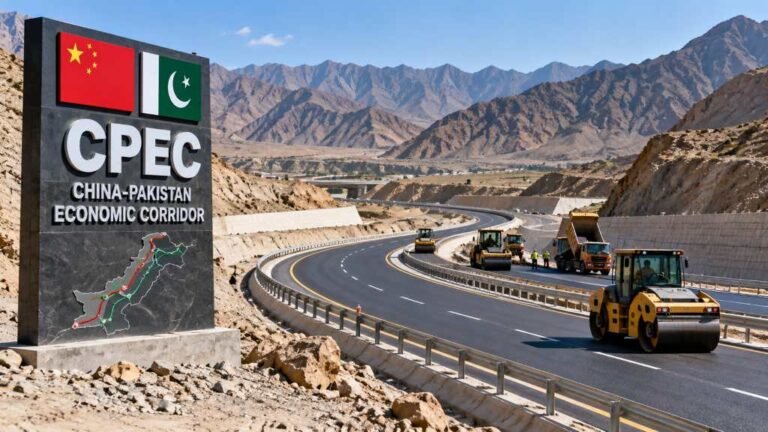
ISLAMABAD, Feb 10 (ABC): The United Nations has warned that militant groups are increasingly targeting Pakistan’s strategic infrastructure, including projects linked to the China-Pakistan Economic Corridor (CPEC), raising fresh concerns about the security of key economic assets.

According to a recent UN assessment submitted to the Security Council, terrorist activity has intensified in South Asia. As a result, Pakistan continues to face threats from armed groups operating across the region.

The report notes that development corridors and security convoys have emerged as frequent targets. Consequently, authorities are tightening protection along sensitive routes.

Corridor routes under attack

The UN observed that the Baloch Liberation Army (BLA) has carried out multiple attacks on Pakistani security forces and CPEC-linked installations.

In several incidents, militants ambushed convoys patrolling strategic highways. They also targeted transport routes that connect major energy and infrastructure projects.

Therefore, officials believe these assaults are meant to disrupt economic progress and undermine investor confidence.

Economic impact a key concern

Experts say attacks on infrastructure cause wider damage than isolated security incidents.

For example, disruptions to highways or project sites can delay construction, increase costs and slow trade flows. Moreover, repeated threats can discourage foreign investment tied to long-term development plans.

Because CPEC is central to Pakistan’s connectivity and energy strategy, protecting these routes has become a national priority.

Better-armed militants raise risks

Meanwhile, the UN report highlighted the growing access of militant groups to advanced weapons.

According to the assessment, fighters now possess modern assault rifles, night-vision and thermal-imaging devices, sniper systems and drone capabilities. These technologies allow them to conduct surveillance and strike more accurately.

As a result, attacks have become more sophisticated and more difficult to counter, especially in remote terrain and during night operations.

Regional instability adds pressure

At the same time, regional instability continues to complicate security efforts.

The report notes that unrest in neighbouring Afghanistan provides space for various armed groups to regroup and launch cross-border operations. Consequently, Pakistan faces persistent external pressure along extended routes that pass through sensitive areas.

Security analysts say such conditions make large infrastructure corridors harder to fully secure.

Security measures strengthened

In response, Pakistani authorities have expanded protection along CPEC routes.

Security forces have increased patrols, improved intelligence coordination and deployed dedicated protection units. In addition, surveillance systems have been strengthened at key points.

Officials maintain that safeguarding CPEC remains essential for economic growth and regional trade. Therefore, counter-terro­rism and infrastructure protection efforts will continue to be intensified.

The UN assessment underscores the need for sustained vigilance and regional cooperation to ensure that development initiatives proceed without disruption.

UN report flags rising cross-border terror threat to Pakistan

0

ISLAMABAD, Feb 10 (ABC): The United Nations has warned that Pakistan is facing an escalating cross-border terrorism threat as Tehrik-e Taliban Pakistan (TTP) steps up attacks from Afghan territory, with militants gaining access to advanced weapons that are increasing the lethality of assaults on security forces and strategic projects.

In its latest report submitted to the UN Security Council, the Analytical Support and Sanctions Monitoring Team said the global terrorist threat has intensified across several regions, including South Asia, where Pakistan remains directly exposed to militant activity spilling over from Afghanistan.

The report noted a rise in attacks inside Pakistan launched by TTP operatives based across the border, leading to repeated military exchanges and heightened tensions in the region.

TTP activity expanding

According to the assessment, TTP continues to operate as one of the largest militant groups present in Afghanistan and has been able to expand its operations against Pakistani state institutions and security forces.

The group’s attacks are becoming more frequent and increasingly complex. Some recent assaults involved larger numbers of fighters and better coordination, indicating improved planning and operational capacity.

Security analysts say this shift poses fresh challenges for Pakistan’s border management and internal security framework.

Advanced weapons increase risks

The UN report also flagged the growing availability of modern weapons to militant groups.

It said fighters are now using advanced assault rifles, night-vision and thermal-imaging devices, sniper systems and drone-based attack capabilities. Such equipment allows militants to conduct surveillance, strike with greater precision and operate effectively at night.

Officials believe these developments have made recent attacks deadlier and more difficult to counter.

Threats to CPEC projects

Besides TTP, the report also highlighted the activities of the Baloch Liberation Army (BLA), which has targeted Pakistani security forces and projects linked to the China-Pakistan Economic Corridor (CPEC).

The group has carried out attacks on convoys and infrastructure along the corridor, raising concerns about the security of key economic and development initiatives.

Authorities view these attacks as attempts to disrupt investment and slow Pakistan’s economic progress.

Regional spillover a concern

The UN warned that instability in Afghanistan continues to provide space for multiple armed groups, increasing the risk of cross-border violence and complicating regional security.

Experts say Pakistan remains on the frontline of this evolving threat environment due to its geographic location and strategic importance.

Despite the challenges, Pakistani security forces have stepped up counter-terrorism operations to dismantle militant networks and safeguard both citizens and critical infrastructure.

The report underscores the need for sustained regional cooperation to address the sources of militancy and prevent further spillover into neighbouring countries.

Pakistan defeat USA by 32 runs in T20 World Cup clash

0

COLOMBO, Feb 10 (ABC): A disciplined all-round performance from batters and bowlers powered Pakistan to a convincing 32-run victory over the United States of America (USA) in the 12th match of the ICC Men’s T20 World Cup 2026 at Colombo’s Sinhalese Sports Club (SSC) Ground on Tuesday.

Defending a challenging target of 191 runs, Pakistan restricted the USA to 158/8 in their allotted 20 overs to secure their second straight win of the tournament.

The victory also helped Pakistan avenge their shock defeat to the USA in the previous edition of the World Cup two years ago.


Farhan, Babar lay strong foundation

After USA captain Monank Patel opted to field first, Pakistan openers Sahibzada Farhan and Saim Ayub provided an aggressive start.

The pair added 54 runs in just five overs and took full advantage of the powerplay.

Ayub scored a quick 19 off 17 balls with two sixes and a four before falling in the sixth over. Captain Salman Ali Agha followed soon after for just one, as Shadley van Schalkwyk struck twice to bring the USA back into the contest.

Star batter Babar Azam then joined Farhan at the crease. The experienced duo stabilised the innings and rotated strike smartly. They built a crucial 81-run partnership for the third wicket to rebuild momentum.

Babar played fluently and scored 46 off 32 balls, hitting four boundaries and a six before Mohammad Mohsin dismissed him in the 15th over.

Farhan continued his attacking approach and remained the top scorer. He smashed a brilliant 73 off 41 balls, studded with six fours and five sixes. During the knock, he also completed 1,000 T20 international runs.


Late flourish pushes Pakistan to 190

After the top-order effort, Shadab Khan accelerated the scoring in the death overs. He blasted 30 off just 12 balls, including four fours and a six.

However, Pakistan lost wickets quickly towards the end and slipped from a strong position. The team eventually finished at 190/9 in 20 overs.

For the USA, Shadley van Schalkwyk stood out with the ball. He claimed four wickets for 25 runs in his four overs. Saurabh Netravalkar, Mohsin and Harmeet Singh picked up one wicket each.


USA start well but lose momentum

Chasing 191, the USA began positively. Openers Andries Gous and Shayan Jahangir added 42 runs at a brisk pace.

Mohammad Nawaz broke the partnership by dismissing Gous for 13. The wicket slowed the scoring rate.

Captain Monank Patel struggled to anchor the innings and managed only three runs before Shadab Khan removed him.

Shadab struck again in the next over to dismiss the well-set Shayan, who scored 49 off 34 balls with five fours and two sixes.


Tariq, Shadab lead Pakistan’s bowling charge

With the USA under pressure, Shubham Ranjane and Milind Kumar attempted a recovery. The pair added 54 runs for the fourth wicket to keep hopes alive.

Usman Tariq broke the stand by dismissing Kumar for 29 in the 16th over. That breakthrough triggered a collapse.

Pakistan bowlers tightened their grip and removed wickets at regular intervals. Ranjane fought back with an aggressive 51 off 29 balls, hitting three sixes and three fours, but Shaheen Shah Afridi dismissed him in the final over.

The USA eventually closed at 158/8.

Tariq spearheaded Pakistan’s bowling with impressive figures of 3/27. Shadab Khan supported him with 2/26. Nawaz, Abrar Ahmed and Shaheen Afridi took one wicket each.


Afridi completes 100 T20I matches

The match also marked a personal milestone for Shaheen Shah Afridi, who completed 100 T20 internationals for Pakistan. Before the game, fellow pacer Naseem Shah presented him with a commemorative cap.


Tournament backdrop

The T20 World Cup, co-hosted by India and Sri Lanka, began on February 7. However, the event saw off-field developments after Bangladesh withdrew from playing matches in India over security concerns and was replaced by Scotland.

Following consultations between the International Cricket Council (ICC) and participating boards, Pakistan later decided to continue participation to protect the spirit of the game.


With back-to-back victories, Pakistan have strengthened their position in Group A and boosted confidence ahead of the upcoming fixtures in the tournament.

Farmers in Punjab shift to broccoli cultivation as demand rises

0

LAHORE, Feb 10 (ABC): Sensing a lucrative opportunity, progressive farmers in Punjab are increasingly turning to broccoli cultivation as demand for the vegetable rises among upper-income consumers in major urban centres.

Although broccoli remains a niche crop compared to traditional vegetables such as cauliflower and cabbage, its presence in the market has expanded in recent years. The vegetable is now widely available at major supermarkets, specialised vegetable outlets, and online platforms catering to urban consumers.

Cultivation spreading beyond Lahore

At present, broccoli is being cultivated mainly on the outskirts of major cities, particularly Lahore. Farmers have also started growing the crop in Sheikhupura, Kasur, Sahiwal, and Pakpattan districts, where climatic conditions during winter favour its production.

“This is a profitable crop. There is a strong demand for broccoli in Lahore, Islamabad, and Karachi,” said Pir Mehmoud Chishti, a broccoli grower from village Tibba Sherkot in Pakpattan district.

Talking to Wealth Pakistan, Chishti said that while prices are attractive, growers face uncertainty due to the absence of a well-developed marketing network for the exotic vegetable.

Prices attractive but market remains limited

According to growers, the retail price of broccoli currently ranges between Rs400 and Rs700 per 500 grams. This is significantly higher than prices of traditional vegetables such as cauliflower or cabbage.

Despite the premium prices, Chishti said imported seed remains the highest cost component in broccoli cultivation. He added that marketing also poses a major challenge, as the vegetable is still unfamiliar to a large segment of the population.

“Because broccoli is not commonly used by the general public, its market is limited,” he explained.

He said the main buyers include high-end hotels, departmental stores, and selected vegetable shops in large cities such as Lahore, Karachi, and Islamabad. Some farms also sell broccoli directly to affluent households through online platforms, where it is mainly used in salads.

“You cannot supply broccoli in large quantities. Sending small volumes is more profitable because demand is limited. In case of oversupply, growers face losses,” he added.

Green variety dominates local production

Several varieties of broccoli are currently being cultivated in Pakistan, with the green variety being the most popular among growers and consumers.

Often described as a superfood, broccoli is primarily grown during the cool season, from September to March. Farmers say the crop performs best during winter, when lower temperatures support healthy growth and better yields.

Imported seed drives up production costs

Vegetable seed dealers say all broccoli seed used in Pakistan is imported from countries including Holland, Japan, China, and Thailand.

“A 10-gram packet costs around Rs3,000, making broccoli cultivation an expensive venture,” said Tahir Saleemi, a vegetable seed dealer.

Talking to Wealth Pakistan, he said that developing local broccoli varieties could significantly reduce production costs and encourage more farmers to adopt the crop.

Research efforts underway for local seed

Efforts are ongoing to develop local broccoli varieties, but progress has been slow due to climatic constraints.

“The seed production phase of broccoli falls in late March and April. Because of high temperatures during this period, we have not yet succeeded in developing a local variety,” said Wajeeha Khan, a broccoli expert at the Vegetable Research Institute.

Talking to Wealth Pakistan, she said scientists at the institute are experimenting with different sowing windows to overcome the temperature challenge.

“Hopefully, we will succeed in developing a local broccoli variety in the future,” she added.

Punjab suitable for winter broccoli cultivation

According to Khan, broccoli requires low temperatures for optimal production. This makes the entire Punjab province suitable for its cultivation during winter.

“It can easily be grown alongside cauliflower and cabbage in the same field,” she said.

Unlike traditional vegetables, broccoli is usually cultivated on small plots, sometimes on less than an acre. Despite the limited area, growers report much higher returns compared to conventional crops.

Health benefits fuel rising demand

Nutritionists say broccoli’s growing popularity is also driven by its health benefits.

The vegetable is rich in fibre, vitamins C, K, and A, and compounds such as sulforaphane, which make it a nutrient-dense food.

“It supports heart health, boosts immunity, and strengthens bones,” said Syed Ali Haider, a nutritionist at a hospital in Lahore.

Talking to Wealth Pakistan, he said broccoli contains antioxidants and bioactive compounds that help reduce cancer risk, aid digestion, and offer low-calorie, anti-inflammatory, and detoxifying benefits.

Pakistan faces growing child eye cancer burden

0

RAWALPINDI, Feb 9 (ABC): Pakistan faces a growing child eye cancer burden and a high rate of inherited vision disorders. Al-Shifa Trust Eye Hospital has completed genetic testing for 139 patients from 91 families in one year.

The hospital launched the country’s first ophthalmic genetic testing lab in January 2025. The facility helps doctors identify genes that cause inherited blindness. Early detection improves treatment and protects children’s sight.

Dr Rutaba Gul, Geneticist at the Department of Ophthalmic Genetics, said inherited eye diseases affect nearly eight million people worldwide. However, Pakistan’s burden remains higher than the global average. She noted that no official national data currently exists.

Genetic testing enables early diagnosis

Doctors at the lab use advanced DNA testing to confirm the exact cause of eye disorders. The method provides faster and more accurate results. It also helps doctors plan targeted treatment.

Eye specialists refer patients based on symptoms and family history. After confirmation, families receive counseling about risks and future planning. This guidance helps prevent complications in other family members.

Early diagnosis also reduces the risk of severe vision loss and blindness.

Cousin marriages increase inherited risks

Health experts link the high rate of inherited diseases to cousin marriages. Such marriages remain common in many regions of Pakistan.

Research shows that more than 70 percent of inherited retinal disease cases occur in children born to closely related parents. Therefore, these disorders appear more frequently in Pakistan than in Europe, the United States, or other Asian countries.

Doctors encourage awareness and genetic counseling to lower future risks.

Hospitals treat 700 child eye cancer cases yearly

Prof Dr Tayyab Afghani, Head of the Orbit and Oculoplastics Department, said Pakistan also carries a heavy child eye cancer burden. Al-Shifa Trust hospitals treat around 700 children with eye cancer every year.

He said this number is nearly double the cases reported in India. Doctors stress that early detection improves survival rates and saves vision.

Free care and national expansion planned

Major General (Retd) Rehmat Khan, President of Al-Shifa Trust, said the hospital provides all genetic tests free of charge. The trust absorbs the high costs to support poor families.

Nearly 80 percent of patients receive free treatment at Al-Shifa hospitals in Rawalpindi, Chakwal, Kohat, Sukkur, Muzaffarabad, and Gilgit. The trust will open a new hospital in Lahore by 2027.

He added that the hospital plans to expand testing services and create a national database. The database will support early screening and future research.