
Home Blog Page 37

Govt proposes Rs5.5bn sports projects in major cities

0

ISLAMABAD, April 17 (ABC): The Ministry of Inter-Provincial Coordination plans multiple sports infrastructure projects in major cities at a proposed cost of Rs5.5 billion.

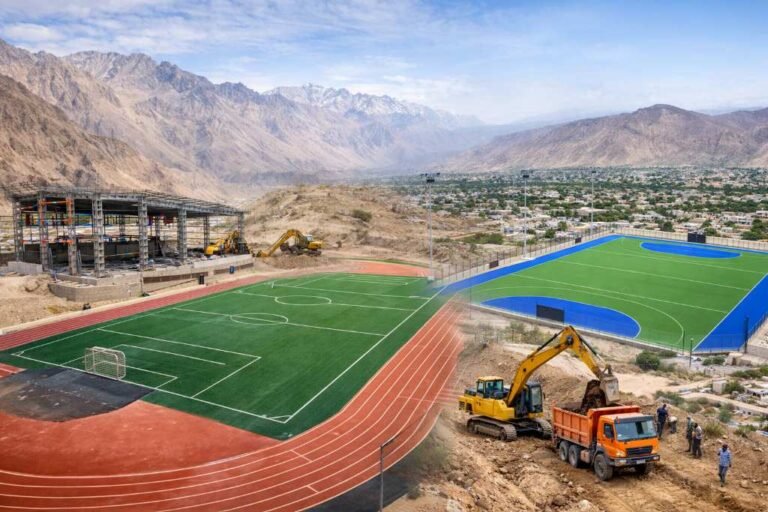
According to official documents available with Wealth Pakistan, the government has proposed a Rs3.5 billion project for the Pakistan Sports Board (PSB) Coaching Centre in Skardu. The project will include a football ground, a hockey turf, a synthetic athletic track, tennis courts, and volleyball courts. It will also include an administrative block and allied infrastructure.

Skardu and Gilgit projects

The Skardu project forms the largest component of the plan. In addition, the ministry has planned construction work at Lalik Jan Hockey Stadium in Gilgit. This work includes installation of floodlights, construction of a retaining wall, and fencing. These upgrades will support night-time sports activities. The Gilgit project will cost Rs268.776 million.

Lahore and Peshawar facilities

In Lahore, the plan includes a new boxing gymnasium and upgraded cycling facilities at the PSB Coaching Centre. This component carries a proposed cost of Rs1.4 billion. Similarly, the government has proposed construction and improvement works at the PSB Coaching Centre in Peshawar. These upgrades aim to enhance athlete training capacity. The Peshawar component will cost Rs365.241 million.

PSDP allocations for 2026-27

The proposed PSDP 2026-27 allocations include Rs800 million for Skardu and Rs200 million for Gilgit. Lahore and Peshawar will each receive Rs150 million under the development plan.

The document shows that these projects form part of a broader strategy to expand and modernise sports infrastructure across Pakistan. The government plans to implement these projects in phases.

Boost to sports development

The proposed investment will improve existing facilities and create new opportunities for young athletes. It will especially benefit players in remote areas by providing access to standard training infrastructure.

The PSDP 2026-27 initiatives will promote sports culture, support talent development, and strengthen Pakistan’s performance in national and international competitions.
Over Rs73.5bn spent on 148 Balochistan projects under PSDP 2025-26

0

ISLAMABAD, April 17 (ABC): The federal government spent Rs73.5 billion on 148 projects in Balochistan under PSDP 2025-26 by the end of March 2026.

According to official documents available with Wealth Pakistan, the government allocated Rs206 billion for these projects in 2025-26. The total approved cost stands at Rs1.365 trillion. Out of 148 projects, 137 are ongoing and 11 are newly approved with a combined cost of Rs152.4 billion.

Ongoing projects dominate portfolio

The 137 ongoing projects form the bulk of the portfolio. They carry an approved cost of Rs1,212.1 billion. The government allocated Rs204.8 billion for these schemes in 2025-26. In contrast, the 11 new projects received a token allocation of Rs1.2 billion.

The Finance Division, in coordination with the Planning Commission, approved upfront one-line releases. These releases support executing ministries and divisions under a quarterly disbursement strategy for FY2025-26.

Sector-wise allocations

Sectoral data shows that the National Highway Authority leads the portfolio. It handles 19 projects worth Rs625.3 billion. Meanwhile, the Government of Balochistan manages 68 projects costing Rs233.9 billion through the Finance Division.

Other key contributors include the Water Resources Division, Power Division, and Higher Education Commission. Together, they reflect a diversified development approach.

Focus on provincial and regional development

Out of 148 projects, 80 are provincial in nature. These projects have a total cost of Rs413 billion, with Rs36 billion allocated for the current fiscal year. They aim to strengthen local infrastructure and improve service delivery across the province.

Regional development remains a key focus. In Gwadar, 22 projects with a total cost of Rs184 billion are underway. Similarly, Quetta hosts 15 projects costing Rs28 billion.

The Planning Commission stated that these initiatives will enhance connectivity and boost economic activity. They also aim to address long-standing development gaps in Balochistan in line with national priorities.

Rs5.36bn spent on 22 Gwadar projects under PSDP 2025-26

0

ISLAMABAD, April 16 (ABC): The government has spent Rs5.36 billion so far in the current fiscal year on 22 development projects in Gwadar under PSDP 2025-26.

According to official documents available with Wealth Pakistan, the federal government allocated Rs16.79 billion for these projects for the fiscal year 2025-26. The total cost of the 22 projects stands at Rs184.2 billion. These projects aim to transform Gwadar into a key economic and logistics hub. Authorities are implementing them at different stages.

Project scope and sectors

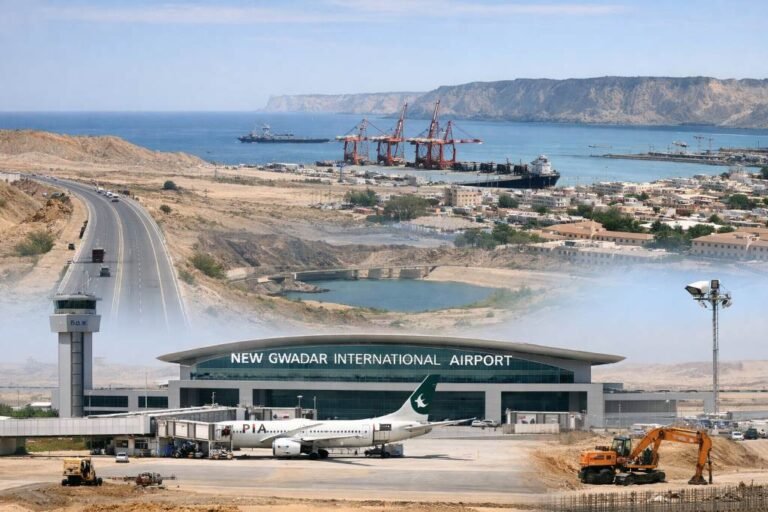
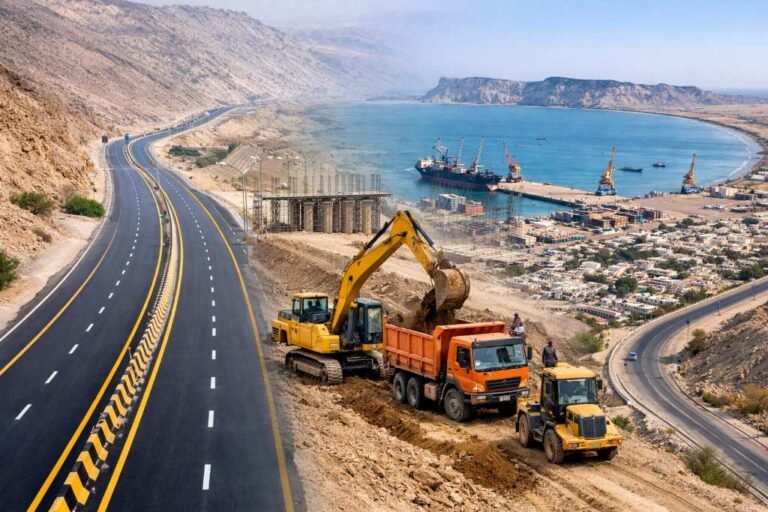
The project mix shows a diversified development approach. It covers infrastructure, energy, maritime, education, and social sectors. Major ongoing schemes include the Gwadar-Ratodero Road, the New Gwadar International Airport, and projects under the Gwadar Development Authority.

The New Gwadar International Airport is the largest project in the region. It has an approved cost of Rs54.98 billion. Authorities spent Rs42.72 billion on it up to June 2025. The project has a throw-forward of Rs12.26 billion. The government allocated Rs4 billion for 2025-26. It released Rs3.43 billion and utilized Rs2.34 billion by March 30, 2026.

Road and water projects

The Gwadar-Ratodero Road (M-8) project recorded an expenditure of Rs32.89 billion up to June 2025. It has a remaining throw-forward of Rs5.13 billion. The government allocated Rs3 billion for the current fiscal year. Utilization stood at Rs592 million by the end of March 2026.

The Shehzanik Dam project in Gwadar district has a total cost of Rs2.23 billion. Authorities spent Rs1.75 billion on it up to June 2025. The project has a throw-forward of Rs482 million. The allocation for 2025-26 stands at Rs220 million.

Rail, planning, and education initiatives

The rail connectivity project from Gwadar via Besima to Jacobabad has a total cost of Rs15.59 billion. The government allocated Rs10 million for the current fiscal year. Utilization reached Rs3 million by March 2026.

Under the Finance Division, the Gwadar Development Authority Business Plan has a total cost of Rs25 billion. The government allocated Rs250 million for the current year. It released and utilized Rs75 million.

The scholarship programme for Gwadar students has a total cost of Rs165 million. The government allocated Rs18 million for 2025-26. It released Rs9 million and utilized Rs5 million.

Maritime and research projects

The Gwadar Blue Economy Centre (Phase I) has a total cost of Rs1.50 billion. The government allocated Rs15 million for the current year. It released Rs5 million and utilized Rs2 million.

The Strengthening of Oceanographic Research Sub Station Gwadar project has a cost of Rs300 million. Authorities allocated Rs150 million. They released Rs74 million and utilized Rs6 million.

Projects with higher utilization

The Gwadar Safe City Project has a cost of Rs2.48 billion. The government allocated Rs1.5 billion for the current year. It released Rs1.02 billion and utilized the full amount.

The Fresh Water Treatment, Water Supply, and Distribution Project costs Rs11.20 billion. The government allocated Rs471 million. It released Rs142 million and utilized it fully.

Land and defence-related projects

The acquisition of 750 acres at Grandani Janubi has a cost of Rs3.92 billion. The government allocated Rs507 million. It released Rs449 million and utilized Rs390 million by March 2026.

The Project Management Cell for the Gwadar shipyard has a cost of Rs773 million. The government allocated Rs86 million. It released Rs65 million and utilized Rs22 million.

The FG Junior Public School Gwadar project received an allocation of Rs100 million. The government released Rs60 million so far.

OIC-COMSTECH, Huawei launch ICT Academy to boost digital skills in 57 OIC States

0

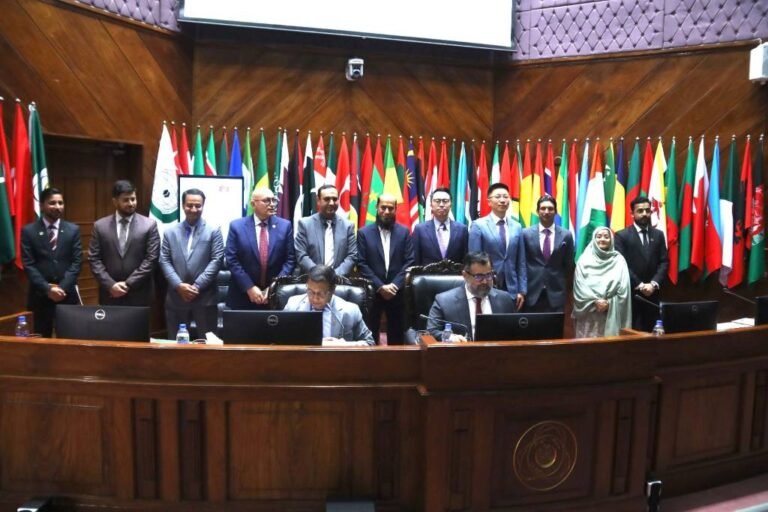
ISLAMABAD, April 15 (ABC): The OIC Ministerial Standing Committee on Scientific and Technological Cooperation (OIC-COMSTECH) and Huawei Technologies signed a Memorandum of Understanding (MoU) to establish a joint ICT academy aimed at strengthening digital skills across OIC member states.

They signed the MoU at the OIC-COMSTECH Secretariat in Islamabad. At the same venue, officials also inaugurated the COMSTECH-Huawei ICT Academy. The initiative targets youth empowerment and aims to enhance digital learning across 57 OIC member and five observer states.

The newly established ICT academy features modern digital infrastructure. It enables virtual instruction, hands-on training, and real-time collaboration. As a result, students and professionals across the OIC region can access advanced learning opportunities.

Leadership Highlights Strategic Importance

Chairman of the Pakistan Telecommunication Authority (PTA), Major General (R) Hafeez Ur Rehman, attended the ceremony as the chief guest. He described the initiative as a strategic step to strengthen Pakistan’s ICT sector. Moreover, he emphasised its role in promoting digital capacity-building across OIC countries.

Coordinator General OIC-COMSTECH Prof Dr Muhammad Iqbal Choudhary said the partnership with Huawei Technologies will advance digital self-reliance in member states. He added that access to modern technologies and training will enable youth to contribute to innovation-led economic development. Furthermore, he highlighted the importance of collaboration in accelerating technological progress.

Huawei Pakistan CEO Ethan Sun said the company remains committed to supporting digital transformation through skill development initiatives. He noted that the ICT academy reflects Huawei’s focus on equipping young people with industry-relevant expertise. In addition, he underlined Huawei’s long-term engagement in developing digital talent.

Training, Certifications, and Global Collaboration

Huawei leadership also highlighted ongoing programmes such as “Seeds for the Future,” which aim to nurture digital talent. Through this initiative, the ICT academy will promote inclusive digital growth, enhance cybersecurity capabilities, and support sustainable technological development in OIC countries.

The academy will function as a hub for blended learning. It will provide access to Huawei’s global training ecosystem and deliver high-quality courses in emerging technologies. Consequently, learners will gain exposure to internationally recognised standards.

Under the partnership, the ICT academy will offer certifications in 5G, Artificial Intelligence, Cloud Computing, and Cybersecurity. These programmes will help bridge the global digital skills gap. At the same time, they will prepare young professionals for evolving industry demands.

International Participation and Closing Ceremony

The event concluded with a tour of the academy, where participants observed live demonstrations of digital learning technologies. Meanwhile, ambassadors and senior diplomats from Somalia, Malaysia, Morocco, Mauritius, Azerbaijan, Algeria, and Brunei Darussalam attended the ceremony. Representatives of international and national organisations also participated, reflecting broad global interest in the initiative.

KP plans 16 picnic spots, 9 tourist facilities to boost tourism

0

ISLAMABAD, April 14 (ABC): The Khyber Pakhtunkhwa government has planned the development of 16 picnic spots and tourist facilitation services at nine destinations under its tourism development schemes.

According to official documents available with Wealth Pakistan, these initiatives are part of broader interventions being implemented across the province. The focus remains on Chitral under various tourism development programmes.

The documents state that the schemes include the construction of jeepable tracks in tourist-bearing areas. These tracks aim to improve access to different locations.

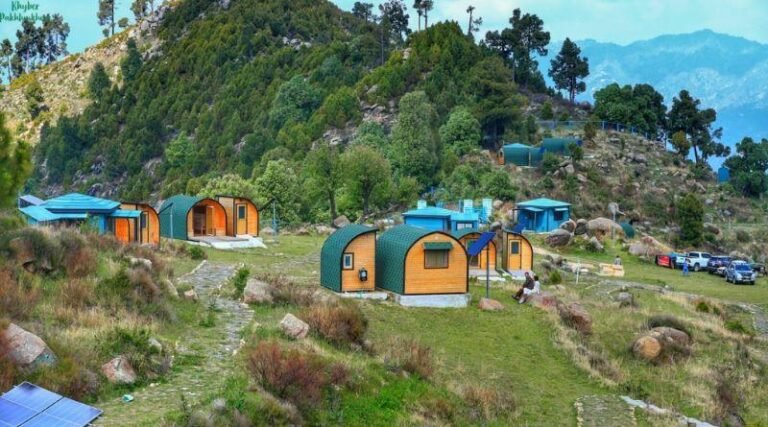
In addition, camping pod sites and rest houses are also included in the planned interventions. These facilities are intended to support tourists visiting remote and scenic areas.

Furthermore, the documents highlight the promotion of community-based accommodation facilities. This initiative aims to encourage local participation in tourism activities.

Tourist facilitation services are also planned at nine destinations. These services will complement the development of infrastructure, including picnic spots and access routes.

Moreover, the documents mention feasibility studies for tourism development projects. They also include the arrangement of events in the tourism and culture sector in Khyber Pakhtunkhwa.

The documents further refer to initiatives linked to “Tirich Mir Year 2024–25.” These activities remain part of the province’s broader tourism framework.

In addition, the promotion of cultural and community-based activities has been included in tourism-related efforts.

According to the documents, coordination is ongoing with provincial line departments and district administrations. At the same time, engagement is being maintained with relevant federal ministries and organisations.

They further note that collaboration continues with national and international tourism stakeholders to support the implementation of these initiatives.