
Home Blog Page 30

PM hosts Prince Rahim Aga Khan V, seeks deeper partnership with AKDN

0

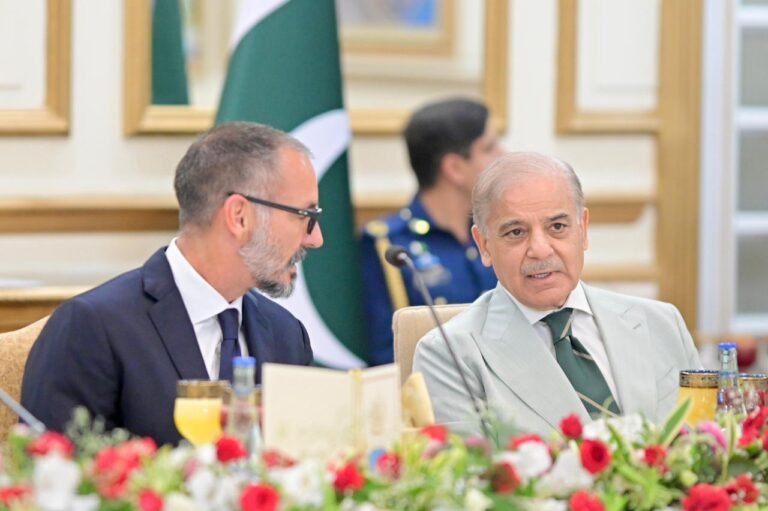
ISLAMABAD, May 21 (ABC): Prime Minister Muhammad Shehbaz Sharif hosted a breakfast meeting in honour of Prince Rahim Aga Khan V during his first official visit to Pakistan, reaffirming the country’s commitment to strengthening cooperation in human development and climate resilience.

The prime minister warmly welcomed Prince Rahim Aga Khan V and appreciated his commitment to promoting peace, stability and constructive engagement with governments and international partners.

Highlighting the longstanding partnership between Pakistan and the Aga Khan Development Network, the prime minister commended the network’s contributions in rural development, healthcare, education, disaster resilience, climate adaptation, renewable energy, digital skills training and youth entrepreneurship.

He particularly praised AKDN’s work in remote and vulnerable communities in Gilgit-Baltistan and Chitral.

The prime minister encouraged AKDN to further expand its partnership with Pakistan, especially in Gilgit-Baltistan and Chitral, where its institutional presence and community outreach have played a significant role. He also welcomed enhanced cooperation with Aga Khan University, acknowledging its contribution to healthcare and higher education.

Recognising Prince Rahim Aga Khan V’s advocacy for environmental stewardship, the prime minister said AKDN remained a trusted partner in Pakistan’s efforts to strengthen climate resilience, particularly in glacially vulnerable northern areas.

Prime Minister Shehbaz Sharif thanked Prince Rahim Aga Khan V for visiting Pakistan and assured him that Pakistan would always remain his second home. He also expressed hope that regular visits would further strengthen the longstanding relationship between Pakistan and the Ismaili community.

The prime minister also appreciated Prince Rahim Aga Khan V’s generosity in making the Serena Hotel available free of charge for the Islamabad Talks.

During the meeting, the prime minister extended heartfelt condolences on the passing of Prince Karim Aga Khan IV and paid tribute to his humanitarian legacy and longstanding association with Pakistan spanning nearly seven decades.

He also presented a commemorative stamp issued by Pakistan Post in honour of Prince Karim Aga Khan IV for his services to Pakistan.

Prince Rahim Aga Khan V thanked the prime minister for the warm welcome and expressed his desire to continue cooperation with Pakistan in various human development initiatives.
Govt speeds up work on Hyderabad-Sukkur Motorway

0

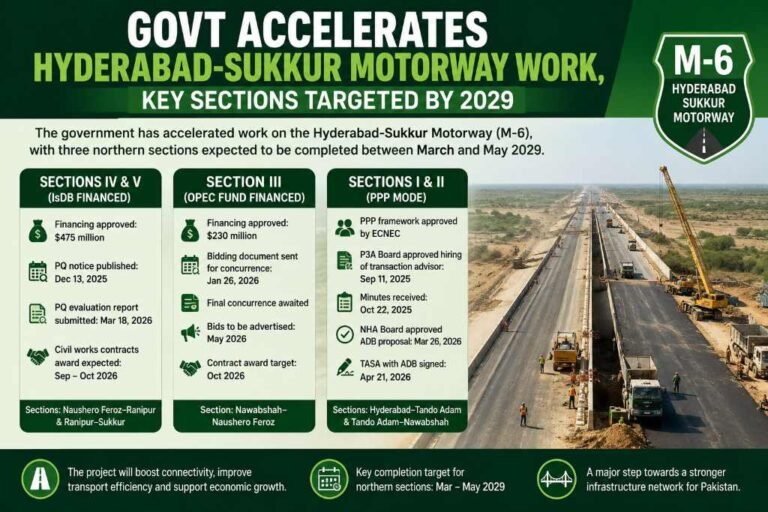
ISLAMABAD, May 21 (ABC): The government has accelerated work on the Hyderabad-Sukkur Motorway (M-6), with three northern sections of the project expected to be completed between March and May 2029 as authorities continue advancing one of the country’s major road infrastructure schemes.

Progress on IsDB-funded sections

According to official documents available with Wealth Pakistan, Sections IV (Naushero Feroz–Ranipur) and V (Ranipur–Sukkur) are being financed by the Islamic Development Bank (IsDB).

Authorities published the prequalification notice for both sections on December 13, 2025. They later submitted the prequalification evaluation report to the lender on March 18, 2026.

Officials expect the award of civil works contracts between September and October 2026. This step will allow construction activities to move forward.

The Islamic Development Bank approved financing of $475 million for the two sections on September 29, 2025. The Government of Pakistan and the lender signed the financing agreement on January 19, 2026.

Section III moves toward bidding stage

Work has also progressed on Section III (Nawabshah–Naushero Feroz), which is receiving financing from the OPEC Fund.

Authorities forwarded the bidding documents to the lender on January 26, 2026, for concurrence. The concerned parties later exchanged comments on the documents, while officials now await final approval.

Authorities expect the section to enter the bidding stage during the current month. They aim to award contracts by October 2026.

The OPEC Fund Board approved financing worth $230 million for Section III on March 25, 2026.

PPP sections also move ahead

Sections I (Hyderabad–Tando Adam) and II (Tando Adam–Nawabshah) will be developed under a Public-Private Partnership (PPP) framework approved by the Executive Committee of the National Economic Council (ECNEC).

The Public Private Partnership Authority (P3A) Board approved the proposal for hiring an international financial institution as transaction advisor on September 11, 2025. Officials received the meeting minutes on October 22, 2025.

The National Highway Authority (NHA) Board later approved the proposal submitted by the Asian Development Bank (ADB) on March 26, 2026.

Following the approval, authorities signed the Transaction Advisory Service Agreement (TASA) with the ADB on April 21, 2026.

Officials expect the ADB to complete its advisory study within four months. They also expect the concession award process to conclude by February 2027.

The Hyderabad-Sukkur Motorway is expected to improve regional connectivity, strengthen transport efficiency, and support economic activity after completion.

Pakistan-China vaccine initiative offers fresh push for livestock exports

0

ISLAMABAD, May 20 (ABC): Pakistan’s cooperation with China in the animal vaccine sector is expected to strengthen disease control efforts and create new opportunities for livestock exports, providing fresh momentum for one of the country’s key agricultural sectors.

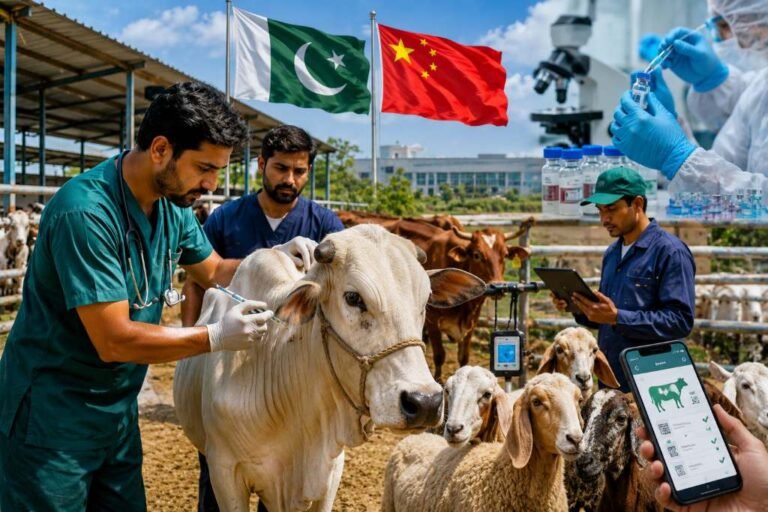
The Sindh Livestock & Fisheries Department has signed a joint venture agreement with China’s Luoyang Modern Biology Group for the supply of animal vaccines, including vaccines for foot-and-mouth disease (FMD). The agreement also covers technology transfer and the development of animal traceability systems that experts believe can support the modernisation of Pakistan’s livestock sector.

Disease control key to export growth

Speaking with Wealth Pakistan, Dr Umair Nawaz, Manager Dairy & Livestock at Habib Bank Limited Zarai Services Pakistan, said effective vaccination against FMD remains important for improving Pakistan’s livestock export potential.

He said stronger disease management and wider vaccination coverage can improve livestock health standards, particularly at the village and smallholder level where unvaccinated animals often enter the supply chain and create challenges for disease control.

“Consistent vaccination along with proper cold chain management can help Pakistan move toward FMD-free status, which is essential for access to premium international markets,” he said.

Dr Nawaz said improvements in public-sector vaccine availability, cold chain systems, and farmer awareness could strengthen disease prevention efforts and support long-term growth of the livestock sector.

He also stressed the need for stronger public-private coordination to improve vaccine delivery and monitoring systems. He highlighted the importance of deploying trained veterinarians at village and market levels to increase affordable vaccination access for small farmers.

Technology transfer can strengthen livestock sector

Ahmed Faraz, a livestock expert and farm manager, described Pakistan-China cooperation as a positive development for the livestock industry.

He said China possesses strong capabilities in biotechnology and scientific research. He added that better disease management through effective vaccination can support Pakistan’s export performance and improve the competitiveness of livestock products in international markets.

“The global market demands disease-free and antibiotic-residue-free meat,” he said, adding that locally produced vaccines based on indigenous disease strains could provide major benefits for Pakistan.

Faraz said Pakistan currently relies largely on imported vaccines that may not fully match local disease patterns. He noted that local production using indigenous strains can improve vaccine effectiveness and support better disease management outcomes.

He also emphasised the importance of livestock traceability systems for export certification. According to him, importing countries require complete records about animal origin, disease history, and treatment details.

Livestock sector remains a major economic contributor

According to the Pakistan Economic Survey 2024-25, the livestock sector contributes around 14.97% to national GDP and 63.6% to agricultural value addition. The sector also supports more than eight million rural households across the country.

The livestock sector contributes nearly 2.9% to Pakistan’s exports through meat, live animals, and other animal-based products.

Pakistan’s meat exports reached $511 million during FY2023-24, according to the Trade Development Authority of Pakistan (TDAP). Industry stakeholders believe stronger vaccination systems, technology transfer, and improved disease control measures can further strengthen Pakistan’s export prospects in international markets.

Telecom sector expands with 57,000 BTS operational across Pakistan

0

ISLAMABAD, May 20 (ABC): Pakistan’s telecom sector continues to expand, with 57,044 Base Transceiver Stations (BTS) now operational across the country. The latest infrastructure figures reflect growing investment in mobile connectivity and support Pakistan’s broader digital transformation goals.

According to the latest infrastructure data available with Wealth Pakistan, Jazz remains the largest operator with 16,247 BTS sites, including 16,003 4G-enabled stations. CMPak follows with 15,882 BTS sites across 2G, 3G, and 4G services. Telenor operates 13,034 BTS installations, while Ufone maintains 11,881 BTS sites to support nationwide mobile coverage.

Overall, Pakistan currently hosts 57,029 2G stations, 33,308 3G stations, and 55,088 4G stations across different telecom networks.

Growing shift towards 4G connectivity

The latest data indicates a growing shift toward high-speed mobile connectivity across the country. While 2G and 3G services continue supporting millions of users, telecom operators are increasingly strengthening their 4G infrastructure.

The continued expansion of 4G networks reflects rising demand for digital services, high-speed internet access, online education, mobile banking, and digital communication solutions in both urban and rural areas.

The growing telecom infrastructure is also helping improve internet accessibility and supporting wider adoption of digital technologies.

Government strategy for digital transformation

Pakistan is moving ahead with a long-term telecommunications strategy focused on next-generation technologies and future network development.

Recognising the growing role of digital connectivity in economic growth, healthcare, education, governance, and innovation, the government has introduced policies aimed at accelerating the transition toward advanced technologies, including 5G networks.

The government is also promoting local manufacturing and supporting the development of a stronger mobile device ecosystem. These measures aim to improve affordability and increase digital inclusion across the country.

Additional initiatives focus on energy efficiency and dedicated power solutions for telecom infrastructure to ensure reliable network services nationwide.

Policy support for broadband expansion

To accelerate broadband expansion, the government has adopted a unified national policy that removes Right of Way (RoW) charges across federal, provincial, and local jurisdictions.

The move is expected to reduce deployment costs and shorten implementation timelines for fibre optic infrastructure projects. It can also encourage greater private sector participation, particularly in underserved and remote areas.

The government is also processing proposed amendments to the Pakistan Telecom Act to provide legal support for these reforms and strengthen the telecommunications sector further.

Punjab rail overhaul targets 1,415km network upgrade

0

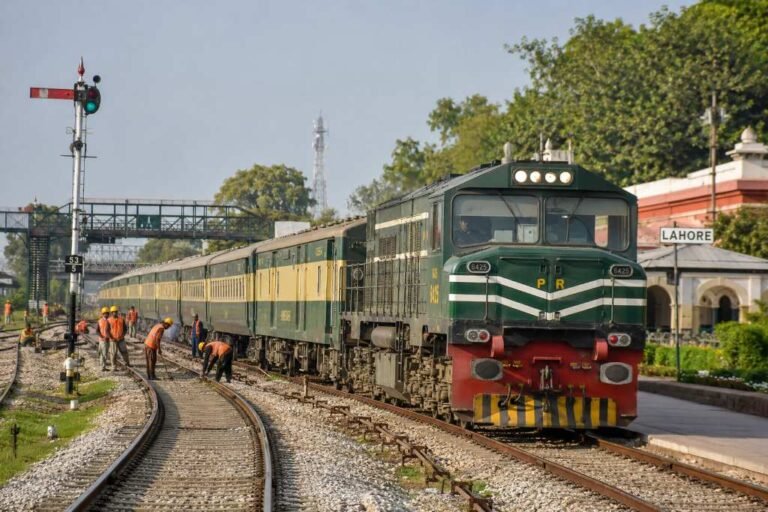
LAHORE, May 19 (ABC): Pakistan Railways (PR) is moving ahead with the upgradation of around 1,415 kilometres of branch lines in Punjab while also advancing suburban rail projects worth over Rs44.5 billion in Sindh. The initiative forms part of broader efforts to modernise railway infrastructure and strengthen regional connectivity.

According to official documents available with Wealth Pakistan, the Ministry of Railways is implementing a comprehensive programme for the expansion, rehabilitation, and modernisation of the national railway network in coordination with provincial governments. The programme aims to improve connectivity, operational efficiency, freight movement, and passenger mobility across the country.

Punjab rail upgrade plan

Pakistan Railways has placed special focus on the Karachi-Rohri Main Line section under the ML-1 project because of its strategic role in passenger transport and freight movement.

The planned work includes track renewal, bridge rehabilitation, installation of modern signalling systems, and telecommunication upgrades. Pakistan Railways also plans to increase train speeds and axle load capacity. These measures can improve safety standards and strengthen operational performance.

Following cabinet approval, Pakistan Railways and the Punjab government signed a memorandum of understanding (MoU) on April 16, 2026. The agreement focuses on the rehabilitation and modernisation of railway infrastructure in the province.

The authorities have prioritised around 1,415 kilometres of branch railway lines for upgradation. These include Rawalpindi-Kasur, Pakpattan-Lodhran, Sargodha-Malakwal, Lala Musa-Chak Jhumra-Shaheenabad, Shorkot-Jhang-Sargodha, Sheikhupura-Shorkot, Kot Adu-Dera Ghazi Khan-Kashmore, Shahdara-Narowal, and Narowal-Sialkot.

The Punjab Transport Department has hired M/s NESPAK to conduct feasibility studies for the projects. The studies are expected to be completed within eight months.

Sindh suburban rail projects

Pakistan Railways has also proposed suburban rail services in Sindh to improve transport facilities and strengthen regional links. The plan identifies two major suburban railway corridors.

The first suburban route will run from Kotri to Rohri through Dadu, Larkana, Habibkot, Jacobabad, and Shikarpur. The corridor will cover a distance of 434 kilometres. Infrastructure development and diesel multiple unit (DMU) services on this route will cost an estimated Rs23,931 million.

The second proposed suburban corridor will connect Hyderabad, Mirpurkhas, Marvi, and Badin over a distance of 300 kilometres. According to official documents, the estimated project cost stands at Rs20,593 million.

Together, the two suburban railway projects carry an estimated cost of Rs44,524 million, or more than Rs44.5 billion. The government has already started the approval process for both schemes.

Pakistan Railways has also shared future project proposals with the Sindh Mass Transit Authority (SMTA) for further review and finalisation.

Expected impact on connectivity

The proposed railway improvements can reduce travel time, improve passenger convenience, and support trade activity. The projects can also help create a safer and more efficient transport system across urban and rural areas.

Balochistan universities receive Rs2.93bn in HEC funding support

0

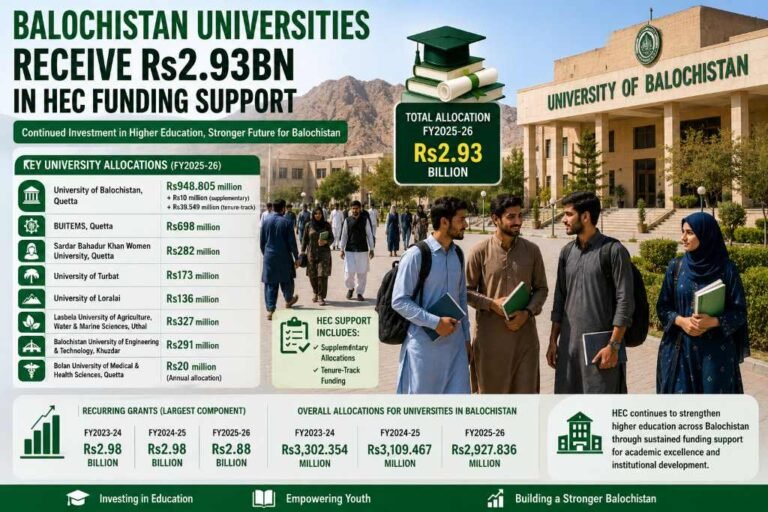
ISLAMABAD, May 18 (ABC): Universities in Balochistan have received Rs2.93 billion in support from the Higher Education Commission (HEC) during FY2025-26. The funding reflects continued financial assistance for higher education institutions across the province.

According to an official document available with Wealth Pakistan, HEC continues to support universities in Balochistan through recurring grants, supplementary allocations, and tenure-track funding mechanisms.

University of Balochistan receives highest allocation

For FY2025-26, the University of Balochistan (UoB), Quetta, received a recurring grant of Rs948.805 million. The university also received Rs10 million in supplementary funding and Rs39.549 million under tenure-track support.

Similarly, the Balochistan University of Information Technology, Engineering and Management Sciences (BUITEMS), Quetta, received Rs698 million during FY2025-26. The institution had received Rs722 million in FY2024-25 and Rs825 million in FY2023-24.

Other universities continue receiving support

Several other universities across the province also received financial support from HEC.

Sardar Bahadur Khan Women University, Quetta, received Rs282 million during FY2025-26. The university had received Rs313 million in FY2024-25 and Rs293 million in FY2023-24.

The University of Turbat received Rs173 million in FY2025-26. It had received Rs192 million in FY2024-25 and Rs202 million in FY2023-24.

Likewise, the University of Loralai received Rs136 million during FY2025-26. The institution had received Rs152 million in FY2024-25 and Rs175 million in FY2023-24.

Lasbela University of Agriculture, Water and Marine Sciences, Uthal, received Rs327 million in FY2025-26. The institution had received Rs342 million in FY2024-25 and Rs352 million in FY2023-24.

Similarly, Balochistan University of Engineering and Technology, Khuzdar, received Rs291 million during FY2025-26. It had received Rs304 million in FY2024-25 and Rs334 million in FY2023-24.

Meanwhile, Bolan University of Medical and Health Sciences, Quetta, continued receiving an annual allocation of Rs20 million during FY2023-24, FY2024-25, and FY2025-26.

Recurring grants remain major funding source

The document showed that annual recurring grants remained the largest component of university funding in the province.

Recurring grants exceeded Rs2.98 billion during FY2023-24 and FY2024-25. The amount stood at Rs2.88 billion in FY2025-26.

Overall allocations for universities in Balochistan reached Rs3,302.354 million in FY2023-24. The figure declined to Rs3,109.467 million in FY2024-25 and further dropped to Rs2,927.836 million in FY2025-26.

The funding allocations show continued support for higher education institutions in Balochistan. The financial assistance aims to meet operational and academic requirements through recurring grants and institutional funding mechanisms.

Pakistan diversifies rice export strategy through new markets, trade routes

0

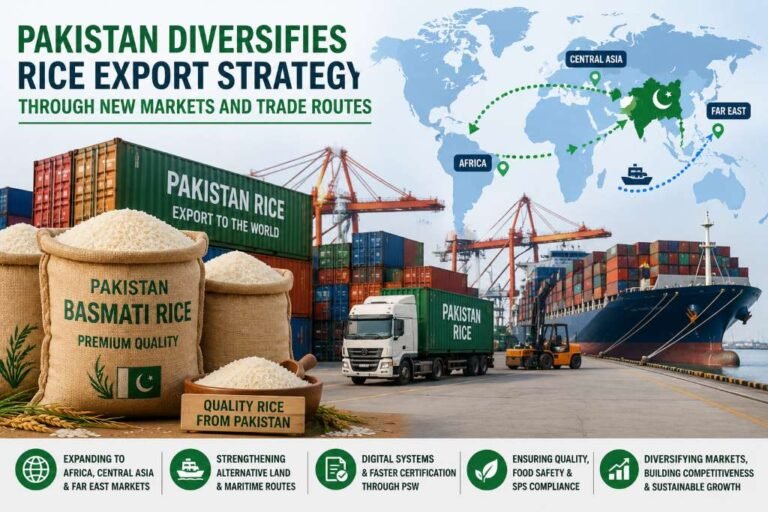
ISLAMABAD, May 18 (ABC): Pakistan is expanding efforts to diversify rice exports toward Africa, Central Asia, and Far East markets. The move forms part of a broader strategy to maintain uninterrupted trade flows and reduce dependence on traditional export destinations amid regional trade disruptions.

According to an official document available with Wealth Pakistan, disruptions in major shipping routes have caused delays, vessel rerouting, and higher freight and insurance costs. Rising fuel and logistics expenses have also increased export costs and affected timely deliveries.

The document noted that these disruptions may cause short-term declines in exports to some Middle Eastern markets. At the same time, they may create fluctuations in global rice prices and trade patterns.

Authorities strengthen alternative trade routes

To address these challenges, authorities are strengthening alternative land and maritime trade routes. They are also improving traceability systems, increasing exporter capacity, and introducing digital platforms such as Phyto to simplify export procedures.

The Department of Plant Protection (DPP) is also working to ensure smooth exports through efficient phytosanitary certification and strict compliance with Sanitary and Phytosanitary (SPS) requirements. These measures aim to prevent shipment delays and improve market access.

According to the document, DPP has strengthened export facilitation by integrating certification procedures with the Pakistan Single Window (PSW). The system now allows exporters to submit applications and obtain certificates online.

More than 85% of certificates are now issued within 24 hours. The faster process helps improve efficiency and reduce delays.

Measures support regional trade expansion

To facilitate regional trade, the Ministry of Commerce has granted a temporary exemption from the Financial Instrument requirement for exports to Iran and Central Asian Republics through the Iran land route.

The exemption covers important commodities, including rice. Authorities introduced the measure to ease procedural requirements and encourage the use of alternative trade corridors.

Pakistan exports rice to more than 150 countries and remains one of the world’s major rice producers and exporters. The country produces around 9–10 million metric tons (MMT) of rice annually. It also maintains an exportable surplus ranging from 4.5 to 5.5 MMT.

Pakistan’s rice exports remained relatively stable. Exports declined slightly from 4.38 MMT in 2024 to 4.32 MMT in 2025.

Export trends show changing market patterns

While exports to traditional markets such as Malaysia, Indonesia, Belgium, and Benin declined, shipments to the UAE increased. The trend reflects changing market dynamics and diversification efforts.

During January-April 2026, rice exports stood at around 1.49 MMT. Exports to Afghanistan dropped to zero due to border closures. However, the UAE and China remained among the stronger markets.

At the same time, exports to African destinations such as Ivory Coast recorded growth. The increase highlights Pakistan’s gradual expansion into new markets.

The document noted that traditional Middle Eastern markets have largely remained stable. However, exports to African and other non-traditional destinations have increased, reflecting broader efforts to diversify market exposure.

Quality measures improve export compliance

In the European Union, stricter SPS requirements have strengthened quality compliance while keeping export volumes relatively controlled. The trend shows a gradual shift toward quality-focused exports in premium markets.

To address food safety concerns, especially maximum residue limits (MRLs) and aflatoxin contamination, DPP has introduced several corrective measures in coordination with the Ministry of Commerce and provincial governments.

These measures include a ban on 14 hazardous pesticides used in rice crops. Authorities have also introduced stricter inspections, mandatory laboratory testing, and blacklisting of exporters involved in fraudulent reporting practices.

The document noted that authorities have promoted Good Agricultural Practices (GAP), moisture-control measures, and stronger coordination with internationally recognized inspection agencies such as SGS and Eurofins.

As a result, compliance levels have improved significantly. EU interceptions declined from 77 cases in 2024 to 38 cases in 2025. The number further dropped to only five cases up to April 2026.