

2 million electricity consumers register for subsidy in Pakistan
ISLAMABAD, June 02 (ABC): Around two million single-phase electricity consumers have registered under a QR code-based verification system introduced to ensure that power subsidies reach eligible beneficiaries, according to a media brief available with Wealth Pakistan.
Protected consumers more than double
The document shows that the number of protected consumers increased from 9.5 million in FY2022 to 21.5 million in 2026. Subsidized residential consumers now stand at 29.57 million, accounting for 86 percent of all residential electricity users in the country.
The annual subsidy for protected consumers also rose significantly. It increased from Rs199 billion in FY2022 to Rs423 billion in FY2025-26, reflecting the government’s continued support for low-income and low-consumption households.
Power subsidy bill reaches Rs527bn
According to the brief, the combined residential and agricultural electricity subsidy currently amounts to Rs527 billion. Of this total, Rs249 billion is funded directly by the government, while Rs278 billion is provided through cross-subsidies paid by other electricity consumers.
The Power Division said the objective of the QR code verification system is not to withdraw support from eligible consumers but to improve the targeting of subsidies. It said verified consumers would continue receiving assistance without interruption, while eligibility criteria would be finalized through public consultations.
Reforms help reduce sector costs
The ministry highlighted several measures that have lowered costs across the power sector. These include Rs3.5 trillion in lifetime savings achieved through the renegotiation of Independent Power Producer (IPP) contracts.
The brief also reported Rs47 billion generated through the disposal of redundant machinery belonging to government-owned generation companies. In addition, reductions in distribution company (DISCO) losses saved Rs193 billion during FY2024-25 compared with FY2023-24.
According to the document, circular debt was reduced by Rs780 billion during FY2024-25 as part of broader sector reforms.
Electricity tariffs show downward trend
The Power Division stated that electricity tariffs declined across multiple consumer categories between March 2024 and May 2026.
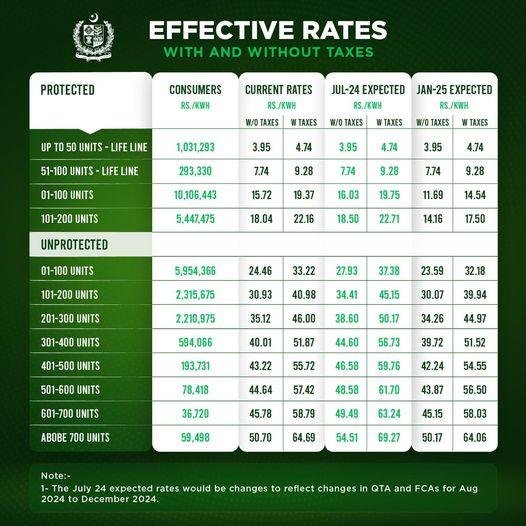
The national average all-inclusive tariff fell from Rs53.04 per unit to Rs42.26 per unit, representing a 20 percent reduction.
For protected consumers using up to 200 units per month, the all-inclusive tariff declined from Rs24.07 to Rs16.56 per unit. Industrial tariffs decreased from Rs62.99 to Rs42.40 per unit, while commercial tariffs dropped from Rs76.00 to Rs70.08 per unit.
Agricultural consumers also benefited from lower tariffs, with rates falling from Rs47.56 per unit to Rs40.82 per unit during the same period.
Clean energy share set to expand
The brief said clean energy accounted for 55 percent of Pakistan’s power generation mix in 2025 and is projected to reach 90 percent by 2035.
The share of locally sourced fuel is expected to increase from 74 percent to 96 percent over the same period. As a result, the country’s annual fuel import bill is projected to decline from $2.4 billion to $0.3 billion.
Long-term planning targets reliable supply
According to the Power Division, the national grid’s installed capacity, excluding K-Electric, stood at 36,397MW in 2025. The document separately listed 12,296MW of net-metering solar capacity and 18,944MW of off-grid solar installations.
The ministry defended plans for a 26GW expansion of generation capacity, saying future planning must account for maintenance requirements, plant outages, hydrological conditions, fuel availability, solar generation variability and transmission constraints.
The brief noted that rationalization under the Indicative System Plan (ISP) 2025 removed more than 9,000MW of forced capacity additions. This decision is expected to save over $15 billion in capital investment and more than Rs400 billion annually.
Pakistan launches Rs950m GB project to tap rare earth minerals
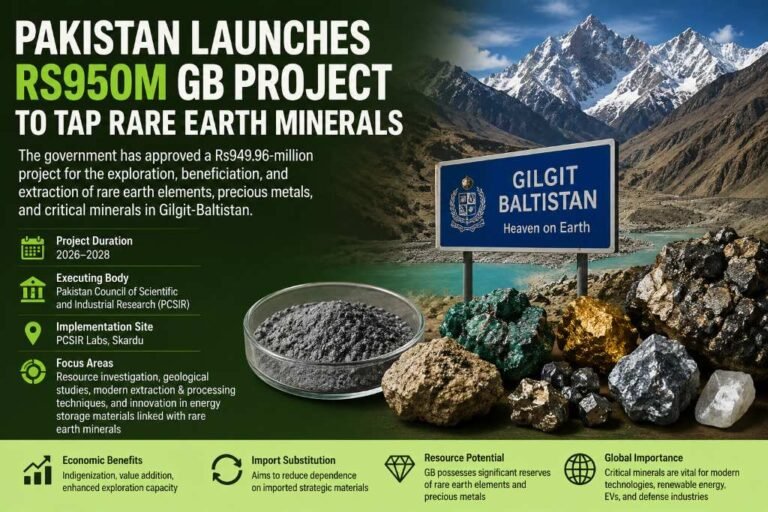
ISLAMABAD, June 1 (ABC): The government has approved a Rs949.96-million project for the exploration, beneficiation, and extraction of rare earth elements, precious metals, and critical minerals in Gilgit-Baltistan, according to a document available with Wealth Pakistan.
The two-year project will run from 2026 to 2028. The Pakistan Council of Scientific and Industrial Research (PCSIR) will execute it under the Ministry of Science and Technology, with all activities based at PCSIR Labs, Skardu.
Focus on mineral exploration
The initiative focuses on resource investigation, geological studies, and the modernization of extraction and processing techniques. It also seeks to promote innovation in energy storage materials linked with rare earth minerals.
The project is expected to open new avenues for Pakistan’s mineral sector while reducing dependence on imported strategic materials.
Advanced technologies to support extraction
According to the document, the project will use advanced technologies for the identification and processing of critical minerals. These technologies include ICP-MS analysis systems, beneficiation plants, and grinding mills.
The use of modern equipment is expected to strengthen mineral exploration and improve processing capabilities.
Expected economic benefits
The project is expected to generate several economic and industrial benefits, including indigenization, value addition, enhanced exploration capacity, and import substitution. Officials believe the initiative will help strengthen Pakistan’s mineral sector and improve local capabilities.
Gilgit-Baltistan possesses significant reserves of rare earth elements and precious metals. These resources are increasingly important for modern technologies, renewable energy systems, electric vehicles, and defense industries worldwide.
The development comes at a time of rapidly rising global demand for critical minerals. In this environment, the project could help position Pakistan as a regional player in the strategic minerals market.

Govt plans Rs980m mineral resource centre in Peshawar
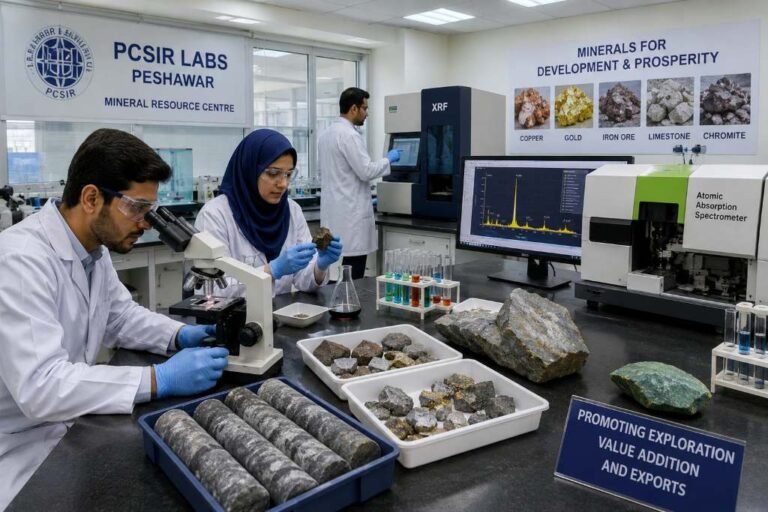
ISLAMABAD, May 30 (ABC): The government has planned a Rs979.621 million project to establish a mineral resource centre, analytical laboratory and mineral detection facility at PCSIR Laboratories Peshawar. The initiative aims to promote mineral exploration, value addition and exports while strengthening Pakistan’s mining sector.
According to documents available with Wealth Pakistan, the Pakistan Council of Scientific and Industrial Research (PCSIR) will execute the project under the Ministry of Science and Technology from 2026 to 2028.
Modern facility to strengthen mineral research
The proposed facility will enhance mineral processing and analytical capabilities through advanced laboratory infrastructure and modern scientific technologies.
The project will provide services related to ore beneficiation, mineral identification, mineral detection and analytical testing. It will also support geological surveys of local mineral resources and develop technologies for mineral extraction and processing.
Officials believe the facility will help improve the scientific assessment of mineral deposits and support the sustainable development of Pakistan’s mineral sector.
Advanced equipment planned
According to project documents, PCSIR will install several advanced analytical systems at the facility.
The planned equipment includes an Optical Emission Spectrometer, Atomic Absorption Spectrometer, X-Ray Fluorescence (XRF) system and X-Ray Diffraction (XRD) system.
These technologies will enable accurate mineral testing, composition analysis and resource evaluation. They will also help industries meet international quality standards.
Focus on value addition and exports
The project aims to strengthen indigenous technological capabilities and promote value addition in mineral products.
It is expected to support mineral exploration activities, improve resource utilisation and reduce dependence on imported testing and analytical services.
Officials say the facility will also encourage local processing of mineral resources, helping industries move beyond raw material exports and produce higher-value products.
Support for local industries
The proposed centre will provide technical support to industries involved in product design, development and mineral-based manufacturing.
By offering advanced testing and research services, the facility will help manufacturers improve product quality and competitiveness in international markets.
Experts believe stronger research and testing capabilities can contribute to higher mineral exports and increased industrial growth.
Investment expected to boost mining sector
Experts say the project could play a significant role in modernising mineral research infrastructure in Khyber Pakhtunkhwa.
The new facility is also expected to attract investment in mining, mineral processing and related industries. Improved scientific capabilities may help unlock the province’s vast mineral potential and support long-term economic development.
OGDCL makes 19 oil and gas discoveries since 2023
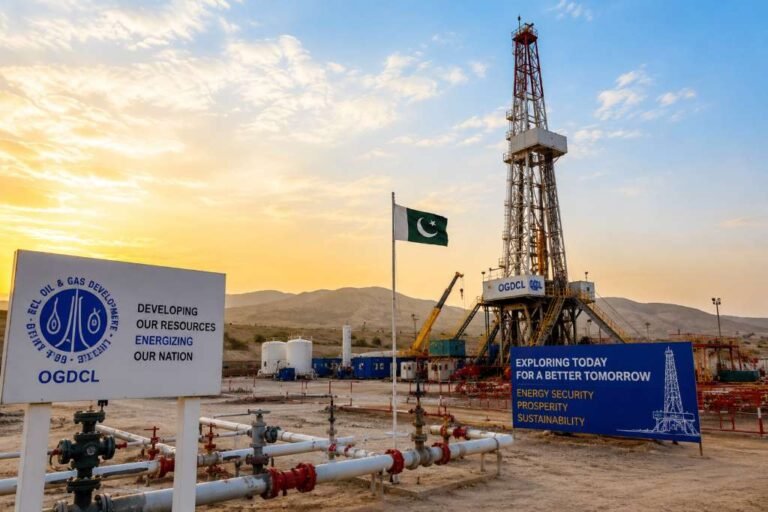
ISLAMABAD, May 30 (ABC): The Oil and Gas Development Company Limited (OGDCL) has made 19 oil and gas discoveries across Sindh, Punjab and Khyber Pakhtunkhwa since 2023. The discoveries are strengthening Pakistan’s energy security and reducing dependence on costly fuel imports.
According to official documents available with Wealth Pakistan, the discoveries have an estimated cumulative production potential of about 17,123 barrels per day (BPD) of oil and 151 million standard cubic feet per day (MMSCFD) of gas. These finds are expected to generate daily import substitution worth nearly Rs1.2 billion.
Discoveries accelerate over three years
OGDCL made five discoveries during FY2023-24. These discoveries added 481 BPD of oil and 29.66 MMSCFD of gas. They generated an estimated daily import substitution of Rs283.48 million.
The company recorded another five discoveries in FY2024-25. These finds contributed 947 BPD of oil and 34.49 MMSCFD of gas. They also reduced import costs by about Rs279.70 million per day.
During the first nine months of FY2025-26, OGDCL accelerated exploration activities and made nine additional discoveries. These discoveries have an estimated production potential of 15,695 BPD of oil and 86.95 MMSCFD of gas. They are expected to save around Rs633.45 million per day in import expenditure.
Baragzai discovery stands out
Among the major discoveries, the multi-zone hydrocarbon finds at Baragzai X-01 proved particularly significant.
The well has a tested cumulative production potential of around 15,005 BPD of oil and 45.36 MMSCFD of gas. The discovery represents one of the most important additions to OGDCL’s resource base in recent years.
Reserve life expands to 17 years
The company also improved its Reserve Replacement Ratio (RRR), which measures reserve additions against production.
OGDCL’s RRR stood at 56% in FY2023-24. It increased sharply to 167% in FY2024-25 and remained strong at 153% during the first nine months of FY2025-26.
As a result, OGDCL increased its reserve life from 14 years to 17 years as of March 31, 2026. The improvement reflects stronger hydrocarbon sustainability and future production potential.
More wells brought into production
The documents show that OGDCL brought 34 wells and fields into production during the review period. The company took these steps to monetise discovered resources and boost energy output.
In FY2022-23, OGDCL brought five wells online. These wells produced 990 BPD of oil and 18.28 MMSCFD of gas.
During FY2023-24, the company added 11 wells. These wells contributed 4,398 BPD of oil and 43.23 MMSCFD of gas.
In FY2024-25, another eight wells entered production. They added 744 BPD of oil and 41.80 MMSCFD of gas.
During FY2025-26 up to April, OGDCL brought 11 more wells online. These wells are producing an estimated 9,734 BPD of oil and 74.25 MMSCFD of gas.
Production enhancement boosts output
Alongside new discoveries, OGDCL intensified production enhancement efforts across its fields.
The company carried out more than 65 rig workovers and over 295 rigless interventions. These activities generated an estimated incremental production impact of about 17,000 BPD of oil and 90 MMSCFD of gas.
The latest discoveries, new wells and production enhancement measures highlight OGDCL’s growing role in strengthening Pakistan’s energy sector and reducing the country’s reliance on imported fuels.
Rs903m invested to strengthen health emergency response in Balochistan
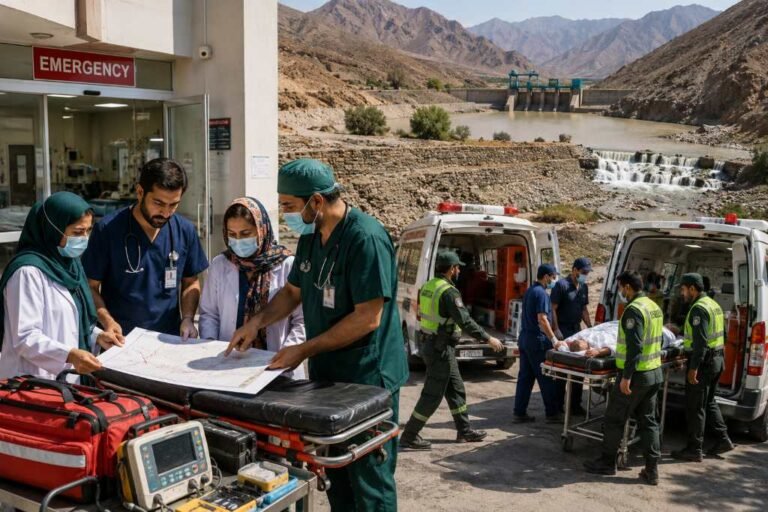
ISLAMABAD, May 30 (ABC): The National Disaster Risk Management Fund (NDRMF) has invested Rs903 million to strengthen health emergency response systems in 15 hospitals across Balochistan. The initiative forms part of wider efforts to improve disaster resilience and climate adaptation in vulnerable districts.
According to documents available with Wealth Pakistan, the projects targeted areas frequently affected by climate-induced disasters. These districts include Chagai, Killa Saifullah, Killa Abdullah, Naseerabad, Pishin and Loralai.
Health facilities receive emergency response support
The health system strengthening programme covered hospitals and healthcare facilities in Quetta, Pishin, Naseerabad, Killa Abdullah, Killa Saifullah, Loralai, Chagai, Kech, Khuzdar, Panjgur, Gwadar, Awaran, Washuk, Wadh, Nushki, Kharan and Kalat.
The programme aimed to improve emergency preparedness and enhance the capacity of healthcare institutions to respond to natural disasters and climate-related emergencies.
Flood protection infrastructure expanded
Alongside healthcare interventions, NDRMF invested heavily in disaster mitigation infrastructure across the province.
According to official documents, the organisation reconstructed and rehabilitated 88 flood protection structures. These projects help protect vulnerable communities from recurring flash floods and other climate-related disasters.
The upgraded infrastructure is expected to reduce damage to homes, farmland and public assets during extreme weather events.
Small dams improve water resilience
NDRMF also developed 20 small dams and water conservation structures in remote areas of Balochistan.
These projects aim to improve water management, support local livelihoods and strengthen climate resilience in water-scarce regions.
Officials believe the new infrastructure will help communities cope better with droughts and changing rainfall patterns.
Public buildings retrofitted for safety
The Fund retrofitted 15 public buildings, including schools and Basic Health Units (BHUs), to improve their ability to withstand natural disasters.
The retrofitting work enhanced structural safety and reduced risks to people using these facilities during emergencies.
Early warning system boosts preparedness
NDRMF also installed an early warning system in vulnerable areas of the province.
The system helps communities respond quickly to potential disasters and reduces risks to life and property. It also supports local authorities in making timely decisions during emergencies.
According to the documents, these initiatives form part of NDRMF’s broader strategy to strengthen resilience and disaster preparedness in Pakistan’s underserved and climate-vulnerable regions.
Govt speeds up work on four dams to add over 8 MAF water storage
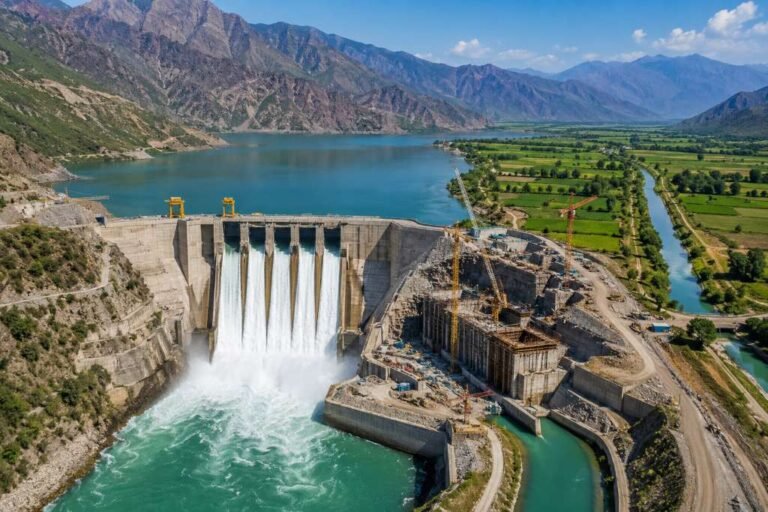
ISLAMABAD, May 30 (ABC): The government has accelerated work on four major dam projects that will add more than 8 million acre-feet (MAF) of water storage capacity. The move aims to strengthen water security, improve irrigation management and enhance resilience against climate change.
Seasonal water flows create storage challenges
According to official data available with Wealth Pakistan, Pakistan receives nearly 80% of its annual river flows during only 92 days between June and August. The remaining 20% arrives during the other 273 days of the year. This uneven distribution creates major challenges for irrigation, flood control and water availability during dry seasons.
To tackle these challenges, the Water and Power Development Authority (WAPDA) has developed reservoirs with a combined live storage capacity of 13.168 MAF. These reservoirs help regulate water supplies throughout the year across the Indus Basin Irrigation System.
Pakistan’s three principal reservoirs are Tarbela Dam, with a live storage capacity of 5.580 MAF, Mangla Dam with 7.277 MAF, and Chashma Barrage with 0.311 MAF.
Mangla project restores lost storage
Sedimentation reduced the storage capacity of Mangla Reservoir over the years. However, the Mangla Dam Raising Project recovered a significant portion of the lost capacity by adding 2.88 MAF of water storage.
WAPDA has designated the current period as the “Decade of Dams.” Under this initiative, the authority is fast-tracking several large-scale projects to enhance Pakistan’s water storage capacity and ensure sustainable water supplies.
Four completed projects add nearly 4 MAF
Over the past decade, WAPDA completed four major projects that added 3.914 MAF of live storage capacity. These projects include the Mangla Dam Raising Project, Gomal Zam Dam, Satpara Dam and Darawat Dam.
Gomal Zam Dam contributed 0.892 MAF of storage capacity. Satpara Dam added 0.053 MAF, while Darawat Dam contributed 0.089 MAF.
Four mega dams under construction
WAPDA is currently implementing four major reservoir projects with a combined live storage capacity of 8.136 MAF.
Diamer-Bhasha Dam is the largest among them and will add 6.4 MAF of storage capacity. Mohmand Dam will contribute 0.676 MAF, Kurram Tangi Dam 0.90 MAF and Nai Gaj Dam 0.16 MAF.
According to official data, these projects will increase water availability, improve flood management and support agricultural productivity across the country.
More reservoir projects in the pipeline
The government is also planning additional reservoir projects with a combined live storage capacity of 15.88 MAF.
These projects include Sindh Barrage with 2.0 MAF, Shyok Dam Multipurpose Project with 5.5 MAF, Akhori Dam with 7.0 MAF, Chiniot Dam with 0.93 MAF and Murunj Dam with 0.45 MAF.
Experts say Pakistan must expand its water storage infrastructure to meet rising demand and address climate-related challenges. These challenges include erratic rainfall, floods and prolonged dry spells.
Monitoring systems strengthen water management
Alongside dam construction, WAPDA has expanded its hydro-meteorological monitoring and telemetry systems. The upgraded network provides real-time data on river flows, transboundary streams, reservoir levels and rainfall patterns.
The system supports faster operational decisions and improves preparedness for floods and droughts. Together, new reservoirs and improved monitoring systems will strengthen Pakistan’s long-term water security and water management capacity.