Home Blog Page 27

Govt streamlining pension system for overseas Pakistani retirees

0

ISLAMABAD, Nov 23 (APP): The Ministry of Finance, in collaboration with the Controller General of Accounts and the Accountant General Pakistan Revenues, has undertaken a series of initiatives aimed at improving the pension disbursement system for overseas Pakistani retirees.

According to a document available with Wealth Pakistan, the government is addressing longstanding issues related to pension disbursements, data integration and logistical challenges, ensuring that pensioners residing abroad receive their benefits without delay.

The Finance Division is working to further strengthen the pension and General Provident Fund (GPF) management system by improving data integration between autonomous bodies and the AGPR system. Enhancing this linkage will help streamline the processing of pensions and GPF contributions for employees on deputation.

Since many civil servants working in autonomous bodies operate under separate pension contribution mechanisms, better coordination will ensure smoother and more accurate pension transfers.

To achieve this, the Finance Ministry is planning to develop a more robust and unified tracking system that will securely record pension histories and ensure timely and accurate transfer of contributions.

The Finance Division is also working to improve disbursement of pensions to employees of abolished or merged entities through smoother processes. While many pensioners have been receiving their benefits without difficulty, the Division recognizes the need to further streamline procedures for those nearing retirement or approaching superannuation, particularly in matters such as leave encashment and GPF withdrawals. To strengthen this transition, the Finance Division has emphasized prioritizing these cases and putting in place measures that fully safeguard the rights and entitlements of all pensioners.

A large number of Pakistani retirees living abroad will soon experience greater ease in managing their pension payments, as efforts are underway to simplify account opening and verification procedures.

The National Database and Registration Authority (NADRA) is developing a dedicated online platform that will enable biometric and facial-recognition verification from anywhere in the world. Through this system, overseas pensioners will be able to submit their proof-of-life certificates remotely, eliminating the need for travel to Pakistan for physical verification.

Once launched, the platform will greatly reduce inconvenience for pensioners and help ensure the timely and uninterrupted disbursement of pensions. The system is in its final development stages and is expected to be rolled out in the near future.

The Finance Ministry has also instructed the SBP to work closely with banks to synchronize their systems and implement the proposed online application, ensuring the smooth flow of pension payments to overseas retirees.

These reforms are part of the government’s broader efforts to modernize the public sector pension system and provide better services to Pakistan’s pensioners, regardless of their location.

Punjab begins survey of flood-hit irrigation infrastructure

0

ISLAMABAD, Nov 21 (APP): The Punjab Irrigation Department has initiated a survey for geophysical assessment of damages to the irrigation infrastructure following severe flooding in recent months.

The embankments and spurs along the three major rivers of the province; Chenab, Ravi, and Sutlej, which faced some of the most severe flooding in August and September this year, are being surveyed.

“We are conducting a structural audit of these embankments to scientifically assess their vulnerability. Initially, the embankments and spurs on the Chenab River, from Trimmu Headworks to Punjnad, have been surveyed,” Dr. Ghulam Zakir Hassan Sial, Director of Irrigation Research Institute (IRI), Punjab, told Wealth Pakistan.

Dr. Sial said that IRI teams are carrying out physical surveys using electrical resistivity and tomography techniques to examine the geophysical condition of the structures.

He said that embankments along Marala, Khanki, Qadirabad, and Chiniot will also be surveyed by dedicated field teams.

Similarly, the department is assessing embankments along the Ravi River, with the key location at Shahdara near Lahore already surveyed.
The embankments along Balloki and Sidhnai headworks are also scheduled for inspection under the ongoing geophysical assessment plan.

In the second phase, embankments along major headworks of the Sutlej River — stretching from Ganda Singhwala to Islam Headworks — will be examined as part of the broader vulnerability review.

Dr. Sial said based on the survey results, recommendations will be submitted to the Punjab government to strengthen these structures ahead of any future floods.

He said a strategy would also be prepared to help minimize damage during future flooding events. He expressed hope that fortifying spurs and embankments would significantly reduce human and crop losses in the years ahead.

Agriculture, the backbone of Punjab’s economy, relies heavily on surface water conveyed through an extensive canal network covering 36,862 kilometers.

This includes around 6,500 kilometers of main and branch canals and 31,050 kilometers of distributaries and minors, collectively forming one of the region’s largest irrigation systems.

The International Water Management Institute (IWMI) is also extending technical support to the Punjab Irrigation Department as it works to rehabilitate the province’s water infrastructure following the recent flood damage.

IWMI spokesperson Amjad Jamal told Wealth Pakistan that the institute, under the Water Resource Accountability in Pakistan (WRAP) program, is collaborating with the provincial department to improve water resource management and enhance climate resilience at provincial and district levels.

“We are currently working with the Punjab Irrigation Department to formulate a strategy for the efficient use of water for agriculture in the post-flood context,” he told Wealth Pakistan.

He said IWMI, headquartered in Sri Lanka, had recently organized consultative workshops to engage key stakeholders.

He noted that the institute was also providing training on tools such as Geographic Information Systems (GIS) and soil moisture sensors to help improve efficiency and sustainability in water management.

He expressed hope that the collaboration would support the promotion of water stewardship in Pakistan, similar to other water-stressed regions around the world.

Housing ministry completes over Rs36bn infrastructural development projects

0

ISLAMABAD, Nov 20 (APP): The Ministry of Housing and Works has completed eight major national infrastructure development projects worth Rs36.669 billion over the past five years.

According to documents available with Wealth Pakistan, these development projects – fully funded by the government – have been completed across the country since 2020.

Pakistan Infrastructure Development Company Limited (PIDCL) — an attached department of the Ministry of Housing and Works — carried out these projects.

These eight completed projects include a flyover along Sher Shah Suri Road, the 6.4km Nishtar Road, the 8.9km Manghopir Road (Phase-I), fire tenders for KMC, KMC development schemes, the laying of 66” and 48” water pipelines, the 0.5km PNS Mehran Road, and the Green Line Bus Rapid Transit System Karachi (Infrastructure Phase-I).

The flyovers along Sher Shah Suri Road, completed in 2020, cost Rs2.39 billion; Nishtar Road and Manghopir Road (Phase-I), completed in 2019 and 2021 respectively, cost Rs1.9 billion; and Manghopir Road–Jam Chakro to Banaras (North Bound), completed in 2024, cost Rs3.19 billion.

Similarly, the KMC fire tenders project, completed in 2021, cost Rs1.88 billion; the KMC development schemes, completed in 2021, cost Rs1.011 billion; the laying of 66” and 48” water pipelines, completed in 2020, cost Rs1.65 billion; the 0.5km PNS Mehran Road project, completed in 2021, cost Rs0.04 billion; and the Green Line Bus Rapid Transit System Karachi (Infrastructure Phase-I), completed in 2022, cost Rs24.60 billion.

In addition to these completed projects, the PIDCL is also undertaking other projects under its mandate. These include the Karachi Urban Infrastructure Development Package, the Hyderabad Urban Infrastructure Development Package (revamping and rehabilitation), federal courts in Karachi. These projects are estimated to cost Rs 24 billion.

The Karachi Urban Infrastructure Development Package is estimated to cost Rs15 billion, the Hyderabad Urban Infrastructure Development Package (revamping and rehabilitation) Rs5 billion as per initial estimates, and the Federal Courts Karachi project Rs4 billion.

In addition, the PIDCL is handling the 1.8km Green Line Bus Rapid Transit System project, costing Rs4.59 billion, and the integration of the 1km Orange Line BRTS with the Green Line BRTS, costing Rs0.058 billion.

An official from the housing ministry told Wealth Pakistan that these projects are playing a pivotal role in improving urban mobility, strengthening civic infrastructure, and addressing long-standing development gaps in major metropolitan areas.

He said several of these schemes, particularly road rehabilitation and water pipeline networks, were launched to ease chronic traffic congestion and resolve water supply challenges faced by millions of residents in Karachi.

The PIDCL has been directed to accelerate work on the remaining ongoing projects, especially those related to Karachi and Hyderabad’s urban infrastructure, given their significant impact on economic activity in the region.

The government is also considering expanding the scope of the Karachi package to include additional roads, drainage improvements, and new water supply channels.

Waseela Diabesity Family Festival and Awareness Seminar held in Lahore

0

LAHORE: In connection with World Diabetes Day, a Diabesity Family Festival and Diabetes Awareness Seminar were organized at the Waseela Diabesity Center under the auspices of the Rasheeda Majeed Trust. A large number of citizens participated in the event. The primary objective of this important social and medical activity was to raise public awareness about the risks of diabetes, timely diagnosis, preventive measures, effective treatment, and the importance of a healthy lifestyle.

The festival began at 9:00 a.m. with a free medical and eye camp, which continued until noon. Citizens received free check-ups along with key diabetes-related tests such as HbA1c, DPNP, BMI, uric acid, blood sugar monitoring, and foot care and complete eye examinations. Local residents and participants greatly appreciated and benefited from these free services.

Following the medical camp, the formal session of the Diabetes Awareness Seminar commenced with a recitation from the Holy Quran and Naat. Renowned health experts later delivered comprehensive talks on various aspects of diabetes.

Welcoming the participants, Dr. Izhar-ul-Haq Hashmi said that such initiatives play a vital role in increasing public awareness. He stressed that diabetes is a rapidly growing disease and timely guidance is crucial to prevent complications.

Dr. Muhammad Jameel presented a detailed introduction to diabetes, explaining that the disease can affect multiple organs of the body. However, with early diagnosis, proper treatment, and a healthy lifestyle, diabetes can be effectively managed. He added that patients who carefully monitor their diet, weight, and daily routine can significantly reduce potential complications.

Speaking on gestational diabetes, Dr. Nazia Ayyub Butt highlighted that diabetes during pregnancy can pose risks to both mother and child, but if detected early, it is easily manageable. She emphasized the importance of regular check-ups for pregnant women to prevent complications.

Addressing diabetes-related complications, Dr. Tahir Rasool said that issues related to the eyes, kidneys, heart, nerves, and feet usually arise when patients ignore their condition. He advised citizens to undergo regular tests to avoid long-term health risks.

Discussing nutrition, Tauseef A. Khan stated that a balanced diet is essential for everyone, but its importance multiplies for diabetic patients. He noted that low-fat meals, high-fiber foods, adequate water intake, and regular exercise play a significant role in controlling diabetes.

In another session, Dr. Muhammad Jameel discussed the link between diabetes and kidney disease, stating that diabetes is the leading cause of kidney damage. He advised patients to undergo kidney function tests at least twice a year to prevent irreversible harm.

Highlighting advancements in treatment, Dr. Sajid Hameed said that modern technology, including smart devices and mobile apps, has made diabetes management much easier. Patients can now regularly monitor their sugar levels and make informed adjustments in their routine.

In a video message, Dr. Abbas Raza emphasized that lifestyle modification is the most critical element in diabetes management. He said that daily walks, a balanced diet, proper sleep, and mental relaxation not only control sugar levels but also improve overall health.

Addressing the closing session as guest of honour, Dr. Zareen Arif said that illness does not weaken a person; they become weak only when they give up hope. She added that adopting a healthy lifestyle can significantly improve quality of life for everyone.

The event concluded with a symbolic walk, distribution of shields, a lucky draw, and refreshments. The organizers thanked all guests, sponsors, media representatives, and speakers, stating that the festival successfully achieved its goal of raising awareness about diabetes and guiding people toward healthier living.

EOBI’s investment portfolio reaches Rs651 billion

0

ISLAMABAD, Nov 19 (APP): The Employees’ Old-Age Benefits Institution (EOBI) has reported a total investment portfolio of Rs 651.03 billion as of October 31, 2025.

The portfolio composition mentioned in a document available with Wealth Pakistan highlights a strong focus on fixed income securities, real estate, and equity investments, aiming to ensure long-term financial security for employees’ pensions and retirement benefits.

According to the breakdown provided in the official presentation, fixed income investments account for the lion’s share of the portfolio, totalling Rs557 billion, or 85% of the total value.

This category primarily consists of Pakistan Investment Bonds (PIBs), which alone constitute Rs497.12 billion of the total portfolio.

Additionally, the portfolio includes accrued profits from PIBs valued at Rs37.49 billion, along with Market Treasury Bills (MTBs), which make up Rs5.1 billion.

Real estate investments form another substantial segment, amounting to Rs58.55 billion, or 9% of the overall portfolio. This is distributed across real estate properties (Rs42.36 billion) and real estate projects (Rs16.20 billion). The real estate investments play a key role in the diversification strategy, providing a hedge against inflation and contributing to the overall stability of the fund.

Equity investments make up a smaller, yet significant, portion of the portfolio, with Rs35.49 billion or 6% allocated to various stocks.

This includes Available-for-Sale Equity worth Rs27.14 billion and Held-for-Trading Equity of Rs8.35 billion. Despite their relatively small proportion, equity investments offer an opportunity for higher returns in the long term.

The total investment income projected for 2025 stands at Rs80.16 billion, a promising indicator of the fund’s future income-generating potential.

The EOBI’s investment strategy continues to emphasise safety and long-term growth, aiming to secure the retirement benefits of millions of workers across Pakistan. By maintaining a diversified portfolio, EOBI ensures that its funds are well-positioned to weather economic fluctuations while delivering reliable returns.

Punjab decides to bring all 23 testing labs under newly established PAFDA

0

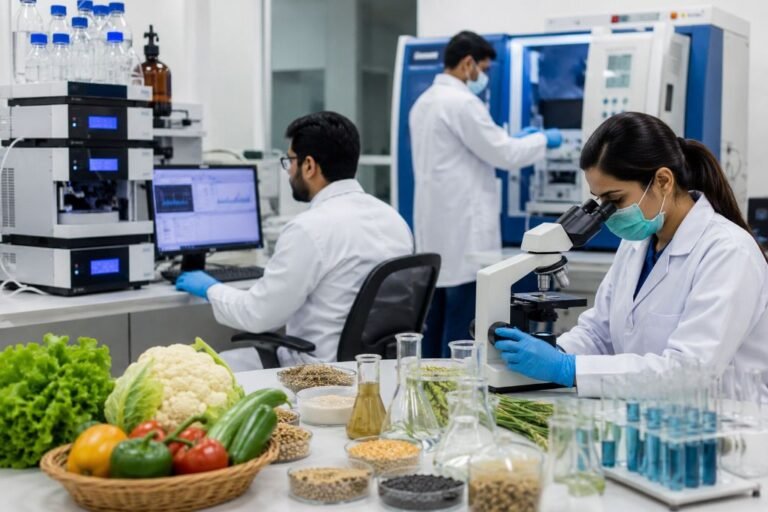
ISLAMABAD, Nov 18 (APP): The Punjab government has decided to place all 23 testing laboratories of the food, agriculture and health departments under the unified management of the newly created Punjab Agriculture, Food and Drugs Authority (PAFDA).

Dr Talat Naseer Pasha, Director General of PAFDA, told Wealth Pakistan that in the first phase all existing laboratories of the allied departments would be taken over and upgraded according to international benchmarks, with efforts also underway to secure accreditation from national and global standard-setting organisations.

He said the authority would also establish a central testing laboratory equipped with advanced facilities to cater to multiple economic sectors at the same time. He expressed optimism that the authority’s entire testing and regulatory functions would become fully operational by early next year.

He said the long-term vision is for PAFDA to evolve into an internationally recognised conformance and compliance body by 2035 in areas including food, pharmaceuticals, agricultural inputs, feed and cosmetics. He said this transformation is expected to support Pakistan’s export growth, cut foreign testing costs and strengthen public health.

Dr Pasha noted that the authority’s planned functions would also contribute to safer consumer products, reduced foreign exchange losses, faster export procedures through internationally accepted certifications and a stronger applied research environment for both academia and industry.

He pointed out that Pakistan continues to face significant difficulties in ensuring safe food, effective medicines and compliant agricultural inputs. Citing food quality concerns, he said that unsafe and adulterated food alone has major consequences for public health, including malnutrition, and results in an annual economic burden of US$7.6 billion.

Explaining PAFDA’s responsibilities, Dr Pasha said the authority’s mandate covers testing and conformance certification in areas such as agri-inputs, food, soil, feed, pharmaceuticals, cosmetics, biologics, medical devices and genomics. This includes plant and animal genomics, nutrigenomics, pharmacogenetics and nutrigenetics. He stated that the authority is being designed with reference to leading regional and global institutions, including the Dubai Municipality Laboratory, China’s CNAS and the United States Food and Drug Administration (FDA).

He said PAFDA is expected to function as Punjab’s flagship project, supporting national-level development through voluntary cooperation and globally aligned standards. Discussing upcoming plans, he said the authority would introduce genomics services to enhance consumer protection and speed up export approvals. He noted that the phased development of these services would help ensure international acceptance while meeting the requirements of the healthcare, food and agriculture sectors.

Dr Pasha said that a bioequivalence studies facility would also be created so that local pharmaceutical manufacturers can establish therapeutic equivalence locally instead of relying on testing abroad. In addition, PAFDA will develop advanced testing facilities to support sectors such as surgical instruments, leather and textiles.

He said all laboratory processes under the authority would adhere to standards followed by leading certification bodies, including the USFDA, the European Food Safety Authority (EFSA), the European Medicines Agency (EMA) and China’s National Medical Products Administration (NMPA).

Experts have described the establishment of PAFDA as an encouraging step for Pakistan’s economy. Dr Kausar Abdullah Malik, a senior scientist and former interim federal minister for food security and research, told Wealth Pakistan that the authority is expected to improve the safety of food and medicines while reducing adulteration in agricultural inputs.

He said PAFDA possesses the capability and facilities required to carry out its mandate effectively. He added that the authority’s oversight of existing laboratories would help ensure that these facilities are used efficiently and fulfil the objectives for which they were created.

JK Journalists Forum calls for safeguarding refugee rights

0

Staff Report

LAHORE, Nov 18: A meeting of the Jammu Kashmir Journalists Forum, chaired by President Khalid Minhas, reviewed the latest political and social developments in Kashmir and the issues confronting Kashmiri refugees living in Pakistan. General Secretary Muhammad Abdullah and several members of the forum attended the session.

Participants welcomed the formation of the new government in Azad Jammu & Kashmir and congratulated Prime Minister Faisal Mumtaz Rathore on assuming office. They expressed hope that the new leadership would hold meaningful consultations with all genuine stakeholders on matters concerning Kashmir and take effective steps to address public concerns.

Members emphasised that protecting the identity, political representation and fundamental rights of Kashmiri refugees in Pakistan is a shared responsibility of both the Government of Pakistan and the Government of Azad Jammu & Kashmir. They voiced concern over attempts by certain quarters to undermine the historical identity and special status of Kashmiri refugees, terming such efforts contrary to the spirit of the Kashmir cause.

The Forum reiterated that Kashmiri refugees residing in Pakistan are real stakeholders in the Kashmir issue, and their status, identity and rights are internationally recognised. It reaffirmed its commitment to continue advocating for the protection of refugees’ rights, defending their identity and highlighting their issues at every forum.

Concluding the meeting, members expressed hope that the new government would take decisions that strengthen the Kashmir cause and fulfil the expectations of the Kashmiri people, particularly those living as refugees in Pakistan.

Punjab govt to provide new veterinary diagnostic equipment at tehsil level

0

ISLAMABAD, Nov 17 (APP): The Punjab government is expanding and modernizing diagnostic facilities for livestock across the province to ensure the early detection and effective control of major animal diseases.

Dr Haider Ali Khan, Director at the Punjab Livestock Department, told Wealth Pakistan that 133 ultrasound machines would be provided to tehsil-level veterinary hospitals in all 41 districts of the province.

In addition, 10 portable X-ray machines will be  supplied to divisional veterinary hospitals to strengthen their diagnostic capacity.

He said veterinary hospitals and dispensaries were being upgraded in phases to enhance their ability to diagnose and manage livestock diseases more efficiently.

Punjab currently operates 2,508 veterinary treatment facilities, including 754 civil veterinary hospitals, 1,754 civil veterinary dispensaries, 202 mobile veterinary dispensaries, and 43 mobile veterinary laboratories.

According to the 7th Agricultural Census 2024, Punjab is home to the largest livestock population in Pakistan, with more than 104 million animals, including 16.9 million cattle, 14.2 million buffaloes, 13.3 million sheep, and 31.3 million goats.

Dr Haider Ali Khan said the government was also equipping district and divisional hospitals with modern surgical theatres, ultrasonography units, and portable X-ray systems to improve emergency and routine animal care. He revealed that 15 Foot-and-Mouth Disease (FMD)-free compartments were being developed across Punjab to ensure that meat produced in the province meets international health and safety standards.

“The establishment of these FMD-free zones will not only improve livestock health but also reduce production losses,” he said. “This will help Punjab’s meat exports gain better access to food-deficient markets in the Middle East.”

Livestock experts have welcomed the initiative, noting that enhanced diagnostic capabilities will ease longstanding challenges for breeders who often rely on under-equipped treatment centres.

Dr Irshad Muhammad Khan, former professor at the Faculty of Veterinary Sciences, University of Agriculture Faisalabad, identified major diseases affecting bovine and small ruminants in Punjab, including FMD, Lumpy Skin Disease (LSD), Hemorrhagic Septicemia, tick-borne illnesses, Enterotoxemia, Caprine Pleuropneumonia, and Peste des Petits Ruminants (PPR).

He said the new initiative will help cope with these diseases in the province. Veterinary specialists welcomed the move to establish state-of-the-art diagnostic laboratories at the district level. “At present, the only modern public-sector diagnostic labs are at UVAS Lahore and the University of Agriculture Faisalabad,” Dr Wasif Umair, a veterinary pathologist who operates a private laboratory in Lahore, told Wealth Pakistan. “Most livestock farmers cannot afford private testing, which is why establishing district-level public diagnostic labs by Punjab government will help the livestock sector in a great way,” he added.

Pakistan sets 2.78 million ton onion production target for 2025-26

0

ISLAMABAD, Nov 16 (APP): Pakistan has fixed its onion production target at 2.78 million tons for the 2025-26 crop year, with cultivation planned over 168,000 hectares across the country. The new target reflects the government’s aim to build on the strong output achieved in the ongoing season.

According to official data available with Wealth Pakistan, during 2024-25, national onion production rose sharply by 19.2 percent, reaching 2.747 million tons compared to 2.3046 million tons a year earlier. The cultivated area also recorded a notable increase of 16.8 percent, expanding from 142,500 hectares to 166,400 hectares, according to a document of the Ministry of National Food Security and Research.

Onion is Pakistan’s second major vegetable crop after potato, with annual consumption estimated between 1.6 and 1.8 million tons. It remains an essential ingredient for household cooking throughout the year, widely used in soups, gravies, seasonings and other food preparations.

Under the new production plan for 2025-26, Sindh has been assigned the largest share with a target of 956,550 tons from 60,000 hectares. Balochistan follows closely with a target of 884,500 tons from 47,000 hectares, while Punjab aims for 720,000 tons from 49,000 hectares. Khyber Pakhtunkhwa has been given a target of 254,400 tons from 12,000 hectares.

In the ongoing 2024-25 season, Punjab emerged as the key contributor to national growth. Its output surged by 92.4 percent to 914,000 tons, driven by a significant expansion in cultivated area from 29,000 hectares to 52,000 hectares—an increase of 79.3 percent. This rise also lifted the province’s yield by 7.3 percent, from 16,379 kg per hectare to 17,577 kg per hectare.

Sindh, traditionally a major onion-producing region, recorded marginal growth. Its production increased by 1.5 percent to 783,200 tons, while cultivated area rose slightly by 1.4 percent to 57,900 hectares. Yield remained steady, dipping only 0.1 percent to 13,527 kg per hectare.

Balochistan posted a 3.9 percent improvement in production, reaching 885,400 tons, supported by a 3.7 percent rise in cultivated area to 47,100 hectares. The province’s yield also inched up by 0.1 percent to 18,798 kg per hectare.

Khyber Pakhtunkhwa, however, reported a decline during the 2024-25 cycle. Its cultivated area fell by 14.5 percent to 9,400 hectares, while production dropped 19.9 percent to 164,500 tons. Yield also declined by 6.2 percent to 17,500 kg per hectare.

Nationally, average yield improved slightly to 16,509 kg per hectare, up 2.1 percent from 16,172 kg recorded in 2023-24.

The Federal Committee on Agriculture confirmed that Pakistan surpassed its national production target for 2024-25. Against a planned output of 2.554 million tons from 157,000 hectares, actual production stood at 2.747 million tons—7.5 percent higher than the target—while the cultivated area exceeded expectations by rising to 166,400 hectares, an increase of 6 percent.

Punjab and Balochistan were the provinces to exceed their assigned targets. Punjab surpassed its 660,000-ton target by 38.5 percent, and Balochistan exceeded its 741,000-ton target by 19.5 percent. Sindh achieved 86 percent of its target of 911,000 tons, while Khyber Pakhtunkhwa met only 67.9 percent of its target, producing 164,500 tons against a requirement of 242,300 tons.

Over 6,600 scholarships awarded to students from Balochistan, ex-FATA and GB

0

ISLAMABAD, Nov 16 (APP): The government has awarded a total of 6,437 indigenous scholarships and 226 overseas scholarships to students from Balochistan, former FATA and Gilgit-Baltistan over the past decade, reflecting sustained federal efforts to expand access to higher education in underdeveloped regions.

According to official data available with Wealth Pakistan, students from Balochistan received the highest number of indigenous scholarships, totalling 3,884 across MS-to-PhD, MS/MPhil, PhD and undergraduate levels. These include 99 MS-to-PhD, 396 MS/MPhil, 96 PhD, and 2,793 undergraduate awards.

Students from FATA secured 2,745 indigenous scholarships, comprising 418 MS/MPhil and 2,327 undergraduate slots.

Meanwhile, Gilgit-Baltistan received 308 undergraduate scholarships during the same period.

Along with indigenous opportunities, HEC also facilitated 226 overseas scholarships exclusively for students from Balochistan, including 50 language-course scholarships, 10 LLM scholarships, and 166 PhD scholarships.

These initiatives fall under the federal government’s quota policy, which ensures equitable access to higher education through both local and foreign-funded scholarship programs. Additionally, special projects dedicated to Balochistan, FATA, and GB continue to run, ensuring that students from remote and disadvantaged backgrounds are not excluded from academic progress and professional development.

A senior official at the HEC told Wealth Pakistan that these initiatives reflect the government’s broader commitment to expanding higher education opportunities in underdeveloped regions such as Balochistan, the former FATA districts and Gilgit-Baltistan. The federal government has continued to prioritise special scholarship programmes, overseas study opportunities and capacity-building projects to ensure equitable access for students from disadvantaged backgrounds.

He said targeted interventions over the past decade have helped bridge long-standing educational gaps by enabling thousands of students from remote areas to pursue advanced degrees at home and abroad. Such measures, he said, are part of a deliberate effort to promote inclusion, strengthen human capital and support socio-economic development in regions that have historically lagged behind in higher education infrastructure.