
Home Blog Page 17

Behind Pakistan’s IT export boom: can software succeed where textiles have stalled

0

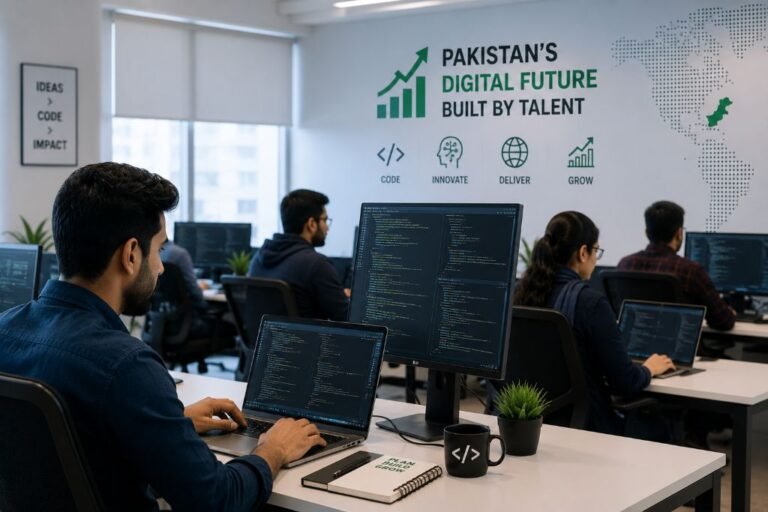
ISLAMABAD, July 24 (ABC): For decades, Pakistan has relied on textiles to earn the foreign exchange needed to keep its economy running. But as rising energy costs, political uncertainty and fierce global competition squeeze the country’s traditional exporters, another industry is quietly gaining ground—not in factories, but behind computer screens.

Pakistan’s IT exports reached $4.6 billion in fiscal year 2026, a 21% year-on-year increase from FY25’s $3.814 billion, making digital services one of the country’s fastest-growing export sectors. The figures have encouraged policymakers eager to diversify an economy long dependent on cotton, garments and remittances.

Yet the industry’s emergence is about more than impressive statistics. Interviews with industry participants suggest Pakistan’s technology sector is reaching a turning point, driven by shifts in global outsourcing, a young English-speaking workforce and increasingly supportive government policies. The challenge now is whether the country can transform that momentum into a globally competitive technology industry rather than remaining a supplier of low-cost digital labour.

For Sohail Sarwar, the transformation has unfolded over nearly two decades.

After working for Chinese and American technology companies, Sarwar returned from Beijing several years ago for family reasons. He continued serving overseas clients remotely before joining a Pakistani IT company that provides digital services to customers in Britain, the United States and elsewhere. His career mirrors a broader shift in the global technology industry, where geography has become less important than connectivity and skills.

“Our clients are mainly from the UK and the US,” Sarwar said, adding that his company’s revenue increased by roughly 25 to 30 percent over the past year as overseas demand continued to grow.

His experience reflects a wider trend reshaping Pakistan’s technology sector.

The normalization of remote work after the pandemic has broadened the global market for software development and digital services. At the same time, businesses seeking to control costs are outsourcing not only software engineering but also digital marketing, customer support, cybersecurity and, increasingly, artificial intelligence-related work.

Pakistan has become an increasingly attractive destination for that business. It combines a large pool of young professionals with widespread English proficiency and labour costs that remain well below many competing markets. Once known primarily as one of the world’s largest freelance hubs, the country is now producing companies capable of managing long-term international projects rather than simply supplying individual programmers.

That evolution, Sarwar argues, represents a fundamental change in the industry’s business model.

Instead of competing solely by providing software developers at lower hourly rates, Pakistani companies are beginning to sell complete digital solutions—from AI-powered customer service systems to automated marketing platforms and predictive analytics.

“The industry is moving from ‘Labour-as-a-Service’ to ‘Value-as-a-Service’,” he said.

The distinction matters.

Artificial intelligence is expected to automate many routine programming tasks over the coming decade, making low-cost coding alone a diminishing competitive advantage. Companies able to package technology into integrated business solutions are likely to capture a larger share of global digital spending than those relying purely on labour arbitrage.

Government policy has also become more supportive.

Recent reforms allowing IT exporters to retain a larger share of their foreign-currency earnings, together with the extension of preferential tax treatment for the sector through 2030, have improved business confidence and encouraged more companies to operate formally.

Sarwar described the tax regime as one of the most meaningful policy measures introduced for the industry, saying it has provided the certainty companies need to invest and expand.

But he is equally clear that policy announcements alone are not enough.

Although foreign-exchange rules have improved, many commercial banks still lack the expertise to process technology-export documentation efficiently, leaving companies to navigate inconsistent procedures that slow international business.

“The implementation still needs to become clearer across the banking sector,” he said.

Those institutional frictions illustrate a broader reality: Pakistan’s technology companies often succeed despite structural obstacles rather than because those obstacles have disappeared.

Reliable electricity remains far from guaranteed. To avoid costly interruptions, companies routinely maintain backup generators, uninterrupted power systems and multiple internet connections. For firms developing AI applications, unstable international connectivity and high import duties on advanced graphics processors add further costs, forcing many to rely on overseas cloud providers instead of building computing capacity at home.

In effect, businesses spend heavily simply to create the stability that competitors in more developed technology ecosystems often take for granted.

That reality helps explain why Pakistan’s next stage of development may prove more difficult than its first.

The country has already demonstrated that it can compete internationally by exporting skilled labour. The larger question is whether it can build globally recognized technology companies capable of producing intellectual property, attracting long-term investment and developing advanced products in fields such as artificial intelligence.

Other Asian economies have already made similar transitions, albeit through different paths. Vietnam integrated itself into global manufacturing supply chains to become an electronics export powerhouse. Pakistan’s opportunity lies elsewhere. Rather than exporting smartphones or semiconductors, it is seeking to export software, digital services and increasingly, technological expertise.

Whether that ambition succeeds will depend less on maintaining another year of double-digit export growth than on resolving the infrastructure, institutional and skills bottlenecks that continue to constrain the industry’s evolution.

For Pakistan, the significance of the current IT boom is therefore not simply that another export sector is expanding.

It is that, for the first time in decades, the country may have identified a credible path toward diversifying its export economy beyond textiles. Whether that path leads to a sustainable technology ecosystem—or remains another promising opportunity constrained by structural weaknesses—will shape Pakistan’s economic trajectory long after this year’s export figures are forgotten.
KP plans irrigation project for 10,930 acres of agricultural land

0

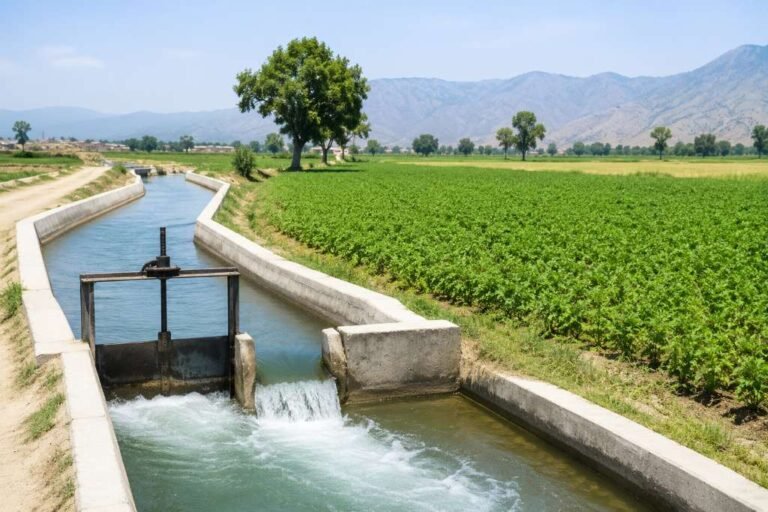
ISLAMABAD, July 23 (ABC): A major irrigation project is set to expand water availability to areas adjoining the proposed CPEC City near Swabi district of Khyber Pakhtunkhwa (KP). The project will develop irrigation infrastructure across a command area covering more than 10,930 acres.

According to official documents available with Wealth Pakistan, the project, titled “Pehur High Level Canal Extension (PHLCE) Project – Additional Area: Lot-4,” proposes extensive irrigation and command area development (CAD) in strategically located agricultural zones.

Three project components

According to the project layout, Lot-4 comprises three major components. These include the Indus Ambar Additional Command Area (3,234 hectares), the Indus Ambar HEIS/PDN Area (464 hectares) and the Nandrak Area (726 hectares).

The documents show that one project area lies south of the M-1 Motorway and west of the Indus Branch Canal. Its western boundary adjoins the proposed CPEC City. The project proposes full development of irrigation infrastructure and command area facilities in this zone.

Nandrak irrigation upgrade

The Nandrak Area is located south of the proposed CPEC City and north of the Kabul River.

According to the documents, parts of this area already receive irrigation from the tail of the Indus Branch Canal through the Jahangira and Nandrak minors. However, the project proposes rehabilitation and strengthening of the existing irrigation system to maximise agricultural productivity.

Indus Ambar development

The Indus Ambar Additional Command Area forms the largest component of the project. It is located adjacent to Lot-3.

About half of the area lies between the Maira Branch and the M-1 Motorway. The remaining land is located south of the motorway on both banks of the Indus Branch Canal.

The project recommends complete development of irrigation facilities and command area infrastructure across this region.

Project objectives

Together, the three components cover a command area of about 10,930 acres.

The Indus Ambar Additional Command Area covers 3,234 hectares, while the Indus Ambar HEIS/PDN Area spans 464 hectares. The Nandrak Area extends over 726 hectares.

The project proposes full irrigation and command area development in the Indus Ambar zones. It also calls for rehabilitation and strengthening of the existing irrigation system in the Nandrak Area.

According to the documents, the project aims to expand irrigation coverage, improve water distribution efficiency and strengthen command area development across the designated agricultural zones. Once completed, it is expected to improve irrigation infrastructure and support agricultural development in the region.

KP to build 980km roads, 34 bridges under Rs105bn development plan

0

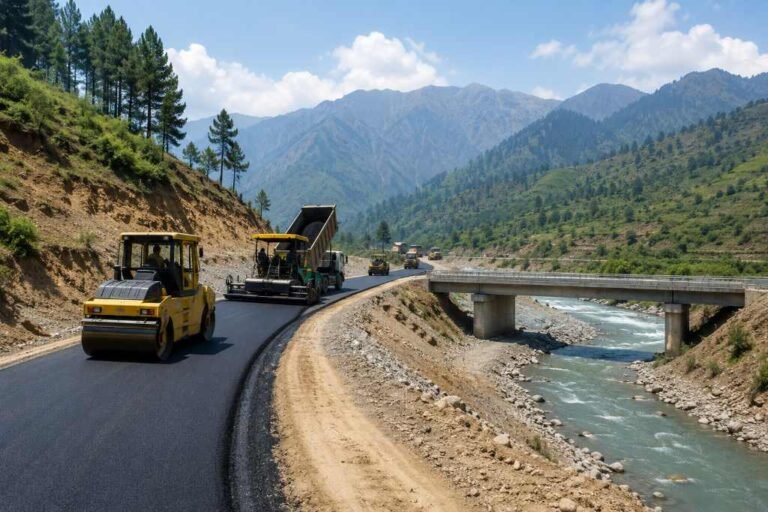
ISLAMABAD, July 22 (ABC): The Khyber Pakhtunkhwa government plans to build and rehabilitate 980.9 kilometres of roads and 34 bridges in 18 districts by November 2029 under the Rural Roads Development Project (KP-RRDP).

According to documents available with Wealth Pakistan, the Executive Committee of the National Economic Council (ECNEC) approved the Rs105.45 billion (approximately $370 million) project in February 2024.

The programme aims to improve access to markets, educational institutions and healthcare facilities by upgrading rural transport infrastructure across the province.

Roads and bridges

The provincial Communication and Works Department is implementing the project. Minconsult SDN BHD and Creative Engineering Consultants (JV) are serving as supervisory consultants.

The official plan includes the rehabilitation and construction of 474.2 kilometres of flood-damaged roads. It also includes 324.4 kilometres of rural access roads and 182.3 kilometres of tourism roads. Together, these projects will cover 980.9 kilometres.

The programme also includes the construction of 34 bridges. These bridges will improve connectivity in remote and disaster-prone areas.

District-wise allocation

District-wise allocations show that Dera Ismail Khan will receive the largest share of flood road rehabilitation, covering 207.5 kilometres.

Chitral has the highest combined allocation of 192.1 kilometres. This includes 153 kilometres of flood roads, 22 kilometres of access roads and 17.1 kilometres of tourism roads.

The programme also covers Karak, Kohat, Bannu, Malakand, Charsadda, Buner, Swabi, Lower Dir, Upper Dir, Swat, Shangla, Upper Kohistan, Lower Kohistan, Battagram, Haripur, Mansehra and Torghar.

Project cost and timeline

The cost breakup shows that Rs100.86 billion has been earmarked for civil works. These include road rehabilitation, tourism access routes, bridge construction, utility relocation and contingencies.

The government has allocated another Rs3.78 billion for consultancy services. It has also earmarked Rs813 million for project management, institutional strengthening and horticultural activities.

According to the implementation schedule, the programme will continue until November 2029.

Punjab to invest Rs60bn in four agro-processing park clusters

0

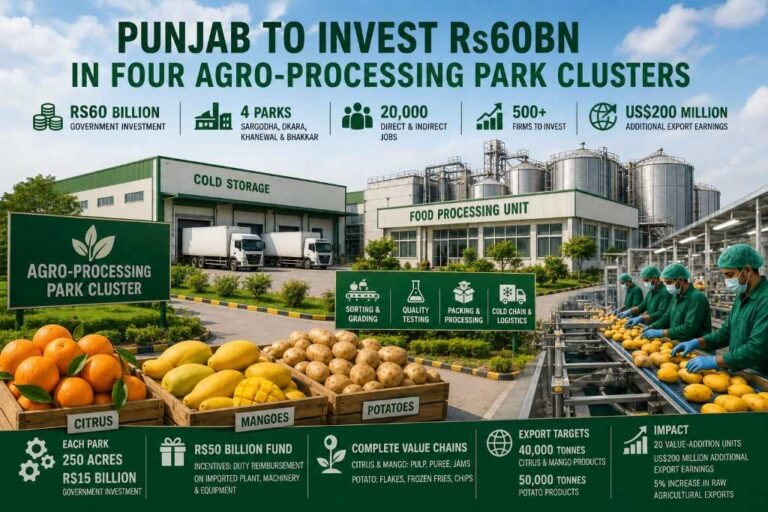
LAHORE, July 22 (ABC): The Punjab government will invest Rs60 billion under the three-year Punjab Economic Transformation Plan to establish four agro-processing park clusters in Sargodha, Okara, Khanewal and Bhakkar.

According to official documents available with Wealth Pakistan, the four clusters will provide shared cold chain facilities, certification services and business infrastructure. The initiative will enable more than 500 firms to invest and create around 20,000 direct and indirect jobs.

Each agro-processing park will span 250 acres and receive a government investment of Rs15 billion.

Parks to support value-added processing

The parks will be developed near major crop-producing regions. These include citrus-growing Sargodha, potato-producing Okara and mango-growing areas of southern Punjab, particularly around Multan.

The facilities will include sorting and grading units, laboratories, certification services, cold storage, logistics infrastructure, capacity-building centres and business support services.

To encourage private sector participation, the government will offer several manufacturing incentives. These include reimbursement of duties on imported plant, machinery and equipment through a dedicated Rs50 billion fund.

Complete value chains planned

The parks will support the complete processing chain for citrus and mangoes. This will cover farm-gate collection, sorting, grading, packing, polishing and waxing. The facilities will also produce pulp, puree and jams.

Potato processing facilities will cover the entire value chain. They will handle farm-gate procurement, grading, cold storage and the production of dehydrated potato flakes, frozen fries and potato chips.

Investment and export targets

Government estimates show the initiative will attract more than Rs20 billion in private investment. More than 500 firms are expected to benefit from the incentives offered under the programme.

The agro-processing parks are expected to facilitate exports of 40,000 tonnes of value-added citrus and mango products. They will also support exports of 50,000 tonnes of value-added potato products.

The initiative will establish 20 value-addition units. It is expected to generate an additional $200 million in export earnings and increase raw agricultural exports by 5%.

2,000 5G sites target set for each mobile operator by 2028

0

ISLAMABAD, July 21 (ABC): The Pakistan Telecommunication Authority (PTA) has set a target for each cellular mobile operator (CMO) to deploy 2,000 5G sites by 2028 under the first phase of Pakistan’s commercial 5G rollout.

According to official documents available with Wealth Pakistan, Phase I of the 5G rollout will run from 2026 to 2028. During this phase, every licensed operator will establish 2,000 5G sites.

Operators must also upgrade at least 20 percent of their existing 4G sites in the federal and provincial capitals to 5G technology.

Network upgrade targets

The roadmap also requires operators to increase the Fiber-to-the-Tower (FTTS) ratio to 20 percent. This step will strengthen network capacity and improve the performance of 5G services.

The PTA has also raised the quality standards for mobile broadband.

According to the document, the current average 4G throughput of around 4 Mbps will increase to a median speed of 20 Mbps. The roadmap also sets a minimum 5G baseline speed of 50 Mbps. Operators will gradually raise the median 5G speed to 100 Mbps.

Infrastructure rollout underway

According to the document, operators have started deploying infrastructure under the first phase of the rollout.

In areas where operators have completed new base transceiver stations (BTS) and network upgrades, they are providing 5G services alongside improved 4G performance.

The initial rollout includes procurement and import of telecom equipment, integration of newly assigned spectrum bands, network modernisation, and preparations for compatible 5G handsets.

Four-phase rollout plan

The document states that Pakistan will implement commercial 5G services in four phases. Phase I is currently underway.

The PTA will monitor operators’ compliance with rollout obligations, coverage targets and quality-of-service requirements throughout the implementation process.

Monsoon harvesting can unlock 83 MAF of rainwater for Pakistan

0

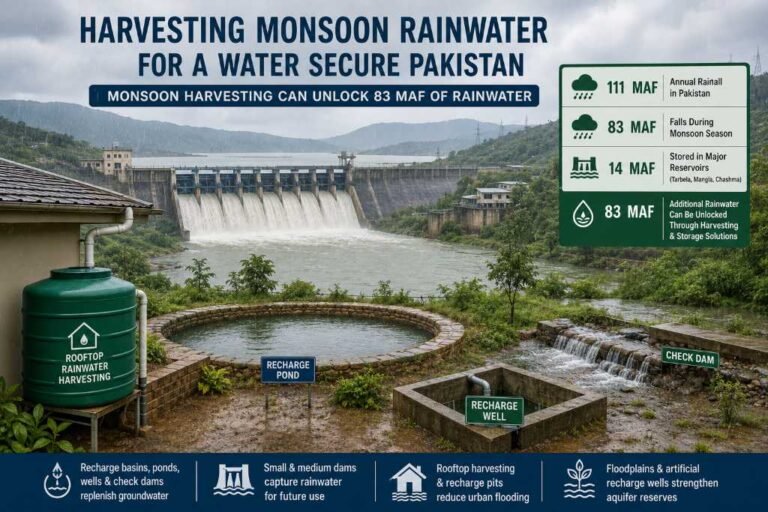
LAHORE, July 21 (ABC): Pakistan can significantly strengthen its water security by effectively harvesting abundant monsoon rainfall. Experts say improved rainwater harvesting and expanded water storage infrastructure can unlock nearly 83 million acre-feet (MAF) of seasonal rainfall for productive use.

Pakistan receives around 111 MAF of rainfall every year. About 83 MAF falls during the monsoon season. At present, the country stores around 14 MAF in major reservoirs, including Tarbela, Mangla and Chashma. This highlights the vast potential for expanding water storage and harvesting systems.

Rainwater harvesting offers major potential

Talking to Wealth Pakistan, Dr Ghulam Zakir Hassan Sial, Director of the Irrigation Research Institute (IRI), Punjab, said Pakistan could substantially improve water availability by adopting both centralized and decentralized water storage solutions.

He said recharge basins, recharge ponds, recharge wells, check dams, flood-spreading basins and injection wells in suitable aquifers are among the most effective methods for conserving monsoon rainwater and replenishing groundwater resources.

Dr Sial said large dams remain important for long-term water storage. However, Pakistan should also prioritise small and medium-sized dams, hill torrent dams and delay-action dams. These structures can capture rainwater that would otherwise flow away.

He said urban centres such as Lahore, Islamabad, Faisalabad and Rawalpindi offer significant opportunities for rooftop rainwater harvesting, underground storage tanks and recharge pits. These measures can improve groundwater replenishment.

According to Dr Sial, rapid urbanisation has increased the area covered by roads and concrete surfaces. As a result, rainwater flows quickly into storm drains instead of naturally recharging aquifers. He said expanding rainwater harvesting infrastructure would improve groundwater reserves and help reduce urban flooding.

Nature-based solutions can boost water storage

Experts also recommend complementing conventional water infrastructure with nature-based solutions to maximise water conservation.

Talking to Wealth Pakistan, Sohail Ali Naqvi, Director of Water Resources at WWF-Pakistan, said Pakistan has tremendous potential to store floodwater in natural floodplains alongside engineered infrastructure such as dams. He said dams provide large-scale water storage, flow regulation and hydropower generation.

Naqvi said Pakistan extracts more than 55 MAF of groundwater every year for agricultural, domestic and commercial use. This creates substantial opportunities to replenish depleted aquifers through managed recharge.

He said floodwater can be diverted to floodplains. This allows water to seep into underground aquifers and strengthen groundwater reserves for future use.

Naqvi said artificial recharge wells are among the most effective Managed Aquifer Recharge (MAR) techniques. The Pakistan Council of Research in Water Resources (PCRWR) introduced this technology, while WWF-Pakistan and other institutions have promoted it in different cities across Punjab.

He said Pakistan should maximise the use of available rainwater, surface water and groundwater. According to Naqvi, the monsoon season offers an ideal opportunity to strengthen water resources for agriculture and other sectors, particularly amid growing uncertainty over transboundary water resources.

Punjab to establish modern wheat silos under PPP model

0

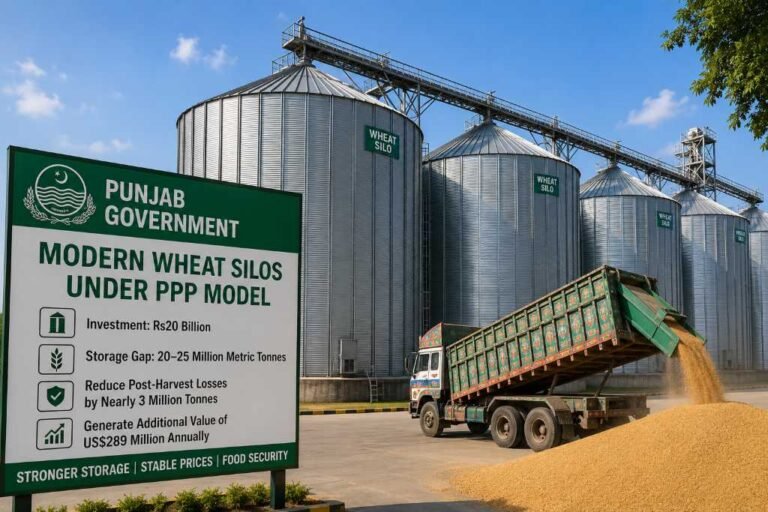
LAHORE, July 20 (ABC): The Punjab government is accelerating efforts to expand the province’s wheat storage capacity through a comprehensive infrastructure programme. The initiative aims to reduce post-harvest losses, improve supply chain efficiency and strengthen food security.

Modern wheat storage

“The work is underway to establish modern wheat silos under a public-private partnership (PPP) model. This will improve long-term storage, reduce post-harvest losses and improve supply chain efficiency,” Director General Food Punjab Amjad Hafeez told Wealth Pakistan.

He said the government is also promoting on-farm silos under the PPP model. The initiative will increase farmers’ storage capacity. It will help them store wheat safely, reduce distress sales and secure better returns on their produce.

According to Hafeez, the initiative involves targeted investments of Rs20 billion to address Pakistan’s estimated wheat storage gap of 20-25 million metric tonnes. The programme will help farmers retain ownership of their produce. It will also prevent nearly three million tonnes of post-harvest losses and generate an estimated $289 million in additional annual value.

In Pakistan, wheat is consumed in various forms, including atta (whole wheat flour), maida (refined flour), suji (semolina), fortified flour, starch, breakfast cereals and crushed wheat.

Wheat stocks remain sufficient

Commenting on wheat stocks, Hafeez said Punjab has sufficient reserves to comfortably meet provincial requirements until the end of the current wheat year in April next year.

He said Punjab produced about 21.91 million metric tonnes (MMT) of wheat this year. The province’s annual domestic consumption is estimated at around 16.5 MMT. This leaves a surplus of approximately 5.41 MMT.

The surplus provides a strong buffer to ensure uninterrupted wheat supplies. It will also help meet inter-provincial requirements, maintain market stability and strengthen food security.

“The releases will be carried out in a calibrated and phased manner to ensure a steady supply of wheat to the milling sector. This approach is intended to maintain adequate flour availability in the market and help keep flour and roti prices stable and affordable for consumers,” Hafeez said.

He added that the Pakistan Agricultural Storage and Services Corporation (PASSCO) will begin dispatching wheat to Punjab this month. The schedule aligns with the province’s supply management plan. It will ensure smooth wheat movement and continued availability of stocks.

Government vows price stability

Hafeez said the government would not allow unjustified increases in wheat, flour and bread prices. He stressed that these essential food items must remain affordable, particularly for low-income households.

He said government wheat releases would continue under a coordinated strategy. Officials are also monitoring market prices closely. He warned that authorities would take strict legal action against anyone involved in hoarding or creating an artificial wheat shortage.

Millers welcome wheat release

Flour millers have welcomed the government’s decision to release wheat from official stocks. They believe the move will help stabilise flour prices across the province.

“The price of the 10kg flour bag has remained in line with the government’s notified rates. The issue has been with the 15kg bag, which is produced from wheat purchased on the open market,” Pakistan Flour Mills Association (PFMA) Patron-in-Chief Asim Ahmad Raza told Wealth Pakistan.

He expressed hope that the release of wheat from government warehouses would lower flour prices. He said it would also reduce the prices of roti and naan.

Punjab devises plan to lift livestock exports beyond $4bn

0

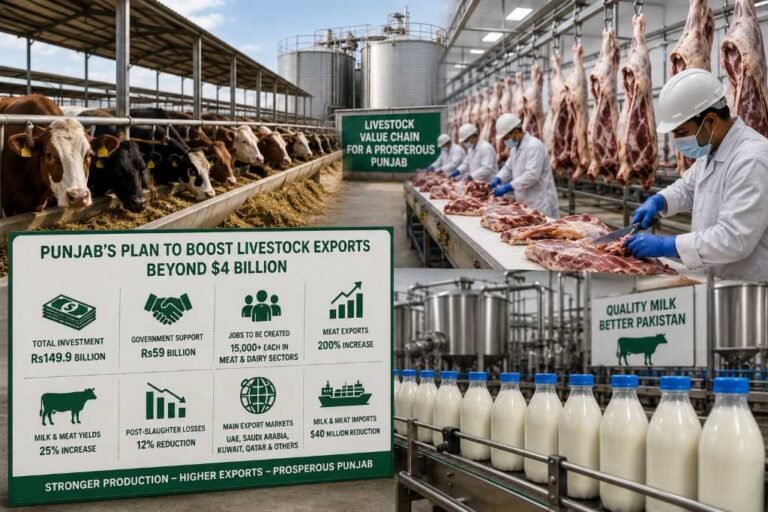
LAHORE, July 20 (ABC): The Punjab government plans to strengthen the meat and dairy value chains through a Rs149.9 billion public-private investment programme. The initiative aims to raise Pakistan’s livestock exports beyond $4 billion.

According to official documents available with Wealth Pakistan, Punjab’s livestock sector represents a major untapped export opportunity. Pakistan’s meat exports currently stand at $517 million, accounting for only 0.3 per cent of the global meat market.

Meat value chain

The initiative seeks to develop an integrated meat value chain. It will include modern slaughterhouses and feedlots. It will also establish meat processing and packing facilities, certification systems, disease control measures, and research centres.

The proposed meat value chain will cover the entire production process. It will begin with live animals at the farm gate. It will also cover slaughtered carcasses, chilled and frozen meat, edible offal, processed meat products, by-products, and the gelatin and collagen industry.

Of the total Rs149.9 billion investment envisaged under the livestock value stream, the government plans to provide Rs59 billion in financing support. The private sector is expected to invest Rs70 billion.

Pakistan’s meat exports mainly go to the United Arab Emirates (38.4 per cent), Saudi Arabia (29.1 per cent), Kuwait (9.4 per cent), and Qatar (6.3 per cent). The remaining 26.8 per cent go to other markets.

According to the documents, the programme aims to increase milk and meat yields by 25 per cent. It will also create more than 15,000 jobs each in the meat and dairy sectors.

The government expects meat exports to increase by 200 per cent. It also expects post-slaughter losses to decline by 12 per cent. The programme seeks to reduce milk and meat imports by $40 million.

Proposed investments include meat processing plants costing Rs2.7 billion per unit. Modern slaughterhouses and meat offal processing plants will cost Rs2.1 billion per unit. Commercial-scale feedlots will cost Rs750 million per unit, while corporate feedlots and integrated meat packing houses will cost Rs4 billion each.

To improve certification and compliance with international standards, the private sector plans to invest Rs65 billion in the meat value chain. The government will provide a financing subsidy of Rs19.1 billion.

Dairy value chain

Under the proposed programme, the government will strengthen the dairy value chain. It will invest in processing facilities, milk collection centres, cold-chain logistics, livestock financing, farmer training, disease control, and supply chain support systems.

The government will invest Rs1.5 billion in the dairy value chain. Pakistan’s milk exports currently stand at $26.2 million, representing only 0.0001 per cent of the global dairy market.

Punjab has a cattle and buffalo population of 57 million. However, dairy exports remain minimal, while post-harvest milk losses stand at 20 per cent.

The proposed dairy value chain will cover raw milk collection, primary and rural dairy products, fat-based dairy products, fermented dairy products, cheese and other dairy foods, dairy ingredients, nutraceuticals, functional dairy products, and export-oriented dairy production.

According to the documents, planned investments include milk pasteurisation and packaging plants costing Rs30 million per unit. Butter and ghee processing units will cost Rs83 million per unit. Ice cream processing plants will cost Rs150 million per unit, while milk powder processing plants will cost Rs300 million per unit.

Farm-level investments will include total mixed ration wagons (13-tonne) at Rs10 million per unit and 10-animal milking parlours costing Rs25 million each.

The private sector plans to invest Rs5 billion in the dairy value chain. The government will provide a financing subsidy of Rs1.5 billion.

Overall investment

Overall, the government plans to invest Rs59 billion across the livestock value chain. This includes Rs29 billion for meat-sector initiatives and Rs30 billion for dairy development.

Major interventions include the Punjab Livestock Card, development of a meat free zone, supply chain support, livestock farmer training, and heat transformation programmes. According to the documents, these measures will strengthen production, improve exports and reduce dependence on imports.