


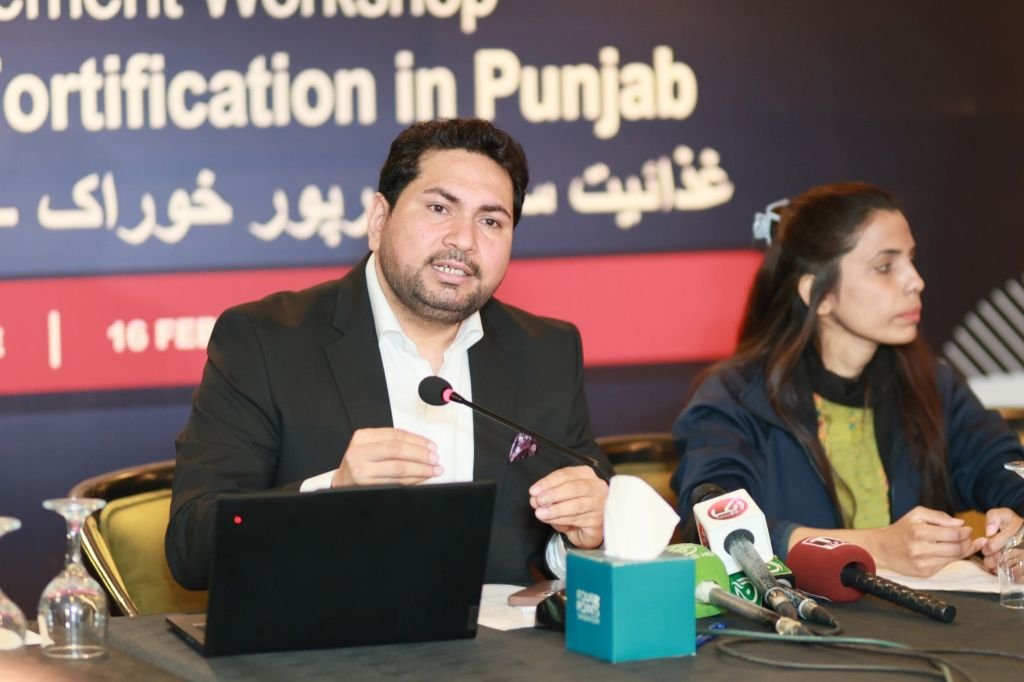

LAHORE, Feb 17 (Wealth Pakistan): Nutrition International has urged the Punjab government to adopt mandatory food fortification to tackle malnutrition, a persistent public health challenge in Pakistan.
High Malnutrition Rates in Punjab
Programme Manager Zameer Haider said Punjab continues to face alarming nutrition indicators. The province reports high levels of stunting, wasting, and anaemia among children. Many women of reproductive age also suffer from serious micronutrient deficiencies.
Nutrition International’s Cost of Inaction Tool estimates that malnutrition costs Pakistan over USD 17 billion (PKR 4.76 trillion) each year. The losses result from low productivity, rising healthcare expenses, and reduced cognitive development in children.
The Multiple Indicator Cluster Survey (MICS) 2018 presents concerning data for Punjab. Around 31.5% of children under five are stunted. Another 7.5% are wasted, while 21.2% are underweight. In addition, 42.2% of women and 52% of children under five suffer from anaemia.
Food Fortification as a Cost-Effective Solution
Food fortification adds essential micronutrients to commonly consumed staples. These nutrients include iron, folic acid, and vitamins A and D. Wheat flour, edible oil, and salt are the main vehicles for fortification.
Global evidence shows strong economic returns. Every dollar invested in fortification generates an estimated USD 27 in benefits. These gains come through disease prevention, higher productivity, and improved lifetime earnings.
In Pakistan, the intervention remains affordable. Fortifying a 20-kg bag of wheat flour costs about PKR 20. Fortifying one kilogram of edible oil costs nearly PKR 0.75. Officials say the measure can reach millions without altering eating habits.
Call for Policy Action in Punjab
Participants at a recent discussion session noted that Sindh, Balochistan, and Khyber Pakhtunkhwa have already enacted mandatory fortification laws. They stressed that Punjab should follow suit. As the largest province and a major wheat flour producer, Punjab can lead national progress.
Speaking at a workshop, Zameer Haider said many families consume enough calories but still face hidden hunger. Deficiencies in vitamins and minerals weaken immunity. They also impair cognitive growth and reduce productivity.
He added that Punjab’s “Healthy Punjab” vision provides an opportunity for preventive action. Fortification can complement curative services and reduce the burden of micronutrient deficiencies.
He also emphasized the media’s responsibility in raising awareness. According to him, informed public dialogue can help build support for sustainable nutrition policies.
The initiative forms part of Nutrition International’s broader efforts to strengthen Pakistan’s nutrition agenda and promote long-term public health improvement.