


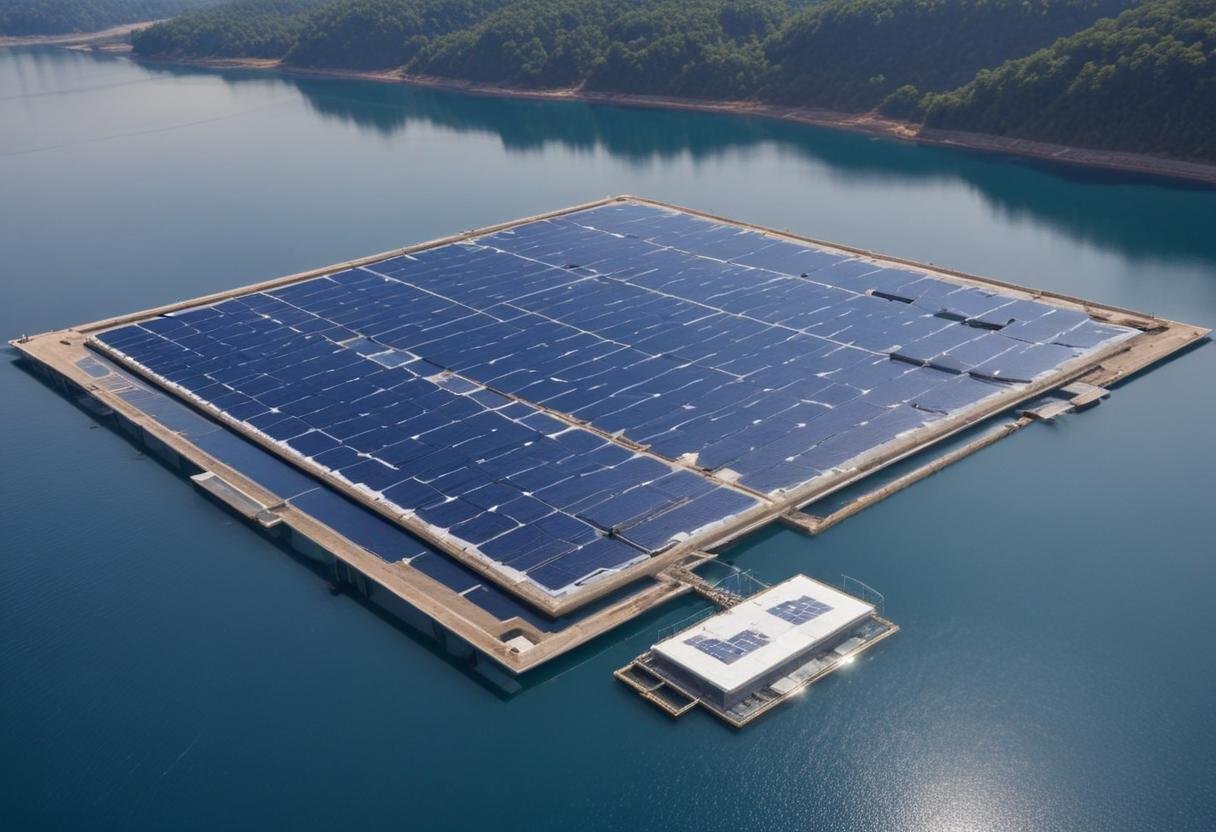
ISLAMABAD, May 6 (ABC): The government plans to develop a 500-megawatt floating solar power project at Keenjhar Lake in Sindh to increase clean energy generation and reduce dependence on imported fossil fuels.
According to documents available with Wealth Pakistan, the project carries an estimated cost of $243.63 million and is expected to generate around 861.91 gigawatt-hours of electricity annually.
The floating solar facility will supply electricity to K-Electric under a long-term Power Purchase Agreement (PPA). The project also supports Pakistan’s broader 2030 emission reduction targets and renewable energy transition goals.
Project to use water surface for solar generation
Unlike conventional solar plants, the Keenjhar Lake project will use water surfaces instead of large land areas. The approach is expected to reduce land-use pressure while improving solar panel efficiency through the cooling effect of water.
The project site is located near major industrial zones in Sindh, which will help ensure efficient transmission of electricity to high-demand areas.
Documents show the project will operate with a capacity factor of 19.6% and offer an estimated tariff of 3.98 US cents per kilowatt-hour.
EPC bidding process underway
The authorities plan to execute the project under the Engineering, Procurement and Construction (EPC) model through competitive bidding.
K-Electric has already issued a Letter of Intent (LoI) for power procurement, while the bidding process for EPC contractors is currently underway.
The total investment structure includes around $182.72 million in debt financing and $60.91 million in equity investment.
Project supports clean energy transition
The allocated funds will cover EPC development, transmission infrastructure, and operations and maintenance (O&M) requirements.
The project is also expected to create employment opportunities during both construction and operational phases, particularly in technical and engineering fields.
Officials believe the initiative will support Pakistan’s renewable energy expansion and help strengthen long-term energy security through increased use of locally generated clean electricity.
The project aligns with Sustainable Development Goals (SDGs) 7, 9, and 13, which focus on clean energy, sustainable infrastructure, and climate action.