


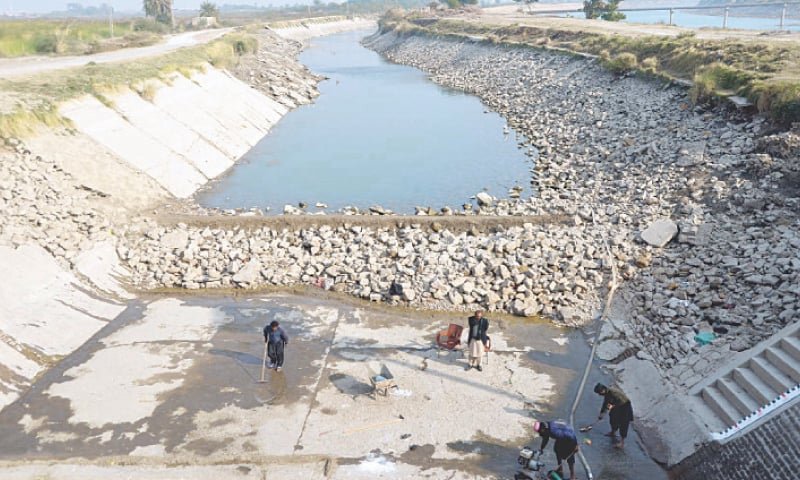

ISLAMABAD, Feb 15 (ABC): Authorities will start rehabilitation and improvement work on the Akram Wah Canal in March 2026 under the Sindh Water and Agriculture Transformation (SWAT) Project, financed by the World Bank.
According to official documents available with Wealth Pakistan, the SWAT Project carries total funding of $320 million. Out of this amount, International Development Association credits provide $292 million, while the government of Sindh contributes the remaining share.
The irrigation and agriculture departments are implementing the project. They aim to improve agricultural water productivity, strengthen irrigation services and support small and medium farmers across Sindh.
Project covers 23 districts
The project covers 23 districts. These include Badin, Dadu, Ghotki, Hyderabad, Jacobabad, Jamshoro, Kashmore, Khairpur Mirs, Larkana, Matiari, Mirpur Khas, Naushahro Feroze, Qambar Shahdadkot, Sanghar, Shaheed Benazir Abad, Shikarpur, Sujawal, Sukkur, Tando Allahyar, Tando Muhammad Khan, Tharparkar, Thatta and Umerkot.
In particular, officials consider the Akram Wah Canal a key part of the province’s water reform strategy. Therefore, they expect the canal upgrade to improve water delivery in several command areas.
Institutional and field-level progress
So far, authorities have launched a hydro-agro informatics program to improve data-driven water management. In addition, they have prepared area development plans for farmer organizations.
Moreover, field teams are conducting demonstrations on climate-smart agriculture. These demonstrations help farmers adopt efficient irrigation and crop practices.
As a result, farmers can use water more effectively and reduce losses in the system.
Financing structure and approvals
The financing package includes a $98 million concessional credit with a 30-year repayment period. In addition, the project includes a $192 million non-concessional credit based on the Secured Overnight Financing Rate plus spread.
The Executive Committee of the National Economic Council approved the project in 2022 after the Central Development Working Party recommended it. Subsequently, the World Bank Board cleared the project.
Officials describe the SWAT Project as a flagship initiative for Sindh. Overall, they expect it to strengthen water governance, raise irrigation efficiency and enhance agricultural resilience in the province.