

Home Blog Page 69

PIDCL receives Rs 661.417m PSDP funds in Q1 FY2025–26

0

ISLAMABAD, Nov 14 (APP): Pakistan Infrastructure Development Company Limited (PIDCL) has received a total of Rs 661.417 million as part of the first quarter releases under the Public Sector Development Programme (PSDP) 2025–26.

According to an official document available with Wealth Pakistan, under the approved allocations for FY2025-26, a total of 20 PSDP schemes are being implemented by the PIDCL with a cumulative budgetary allocation of Rs14,409.448 million.

The funds were disbursed in two phases by the Ministry of Planning, Development & Special Initiatives (M/o PD&SI). The first-quarter release of Rs631.417 million was made on July 31, 2025, covering 16 development schemes. A subsequent release of Rs30 million followed on October 21, 2025, covering two development schemes, bringing the total disbursement to Rs661.417 million.

Among the largest projects, Green Line (BRT’s) Karachi has a total cost of Rs29,193.790 million, a budget allocation of Rs3,000.000 million, with Rs450 million released for the first quarter.

Additionally, Operational (Green Line BRT’s) Karachi involves a cost of Rs13,502.710 million. An allocation of Rs185.000 million was made, with Rs27.750 million released for the first quarter.

The document reveals a strong focus on improving amenities across Karachi’s districts. Multiple schemes for improving or rehabilitating roads, streets and water & sewerage systems, have received funds, including District Central Karachi Rs11.250 million, District East Karachi, Rs11.250 million, District Korangi/Malir Karachi Rs7.500 million, and District South & West KMC Karachi Rs11.250 million.

The other notable projects in Karachi that have received first-quarter funding include the construction of parks. Car Bazaar Park received Rs12 million, and Asian Football Ground Rs14.917 million.

Infrastructure rehabilitation projects in Orangi Town, Nazimabad, and Landhi Town each received Rs12 million in funding.

Beyond Sindh, two bridge construction projects in Khyber Pakhtunkhwa’s Mansehra district have also been funded. Construction of Mari Safdar Shah Bridge and Shah Da Panja Bridge over Siran River each received Rs15 million of their Rs100 million annual allocations.

The release of these funds is expected to accelerate the ongoing vital infrastructure projects for the welfare of millions of citizens.
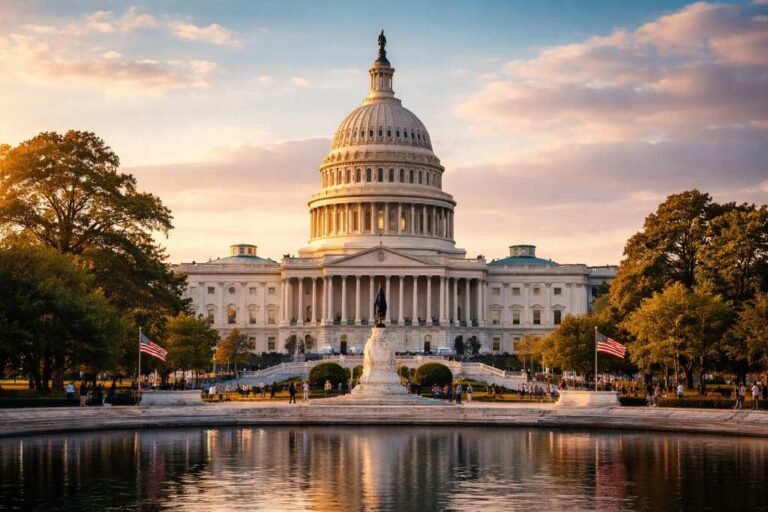
 

Why every American has a stake in Biden’s big meeting with McCarthy

0

ISLAMABAD: The high-stakes meeting between US President Joe Biden and House Speaker Kevin McCarthy carries implications far beyond Washington politics, with potential consequences for the broader American public and the global economy.

At the center of the discussions is the issue of the US debt ceiling — a legal limit on how much the federal government can borrow to meet its financial obligations. Failure to reach an agreement could lead to a default, a scenario that economists warn would disrupt financial markets, weaken investor confidence, and affect millions of Americans directly.

The US government relies on borrowing to fund essential services, including social security payments, healthcare programs, defense spending, and salaries of federal employees. If lawmakers fail to raise or suspend the debt ceiling, the government could face difficulties in meeting these commitments on time.

Economic impact on households

The outcome of the Biden–McCarthy talks matters to ordinary Americans because it directly affects economic stability. A prolonged deadlock could lead to higher interest rates, making mortgages, car loans, and credit card payments more expensive.

Financial markets also tend to react sharply to uncertainty around US debt. Stock market volatility could impact retirement savings and investment portfolios, particularly for middle-income households that rely on pensions and mutual funds.

Moreover, a default or even the threat of one could weaken the US dollar, increasing the cost of imported goods and contributing to inflationary pressures.

Risks to jobs and growth

Economic experts caution that failure to resolve the debt ceiling issue could slow economic growth and potentially trigger job losses. Government spending plays a key role in supporting economic activity, and disruptions could affect businesses that depend on federal contracts.

Small businesses may face tighter credit conditions if financial markets become unstable. This could limit expansion plans, hiring, and overall economic momentum.

Global ripple effects

The significance of the Biden–McCarthy meeting extends beyond the United States. As the world’s largest economy, the US plays a central role in global financial stability. Any uncertainty around its ability to meet obligations could affect international markets, trade flows, and investor confidence worldwide.

Countries that rely on US economic stability, including emerging markets, could experience capital outflows and currency fluctuations. This highlights why the outcome of the talks attracts global attention.

Political stakes and negotiation dynamics

The meeting also reflects deep political divisions in Washington. Republicans and Democrats remain divided over government spending, fiscal responsibility, and budget priorities.

While both sides acknowledge the importance of avoiding default, they differ on how to achieve fiscal balance. Negotiations involve complex trade-offs, including potential spending cuts, policy adjustments, and timelines for future budget decisions.

A critical moment for stability

The Biden–McCarthy meeting represents a critical juncture for economic and financial stability. Its outcome will influence not only government operations but also the broader economic environment affecting households, businesses, and global markets.

For Americans, the stakes are clear. The decisions taken during these talks will shape borrowing costs, job prospects, and overall economic confidence in the months ahead.

As negotiations continue, the focus remains on reaching a timely agreement that ensures continuity in government operations and avoids disruptions that could have far-reaching consequences.