

Home Blog Page 51

No military operation underway in Tirah Valley: govt

0

ISLAMABAD, Jan 27 (ABC): Defence Minister Khawaja Asif on Tuesday ruled out any military operation in Tirah Valley, saying the recent displacement of residents was part of routine seasonal migration.

Speaking at a press conference in Islamabad, he said reports of a planned or ongoing operation in Tirah Valley were incorrect. He added that the movement of people should not be portrayed as forced displacement.

Seasonal migration, not forced displacement

Khawaja Asif said residents of six to seven valleys in Tirah Valley migrate every year for four to six months when winter snowfall begins. As a result, families move to warmer areas, including Bara and Peshawar. However, they usually leave behind one or two members to protect their homes.

“This is a routine practice that has continued for years and can be verified,” he said. Therefore, he stressed that the current Tirah Valley displacement was seasonal in nature.

He was accompanied at the press conference by Information Minister Attaullah Tarar and Special Assistant to the Prime Minister for Information and Khyber Pakhtunkhwa Affairs Ikhtiar Wali Khan.

Rs4bn migration package approved

The defence minister said a jirga from Tirah Valley had been holding meetings with the provincial government. Consequently, the Khyber Pakhtunkhwa government approved a Rs4 billion migration package for the residents.

Holding up an official notification, he said the arrangement was strictly between the jirga and the provincial government. Moreover, he clarified that the armed forces deployed in the area had no role in the decision.

Earlier, he said members of the banned Tehreek-i-Taliban Pakistan were present in Tirah Valley with their families. He estimated their number at around 400 to 500.

No military operation in Tirah Valley

Khawaja Asif said a military operation had taken place in Tirah Valley years ago. Later, however, authorities decided that intelligence-based operations were more effective and caused less collateral damage.

As a result, large-scale operations were discontinued several years ago. Therefore, he said there was no question of launching a new military operation in Tirah Valley.

Lack of basic facilities highlighted

Criticising the provincial government, the defence minister said Tirah Valley lacked basic facilities. In particular, he pointed to the absence of hospitals, schools and police stations, despite earlier commitments.

He added that there was no functional police station in the area. According to him, civilian law enforcement was completely absent.

Hemp cultivation and local economy

Referring to economic activity, Khawaja Asif said hemp was cultivated on around 12,000 acres in Tirah Valley. He said each acre generated profits of about Rs3 to 3.5 million.

He explained that hemp had several legal uses, including medicines and construction material. However, he alleged that the financial benefits did not reach local residents.

Therefore, he said the federal government had started measures to ensure that income from hemp cultivation benefited the people of Tirah Valley. These measures, he added, included the construction of schools and hospitals. He reiterated that the situation had no link to any military operation.

Ryan Seacrest reflects on returning to ‘American Idol’

0

United States Jan 27 (ABC) :Ryan Seacrest says thoughts of legacy are not on his mind, even after more than two decades as the face of American Idol, as he prepares to return once again for the show’s latest season.

Speaking to People on the Nashville press line ahead of Season 9, the longtime host said he has never seriously considered how history might remember his role on the iconic singing competition.

“That’s a big question. I haven’t thought about legacy yet,” Seacrest said.

Instead, he explained that his focus has always been on creating a welcoming and easy-going experience for viewers at home. According to Seacrest, his aim is to make the show enjoyable for audiences of all ages and something families can comfortably watch together.

“I want people to feel relaxed watching the show,” he said. “That sense of comfort, like you’ve known each other for a long time, even if you’ve never met — that’s really the job of a host.”

Seacrest, who has been with American Idol since its debut in 2002, said his motivation to keep returning comes from meeting a new generation of contestants each season. Many, he noted, grew up watching the programme and have dreamed for years of standing on the audition stage.

He also highlighted how the show has evolved, particularly in terms of representation, which has encouraged more people to take part.

“So many contestants tell us they never thought the show was for someone like them,” he said. “But then they saw an artist who didn’t fit a cookie-cutter image and thought, ‘Maybe I can do this.’ That shift has been really powerful.”

Despite changes in judges and contestants over the years, Seacrest said his approach as a host remains the same: read the room, stay flexible and help performers feel at ease.

“When the live shows start, we may have a plan, but it rarely goes exactly that way,” he said. “You roll with it, react in the moment and have fun with the judges — that’s the formula.”

Season 9 of American Idol features Seacrest alongside judges Lionel Richie, Luke Bryan and Carrie Underwood. The season premiered on ABC on Monday, January 26, with episodes available to stream the following day on Hulu.

US battles deadly winter storm as freezing temperatures linger

0

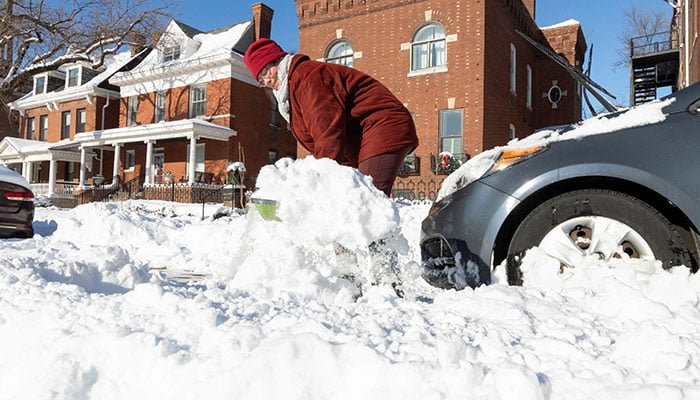
NEW YORK Jan 27 (ABC) :Millions of Americans were digging out on Monday after a massive winter storm battered large parts of the United States, leaving at least 23 people dead, knocking out power and crippling transport networks, while dangerously cold temperatures were expected to persist for days.

An intense Arctic air mass continued to grip the country from New Mexico to Maine, threatening to slow recovery efforts. The storm brought heavy snow, strong winds, freezing rain and sleet, creating hazardous conditions across much of the northern half of the US.

The National Weather Service warned that temperatures in many regions would remain continuously below freezing through February 1. It also cautioned that record-low temperatures across the South were especially dangerous, as many households were still without electricity following the weekend storm.

While skies began to clear in some areas, snowfall continued in parts of the Northeast. Sections of Connecticut recorded more than 22 inches of snow, while Boston received over 16 inches.

Authorities linked at least 23 deaths to the storm, based on state and local reports. Causes included hypothermia and accidents involving traffic, sledding, all-terrain vehicles and snowplows. In New York City, eight additional deaths were reported amid plunging temperatures, with investigations underway to determine whether they were storm-related.

Power restoration efforts were ongoing, but more than 550,000 customers across the South were still without electricity by Monday evening, according to Poweroutage.com. Tennessee, Mississippi and Louisiana — states less accustomed to severe winter weather — were among the hardest hit.

The National Weather Service said nearly 190 million people were under some form of extreme cold alert. In the Great Lakes region, temperatures dropped sharply, with parts of Minnesota and Wisconsin recording lows of -23°F (-30.6°C), and wind chills increasing the risk of frostbite within minutes.

Nearly half of the contiguous US states received at least a foot of snow over the weekend. New Mexico’s Bonito Lake reported the highest total, with 31 inches.

Local authorities warned of ongoing dangers. In Nashville, Mayor Freddie O’Connell said ice-laden trees continued to fall, sometimes disrupting power that had already been restored. Cities across the country opened emergency warming shelters as officials urged residents to limit travel.

Meteorologists said recovery was particularly challenging because the storm affected such a wide area, limiting the ability of better-prepared northern states to assist southern regions. Forecasters also noted that the storm was linked to a disrupted polar vortex, which allowed Arctic air to surge southward across North America.

Meanwhile, Texas remained under a severe cold wave, with icy roads and freezing temperatures disrupting daily life in cities including Dallas, Austin and Houston. Officials warned of renewed risks later in the week, including freezing rain and ice accumulation, and advised residents to avoid non-essential travel.

With schools closed in several areas and weather conditions expected to remain unstable, authorities across the US urged continued caution as the country grapples with the aftermath of one of the season’s most widespread winter storms.

Pakistan bowlers shine as New Zealand collapse to 110

0

Jan 27 (ABC) :Pakistan’s fast bowlers delivered a dominant performance as New Zealand were dismissed for 110 in the Super Six match of the ICC Men’s U19 World Cup 2026 at the Harare Sports Club on Tuesday, leaving Pakistan a target of 111 to win.

After opting to bat first, New Zealand suffered an early setback when opener Marco William Alpe was dismissed for two with only 11 runs on the board, as Ali Raza struck in the opening spell. Hugo Paul Bogue and captain Thomas Coney Jones then attempted to rebuild the innings, scoring quickly and adding 48 runs for the second wicket.

New Zealand appeared settled at 59-1 in the 8th over before Pakistan’s pace attack triggered a dramatic collapse. Bogue top-scored with 39 off 27 balls, including two sixes and seven fours, before falling to Mohammad Sayyam. Soon after, Jones was removed for 15 by Abdul Subhan.

The wickets continued to tumble as Snehith Reddy, Jacob Cotter, Jaskaran Sandhu and Brandon Matzopoulos were dismissed cheaply, reducing New Zealand to 67-7. Spinner Momin Qamar further dented the innings by dismissing Callum Samson after a brief stand with Mason Clarke.

Clarke and Hunter Shore managed to push the total past 100, but Abdul Subhan returned to break the partnership by removing Clarke for 17. Shore was run out for 13, bringing the New Zealand innings to an end in the 26th over.

Abdul Subhan was the standout performer for Pakistan, claiming four wickets for 11 runs in 6.3 overs. Ali Raza supported well with three wickets for 36, while Mohammad Sayyam and Momin Qamar took one wicket each.

Westerly system keeps northern Pakistan in deep freeze

0

Jan 27 (ABC) : A strong cold spell continued to affect the country as a westerly weather system remained active over the upper regions, pushing temperatures below freezing across much of northern Pakistan.

The National Weather Forecasting Centre (NWFC) said the westerly wave is influencing the northern parts of the country and is expected to persist until tomorrow. Several high-altitude areas recorded severe cold, with temperatures plunging to -7°C in Malam Jabba, Parachinar and Gupis, -6°C in Bagrote, and -5°C in Kalam and Rawalakot. Murree and Skardu saw temperatures drop to -3°C, while Quetta recorded -1°C.

The weather authority warned that moderate to heavy snowfall could lead to road closures and slippery conditions in tourist and mountainous regions, including Naran, Kaghan, Swat, Kalam, Chitral, Kohistan, Murree, Galliyat, Hunza, Skardu, Astore and Neelum Valley on January 27. The risk of landslides and avalanches remains high in hilly areas of upper Khyber Pakhtunkhwa, Gilgit-Baltistan and Azad Jammu and Kashmir.

Tourists were advised to avoid unnecessary travel and follow safety guidelines.

Intermittent rain, strong winds and thunderstorms are expected in upper KP, AJK and GB, while isolated heavy rain with snowfall may occur in some areas. Cloudy weather with scattered rain is forecast for lower KP, northeastern Punjab and northern Balochistan, whereas cold and dry conditions are likely elsewhere.

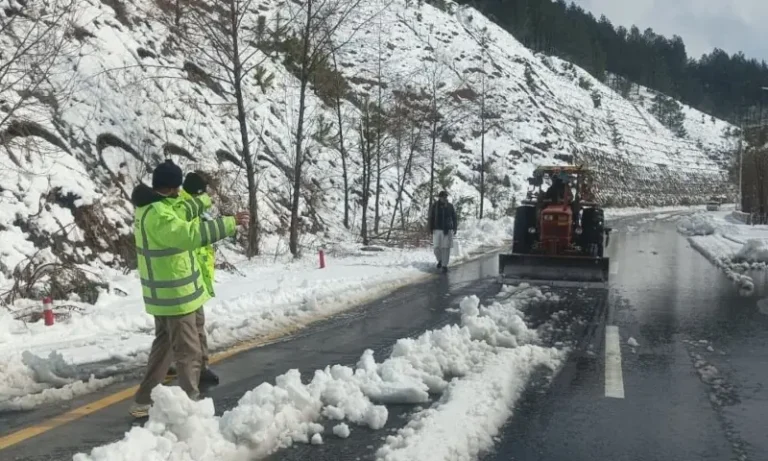
Meanwhile, the National Highways and Motorways Police (NHMP) said traffic flow was being maintained despite heavy snowfall. Snow clearance operations were underway on the Hazara Expressway and Murree Expressway, with heavy machinery deployed to keep roads open.

In the Galiyat region of Abbottabad, conditions remained critical as snowfall continued. Areas such as Nathiagali, Ayubia and Changla Gali received over three feet of snow within 16 hours, according to state media. Authorities said snow removal efforts were ongoing, though snowfall intensity remained high.

A third spell of snowfall, accompanied by intermittent rain, affected South Waziristan Upper and Lower late Monday night, further intensifying cold conditions and limiting movement in high-altitude areas. Several roads were blocked, disrupting transportation and delaying essential supplies to remote villages.

Despite travel challenges, the snowfall brought relief for farmers, particularly wheat growers. Agricultural experts said the rain and snow would improve soil moisture, fertility and groundwater levels, benefiting crops in the coming months.

However, authorities cautioned that continued snowfall may cut off remote areas if road clearance is delayed. Residents were urged to stay cautious, especially during early morning and evening hours, and to protect vulnerable groups such as children and the elderly.

Officials said emergency services remain on alert to respond swiftly to any weather-related incidents.

Chinese agritech firm eyes seed breeding partnerships in Pakistan

0

ISLAMABAD, Jan 27 (ABC): A Chinese agricultural technology company with over a decade of experience in Pakistan is seeking to expand its local operations through long-term partnerships focused on seed breeding and production, according to a company executive.

Focus on localisation and breeding

Jin Shao, Manager International Department at Anhui SunGu Agritech Co. Ltd, told Wealth Pakistan that the company has been operating in Pakistan for more than 12 years. During this period, it has worked with several local partners across the country.

He said the next phase of growth would focus on deeper localisation. This includes seed breeding and production within Pakistan, which he described as essential for sustainable agricultural development.

Wide range of seed operations

Jin said the company is engaged in multiple seed segments in Pakistan. These include hybrid rice, maize, sunflower, canola, and vegetable seeds. He added that the company works with partners of different sizes, ranging from large importers to smaller firms.

According to him, all partners receive equal support as long as cooperation is based on trust and long-term commitment.

Productivity gains for farmers

He said the company introduces Chinese breeding technologies that perform better than older local seed varieties. These technologies help farmers achieve higher yields and improve productivity.

Jin noted that increased output allows farmers to earn higher incomes. It also creates export opportunities and supports overall growth in the agricultural economy.

Mutual benefits for both countries

He described the partnership model as a mutually beneficial chain. Chinese seed technology supports agricultural production in Pakistan, while agricultural exports help strengthen economic ties between Pakistan and China.

Jin said agriculture remains a key pillar of Pakistan’s economy. Improved seed varieties, he added, can also raise living standards by increasing the supply of crops, including vegetables.

Edible oil and canola initiatives

He said the company is also working to improve edible oil quality through canola cultivation and processing. These efforts are part of broader seed initiatives that are progressing at different stages.

Jin added that efficient seed use can reduce input costs. As a result, higher yields can help keep food prices more affordable for consumers.

Policy alignment and long-term planning

Jin said Pakistan’s policy direction encourages local industrial development rather than pure trading. This has prompted the company to look for partners willing to invest jointly over the long term and share risks.

He noted that long-term planning can be challenging. Many companies, he said, prefer quick returns. However, China’s experience shows that gradual and steady growth delivers stronger results.

Balanced production and compliance

He said the company follows a mixed approach to seed supply. Some seed varieties are produced locally in Pakistan, while others are produced in China, depending on suitability and maturity.

Under Pakistan’s updated seed regulations, he added, the company aims to balance local production and imports. This reflects its commitment to localisation and compliance with national policies.

Outlook for cooperation

Jin said the company remains focused on gradual expansion, deeper localisation, and long-term cooperation in Pakistan’s agricultural sector.

He described the recently held Pakistan-China Agriculture Investment Conference in Islamabad as a positive starting point for deeper engagement. However, he stressed that careful partner selection remains essential to ensure sustainable outcomes.

BRICS Expansionism

0

By Mannan Samad

The world is moving steadily towards a multilateral international order. Global power is no longer centred on a single country or region. Instead, influence now spreads across multiple states and groupings. As a result, alliances and coalitions have become essential for global coordination and survival.

Today, leagues, partnerships, and informal groups shape international politics. This trend reflects the rise of a plural and multipolar world system.

The birth of BRICS

One clear example of this shift is BRICS. The group includes Brazil, Russia, India, China, and South Africa. Economist Jim O’Neill first introduced the idea of BRIC in 2001 to describe rising economies. The group formally emerged in 2009 in Russia. Later, South Africa joined in 2010, turning BRIC into BRICS.

Since then, the bloc has served as a platform for cooperation among major emerging economies.

Growing influence and expansion

Over time, BRICS has expanded in both size and influence. In January 2024, Egypt, Ethiopia, Iran, and the United Arab Emirates joined the bloc. Following the BRICS summit in Kazan in October 2024, more than 40 countries showed interest in membership.

More recently, Malaysia became a full member. This expansion highlights BRICS’ growing appeal and its ambition to shape a new global order.

BRICS versus Western dominance

BRICS increasingly positions itself as an alternative to Western-led groups such as the G7. While the G7 promotes a profit-driven liberal order, BRICS stresses collective growth and cooperation. As a result, many Global South countries see BRICS as a more inclusive platform.

De-dollarisation and economic autonomy

Another key goal of BRICS is reducing reliance on the US dollar. Member states argue that dollar dominance allows political pressure through sanctions. Therefore, BRICS has discussed alternative payment systems and trade currencies. However, analysts agree that the dollar will remain dominant due to its stability.

Internal challenges within BRICS

Despite its growth, BRICS faces internal divisions. Political rivalry, border disputes, and regional tensions weaken unity. Differences between China, India, and Russia raise doubts about long-term cohesion.

Looking ahead

BRICS reflects a changing world. However, cooperation remains more effective than confrontation. Global challenges require dialogue, trust, and shared leadership.

Only through collaboration can a stable and sustainable future be secured.

The writer is a lawyer based in Quetta, Balochistan. His thematic interest revolves around refugees, gender equality, climate change, disinformation, and global affairs. He can be reached at mannansaamad@gmail.com.

AI and Ethics

0

Amina Shoaib Kashani

Artificial intelligence (AI) is now part of daily life. People use it in healthcare, education, banking, and transport. AI helps improve speed and accuracy. As a result, it makes many tasks easier. However, these benefits also raise ethical concerns that need attention.

Bias in AI systems

One major issue is bias in AI systems. AI learns from data provided by humans. If this data is biased, the results can be unfair. For example, biased systems may affect hiring, loans, or access to services. Therefore, developers must check data carefully. Fair data helps ensure fair outcomes.

Privacy and data protection

Another concern is privacy. AI systems often collect personal information. This may include sensitive data. Without proper safeguards, data misuse can occur. As a result, people may lose trust in technology. For this reason, strong data protection laws are necessary. Clear rules can ensure safe and responsible use of data.

Impact on jobs

AI also affects employment. On one hand, it creates new jobs and industries. On the other hand, it may replace some traditional roles. As a result, some workers may face job loss. However, training and education can reduce this risk. Governments and companies should invest in new skills. This will help workers adjust to change.

Need for ethical use

In conclusion, AI offers many advantages. However, ethical use remains essential. By reducing bias, protecting privacy, and supporting workers, society can benefit from AI. Therefore, ethical rules must guide future development. This approach will help ensure fairness, safety, and opportunity for everyone.

The writer is from Turbat.

Vehicle imports jump 194%, mobile phone imports cross $200m in December

0

ISLAMABAD, Jan 27 (ABC): Pakistan recorded a sharp rise in imports of vehicles and mobile phones in December 2025. Official data released by the Trade Development Authority of Pakistan (TDAP) shows strong growth in these categories despite mixed trends in overall imports.

Motor vehicle imports surge sharply

TDAP data shows that motor vehicle imports rose by 194 percent year-on-year in December. Import payments for vehicles reached $207 million. As a result, motor vehicles ranked among the fastest-growing import items during the month.

This sharp rise added noticeably to Pakistan’s import bill. Moreover, it highlighted strong demand for transport-related goods.

Mobile phone imports cross $200m

Meanwhile, imports of mobile phones also increased significantly. TDAP figures show that mobile phone imports reached $202 million in December. This placed mobile phones among the highest-value consumer electronics imported during the month.

Compared with December last year, the rise marked a clear increase. Therefore, mobile phones remained a key driver of consumer imports.

Transport equipment imports rise in FY26

In addition, TDAP data shows strong growth in transport-related imports during the fiscal year. During July–December FY26, imports of motor vehicles for the transport of goods increased by 201 percent. Import payments reached $242 million during the period.

These figures show that vehicle imports remained high beyond December. As a result, transport equipment continued to add pressure to import payments.

Related items also record growth

The product-wise tables also show higher imports of parts and accessories linked to transport equipment. However, the report highlights motor vehicles and mobile phones as the main contributors to December’s import growth.

Therefore, these two categories stood out among higher-value imports during the month.

Overall import bill remains elevated

According to TDAP report avaibale with Wealth Pakistan, Pakistan’s total imports stood at $6.022 billion in December. Although imports declined slightly compared to November, year-on-year growth in selected items kept the import bill high.

Cumulative data for July–December FY26 shows that total imports reached $34.394 billion. This marked an 11 percent increase compared with the same period last year. Growth in vehicle and mobile phone imports contributed to this rise.

Sindh govt’s unpaid power bills pile up to over Rs65bn in 2025

0

ISLAMABAD, Jan 27 (ABC): Unpaid electricity bills of Sindh government departments crossed Rs65 billion in 2025, according to official documents available with Wealth Pakistan. Power distribution companies operating in the province reported the figures.

SEPCO reports unpaid bills worth Rs35.86bn

Sukkur Electric Power Company (SEPCO) reported unpaid electricity bills of Rs35.86 billion as of December 2025. These dues relate to various Sindh government departments. As a result, payment gaps widened across SEPCO’s service areas.

Out of the total amount, provincial government departments owe Rs10.39 billion. Meanwhile, autonomous bodies under the provincial government owe Rs947.01 million.

Local governments emerge as major defaulters

In addition, local bodies owe Rs1.97 billion in unpaid bills. City district governments account for Rs2.96 billion. However, Taluka Municipal Administrations owe the largest share at Rs19.59 billion. Therefore, they remain the biggest source of outstanding dues within SEPCO’s region.

SEPCO has urged the Government of Sindh to take immediate action. Moreover, the company has called for budget releases, payment plans, or reconciliation of pending bills.

HESCO dues rise to Rs29.8bn

Meanwhile, Hyderabad Electric Supply Company (HESCO) also reported large unpaid bills. Outstanding dues reached Rs29.8 billion as of December 2025. As a result, financial pressure increased on the company.

Major defaulters include the police, irrigation department, public health engineering department, health and welfare department, education department, and local bodies.

Key provincial departments owe billions

According to the documents available with Wealth Pakistan, the highest unpaid amount was recorded against Sindh SCRAP. It owes Rs5.19 billion across 1,425 connections. In addition, the Sindh Irrigation and Drainage Authority owes Rs3.19 billion.

Moreover, the public health engineering department owes Rs3.11 billion. The police department owes Rs1.87 billion. Furthermore, the irrigation and power department owes Rs1.18 billion. Receivables from the health and welfare department stand at Rs873 million.

Municipal dues add further pressure

At the same time, Taluka Municipal Administrations owe Rs8.83 billion to HESCO. Other departments account for Rs4.23 billion. Therefore, unpaid municipal bills continue to add pressure on the power distribution system.

HESCO stressed that timely recovery of government dues remains essential. As a result, regular payments are needed to maintain financial discipline and ensure reliable electricity supply across Sindh.