

Home Blog Page 45

Mix of running, cycling, swimming linked to longer life span

0

ISLAMABAD, Feb 11 (ABC): Regular participation in a variety of physical activities — including walking, cycling, running, strength training, and light outdoor work — may significantly reduce the risk of early death, according to new research reported by Medical News Today.

The study, published in BMJ Medicine, found that people who combined different forms of exercise had better survival outcomes than those who relied on a single type of workout. Researchers said exercise diversity, along with adequate overall activity, was linked to longer life expectancy.

Three decades of data analyzed

Scientists examined long-term data from more than 111,000 participants drawn from the Nurses’ Health Study and the Health Professionals Follow-Up Study.

Participants reported their physical activity habits for over 30 years. Activities included aerobic exercise such as walking, jogging, cycling, tennis, rowing, and swimming, as well as yoga, stretching, weight training, gardening, and other moderate or vigorous outdoor tasks.

Researchers compared these habits with mortality records to assess the impact on longevity.

Higher activity linked to lower death risk

The findings showed that greater total physical activity lowered the risk of death from all causes. Most individual activities were associated with reduced mortality.

However, researchers noted that benefits plateaued after a certain level. Additional hours of exercise did not continue to lower the risk indefinitely.

“It’s common to see a limit of benefits for healthy lifestyle factors such as physical activity,” Yang Hu, ScD, research scientist at Harvard T.H. Chan School of Public Health and the study’s corresponding author, told Medical News Today.

“No additional benefits may be gained beyond certain amounts of exercise,” he added.

Exercise variety provides extra protection

The study also identified an independent benefit from exercise variety.

Participants who engaged in the widest range of activities showed:

• 19% lower risk of death from all causes
• 13–14% lower risk of death from heart disease, cancer, respiratory disease, and other illnesses

Researchers said different forms of activity improve different body systems, including cardiovascular fitness, muscle strength, balance, and flexibility. Combining these benefits may offer stronger protection against chronic disease.

“It means that although maintaining a high level of total physical activity is still most important, mixing different types of activities may be more helpful to prevent premature death,” Hu said.

Doctors welcome findings

Medical experts told Medical News Today the results support long-standing clinical advice that consistent and varied exercise improves health outcomes.

Zeeshan Khan, MD, chief of geriatrics at Hackensack Meridian Jersey Shore University Medical Center, said the study adds evidence that variety matters.

“This study provides robust long-term data that adds a crucial new dimension to that advice: variety is just as important as volume,” he said.

Sports medicine specialist Bert Mandelbaum, MD, noted that combining endurance, strength, and balance exercises can improve overall physical resilience.

Further research planned

Researchers said future studies should focus more on older adults and identify the optimal mix of aerobic, strength, and flexibility training to develop clearer guidelines for longevity.

Medical News Today reported that experts consider physical activity one of the most modifiable lifestyle factors for preventing premature death.

Sleep problems may signal mental health risks

0

ISLAMABAD, Feb 11 (ABC): Poor sleep may be more than just a nightly inconvenience — it could be a key driver and early warning sign of mental health problems, according to experts featured in a recent Medical News Today podcast.

In an episode of Medical News Today’s “In Conversation” series titled “Is sleep the missing piece in mental health?”, sleep specialists explained that sleep and mental health share a complex two-way relationship. Insomnia and sleep deprivation not only worsen mood and anxiety but may also precede depression and other psychiatric conditions.

Consultant psychiatrist Dr. Lauren Waterman of North London NHS Foundation Trust, who specializes in insomnia, said sleep disturbances can significantly affect emotional regulation, thinking ability, and daily functioning.

“Sleep affects how we feel, think, and function, and is more interconnected with our mental health than people assume,” the podcast noted.

Insomnia and sleep deprivation not the same

Dr. Waterman stressed that insomnia and sleep deprivation are often confused but represent very different conditions.

Sleep deprivation occurs when external factors prevent sleep, such as noise, caregiving responsibilities, or environmental disruption. Long-term deprivation can increase risks of serious health outcomes, including heart disease and premature death.

Insomnia, however, stems from internal brain mechanisms that prevent sleep even when adequate time and opportunity exist.

“With insomnia, something inside your brain is stopping you from sleeping,” she explained. “The brain gradually adapts, meaning people may function on fewer hours, but still experience fatigue and poor quality of life.”

Why poor sleep worsens mood

Experts said lack of sleep disrupts emotional processing in the brain, making people more reactive, impatient, and vulnerable to low mood or anxiety.

Studies cited in the discussion show that sleep problems frequently accompany depression and anxiety disorders. In some cases, insomnia appears before other symptoms emerge, suggesting it may act as an early warning sign.

People with chronic insomnia often feel “tired but wired,” meaning they lack energy but do not feel sleepy enough to fall asleep easily.

This mismatch stems from overactive “wakefulness pathways” in the brain, which keep the mind alert even when the body feels exhausted.

Frequent waking is normal

Contrary to popular belief, waking multiple times at night is normal, Dr. Waterman said.

“Everyone wakes up about 10 to 15 times an hour,” she explained, describing this as an evolutionary safety mechanism. Most people simply fall back asleep so quickly that they do not remember it.

The problem, she added, is not waking — but worrying.

Anxiety about being awake can trigger racing thoughts that prevent returning to sleep, creating a cycle that sustains insomnia.

Sleep cycles matter

Deep sleep occurs mostly in the first few hours of the night, while lighter and dream sleep dominate later stages.

Because of this, some people with insomnia still obtain condensed periods of restorative sleep early in the night, which may explain why they function better than expected on fewer hours.

However, fragmented or irregular sleep patterns can still harm overall well-being.

Melatonin supplements may not work as expected

The episode also raised questions about the effectiveness of melatonin supplements, widely used to aid sleep.

Dr. Waterman warned that in countries where melatonin is sold as a dietary supplement rather than a regulated medication, products may contain inconsistent or negligible active ingredients.

Exposure to light can also deactivate melatonin tablets, particularly gummies stored in transparent bottles.

“As long as people believe something helps, placebo can sometimes work,” she noted, but cautioned consumers to be aware of quality issues.

Behavioural therapy recommended

Rather than relying on pills, specialists emphasized cognitive behavioural therapy for insomnia (CBT-I) as the most effective long-term treatment.

Key strategies include:

• Using the bed only for sleep
• Avoiding prolonged time awake in bed
• Getting up at the same time daily
• Limiting naps
• Reducing light exposure before bedtime
• Leaving bed temporarily if unable to sleep

Regular wake-up times, experts said, are more important than fixed bedtimes because they help regulate the body’s internal clock.

When to seek help

Occasional poor sleep is normal during stress or illness. However, problems lasting more than three months may indicate chronic insomnia that requires professional care.

Dr. Waterman advised people whose sleep difficulties persist or worsen to consult healthcare providers or insomnia specialists.

Medical News Today hosts Yasemin Nicola Sakay and Maria Cohut concluded that understanding how sleep works can itself reduce anxiety and improve rest.

Experts say recognizing sleep as a foundation of mental health — rather than an afterthought — may help many people break the cycle of fatigue, low mood, and insomnia.

Only 15 countries score above 75 in CPI 2025

0

ISLAMABAD, Feb 11 (ABC): Clean governance remains concentrated in a small group of economies, with only 15 countries scoring above 75 out of 100 on the Corruption Perceptions Index (CPI) 2025, while the majority of nations continue to face serious corruption challenges, according to Transparency International.

The report shows that although some countries maintain strong safeguards against corruption, most of the world still records weak public-sector integrity. More than two-thirds of the 182 assessed countries scored below 50, highlighting persistent governance gaps.

Transparency International states that this divide between high-performing and low-performing states reflects differences in institutional strength, judicial independence and public oversight.

High scorers share common features

Countries at the top of the ranking include Denmark, Finland, Singapore, New Zealand, Norway and Sweden. These nations consistently maintain strong legal systems, transparent public finance management and independent oversight institutions.

The report notes that governments with professional civil services, effective auditing mechanisms and open procurement systems tend to reduce opportunities for misuse of funds.

Digitalization of public services also plays a role. By limiting direct contact between officials and citizens, digital platforms can reduce discretion and lower bribery risks.

Mid- and low-tier countries struggle

In contrast, many countries in Asia, Africa, Eastern Europe and Latin America remain in the middle or lower ranges of the index.

Scores between 20 and 40 typically indicate widespread governance concerns, including weak enforcement of anti-corruption laws, politicized justice systems and limited transparency in public spending.

Several conflict-affected states scored below 25, reflecting fragile institutions and limited accountability.

Transparency International notes that in such contexts, corruption often becomes systemic and affects every level of government.

Justice systems key to progress

The CPI emphasizes that independent and well-resourced justice institutions are central to controlling corruption.

Where courts operate free from political or economic interference, prosecutors can pursue cases effectively and deter wrongdoing. Conversely, politicized or underfunded justice systems allow impunity to persist.

The report states that timely investigations, transparent court decisions and accessible legal processes help strengthen public trust.

Political finance and influence

Transparency International also links corruption risks with opaque political financing.

Countries that regulate campaign donations, disclose funding sources and enforce limits on spending tend to perform better. Where political money flows without oversight, private interests may exert undue influence over policies and public contracts.

The report stresses that citizens have the right to know who funds political parties and election campaigns.

Civic freedoms and accountability

The CPI highlights the importance of civil society and media freedom.

Journalists, community groups and watchdog organizations often detect early signs of corruption through investigative reporting and public monitoring. Their work helps hold authorities accountable.

Where governments restrict these freedoms, exposure becomes harder and corruption risks rise.

The report notes that countries with open civic space generally record higher CPI scores, while those with obstructed or closed civic environments perform poorly.

Economic costs

Transparency International states that corruption undermines economic growth and investor confidence.

Uncertain regulations, favoritism and opaque decisions increase business costs. As a result, companies may avoid investing in high-risk environments.

Poor governance also weakens service delivery. Funds intended for health, education and infrastructure may fail to reach citizens, reducing development outcomes.

Long-term solutions

The report calls for sustained institutional reforms. It recommends strengthening oversight bodies, improving budget transparency and enhancing international cooperation to combat cross-border corruption.

Transparency International states that national action, combined with multilateral efforts, can help protect public resources and rebuild trust.

The CPI 2025 findings show that clean governance remains achievable but requires consistent commitment to accountability, transparency and rule of law.

Global corruption average drops to 42 as 122 countries score below 50

0

ISLAMABAD, Feb 11 (ABC): The global fight against public-sector corruption weakened in 2025 as the worldwide average score on the Corruption Perceptions Index (CPI) fell to 42 out of 100, marking the first decline in more than a decade, according to the latest report released by Transparency International.

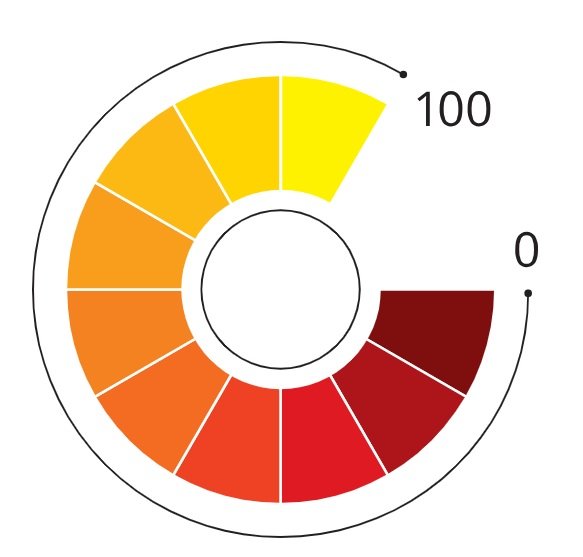
The CPI evaluates perceived levels of corruption across 182 countries and territories, using a scale from zero, which indicates highly corrupt, to 100, which reflects very clean governance. The report shows that 122 countries scored below 50, demonstrating that most governments continue to struggle to control corruption effectively.

The findings highlight a broad deterioration in governance standards at a time when many countries face economic pressures, geopolitical tensions and rising public demands for accountability.

Few countries at the top

Only a small number of nations maintained high integrity scores. Denmark topped the ranking with 89 points, followed by Finland with 88 and Singapore with 84. Other countries that scored strongly included New Zealand, Norway, Sweden, Switzerland and Germany.

In contrast, the lowest scores were recorded by conflict-affected and highly repressive states. Somalia and South Sudan each scored nine, placing them at the bottom of the index. Several other fragile states scored below 20.

Transparency International states that such low scores typically reflect weak institutions, limited oversight and systemic corruption across government systems.

Democracies show mixed performance

The report presents a clear gap between different political systems.

Full democracies recorded an average score of 71, while flawed democracies averaged 47. Non-democratic regimes performed worst, with an average of 32.

The CPI notes that countries with strong, independent institutions, free elections and open civic space generally manage corruption more effectively. However, the report also observes that several established democracies have recently recorded declining scores.

Countries such as the United States, Canada, the United Kingdom, France and Sweden all experienced downward pressure on their ratings. Transparency International links these changes to weakened checks and balances, gaps in anti-corruption enforcement and increasing political polarization.

The findings indicate that even high-income and democratic states remain vulnerable if institutional safeguards weaken.

Civic space linked with lower corruption

The report identifies civic freedoms as a key factor in reducing corruption risks.

Countries that protect freedom of expression, association and peaceful assembly tend to perform better. Open civic space allows journalists, civil society organizations and whistleblowers to expose wrongdoing and demand accountability.

Transparency International notes that restrictions on non-governmental organizations, intimidation of watchdog groups and media censorship often coincide with higher corruption levels. Where independent scrutiny declines, corrupt practices become harder to detect.

The CPI also highlights risks faced by journalists. According to the report, more than 90% of journalists killed while investigating corruption since 2012 worked in countries scoring below 50, underscoring the dangers associated with exposing graft.

Services and inequality suffer

Transparency International states that corruption directly affects daily life by weakening public services.

Mismanagement or diversion of funds can reduce the quality of healthcare, education and infrastructure. Inflated contracts and poor oversight limit resources available for citizens.

The report further notes that corruption increases inequality. Unofficial payments, favoritism and abuse of authority often burden low-income groups more heavily, widening social gaps.

Weak financial management can also trigger fiscal stress. Hidden debt, illicit financial flows and misuse of public borrowing can reduce funds available for development and social protection.

Call for reforms

Transparency International urges governments to strengthen justice systems, improve oversight of public spending and protect civic space.

It also calls for greater transparency in political financing and stronger enforcement against large-scale corruption and cross-border money laundering.

The report states that sustained reforms, rather than short-term campaigns, offer the most effective path toward clean governance.

The CPI 2025 findings suggest that without stronger accountability and institutional integrity, corruption risks will continue to undermine public trust and economic stability worldwide.

Pakistan scores 28 on global corruption index in 2025

0

ISLAMABAD, Feb 11 (ABC): Pakistan scored 28 out of 100 on the Corruption Perceptions Index (CPI) 2025, remaining among countries with high perceived public-sector corruption, according to Transparency International.

The index ranks 182 countries and territories on a scale from zero (highly corrupt) to 100 (very clean). Pakistan’s score places it well below the global average of 42.

The report shows that corruption risks remain strong in many public institutions. It also highlights gaps in transparency, accountability and enforcement.

Global corruption on the rise

The CPI notes that the global average has fallen for the first time in more than a decade. More than two-thirds of countries scored below 50 this year.

Only a few nations scored above 80. These countries maintain strong oversight, independent courts and open civic space.

In contrast, most developing economies continue to struggle with weak controls and slow reforms.

Why Pakistan scores low

Transparency International links low scores to weak checks and balances. It also points to limited oversight of public spending and procurement.

The report says slow investigations and delayed court cases reduce accountability. Opaque political financing also raises concerns about influence and favoritism.

In addition, restricted civic space makes it harder to expose wrongdoing.

Impact on citizens

The report states that corruption directly affects daily life.

Poor oversight of funds can weaken healthcare, education and infrastructure services. As a result, many projects fail to deliver full benefits.

Corruption also increases inequality. Unofficial payments and favoritism often hurt low-income families the most.

The findings further show that corruption can discourage investors. Businesses prefer markets with clear rules and fair competition.

What improves scores

Countries with higher CPI scores follow clear governance practices. They protect independent courts and auditors. They also publish budgets and contracts.

Many of them digitise public services to reduce human discretion. Free media and civil society groups help detect abuse early.

These steps improve trust and reduce opportunities for misuse of funds.

Way forward

Transparency International urges governments to strengthen justice systems and improve oversight. It also calls for greater transparency in political funding and public finance.

For Pakistan, the report highlights the need for lasting institutional reforms. Stronger accountability can improve service delivery and boost investor confidence.

Huawei highlights AI, cloud solutions at Indus AI Week

0

ISLAMABAD, Feb 11 (ABC): Huawei showcased its latest artificial intelligence and cloud computing solutions during the Indus AI Week Islamabad, an event organized by the Ministry of IT and Telecom to promote innovation and accelerate Pakistan’s digital transformation.

The flagship event brought together policymakers, technology firms, researchers, and industry leaders. Participants displayed emerging technologies and explored partnerships aimed at strengthening the country’s digital ecosystem.

Government calls for public-private collaboration

Federal Minister for Planning, Development and Special Initiatives Ahsan Iqbal visited the Huawei booth and stressed the need for closer cooperation between the public and private sectors. He said such partnerships are vital for building a competitive knowledge economy.

He also invited leading technology companies, including Huawei, to participate in the Narowal Innovation Center initiative. According to him, collaboration with global firms will help Pakistan adopt advanced technologies faster and create new opportunities for youth.

“Partnerships with Huawei and other innovators will accelerate Pakistan’s digital transformation and keep the country competitive in the global knowledge economy,” he said. “Huawei’s strong presence in Pakistan is already fostering innovation and supporting our journey toward Digital Pakistan.”

Huawei reaffirms commitment to Pakistan

Huawei Pakistan’s CEO for AI and Cloud, Ahmed Bilal Masood, reiterated the company’s long-term commitment to the country’s technology sector.

He said Huawei aims to support local innovation, skill development, and digital infrastructure through advanced AI and cloud solutions.

“Huawei is proud to be a trusted partner in Pakistan’s innovation ecosystem,” he said.

Platform for innovation

Meanwhile, Indus AI Week Islamabad served as a platform to connect stakeholders, showcase new technologies, and encourage knowledge sharing. Officials said the initiative will help position Pakistan as a regional hub for artificial intelligence and digital innovation.

Online radicalisation, youth recruitment by militants growing: UN

0

ISLAMABAD, Feb 10 (ABC): Militant organisations are increasingly relying on online propaganda, digital outreach and targeted recruitment of young people to sustain their ranks, signalling a shift from purely battlefield tactics to long-term influence strategies, according to a United Nations monitoring report.

The UN Analytical Support and Sanctions Monitoring Team said several armed groups are expanding their use of digital platforms to attract supporters, spread ideology and mobilise recruits across borders.

Security analysts say this trend is creating a steady pipeline of fighters and sympathisers, making extremist networks more resilient.

Digital platforms used for outreach

According to the assessment, militant organisations are actively using social media, encrypted messaging applications and online forums to circulate propaganda material.

These platforms allow groups to distribute videos, statements and recruitment messages quickly and at low cost. Moreover, content can reach audiences far beyond conflict zones.

Officials say such online activity helps militants maintain visibility even when their physical presence is restricted.

Youth increasingly targeted

The report observed that young people are often the primary targets of recruitment efforts.

Militant groups tailor messages to appeal to grievances, identity issues and economic frustrations. As a result, vulnerable individuals may be drawn toward extremist narratives.

Experts warn that online recruitment lowers the barrier to entry. Unlike traditional methods, it does not require direct contact or travel to conflict areas.

Consequently, radicalisation can occur quietly and spread rapidly.

Cross-border influence expands reach

Digital communication also allows groups to connect supporters across countries.

Analysts say this cross-border connectivity strengthens networks and enables coordination without physical meetings. Therefore, extremist ideas can travel faster than security responses.

For countries such as Pakistan, where a large share of the population uses smartphones and social media, monitoring online spaces has become increasingly important.

Long-term security implications

Security experts believe recruitment strategies pose long-term risks.

While weapons and financing determine immediate capabilities, recruitment sustains militant movements over time. Without new entrants, groups weaken. With steady inflows, they persist.

Therefore, counter-radicalisation has become as critical as military operations.

Need for preventive measures

The UN report underscores the importance of preventive action, including community engagement, education initiatives and monitoring of online extremist content.

Officials say addressing root causes such as unemployment, marginalisation and misinformation will be key to reducing vulnerability.

Experts add that digital awareness and stronger cyber monitoring can help limit the spread of extremist propaganda.

Kidnapping, extortion fuel terror financing across conflict regions: UN

0

ISLAMABAD, Feb 10 (ABC): Kidnapping for ransom, extortion and other illicit revenue streams are increasingly strengthening the financial base of militant organisations, enabling them to sustain operations and expand their capabilities, according to a United Nations monitoring report.

The UN Analytical Support and Sanctions Monitoring Team said several armed groups have diversified their funding sources and are generating significant income through criminal activities rather than relying solely on external donations.

Security analysts say this shift has made militant networks more self-sufficient and harder to weaken financially.

Ransom payments boost war chests

According to the assessment, kidnapping for ransom remains one of the most profitable tactics.

In parts of Africa and the Sahel, militant groups reported receiving large payments in exchange for hostages. The report cited cases where single ransom deals ran into tens of millions of dollars, sharply increasing the groups’ financial strength .

Experts say such windfalls allow militants to purchase weapons, recruit fighters and strengthen logistics.

As a result, these organisations can sustain longer campaigns despite security pressure.

Extortion becomes routine income

The report noted that many groups now depend on systematic extortion of local populations and businesses.

Militants impose “taxes,” demand protection money and seize goods in areas under their influence. In some regions, these collections have become a steady source of monthly revenue.

Officials say this model provides predictable cash flow and reduces reliance on foreign backers.

Consequently, dismantling such networks becomes more complex for authorities.

Shift toward sustainable financing

The UN observed a broader trend toward what it described as more “profitable and sustainable” financing methods.

Instead of sporadic donations, groups are embedding themselves in local economies through criminal enterprises, smuggling and illegal trade.

Analysts warn that such financial independence improves resilience. Even when leaders are targeted or camps are dismantled, funding channels often remain intact.

Implications for regional security

Although many of these practices are reported in other conflict zones, security experts say the pattern carries lessons for South Asia as well.

Stronger finances allow militant groups to maintain recruitment, propaganda and operational networks. Therefore, financial disruption is now considered as important as battlefield operations.

Counter-terrorism officials say closer monitoring of money flows, ransom payments and illicit trade routes will be essential to curb the growth of such groups.

Need for financial countermeasures

The UN report underscores the importance of coordinated financial intelligence, tighter controls on illegal transactions and regional cooperation to cut off funding sources.

Experts say without targeting militant finances, security operations alone may not produce lasting results.

As armed groups increasingly rely on criminal income streams, governments are expected to place greater emphasis on financial tracking and enforcement measures.

Militant groups adopt drones, satellite phones and encrypted tech

0

ISLAMABAD, Feb 10 (ABC): Terrorist organisations operating across conflict regions are increasingly adopting modern technologies such as drones, satellite communication systems and encrypted digital platforms, making detection and interception more difficult for security agencies, according to a United Nations monitoring report.

The UN Analytical Support and Sanctions Monitoring Team said armed groups are no longer relying solely on conventional tactics. Instead, they are integrating affordable commercial technologies into their operations to improve mobility, communication and operational security.

Security experts say these developments are reshaping the threat landscape and complicating counter-terrorism efforts worldwide, including in South Asia.

Drones becoming a key tool

According to the assessment, several militant groups have expanded their use of drones for reconnaissance and surveillance.

The report noted that drones are being deployed to monitor troop movements, identify targets and coordinate attacks. In some theatres, fighters are also experimenting with weaponizing drones to strike government and military positions.

Analysts say unmanned aerial systems allow militants to gather real-time intelligence while staying out of reach of ground forces.

As a result, security personnel face greater challenges in tracking hostile movements, especially in remote or mountainous terrain.

Satellite communications widen reach

The UN team also highlighted the growing use of satellite-based communications.

Unlike traditional mobile networks, satellite systems allow fighters to communicate from isolated areas that lack cellular coverage. This enables groups to coordinate operations, transfer information and maintain contact across long distances.

Officials say such connectivity acts as a force multiplier. It allows militants to operate even in regions where state communication infrastructure is weak or absent.

Consequently, interception and monitoring become more complex for law-enforcement agencies.

Encrypted and digital tools on the rise

Meanwhile, militants are increasingly relying on encrypted messaging applications and digital platforms to protect internal communications.

The report observed that these tools help groups maintain operational secrecy and avoid surveillance. Some organisations are also using online propaganda, digital fundraising methods and emerging technologies to recruit and mobilise supporters.

Security analysts warn that these digital capabilities allow groups to expand influence beyond physical battlefields.

Security implications for the region

Experts say the shift toward technology-driven tactics signals a broader evolution in militant strategy.

Instead of large formations, groups now prefer smaller, mobile cells supported by modern communication tools. This approach reduces their visibility and increases survivability.

For countries like Pakistan, which face varied terrain and long borders, such tactics present additional challenges for intelligence gathering and rapid response.

Need for adaptive countermeasures

The UN report underscores the importance of adapting counter-terro­rism strategies to match these technological changes.

Officials say stronger surveillance systems, improved cyber monitoring and enhanced regional coordination will be essential to counter evolving threats.

As militant organisations modernise their tools, security agencies are also expected to upgrade capabilities to prevent misuse of commercial technology for violent purposes.

Afghanistan remains base for multiple militant groups

0

ISLAMABAD, Feb 10 (ABC): Afghanistan continues to host multiple terrorist organisations, creating persistent cross-border security risks for neighbouring countries, particularly Pakistan, according to a new United Nations monitoring report.

The UN Analytical Support and Sanctions Monitoring Team said the presence of militant groups inside Afghanistan remains a serious regional concern, with spillover effects including cross-border attacks and growing instability in South Asia.

Regional countries, the report noted, remain worried about the number of armed groups operating within Afghan territory and the impact of their activities beyond its borders.

Multiple groups active inside Afghanistan

According to the assessment, several internationally designated groups continue to maintain a presence in Afghanistan.

The report said Al-Qaida remains operational and retains ambitions for external attacks. Meanwhile, Al-Qaida in the Indian Subcontinent (AQIS) is active in south-eastern Afghanistan, with parts of its leadership and media networks reportedly based in major cities.

The monitoring team observed that such groups benefit from local networks that provide training, advice and logistical support, strengthening their operational capabilities.

Security analysts say this environment allows militants to regroup, recruit and reorganise with relative freedom.

TTP attacks increase pressure on Pakistan

The report highlighted Pakistan as one of the countries directly affected by this situation.

It said Tehrik-e Taliban Pakistan (TTP) continues to operate as one of the largest militant groups based in Afghanistan. Moreover, the group has been accorded greater operational space, which has contributed to an increase in attacks against Pakistani security forces and state institutions.

These attacks, the UN noted, have led to military confrontations and heightened tensions along the border.

In addition, the nature of assaults has evolved. According to the assessment, recent attacks have become more complex and, at times, involved larger numbers of fighters.

Security officials say such developments pose fresh challenges for border management and internal security.

Regional relations remain fragile

The monitoring team observed that ongoing instability in Afghanistan continues to affect broader regional stability.

As long as militant groups retain safe operating space, neighbouring countries are likely to face recurring security pressure. Therefore, the overall security environment in Central and South Asia remains fragile.

Experts say sustained cooperation between regional states will be essential to curb cross-border violence.

Need for coordinated response

Officials in Islamabad have repeatedly stressed that lasting peace in Afghanistan is critical for Pakistan’s internal security and economic stability.

The UN report underscores that without stronger counter-terro­rism measures and regional coordination, militant networks will continue to pose risks beyond Afghanistan’s borders.