


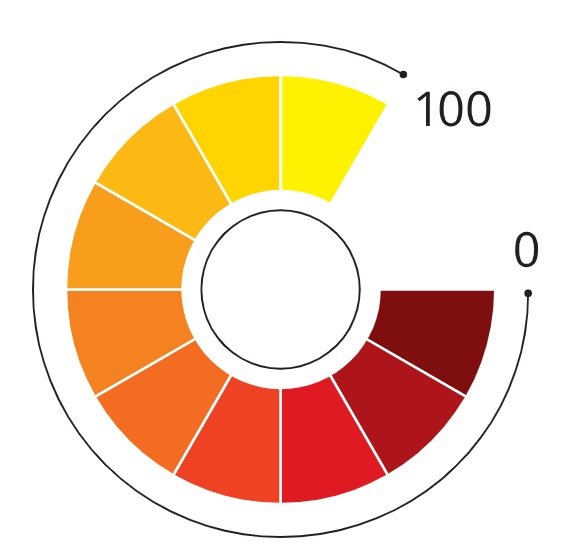

ISLAMABAD, Feb 11 (ABC): Clean governance remains concentrated in a small group of economies, with only 15 countries scoring above 75 out of 100 on the Corruption Perceptions Index (CPI) 2025, while the majority of nations continue to face serious corruption challenges, according to Transparency International.
The report shows that although some countries maintain strong safeguards against corruption, most of the world still records weak public-sector integrity. More than two-thirds of the 182 assessed countries scored below 50, highlighting persistent governance gaps.
Transparency International states that this divide between high-performing and low-performing states reflects differences in institutional strength, judicial independence and public oversight.
High scorers share common features
Countries at the top of the ranking include Denmark, Finland, Singapore, New Zealand, Norway and Sweden. These nations consistently maintain strong legal systems, transparent public finance management and independent oversight institutions.
The report notes that governments with professional civil services, effective auditing mechanisms and open procurement systems tend to reduce opportunities for misuse of funds.
Digitalization of public services also plays a role. By limiting direct contact between officials and citizens, digital platforms can reduce discretion and lower bribery risks.
Mid- and low-tier countries struggle
In contrast, many countries in Asia, Africa, Eastern Europe and Latin America remain in the middle or lower ranges of the index.
Scores between 20 and 40 typically indicate widespread governance concerns, including weak enforcement of anti-corruption laws, politicized justice systems and limited transparency in public spending.
Several conflict-affected states scored below 25, reflecting fragile institutions and limited accountability.
Transparency International notes that in such contexts, corruption often becomes systemic and affects every level of government.
Justice systems key to progress
The CPI emphasizes that independent and well-resourced justice institutions are central to controlling corruption.
Where courts operate free from political or economic interference, prosecutors can pursue cases effectively and deter wrongdoing. Conversely, politicized or underfunded justice systems allow impunity to persist.
The report states that timely investigations, transparent court decisions and accessible legal processes help strengthen public trust.
Political finance and influence
Transparency International also links corruption risks with opaque political financing.
Countries that regulate campaign donations, disclose funding sources and enforce limits on spending tend to perform better. Where political money flows without oversight, private interests may exert undue influence over policies and public contracts.
The report stresses that citizens have the right to know who funds political parties and election campaigns.
Civic freedoms and accountability
The CPI highlights the importance of civil society and media freedom.
Journalists, community groups and watchdog organizations often detect early signs of corruption through investigative reporting and public monitoring. Their work helps hold authorities accountable.
Where governments restrict these freedoms, exposure becomes harder and corruption risks rise.
The report notes that countries with open civic space generally record higher CPI scores, while those with obstructed or closed civic environments perform poorly.
Economic costs
Transparency International states that corruption undermines economic growth and investor confidence.
Uncertain regulations, favoritism and opaque decisions increase business costs. As a result, companies may avoid investing in high-risk environments.
Poor governance also weakens service delivery. Funds intended for health, education and infrastructure may fail to reach citizens, reducing development outcomes.
Long-term solutions
The report calls for sustained institutional reforms. It recommends strengthening oversight bodies, improving budget transparency and enhancing international cooperation to combat cross-border corruption.
Transparency International states that national action, combined with multilateral efforts, can help protect public resources and rebuild trust.
The CPI 2025 findings show that clean governance remains achievable but requires consistent commitment to accountability, transparency and rule of law.