


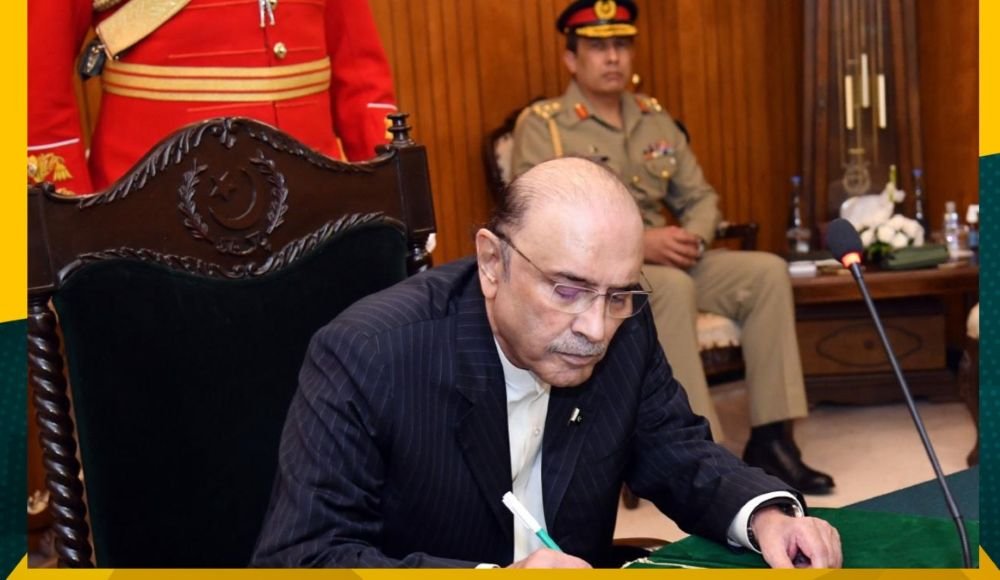
 Bill 2026, defining abuse, setting punishments, and strengthening legal protection for victims in Islamabad.)
ISLAMABAD, Jan 26 (ABC): President Asif Ali Zardari on Monday signed the Domestic Violence (Prevention and Protection) Bill, 2026, turning it into law despite earlier objections raised by the presidency.
Parliament passed the bill last week during a joint sitting, along with six other bills. The session took place amid opposition protests and sloganeering. National Assembly Speaker Ayaz Sadiq chaired the sitting.
Objections raised during joint sitting
During the joint sitting, lawmakers formally presented the president’s objections to the Domestic Violence Bill. Opposition members urged the House to consider the president’s advice.
Earlier, the president had termed the bill vague. He had also raised concerns over the punishments proposed in the law. He advised parliament to reconsider the bill instead of approving it in its present form.
Definition of domestic violence
Under the new law, domestic violence includes physical, emotional, psychological, sexual, and economic abuse. The abuse must occur within a domestic relationship and cause fear or physical or psychological harm.
The law applies to women, men, transgender persons, children, and other vulnerable individuals. It covers both current and former domestic relationships within a household.
Relationship with existing criminal law
The legislation states that offences already covered under the Pakistan Penal Code will continue under existing criminal law.
However, acts not addressed by the Penal Code will fall under the Domestic Violence (Prevention and Protection) Act.
Types of abuse covered
Physical abuse includes acts that cause bodily harm. Emotional and psychological abuse covers stalking, harassment, repeated humiliation, threats, false allegations, abandonment, and coercion.
Sexual abuse refers to conduct that violates dignity. Economic abuse includes denying financial resources or restricting access to money or property legally owed to a person.
Courts must examine the full circumstances of each case before deciding whether domestic violence occurred.
Punishment and compensation
For offences not covered by the Penal Code, the law sets prison terms from six months to three years. Courts may also impose a fine of up to Rs100,000.
The law makes victim compensation mandatory. Courts must award at least Rs20,000 to the victim. Those who help or encourage domestic violence face the same punishment as the offender.
Reason for the legislation
The statement of objects and reasons states that domestic violence remains widespread in Pakistan. Official data cited in the bill shows that one in three women faces domestic abuse during her lifetime.
The statement adds that reported cases have increased in the Islamabad Capital Territory. It also refers to concerns raised by the Federal Ombudsman for Protection Against Harassment over rising complaints in the federal capital.
International commitments
The bill notes that Pakistan is a signatory to the Convention on the Elimination of All Forms of Discrimination Against Women. As a result, the country must adopt strong laws to prevent gender-based violence and protect victims.
According to the statement, the law aims to reduce domestic violence in the Islamabad Capital Territory. It seeks to define abuse clearly, provide legal protection, ensure access to remedies, and hold offenders accountable.