


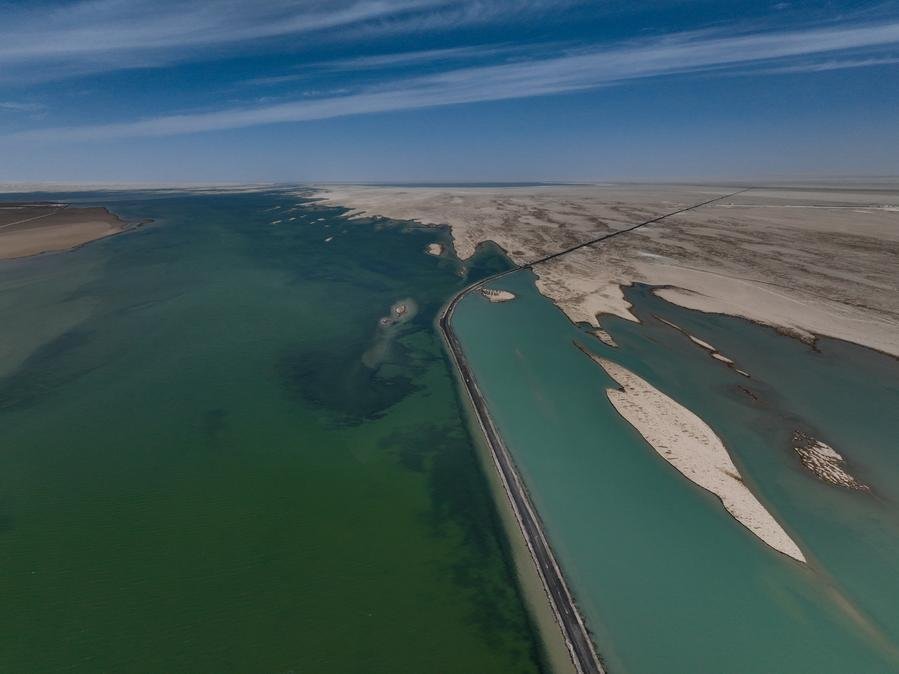

BEIJING, Jan 23 (ABC): China has achieved a major industrial breakthrough in lithium extraction with the launch of the world’s first 20,000-tonne production line using new technology to recover lithium from salt lake brine, a development expected to strengthen supply for the country’s fast-growing electric vehicle sector.
The facility, built by Qinghai CITIC Guoan Technology Development Co., Ltd. in Qinghai Province, has reached full operational capacity, according to a report published by People’s Daily on Thursday.
The successful commissioning of the production line is expected to significantly improve the comprehensive utilisation rate of China’s salt lake lithium resources and extend their sustainable development lifespan. The project is also being viewed as a model for advancing the industry toward greener, smarter and larger-scale operations.
Lithium, often referred to as “white gold,” is a key raw material for rechargeable lithium-ion batteries used in electric vehicles, consumer electronics and large-scale energy storage systems. The breakthrough is seen as an important step in enhancing China’s self-reliance and security in lithium supply, supporting the strategic stability of its new energy industry.
According to the report, the core technology — a proprietary process protected by multiple patents — has increased lithium recovery rates at the salt pan stage from an industry average of below 50 percent to more than 78 percent. Overall lithium recovery across the full production process has risen from 75.38 percent to 90.41 percent.
Processing lithium from salt lakes has long posed technical challenges due to high loss rates associated with traditional solar evaporation methods. The new production line represents a major advance in overcoming these limitations.
In addition to boosting yields, the new technology significantly shortens the production cycle for battery-grade lithium carbonate and sharply reduces lithium losses compared with conventional evaporation processes.
The method also preserves the comprehensive utilisation of associated resources such as potassium and boron, supporting a balance between resource efficiency, economic returns and environmental sustainability, the report said.